Alfa Romeo Alfasud
Front-wheel-drive small car with a boxer engine and Giugiaro styling.

Ssu · CC BY-SA 4.0
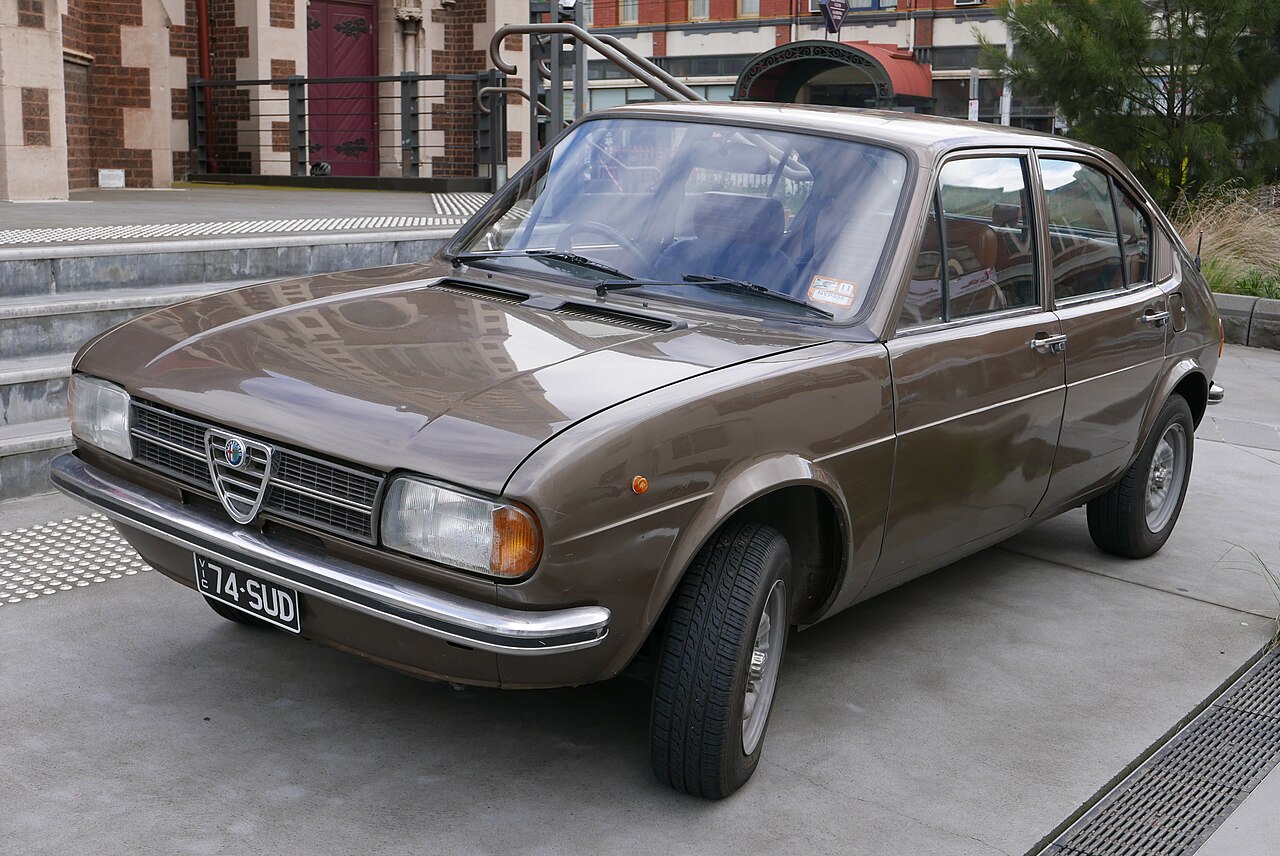
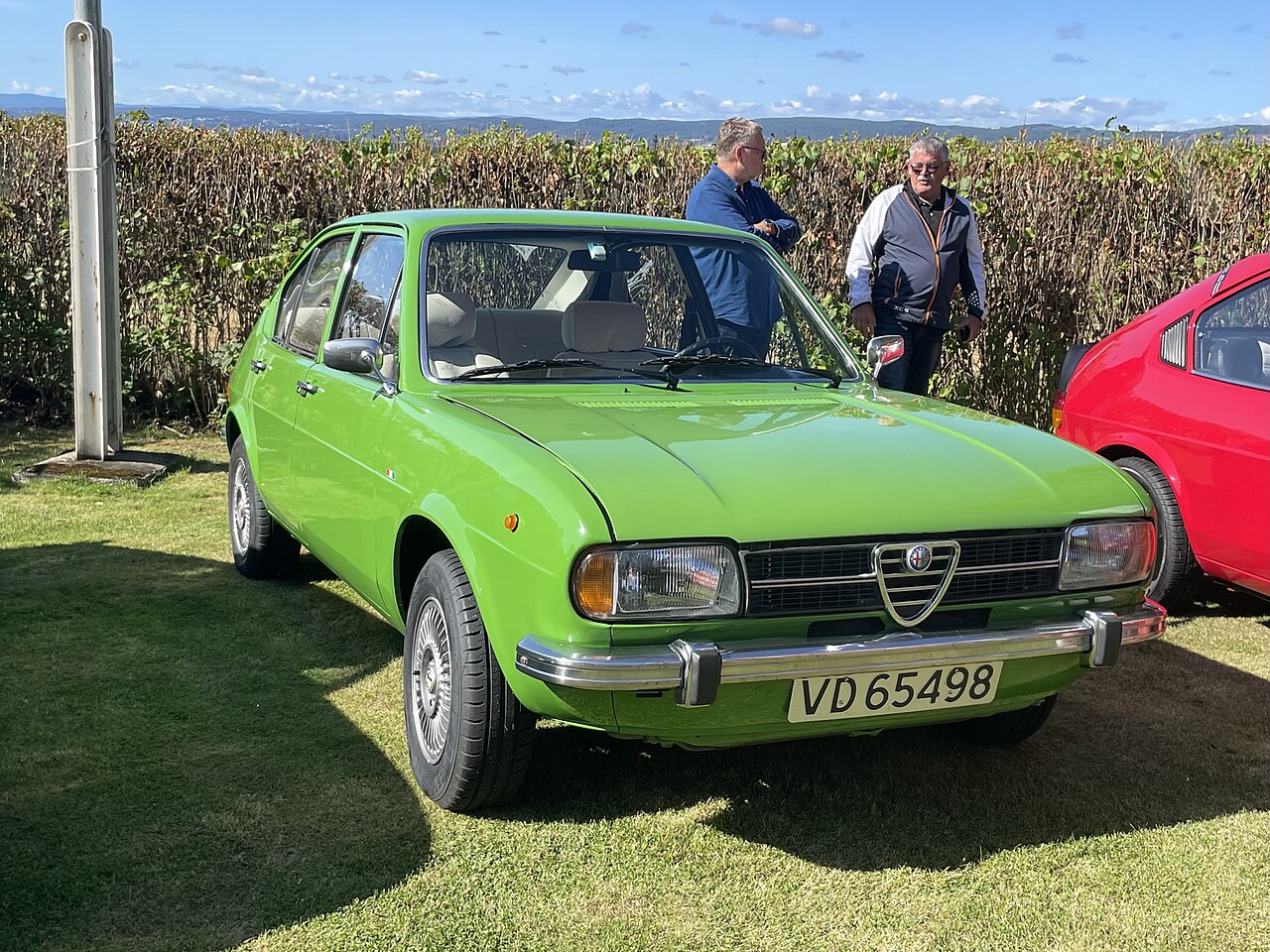
The Alfa Romeo Alfasud (Type 901, 902 and 904) is a small family car manufactured from 1971 to 1989 by Alfa Romeo. It was a front-engine, four-door, five-passenger entry-level model produced over a single generation, with facelifts in 1977 and 1980. The Alfasud was noted for its boxer engine configuration, low center of gravity, aerodynamic profile, class-leading handling, styling by Giorgetto Giugiaro of ItalDesign, and a conspicuous susceptibility to rust.
Quick Facts
- Manufacturer
- Alfa Romeo
- Aka
- Alfa Romeo Export GTA (South Africa)
- Production
- 1971–1983 (berlina) / 1976–1989 (Sprint)
- Assembly
- Italy: Pomigliano d'Arco plant, Campania · Malaysia: Shah Alam (Swedish Motor Assemblies) · Malta: Marsa (Car Assembly Ltd) · South Africa: Brits
- Designer
- Giorgetto Giugiaro at Italdesign
- Class
- Small family car (C)
- Layout
- Longitudinal front-engine, front-wheel-drive
- Related
- Alfa Romeo Sprint · Alfa Romeo Caimano
- Engine
- 1.2 L (1,186 cc) Boxer H4 · 1.3 L (1,286 cc) Boxer H4 · 1.4 L (1,350 cc) Boxer H4 · 1.5 L (1,490 cc) Boxer H4
- Transmission
- 4-speed manual / 5-speed manual
- Wheelbase
- 2455 mm
- Length
- 3890 mm / 3935 – (Giardinetta)
Facts from the source article.
Lore & Background
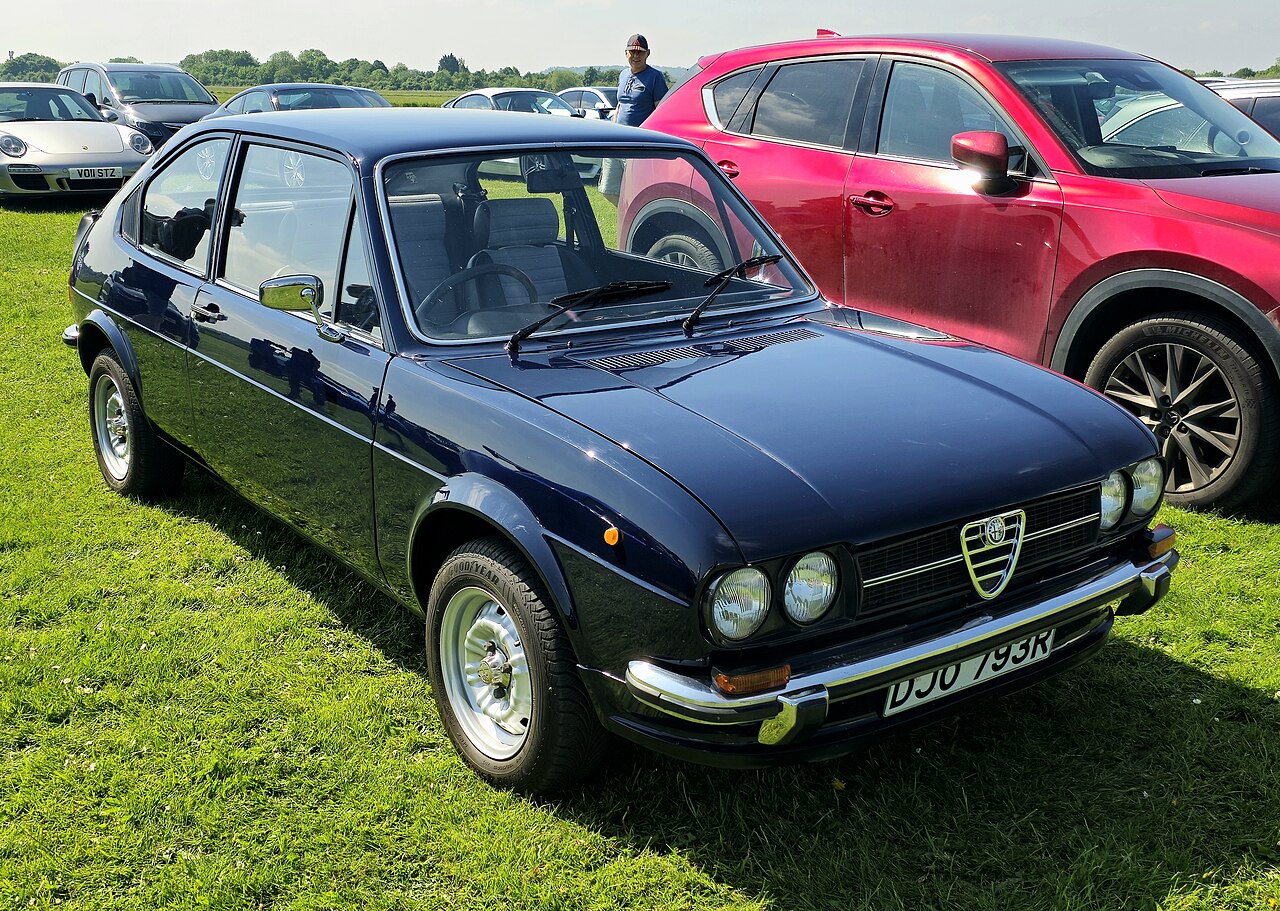
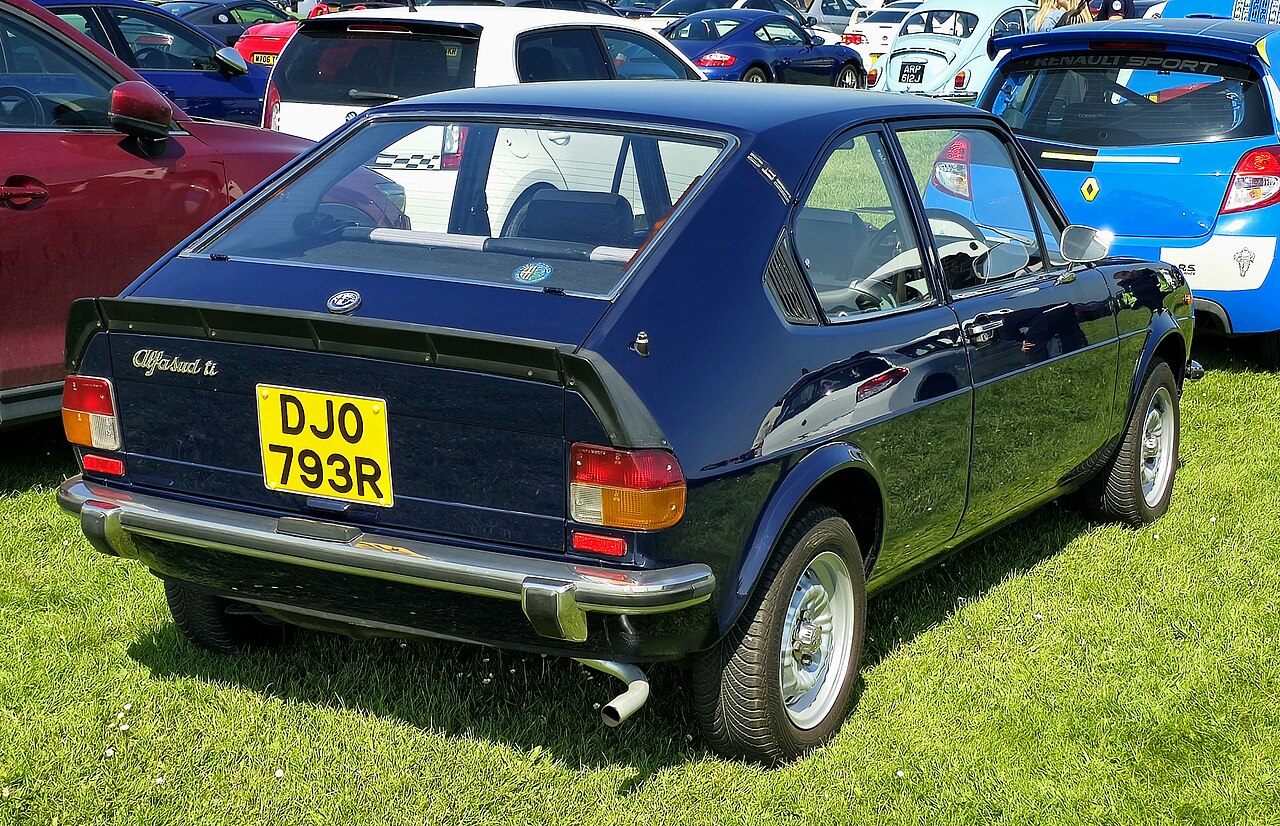
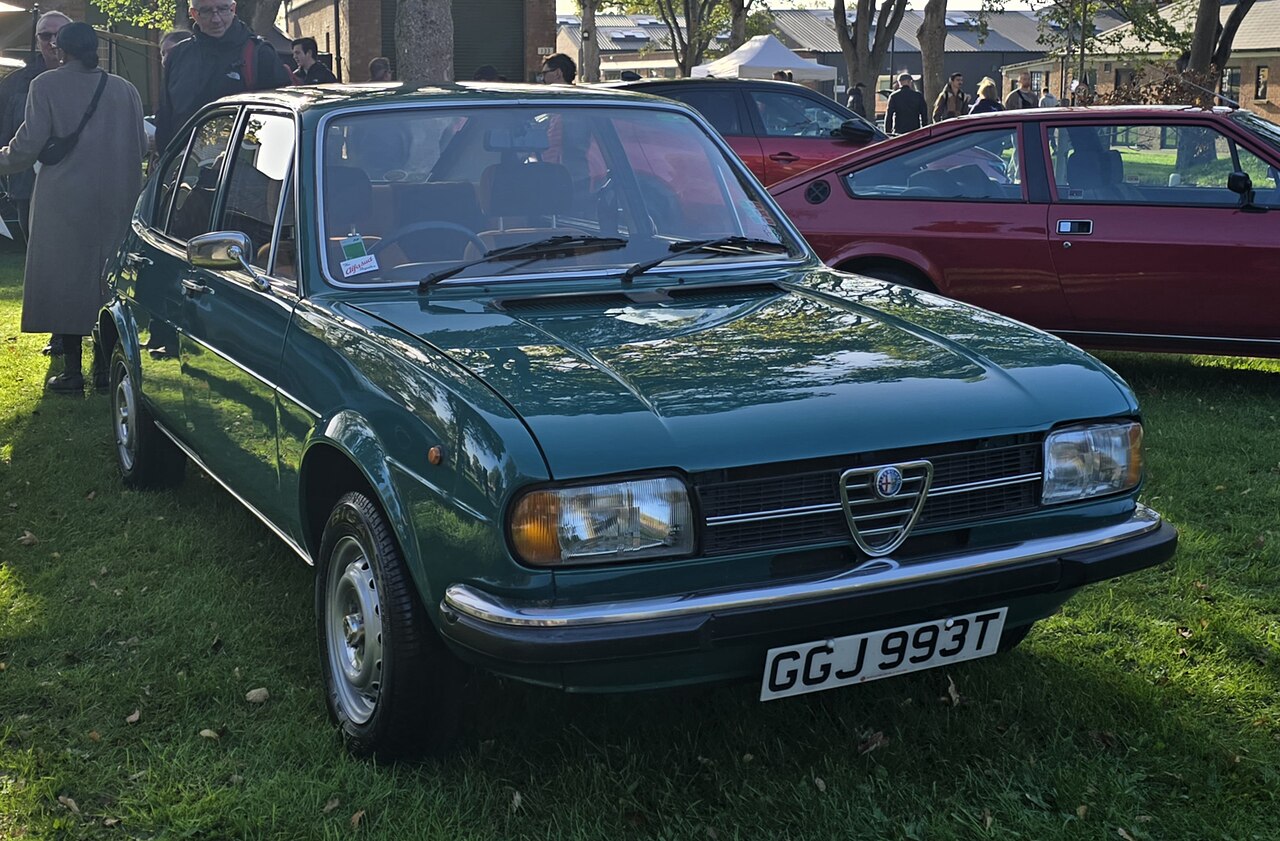
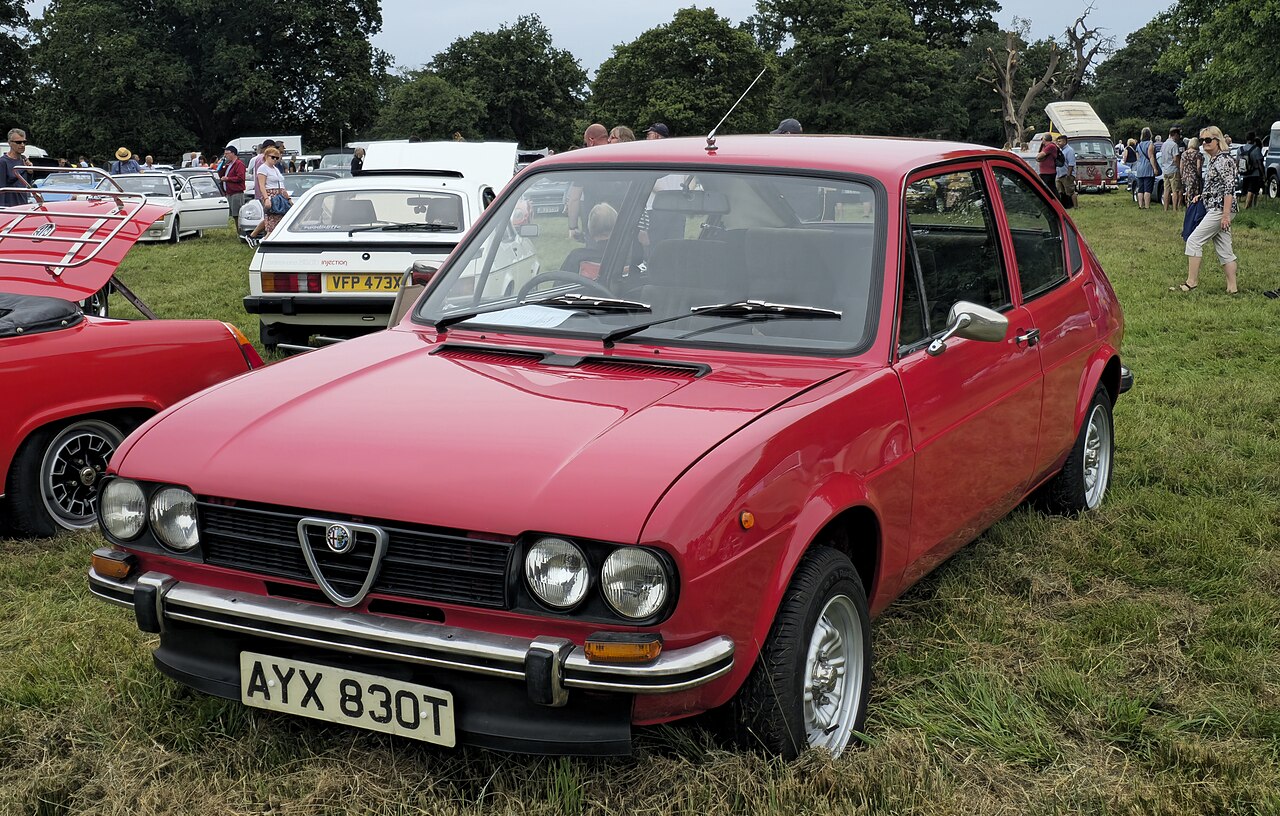
The Alfasud was developed by Austrian engineer Rudolf Hruska. Alfa Romeo had explored building a smaller front-wheel-drive car in the 1950s, but firm plans were laid down in 1967. The car was manufactured at a new factory at Pomigliano d'Arco in southern Italy, hence the name Alfa Sud (Alfa South). Construction began in April 1968 on the site of a World War II aircraft engine factory. The Alfasud debuted at the Turin Motor Show in 1971, featuring front-wheel drive, a water-cooled boxer engine with belt-driven overhead camshafts, MacPherson struts at the front, a rear beam axle with Watt's linkage, inboard front disc brakes, rear disc brakes, and rack-and-pinion steering. The range expanded in November 1973 with the two-door Alfasud ti (Turismo Internazionale), which had a 5-speed gearbox and a more powerful 1.2-litre engine. A three-door estate, the Giardinetta, arrived in May 1975. The Alfasud Sprint coupé was launched in September 1976, with lower, angular bodywork also by Giugiaro. In late 1977 the Alfasud Super replaced the range-topping four-door '5m'. The 1980 facelift brought plastic bumpers, a new instrument panel, and revised lights. A three-door hatchback was added in 1981, and four-door cars were replaced by five-door versions in 1982. The final version, the Quadrifoglio Verde (Green Cloverleaf), appeared in 1983 with a tuned 1.5-litre engine developing 105 PS.
Reader's Guide
The Alfasud's significance lies in its engineering and its flaws. Its boxer engine allowed a low hood line, contributing to an aerodynamic profile, a low center of gravity, and noteworthy road-holding and handling. The car was styled by Giorgetto Giugiaro of ItalDesign. However, the Alfasud became notorious for its propensity to rust, attributed to an assembly process that combined inferior recycled steel and the factory's location just 15 kilometers from the Bay of Naples. Early bodies in white were left in the salty air outside the assembly building, and synthetic foam used to fill box-sections was later found to hold moisture. Production of the five-door saloons ended in 1983, replaced by the Alfa Romeo 33, which evolved the Alfasud's floorpan and running gear. The Alfasud Sprint continued as the Alfa Romeo Sprint until 1989. The three-door hatchback was replaced by the Alfa Romeo Arna, a joint venture with Nissan. The Alfasud was also assembled in Malaysia and South Africa, where it was renamed the Alfa Romeo Export GTA.
Did You Know?
- The Alfasud was named after the factory's location in southern Italy: Alfa Sud (Alfa South).
- The car's boxer engine allowed a low hood line, contributing to an aerodynamic profile and low center of gravity.
- The Alfasud became notorious for rust, partly due to the factory's proximity to the Bay of Naples and the use of inferior recycled steel.
Engineering & Design Philosophy
The Alfasud's technical identity was shaped by Austrian engineer Rudolf Hruska, who chose a flat-twin (boxer) engine layout that fundamentally dictated the car's character. By placing the two cylinders horizontally on either side of the crankshaft, Hruska achieved an exceptionally low hood line and a low center of gravity, giving the small family car a level of road-holding and handling that stood out in its class. The front-wheel-drive architecture paired MacPherson strut front suspension with a rear beam axle using Watt's linkage, while inboard disc brakes at both ends and rack-and-pinion steering added to the driving feel. The 1,186 cc water-cooled unit used belt-driven overhead camshafts on each cylinder head. Giorgetto Giugiaro of ItalDesign gave the car its distinctive two-box silhouette, and the overall aerodynamic profile was a direct benefit of the flat engine architecture. Despite these engineering strengths, the Alfasud carried a well-known weakness: a conspicuous susceptibility to rust that accompanied the model throughout its production life.
Range Expansion & Model Proliferation
What began in 1971 as a straightforward four-door, five-passenger sedan quickly blossomed into an extensive family of variants. The first sporty addition arrived in November 1973 with the two-door Alfasud ti, which adopted a Weber twin-choke carburettor to push the 1.2-litre engine to 68 PS and a top speed of 160 km/h. Through the mid-1970s, Alfa Romeo layered in the SE, the Lusso, the 5m five-speed, and the Super, each refining equipment levels and engine outputs. The Giardinetta estate (1975) and the Sprint coupé (1976) broadened the body-style palette, with the Sprint receiving a new 1,286 cc boxer producing 76 PS and later evolving into the Sprint Veloce with a double twin-choke carburettor setup in 1979. By 1981 a three-door hatchback appeared, and in 1982 the four-door sedans were finally replaced by five-door hatchbacks, bringing the Alfasud in line with competitors who had long since moved to that format.
Industrial Origins & Production
The Alfasud's name is a direct reference to its birthplace. In January 1968, Alfa Romeo registered a new subsidiary, Industria Napoletana Costruzioni Autoveicoli Alfa Romeo-Alfasud S.p.A., with 90 percent of share capital held by Alfa Romeo and the remaining 10 percent by Finmeccanica, the financial arm of the government-controlled IRI. Construction on a state-sponsored plant at Pomigliano d'Arco in southern Italy began in April 1968, on the very site where Alfa Romeo had built aircraft engines during World War II. The car's designation simply meant "Alfa South," anchoring the model to its regional manufacturing base. Production ran from 1972 through 1983, yielding 893,719 units of the standard Alfasud, while the Sprint coupé added another 121,434 cars between 1976 and 1989. The entire model line was produced over a single generation, with only facelifts in 1977 and 1980 marking the passage of time.
Market Position & Late-Model Adaptation
Positioned as Alfa Romeo's entry-level offering, the Alfasud occupied a unique niche in the Italian market. It was a small family car for five passengers, yet it carried the brand's reputation for engaging driving dynamics. The 1980 facelift brought plastic bumpers, a redesigned instrument panel, updated headlamps and rear lights across the entire range, and the Ti version gained a twin-carburettor 1,490 cc engine developing 95 bhp. However, the model's body-style strategy lagged behind the market. While rivals had long offered hatchbacks in this segment, Alfa Romeo held onto the two-box sedan shape until 1981, when a three-door hatchback was introduced in SC or Ti trim. The four-door sedans were not replaced by five-door hatchbacks until 1982, and the two-door Ti and Giardinetta were withdrawn from most markets around the same period. This belated shift underscored how the Alfasud, despite its engineering merits, had to catch up with evolving consumer expectations in its final years of production.
Gallery
More in Touring Cars 1-24
Spotted an error? Know more?
Reader corrections go straight into our review queue. Suggest an edit · How this site is sourced