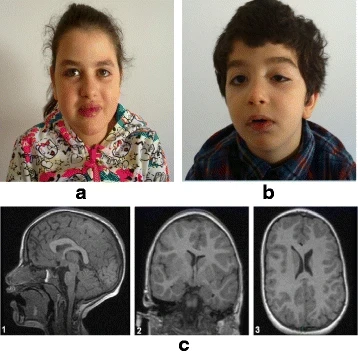
Malpuech facial clefting syndrome
Rare congenital syndrome with facial clefts, caudal appendage, and developmental delays.
Malpuech facial clefting syndrome is a rare congenital disorder marked by facial clefts, a caudal appendage, growth deficiency, intellectual disability, and renal or male genital abnormalities. It was first described by Georges Malpuech and colleagues in 1983 and is considered part of the proposed 3MC syndrome spectrum, which also includes Michels and Mingarelli-Carnevale syndromes. The condition follows an autosomal recessive inheritance pattern and is linked to mutations in the COLLEC11 and MASP1 genes.
Quick Facts
- First described by
- Georges Malpuech and associates
- Year first described
- 1983
- Inheritance
- Autosomal recessive
- Associated genes
- COLLEC11, MASP1
- Proposed spectrum
- 3MC syndrome (Michels, Malpuech, Mingarelli-Carnevale)
Facts from the source article.
Did You Know?
- Only about 12 individuals worldwide were reported to be affected by the disorder as of a 1999 report.
- The syndrome was first observed in four children from a highly consanguineous gypsy family.
- The caudal appendage has been described as a 'human tail' and was noted in three individuals from Brazil.
Signs and symptoms
Malpuech syndrome is present at birth and primarily involves facial clefting, which can range from a bifid uvula to midline or bilateral cleft lip and palate. Additional facial features include hypertelorism, narrow palpebral fissures, ptosis, frontal bossing with synophris, highly arched eyebrows, a wide nasal root and flattened nasal tip, malar hypoplasia, micrognathia, and prominent incisors. Auditory anomalies such as an enlarged ear ridge, hearing impairment from congenital otitis media, and sensorineural hearing loss may occur. A caudal appendage, resembling a nodule-like stub of an animal tail, stems from the coccyx and appears as a prominent protrusion on X-rays. Intellectual disability, learning disability, growth retardation, and developmental delay are common. Psychiatric manifestations include psychotic behavior, obsessive–compulsive disorder, loss of inhibition, hyperactivity, aggression, fear of physical contact, and compulsive actions like echolalia. Neuromuscular tics have also been reported.
Genetics
Mutations in the COLLEC11 and MASP1 genes cause Malpuech syndrome and other disorders within the 3MC spectrum. These genes encode proteins of the lectin complement pathway, part of the innate immune system. The COLLEC11 gene, located on chromosome 2p25.3, produces the CL-K1 protein, a collectin involved in craniofacial cartilage, heart, and kidney development during embryogenesis. The MASP1 gene, on chromosome 3q27-q28, encodes a mannan-binding lectin that binds pathogens such as HIV. Studies in zebrafish suggest CL-K1 mutations contribute to craniofacial abnormalities through errors in neural crest cell migration.
Management
Many congenital malformations in Malpuech syndrome, such as cleft lip and palate, omphalocele, urogenital and craniofacial abnormalities, skeletal deformities like caudal appendage or scoliosis, and umbilical hernias, can be surgically corrected. Anesthesia management in neonates is complicated by micrognathia, which can hinder tracheal intubation, and scoliosis, which complicates regional spinal blocking. In one case, a four-year-old girl with micrognathia required a laryngoscope of adjusted size for successful intubation before tonsillectomy and adenoidectomy. A long-term follow-up of a male patient described surgical repair of cleft lip and palate without issues, an atrial septal defect that needed no intervention, and later diagnoses of intellectual disability, hyperactivity, obsessive-compulsive disorder, and hearing impairment managed with hearing aids. Psychiatric symptoms, including fear of physical contact and a psychotic episode, were treated pharmacologically.
More in Syndromes with Craniofacial Abnormalities
Spotted an error? Know more?
Reader corrections go straight into our review queue. Suggest an edit · How this site is sourced