Cardiofaciocutaneous syndrome
A rare RASopathy with distinctive facial, skin, and heart features.
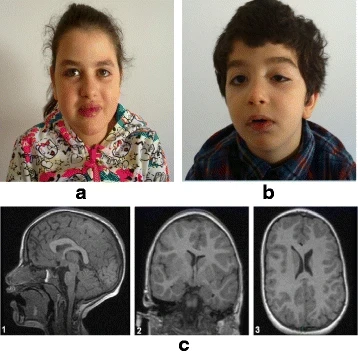
Cardiofaciocutaneous (CFC) syndrome is an extremely rare genetic disorder classified among the RASopathies. It is characterized by a distinctive facial appearance, sparse brittle curly scalp hair, various skin abnormalities, and heart malformations in over 75% of patients. Growth delays, feeding problems, foot abnormalities, intellectual disability, and failure to thrive are also associated.
Quick Facts
- Differential
- Costello syndrome
- Ectodermal dysplasia
- Noonan syndrome
- Noonan syndrome-like disorder with loose anagen hair
Facts from the source article.
Presentation
Individuals typically have craniofacial malformations including macrocephaly, a prominent forehead, and bitemporal constriction. The nose may be upturned and short with a low nasal bridge, and the ears are large and abnormally rotated toward the back of the head. Many also have downward slanting eyelid folds, widely spaced eyes, drooping of the upper eyelids, inward deviation of the eyes, and absent eyebrows and eyelashes.
Genetic
CFC shares phenotypic overlap with Costello and Noonan syndromes, likely due to the biochemical relationship of the mutated genes, all of which encode proteins in the MAP kinase pathway. CFC-causing mutations occur in KRAS, BRAF, MEK1, and MEK2, while Costello syndrome results from HRAS mutations and Noonan syndrome from PTPN11 and SOS1 mutations. The relative severity of CFC compared to Noonan syndrome may reflect the position of the affected genes in the pathway. Shp2, the PTPN11 product, regulates the MAP kinase pathway at or above SOS1, which in turn regulates RAS, RAF, MEK, ERK, and p90RSK. SOS1 is a target of negative feedback by ERK and p90RSK, so activating mutations downstream of SOS1 may be less regulated, contributing to phenotypic differences.
More in Syndromes with Craniofacial Abnormalities
Spotted an error? Know more?
Reader corrections go straight into our review queue. Suggest an edit · How this site is sourced