Costello syndrome
A rare genetic RASopathy with distinctive facial features and tumor risk.
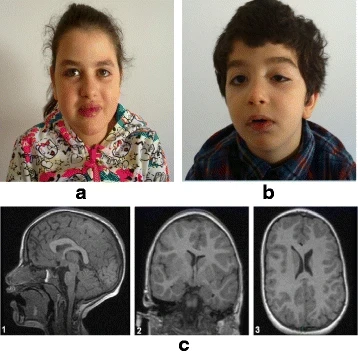
Costello syndrome is a rare genetic disorder that affects multiple body systems. It is characterized by distinctive facial features, delayed development, intellectual disabilities, unusually flexible joints, and loose folds of extra skin, particularly on the hands and feet. Heart abnormalities, including hypertrophic cardiomyopathy and tachycardia, are common, and affected individuals have an increased risk of certain tumors.
Quick Facts
- First reported
- 1977
- Reporter
- Jack Costello
- Gene
- HRAS on chromosome 11
- Inheritance
- Autosomal dominant
- Common cancerous tumor
- Rhabdomyosarcoma
- Common noncancerous tumor
- Papillomas
Facts from the source article.
Did You Know?
- Spanish researchers developed a Costello mouse with the G12V mutation in early 2008.
- Italian and Japanese researchers published a Costello zebrafish with the G12V mutation in late 2008.
- The G12V mouse does not appear to develop tumors as expected.
Genetics
Costello syndrome results from any of at least five different mutations in the HRAS gene on chromosome 11. This gene provides instructions for making the H-Ras protein, which helps control cell growth and division. Mutations causing Costello syndrome produce an H-Ras protein that is permanently active, directing cells to grow and divide constantly rather than responding to external signals. This unchecked cell division may predispose individuals to benign and malignant tumors. HRAS is a proto-oncogene; somatic mutations in healthy people can contribute to cancer, but children with Costello syndrome carry the mutation in every cell. The disorder is inherited in an autosomal dominant manner, though almost all cases result from new mutations with no family history. The condition is rare, with 200 to 300 cases reported worldwide as of 20 April 2007.
Diagnosis
Diagnosing Costello syndrome can be tricky for doctors because other conditions look similar. The process usually starts in childhood, looking at a child's height, head size, and birth weight. For possible prenatal cases, ultrasound can check for extra amniotic fluid, a thicker nuchal fold, bent wrists, and shorter arm and thigh bones. The main way to confirm it is through full genome or exome DNA sequencing.
Treatments
No cure exists for Costello syndrome; treatment addresses symptoms only. Regular ultrasound screening is recommended to detect tumors early. Potential future treatments being considered include farnesyltransferase inhibitors, Lovastatin, and a MEK inhibitor, but none have entered clinical trials for Costello syndrome.
Historical
The genetic cause of Costello syndrome—mutations in HRAS—was first reported in 2005. This discovery, along with mutations found soon after for cardiofaciocutaneous syndrome, surprised geneticists and changed how genetic syndromes are grouped. Previously, researchers looked for new mutations in genes linked to similar syndromes, such as the Noonan syndrome mutation PTPN11, but found nothing related to Costello syndrome. The first Costello syndrome allele was identified unexpectedly when Japanese researchers used DNA from children with Costello syndrome as a control while searching for another Noonan gene. Geneticists realized that Costello syndrome, Noonan syndrome, and cardiofaciocutaneous syndrome are linked by a common cellular function: the Ras-MAP-kinase signal transduction pathway.
More in Syndromes with Craniofacial Abnormalities
Spotted an error? Know more?
Reader corrections go straight into our review queue. Suggest an edit · How this site is sourced