Carpenter syndrome
Rare autosomal recessive disorder with craniofacial and limb anomalies.
Carpenter syndrome, also known as acrocephalopolysyndactyly type II, is an extremely rare autosomal recessive congenital disorder. It is characterized by craniofacial malformations, obesity, syndactyly, and polydactyly. The condition was first characterized in 1909 and is named for George Alfred Carpenter.
Quick Facts
- Symptoms
- Turricephaly
- obesity
- polydactyly
- syndactyly
- and broad cheeks
- Types
- Cole–Carpenter syndrome
- Treatment
- Plastic surgery
- Prognosis
- Typical lifespan, but mostly shortened due to heart problems
- Frequency
- Extremely rare
Facts from the source article.
Did You Know?
- Carpenter syndrome has been associated with mutations in the RAB23 gene on chromosome 6.
- Three key SNPs in the MEGF8 gene on chromosome 19 at 19q13.2 have been identified as primary causes.
- Carpenter syndrome belongs to a group known as acrocephalosyndactyly, originally comprising five types, though this number has been reduced as types were found closely related.
Presentation
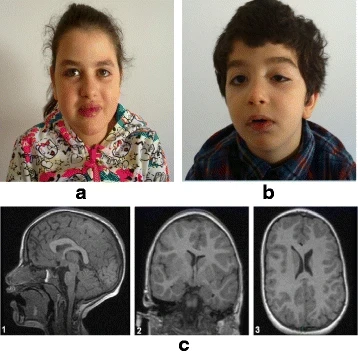
Carpenter syndrome presents with turricephaly, a tower-shaped skull, along with polydactyly and syndactyly. Affected individuals often have obesity, reduced height, and undescended testes in males. Intellectual disability is common, though some patients may have average intellectual capacity. The most common physical manifestation is early fusion of the fibrous cranial sutures, resulting in an abnormally pointed head evident from birth. Facial malformations include broad cheeks, a flat nasal bridge, a wide upturned nose with large nasal openings, and low, unevenly set, malformed ears. The maxilla and/or mandible are underdeveloped, with a highly arched and narrow palate that makes speech difficult. Teeth erupt late and are undersized and widely spaced. Extra digits are common, with extra toes seen more often than extra fingers; both toes and fingers are often webbed. Digits may be abnormally short, and fingers frequently lack an interphalangeal joint. Roughly half of affected infants have some type of heart defect, and seventy-five percent experience some degree of developmental delay due to mild intellectual disability.
Diagnosis
Diagnosing Carpenter syndrome relies on identifying two specific skull malformations: bicoronal and sagittal craniosynostosis. These cause the head to appear pointed, cone-shaped, or short and broad. The condition also involves extra or fused fingers and toes. To confirm the diagnosis, doctors may use X-rays or CT scans of the skull. However, other genetic disorders that also involve skull malformations have genetic tests available; a positive result on those tests excludes Carpenter syndrome. The key diagnostic feature is the skull malformation itself. Sagittal craniosynostosis creates a long, narrow skull shaped like a football, with an increased front-to-back measurement. The forehead is narrow and prominent, the back of the head is unusually large, and the fontanelle is very small or missing. Bicoronal craniosynostosis produces a wide, short skull with a smaller front-to-back measurement. The eye sockets and forehead are misshapen, with smaller sockets often leading to vision problems. Complications can include optic nerve damage, reduced visual clarity, bulging eyes from shallow orbits causing corneal damage, widely spaced eyes, and narrowed sinuses and tear ducts that may inflame the eye’s outer membrane.
Treatment
Operations to correct skull malformations should be performed within the first year of infancy, as modifying bone is easier while the skull is still growing. In surgery, the fused sutures are broken to allow brain growth; the cranial plates are removed, reshaped, and replaced to improve head appearance. Although sutures are broken during surgery, they quickly refuse, and holes may form in the plates, allowing cerebrospinal fluid to escape into cyst-like structures on the external head surface. If a serious heart defect is present, surgery to correct the malformation is required. Other elective surgeries, such as separating webbed fingers or toes, may be performed to improve appearance. Many children undergo speech and occupational therapy to address occupational challenges. Vision problems associated with bicoronal craniosynostosis require consultation with an ophthalmologist. If the palate is severely affected, dental consultation may be needed. A lifelong diet plan is often used to manage obesity. Surgery must be performed if the testes fail to descend, or infertility will result.
Occurrence
Approximately three hundred known cases of Carpenter syndrome exist in the United States. Only 1 in 1 million live births results in an affected infant. The disorder is autosomal recessive, meaning both parents must carry the faulty gene to pass it on; even then, there is only a twenty-five percent chance of having an affected child. Unaffected children remain carriers.
More in Syndromes with Craniofacial Abnormalities
Spotted an error? Know more?
Reader corrections go straight into our review queue. Suggest an edit · How this site is sourced