Donnai–Barrow syndrome
A genetic disorder with craniofacial, hearing, vision, and brain abnormalities.
Donnai–Barrow syndrome is a genetic disorder that affects multiple body systems. It is associated with mutations in the LRP2 gene and was first described by Dian Donnai and Margaret Barrow in 1993.
Quick Facts
- Gene
- LRP2
- Inheritance
- Autosomal recessive
- First described by
- Dian Donnai and Margaret Barrow
- Year described
- 1993
Facts from the source article.
Presentation
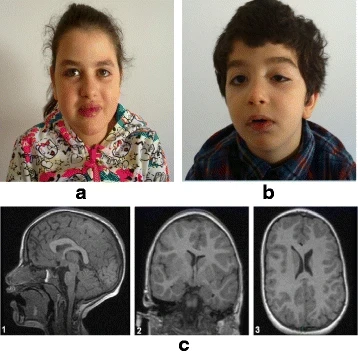
The disorder is marked by distinctive facial features such as prominent, wide-set eyes with downward-pointing outer corners, a short bulbous nose with a flat nasal bridge, backward-rotated ears, and a widow's peak hairline. Affected individuals have severe sensorineural hearing loss due to inner ear abnormalities. Vision problems are common and include high myopia, retinal detachment or deterioration, progressive vision loss, and sometimes iris coloboma. Nearly all individuals have an underdeveloped or absent corpus callosum, and other brain structural anomalies may occur. Mild to moderate intellectual disability and developmental delay are typical. A diaphragmatic hernia, allowing abdominal organs into the chest, may be present, as can an omphalocele. Less frequently, abnormalities of the intestine, heart, other organs, or scoliosis occur.
Causes
Mutations in the LRP2 gene cause Donnai–Barrow syndrome. This gene provides instructions for making megalin, a receptor protein that binds specific ligands to trigger signals affecting cell development and function. Megalin is embedded in the membrane of epithelial cells and helps move ligands from the cell surface into the cell via endocytosis. It is active in the development and function of the central nervous system, eyes, ears, lungs, intestine, reproductive system, and renal tubules. LRP2 mutations are believed to result in the absence of functional megalin protein. The lack of functional megalin in renal tubules causes its ligands to be excreted in urine rather than reabsorbed. The features of the disorder likely stem from the inability of megalin to help absorb these ligands, disruption of biochemical signaling pathways, or other effects of the nonfunctional protein, though it is unclear how these abnormalities produce the specific signs and symptoms. A condition previously classified as facio-oculo-acoustico-renal (FOAR) syndrome is now considered the same disorder. This condition is inherited in an autosomal recessive pattern, meaning both copies of the gene in each cell have mutations; parents typically each carry one mutated copy without showing symptoms.
More in Syndromes with Craniofacial Abnormalities
Spotted an error? Know more?
Reader corrections go straight into our review queue. Suggest an edit · How this site is sourced