Lateral meningocele syndrome
A rare skeletal disorder with facial anomalies and lateral meningoceles.
Lateral meningocele syndrome, also called Lehman syndrome, is a very rare skeletal disorder marked by facial anomalies, hypotonia, and neurologic dysfunction from meningoceles. These protrusions of spinal membranes through vertebral gaps most often occur in the lower spine, damaging surrounding nerves and causing issues such as bladder dysfunction, tingling, leg weakness, and back pain. Only 14 individuals have been reported, with 7 having a molecularly confirmed diagnosis.
Quick Facts
- Reported cases
- 14 individuals (7 molecularly confirmed)
- Inheritance
- Autosomal dominant (X-linked not ruled out)
- Associated gene
- NOTCH3
- Gene location
- Chromosome 19p13
- Mutation type
- Heterozygous truncating mutation on exon 33
Facts from the source article.
Did You Know?
- The syndrome was first described by Lehman et al. in 1977 in a 14-year-old girl whose mother shared some findings.
- There have been 16 reported cases in 14 different families, with 9 male and 7 female patients.
- De novo mutations of the NOTCH3 gene are more common than inherited cases.
Signs and symptoms
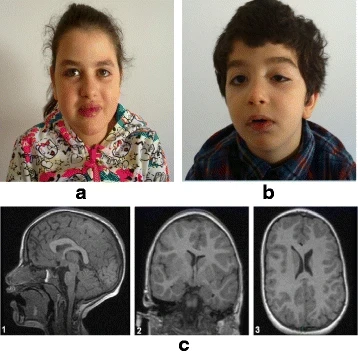
Facial features include dolichocephaly, hypertelorism, ptosis, microretrognathia, high arched palate, long flat philtrum, and low set ears. Non-facial features comprise hyperextensibility, hypotonia, lateral meningoceles, bladder dysfunction, and neuropathy. Motor skill development is delayed in infancy, but intelligence usually remains unaffected. Additional features are low muscle tone, decreased muscle bulk, loose joints, and hernias.
Diagnosis
Diagnosis may be suspected based on distinctive facial features, lateral meningoceles, hyperextensibility, and hypotonia. Radiographic imaging of the spine can clinically identify lateral meningoceles. Molecular genetic testing confirms the diagnosis through a pathogenic variant in NOTCH3. Historically, maldevelopment of the spinal cord, cerebellum, and cerebral cortex helped distinguish the disorder; all historical cases were diagnosed before age 20, with some as early as age 5.
Treatment
No specific treatment exists for Lehman syndrome; only symptom management is recommended. Pain management options are available for chronic pain. Rarely, surgical intervention is needed for neurologic manifestations. Some patients benefit from rehabilitation medicine, physiotherapy, and routine management of cleft palate, hearing loss, congenital cardiac defects, genitourinary abnormalities, and feeding difficulties.
Genetics
The syndrome appears inherited in an autosomal dominant pattern, though X-linked inheritance has not been completely ruled out; males and females are affected equally. The mutation truncates the protein, causing loss of the PEST sequence, which prolongs the protein's half-life and increases signaling effects. NOTCH3 produces the Notch 3 receptor protein; ligands bind to it to control gene activity in the nucleus. The truncation removes the Notch 3 intracellular domain (NICD), which normally disintegrates after completing its nuclear function, leading to prolonged presence in the nucleus and continued gene activity.
More in Syndromes with Craniofacial Abnormalities
Spotted an error? Know more?
Reader corrections go straight into our review queue. Suggest an edit · How this site is sourced