Kabuki syndrome
A rare genetic disorder with distinctive facial features.
Kabuki syndrome is a rare congenital disorder of genetic origin that affects multiple parts of the body, with the most common feature being a characteristic facial appearance. It affects roughly one in 32,000 births and was first identified and described in 1981 by two Japanese groups led by Norio Niikawa and Yoshikazu Kuroki. The syndrome is named for the resemblance of affected individuals' facial features to the stage makeup used in kabuki, a traditional Japanese theatrical form.
Quick Facts
- Onset
- Conception
- Types
- Type 1 (KMT2D), type 2 (KDM6A); other rare mutations unrecognized for now
- Causes
- Loss-of-function mutations in KMT2D or KDM6A genes
- Diagnosis
- Clinical findings; genetic testing
- Differential
- 3MC syndrome
- Frequency
- 1 in 32,000 births
Facts from the source article.
Did You Know?
- Most cases of Kabuki syndrome occur de novo, meaning the mutation did not come from the parents and arose early in embryological development.
- The KMT2D and KDM6A genes code for chromatin-modifying enzymes: a histone methyltransferase and a histone demethylase, respectively.
- Kabuki syndrome is not screened for in routine prenatal testing, but prenatal testing is possible if there is a specific concern, such as an affected parent or sibling.
Signs and symptoms
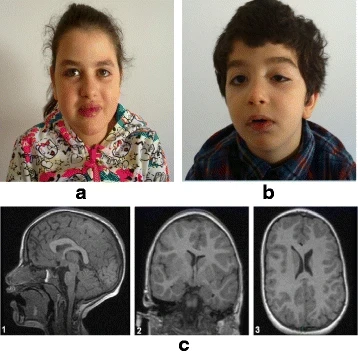
Symptoms vary widely among affected individuals. Most people have distinctive facial features including arched eyebrows, long eyelashes, elongated eyelids with lower lids that turn out, prominent ears, a flat nasal tip, and a downward slant to the mouth. Overlapping features between the two genetic types include prominent ears, abnormal dentition, congenital heart disease, feeding difficulties, cryptorchidism, joint hypermobility, developmental delay, hypotonia, and behavioral difficulties. Other common symptoms are skeletal abnormalities, short stature, heart defects, vision and hearing difficulties, microcephaly, and frequent infections. Mild to moderate intellectual disability and developmental delay are often present. Infants and young children commonly experience hypotonia, feeding issues, infections, and surgical needs for heart and palate defects. School-age children may have fewer hospitalizations but often require individualized education plans due to intellectual impairment and attention difficulties. Older children and adults may experience anxiety, endocrine abnormalities, and immune system abnormalities such as idiopathic thrombocytopenia and common variable immune deficiency.
Diagnosis
Diagnosis is made through genetic testing, including targeted, whole exome, or whole genome sequencing. When genetic testing is unavailable, clinical diagnosis by a geneticist is used. In December 2018, an international expert group defined consensus clinical diagnostic criteria. A definitive diagnosis requires a history of infantile hypotonia, developmental delay and/or intellectual disability, plus one or both of the following: a pathogenic or likely pathogenic variant in KMT2D or KDM6A, and typical dysmorphic features at some point in life. Typical dysmorphic features include long palpebral fissures with eversion of the lateral third of the lower eyelid, plus two or more of the following: arched and broad eyebrows with lateral third notching or sparseness; short columella with depressed nasal tip; large, prominent or cupped ears; and persistent fingertip pads. The original description by Niikawa et al. defined five cardinal manifestations: typical facial features, skeletal anomalies, dermatoglyphic abnormalities, mild to moderate intellectual disability, and postnatal growth deficiency. Diagnosis can be difficult due to the wide spectrum of disease and because some patients lack known mutations. In 2017, researchers identified a unique DNA methylation pattern in Kabuki syndrome that may aid diagnosis in mutation-negative cases.
Management
Management is supportive and aimed at improving quality of life. Newly diagnosed patients typically undergo tests to detect common abnormalities, including echocardiogram, kidney ultrasound, immunoglobulin levels, pneumococcal titers, and hearing screening. Further evaluation by specialists may involve cardiology, nephrology, allergy/immunology, audiology, orthopedics, pulmonary, ophthalmology, ENT, neurology, hematology, or gastroenterology as needed. There is no cure and no syndrome-specific treatment. Treatment plans are customized to address individual symptoms; for example, seizures are treated with standard anti-epilepsy therapies. Patients are routinely evaluated for problems that may develop, such as vision or hearing issues or cognitive difficulties. If congenital heart disease is present, prophylactic antibiotics may be recommended before procedures like dental work that could cause infection.
History
In 1969, Japanese geneticist Norio Niikawa treated a child with unique facial characteristics and various health problems, suspecting an undiagnosed genetic disorder. Over subsequent years, he saw several other patients with the same symptoms. In 1979, Niikawa presented his findings at the first Japan Dysmorphology Conference, where fellow physician Yoshikazu Kuroki recognized the symptoms and had also seen similar pediatric patients. Kuroki presented two of his own cases at the following year's conference. In 1981, both doctors separately submitted articles on the new diagnosis to the Journal of Pediatrics. Niikawa coined the term 'Kabuki syndrome' (also known as Kabuki make-up syndrome or Niikawa–Kuroki syndrome) because the patients' elongated lower eyelids resembled the theatrical makeup worn by actors in Kabuki theatre. The individual kanji for Kabuki mean sing, dance, and skill, sometimes translated as 'the art of singing and dancing'. The genes for Type 1 and Type 2 Kabuki syndrome were discovered in 2010 and 2012, respectively.
More in Syndromes with Craniofacial Abnormalities
Spotted an error? Know more?
Reader corrections go straight into our review queue. Suggest an edit · How this site is sourced