Joubert syndrome
A rare genetic disorder affecting the cerebellum and multiple organ systems.
Joubert syndrome is an uncommon genetic condition passed down in an autosomal recessive pattern. It impacts the cerebellum, the part of the brain governing balance and coordination. This disorder is among several genetic syndromes linked to syndromic retinitis pigmentosa. Pediatric neurologist Marie Joubert first described it in 1969 in Montreal, Quebec.
Quick Facts
- Frequency
- Between 1:80,000 and 1:100,000
Facts from the source article.
Did You Know?
- Mutations in more than 30 genes can cause Joubert syndrome, and known mutations account for 60-90% of cases.
- In a 1997 study of 19 children, 3 died before age 3 and 2 never learned to walk.
- Joubert syndrome can be inherited in an X-linked recessive pattern, in which males are more commonly affected.
Signs and symptoms
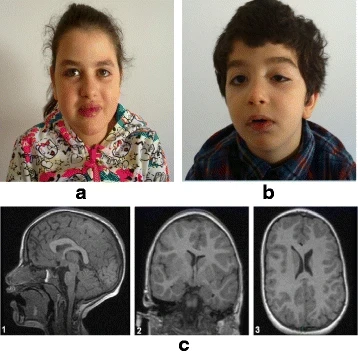
Joubert syndrome typically becomes noticeable in early infancy, with children hitting gross motor milestones late. Core symptoms stem from an underdeveloped cerebellum and include poor muscle coordination, irregular breathing, sleep apnea, unusual eye and tongue movements, and low muscle tone. Some individuals also have extra fingers or toes, a cleft lip or palate, tongue issues, or seizures. Some degree of cognitive and developmental delay is universal, and severe cases may involve a thin corpus callosum. Distinctive facial traits include a broad forehead, arched brows, droopy eyelids, wide-set eyes, low ears, and a triangular mouth. The condition can also affect other systems, causing retinal, kidney, liver, skeletal, or hormonal problems.
Diagnosis
Joubert syndrome is diagnosed through a combination of physical symptoms, genetic testing, and a specific brain malformation seen on an MRI—the molar tooth sign, which involves an underdeveloped or missing cerebellar vermis and a misshapen brain stem. If a family member’s gene mutations are known, prenatal or carrier testing is possible. Because many different genes are involved, the condition is likely underdiagnosed. It occurs more often in Ashkenazi Jewish, French-Canadian, and Hutterite populations.
Treatment
Treatment for Joubert syndrome focuses on managing symptoms and providing support. Infants with irregular breathing need monitoring. Regular checkups are necessary because the kidneys, liver, and eyes can progressively worsen. Delays in motor skills and speech are addressed with physical, occupational, and speech therapy. Most children eventually reach typical developmental milestones, but often later than usual.
Research
Joubert syndrome belongs to a group of conditions known as ciliopathies, which are linked by a common root cause. Researchers believe these disorders stem from faulty molecular machinery inside primary cilia, tiny structures found on many cells throughout the body. When cilia don't work properly, they disrupt crucial signaling pathways needed for development, which may explain why these syndromes often involve multiple symptoms. Other ciliopathies include Bardet-Biedl syndrome, polycystic kidney disease, and some retinal degenerations. Notably, Joubert syndrome type 2 occurs at a higher rate among people of Jewish descent.
More in Syndromes with Craniofacial Abnormalities
Spotted an error? Know more?
Reader corrections go straight into our review queue. Suggest an edit · How this site is sourced