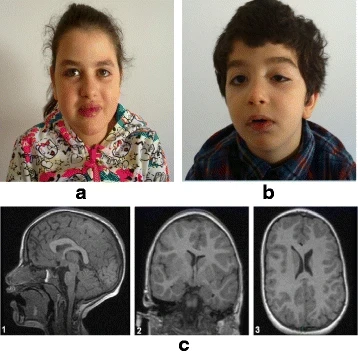
Jacobsen syndrome
A rare chromosomal disorder with intellectual disability and distinctive facial features.
Jacobsen syndrome is a rare congenital disorder caused by a deletion of genetic material from the long arm of chromosome 11, specifically at band 11q24.1. The condition is also known as 11q terminal deletion disorder, and its severity correlates with the size of the deletion, which can range from 5 million to 16 million base pairs. It is notable for a high rate of heart defects and a bleeding disorder called Paris-Trousseau syndrome, which occurs in 88.5% of affected individuals.
Quick Facts
- Prevalence
- approximately 1 out of every 100,000 births
- Sex ratio
- females are twice as likely to be affected as males
- First identified by
- Danish geneticist Petrea Jacobsen
- Year identified
- 1973
- Percentage with paris-trousseau syndrome
- 88.5%
Facts from the source article.
Did You Know?
- The syndrome was first identified by Danish geneticist Petrea Jacobsen in 1973 in a family where multiple members had the disorder due to unbalanced translocation between chromosomes 11 and 21.
- For reasons unknown, females are twice as likely to have Jacobsen syndrome as males.
- No preference for any race or ethnicity has been reported.
Signs and symptoms
Almost all children with Jacobsen syndrome have intellectual disabilities ranging from mild to moderate, depending on the number of gene deletions. Delayed development is common, including speech delays, motor disabilities, and poor coordination, making sitting, standing, and walking difficult. Most eventually speak, though language may be highly restricted in severe cases. Distinctive facial features include microcephaly, trigonocephaly, small low-set ears, hypertelorism, ptosis, broad nasal bridge, abnormally thin upper lips, downturned mouth corners, and epicanthal folds. Behavioral problems such as distractibility, hyperactivity, and impaired social skills may lead to diagnoses of ASD and ADHD. Heart defects are very common. Paris-Trousseau syndrome, a bleeding disorder, affects 88.5% of individuals. Other possible symptoms include eye problems, ear and sinus infections, hearing issues, bone deformities, growth hormone deficiency, gastrointestinal problems, and kidney malfunctions.
Cause
Jacobsen syndrome results from deletion of genetic material from the terminal end of the long arm of chromosome 11. The deletion size varies among patients but always occurs at the q arm terminus. Three mechanisms can produce the deletion: de novo deletion, a random event during sperm or egg formation or embryonic cell division; imbalanced translocation, where a parent with a balanced translocation passes on a rearrangement causing deletion on chromosome 11 and extra material from another chromosome; and ring chromosome 11, where material from both arms is lost and the remaining ends join to form a ring, producing symptoms of both 11q and 11p deletion.
Genetics
If the deletion is de novo, both parents have normal chromosomes and the chance of another child having the deletion is low. In rare cases, one parent carries the deletion in mosaic form, increasing the risk of recurrence. When the child's abnormality stems from a parent's balanced translocation, the likelihood of another child being affected is high.
Treatment
No cure exists for Jacobsen syndrome, but symptoms can be managed. For congenital heart problems, present in 56% of children, a pediatric cardiologist can perform baseline evaluation with electrocardiogram or echocardiogram and treat any issues found. Monthly cognitive behavioral therapy may help ease bleeding disorders; platelet transfusion and ddAVP can be used. Medications that interfere with platelet count should be avoided, and oral contraceptive therapy may be considered for women with heavy menstrual bleeding. Neuropsychologist or behavior specialist evaluation, including brain imaging such as MRI or ERP, can guide intervention programs. Music therapy benefits language development. Vision and hearing tests aid cognitive issues. For behavioral problems like ADHD, medication or therapy—or a combination—may be needed. An ophthalmologist should treat eye defects. Play and interactive games encourage speech. Habilitation should begin early, involving a team of professionals who support the child and family.
More in Syndromes with Craniofacial Abnormalities
Spotted an error? Know more?
Reader corrections go straight into our review queue. Suggest an edit · How this site is sourced