Hurler syndrome
A severe lysosomal storage disorder causing progressive multi-organ damage.
Hurler syndrome, also called mucopolysaccharidosis Type IH (MPS-IH), is a genetic lysosomal storage disorder in which the body cannot break down certain sugar molecules, leading to their accumulation and damage across multiple organ systems. It is the most severe form of mucopolysaccharidosis type I and results from a deficiency of the enzyme alpha-L iduronidase.
Quick Facts
- Causes
- Deficiency of the alpha-L iduronidase enzyme
- Differential
- Hurler-Scheie syndrome
- Scheie syndrome
- Hunter syndrome
- other mucopolysaccharidoses
- Prognosis
- Death usually occurs before 12 years
- Frequency
- 1 in 100,000
Facts from the source article.
Did You Know?
- The IDUA gene, which encodes alpha-L-iduronidase, is located at 4p16.3 on chromosome 4.
- As of 2018, more than 201 different mutations in the IDUA gene have been shown to cause MPS I.
- Gertrud Hurler described the syndrome in 1919, possibly unaware of Charles A. Hunter's 1917 description of a similar disease due to World War I communication disruptions.
Signs and symptoms
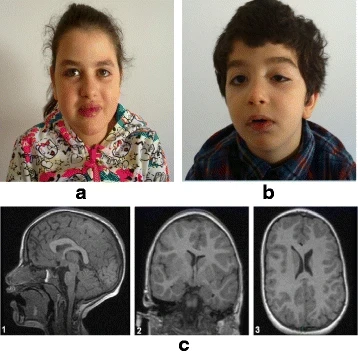
Children with Hurler syndrome often appear normal at birth, with symptoms emerging during the first years of life. Coarsening of facial features may begin between three and six months of age, including a large head with prominent frontal bones, an elongated skull, a flattened nasal bridge with continuous nasal discharge, widely spaced eye sockets, protruding eyes, large lips, and a constantly open jaw. Skeletal abnormalities become apparent by around six months but may not be clinically obvious until ten to fourteen months; these include debilitating spine and hip deformities, carpal tunnel syndrome, and joint stiffness. Growth typically stops by age two, and most patients do not exceed four feet in height. Inguinal and umbilical hernias may be present at birth or develop within the first months. Corneal clouding and retinal degeneration can occur within the first year, leading to blindness. Enlarged liver and spleen are common, though organ function remains normal. Diarrhea, aortic valve disease, and frequent respiratory infections are also seen. Airway obstruction often occurs due to abnormal cervical vertebrae. Developmental delay becomes apparent by one to two years of age, with a maximum functional age of two to four years, followed by progressive deterioration. Most children develop limited language capabilities, and death usually occurs by age ten.
Diagnosis
Diagnosis is often made through clinical examination and urine tests that detect excess mucopolysaccharides. Definitive diagnosis is provided by enzyme assays measuring alpha-L iduronidase deficiency in cells or body fluids. Prenatal diagnosis via amniocentesis or chorionic villus sampling can determine whether a fetus carries a defective gene or is affected. Genetic counseling is available for families with a history of mucopolysaccharidoses. MPS I is divided into three subtypes based on severity: MPS-IH (Hurler syndrome) is the most severe, while MPS-IS (Scheie syndrome) and MPS-IHS (Hurler–Scheie syndrome) are milder. Because of substantial overlap among these subtypes, some sources consider the terms outdated and instead classify MPS I into severe and attenuated forms.
Treatment
There is no cure for Hurler syndrome. Enzyme replacement therapy with iduronidase (Aldurazyme) may improve pulmonary function and mobility and reduce carbohydrate storage in organs. Surgical correction of hand and foot deformities and corneal surgery may be necessary. Bone marrow transplantation (BMT) from HLA-identical siblings or relatives with similar HLA genes can significantly improve survival, cognitive function, and physical symptoms, though graft versus host disease is a risk, especially with non-sibling donors. A 1998 study reported five-year survival of 75% with HLA-identical sibling donors and 53% with non-sibling donors. Umbilical cord blood transplantation (UCBT) from unrelated donors is an option when no suitable bone marrow donor is available, increasing survival and improving cognition, but graft versus host disease remains a complication.
Research
Gene therapy for MPS I is under active investigation. In animal models, delivery of the iduronidase gene via retrovirus, adenovirus, adeno-associated virus, and plasmid vectors has corrected disease in the liver and spleen, and at high doses can address brain effects. Treated mice and dogs have shown improved survival and neurological and physical symptoms, though some animals developed unexplained liver tumors. Sangamo Therapeutics is conducting a clinical trial using zinc finger nuclease (ZFN) gene editing for MPS I.
More in Syndromes with Craniofacial Abnormalities
Spotted an error? Know more?
Reader corrections go straight into our review queue. Suggest an edit · How this site is sourced