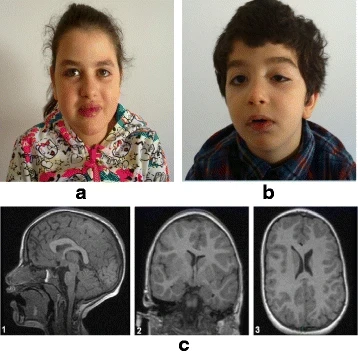
Goldenhar syndrome
A rare congenital defect of first and second branchial arch development.
Goldenhar syndrome is a rare birth condition where the ear, nose, soft palate, lip, and jaw on one side of the body do not fully form. It stems from abnormal development of the first and second branchial arches. Occurring in roughly 1 in 3,500 to 1 in 5,600 births, it is more common in males, with a 3:2 ratio.
Quick Facts
- Incidence
- 1 in 3,500 to 1 in 5,600 live births
- Male-to-female ratio
- 3:2
Facts from the source article.
Did You Know?
- An increase in Goldenhar syndrome in the children of Gulf War veterans has been suggested, but the difference was shown to be statistically insignificant.
- The cause is thought to be multifactorial, although there may be a genetic component accounting for certain familial patterns.
- It has been suggested that there is a branchial arch development issue late in the first trimester.
Signs and symptoms
Chief markers include incomplete development of the ear, nose, soft palate, lip, and mandible on usually one side. Some patients have growing issues with internal organs, especially heart, kidneys, and lungs, where the organ may be absent or underdeveloped on one side. Defects occur bilaterally in about 10% of confirmed cases. Other problems can include severe scoliosis, limbal dermoids, hearing loss, and deafness or blindness. Granulosa cell tumors may be associated, although rare.
Diagnosis
Goldenhar syndrome lacks universally agreed-upon minimal diagnostic criteria. It primarily involves underdevelopment of first and second branchial arch structures, causing hemifacial microsomia. Presentation varies widely, potentially including eye issues like epibulbar dermoids or microphthalmia; ear and nose problems such as microtia or preauricular tags; skeletal issues like mandibular deformities or scoliosis; and heart or kidney defects.
Treatment
Treatment is usually confined to surgical intervention as necessary, such as jaw distraction or bone grafts, ocular dermoid debulking, repairing cleft palate or lip, heart malformations, or spinal surgery. Some patients require hearing aids or glasses. Stem cell grafting (womb tissue grafting) has been successfully used to reprogram eye dermoids, halting their regrowth.
More in Syndromes with Craniofacial Abnormalities
Spotted an error? Know more?
Reader corrections go straight into our review queue. Suggest an edit · How this site is sourced