Freeman–Sheldon syndrome
A severe distal arthrogryposis with craniofacial and limb contractures.
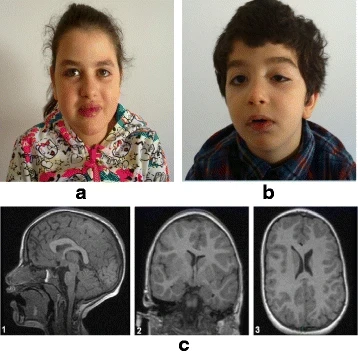
Freeman–Sheldon syndrome is an uncommon condition involving multiple congenital contractures, and it represents the most severe form of distal arthrogryposis. First identified in 1938, fewer than 100 cases had been documented in medical literature by 2007.
Quick Facts
- First described
- 1938
- Described by
- Ernest Arthur Freeman and Joseph Harold Sheldon
- Inheritance
- autosomal dominant or autosomal recessive
- Gene associated
- MYH3
Facts from the source article.
Did You Know?
- Symptoms include drooping of the upper eyelids, strabismus, low-set ears, a long philtrum, gradual hearing loss, scoliosis, and walking difficulties.
- Gastroesophageal reflux has been noted during infancy but usually improves with age.
- The tongue may be small, and limited movement of the soft palate may cause nasal speech.
Cause
Freeman–Sheldon syndrome is caused by genetic changes. The distal arthrogryposis multiplex congenita gene was mapped to 11p15.5-pter. Mutations in embryonic myosin heavy chain 3 (MYH3) at 17p13.1-pter cause the classic phenotype. Missense mutations R672H and R672C were found in 20 probands. Other private de novo or familial mutations include E498G, Y583S, V825D, and T178I. Inheritance may be autosomal dominant or autosomal recessive.
Diagnosis
Freeman–Sheldon syndrome is classified as distal arthrogryposis type 2A (DA2A), the most severe of the distal arthrogryposes. Strict diagnostic criteria require two or more features: distal arthrogryposis, microstomia, whistling-face, nasolabial creases, and an H-shaped chin dimple. It has been described as a type of congenital myopathy.
Management
Early consultation with craniofacial and orthopaedic surgeons is indicated for correction of craniofacial, clubfoot, or hand abnormalities. Operative measures should be pursued cautiously due to abnormal muscle physiology, and many surgical procedures have suboptimal outcomes. Interventions should be planned as early in life as feasible because affected children often have fragile health. Difficult endotracheal intubations and vein access complicate surgery, and malignant hyperthermia may affect individuals with FSS. General health maintenance should emphasize limiting exposure to infectious diseases, as pneumonitis and bronchitis often follow mild respiratory infections. With proper care, satisfactory quality and length of life can be expected.
Research directions
One research priority is to determine the role and nature of malignant hyperthermia in FSS, which would benefit surgical candidates and care teams. Further research is wanted to evaluate the relationship of idiopathic hyperpyrexia, malignant hyperthermia, and stress. Epidemiology of psychopathology in FSS and refinement of therapy protocols also warrant investigation.
More in Syndromes with Craniofacial Abnormalities
Spotted an error? Know more?
Reader corrections go straight into our review queue. Suggest an edit · How this site is sourced