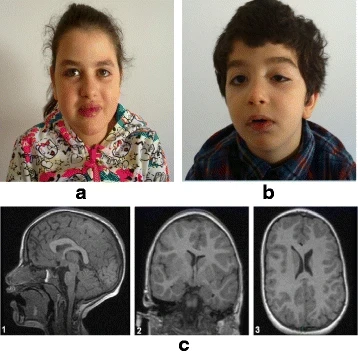
Fragile X syndrome
Genetic disorder causing intellectual disability and characteristic facial features.
Fragile X syndrome (FXS) is a genetic neurodevelopmental disorder and the most common inherited cause of intellectual disability. It is also the most frequent single-gene cause of autism. The condition follows an X-linked dominant inheritance pattern and typically results from an expansion of the CGG triplet repeat in the FMR1 gene.
Quick Facts
- Field
- Medical genetics
- pediatrics
- psychiatry
- Symptoms
- Intellectual disability
- long and narrow face
- large ears
- flexible fingers
- autistic behavior
- large testicles
- Complications
- Seizures
- Onset
- Noticeable by age 2
- Duration
- Lifelong
- Causes
- Genetic (X-linked dominant)
- Diagnosis
- Genetic testing
- Treatment
- Supportive care, early interventions
Facts from the source article.
Did You Know?
- FMRP is found throughout the body but in highest concentrations within the brain and testes, and it selectively binds to about 4% of mRNA in mammalian brains.
- Brain tissue from humans with FXS and mouse models shows abnormal dendritic spines, which are required to increase contact with other neurons.
- Evidence from mouse models shows that mGluR5 antagonists can rescue dendritic spine abnormalities and seizures, as well as cognitive and behavioral problems.
Signs and symptoms
Aside from intellectual disability, prominent characteristics may include an elongated face, large or protruding ears, flat feet, larger testes (macroorchidism), and low muscle tone. Recurrent otitis media and sinusitis are common during early childhood. Speech may be cluttered or nervous. Behavioral features can include stereotypic movements such as hand-flapping, atypical social development, shyness, limited eye contact, memory problems, and difficulty with face encoding. Some individuals also meet diagnostic criteria for autism. Males with a full mutation display virtually complete penetrance and almost always show symptoms, while females with a full mutation generally have about 50% penetrance due to having a second normal X chromosome. Females may have symptoms ranging from mild to severe but are usually less affected than males. Additional physical signs include high-arched palate, hyperextensible finger joints and thumbs, soft velvety skin especially on the palms, redundant skin on the back of the hands, and postpubescent macroorchidism. Individuals may present anywhere from learning disabilities with normal IQ to severe intellectual disability; average IQ in males with complete FMR1 silencing is 40. Main difficulties involve working and short-term memory, executive function, visual memory, visual-spatial relationships, and mathematics, while verbal abilities are relatively spared. Standardized IQ may decrease over time due to slowed intellectual development.
Causes
Fragile X syndrome is a genetic disorder resulting from a mutation of the FMR1 gene on the X chromosome, most commonly an increase in the number of CGG trinucleotide repeats in the 5' untranslated region. Mutation at that site occurs in about 1 in every 2000 males and 1 in every 259 females; the disorder itself affects about 1 in 3600 males and 1 in 4000–6000 females. Over 98% of cases are due to this repeat expansion, but point mutations in FMR1 can also cause the syndrome. In unaffected individuals, the gene contains 5–44 CGG repeats, most often 29 or 30. Between 45 and 54 repeats is considered a grey zone, and a premutation allele is generally 55–200 repeats. Individuals with a full mutation have over 200 repeats, leading to methylation of the repeat expansion and the FMR1 promoter, silencing the gene and eliminating its product. This methylation at chromosome band Xq27.3 causes a constriction that appears fragile under the microscope, giving the syndrome its name. One study found that silencing is mediated by the FMR1 mRNA, which hybridizes to the complementary CGG-repeat portion of the gene to form an RNA·DNA duplex. Fragile X syndrome has traditionally been considered X-linked recessive with variable expressivity and possibly reduced penetrance.
Diagnosis
Clinical diagnosis relies on identifying a variant of FMR1 associated with decreased function alongside moderate to severe intellectual impairment, particularly in males or moderate in females. Diagnostic tests include PCR to analyze the number of CGG repeats, Southern blot analysis, and examination of AGG trinucleotides in the FMR1 gene region. Cytogenetic analysis for fragile X syndrome was first available in the late 1970s, using culture in folate-deficient medium to assess for fragile sites on the long arm of the X chromosome, but this technique proved unreliable because the fragile site was often seen in less than 40% of an individual's cells. Since the 1990s, more sensitive molecular techniques have been used. The fragile X abnormality is now directly determined by PCR for CGG repeat number and Southern blot for methylation status. This method allows accurate assessment of risk for premutation carriers and their children. Because it only tests for CGG repeat expansion, individuals with FXS due to missense mutations or deletions require sequencing of FMR1 if clinical suspicion remains. Prenatal testing via chorionic villus sampling or amniocentesis is reliable. Early diagnosis is important for early intervention and genetic counseling.
Management
There is no cure for the underlying defects of FXS. Management may include speech therapy, behavioral therapy, occupational therapy, special education, or individualized educational plans, and treatment of physical abnormalities when necessary. Persons with a family history are advised to seek genetic counseling. Individuals with full mutation FXS often benefit from consistent routines and predictability to reduce anxiety. They may experience limited social skills and social anxiety, making everyday activities such as traveling, shopping, and peer interaction difficult. Independent living skills and employment capabilities are typically limited, though some adults achieve independence through support and accommodations. Infants may show hypotonia, feeding problems, and vomiting, with language delays becoming noticeable by one year. Tantrums and irritability increase around age three. By school age, significant learning challenges emerge in verbal comprehension, working memory, and understanding complex language. During adolescence, social challenges, aggression, anxiety, and irritability increase. In adulthood, individuals require support in daily living, and mental health may worsen.
More in Syndromes with Craniofacial Abnormalities
Spotted an error? Know more?
Reader corrections go straight into our review queue. Suggest an edit · How this site is sourced