Donohue syndrome
Severe genetic disorder with insulin resistance and distinctive facial features.
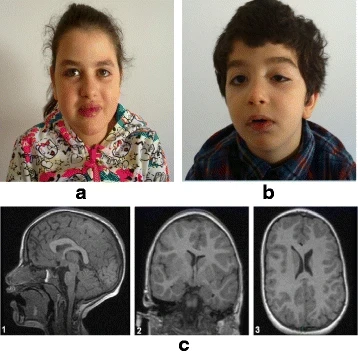
Donohue syndrome, also called leprechaunism, is an extremely rare and severe genetic disorder caused by mutations in the INSR gene, which encodes insulin receptors. The resulting lack or impairment of these receptors leads to profound insulin resistance and disrupts blood glucose regulation, affecting the development of tissues and organs throughout the body. Its name derives from the mythical leprechaun due to characteristic elvish facial features such as bulging eyes and upturned nostrils.
Quick Facts
- Prognosis
- poor
Facts from the source article.
Did You Know?
- The name leprechaunism has been largely abandoned because some parents found it insulting.
- A phase 2 clinical study sponsored by the National Institute of Diabetes and Digestive Kidney Diseases in 2001 examined leptin as a treatment for severe insulin resistance in two children with insulin receptor defects.
- Donohue syndrome was first identified in 1948 by Canadian pathologist William L. Donohue.
Signs and symptoms
Facial features include protuberant and low-set ears, flaring nostrils, an unusually wide mouth, and widely spaced eyes. Affected individuals exhibit stunted growth beginning in gestation, lack of subcutaneous adipose tissue, muscle atrophy, hirsutism, and nail dysplasia. Acanthosis nigricans, characterized by dark, thickened, velvet-like patches of skin, is present. Sex-specific findings include enlarged clitoris and breasts and ovarian cysts in females, and enlarged penis in males. Endocrine abnormalities such as insulin resistance, hypoglycemia, hyperglycemia, and hyperinsulemia occur. A milder form with normal growth and fat distribution exists.
Cause
Donohue syndrome is an autosomal recessive genetic disorder caused by mutations in the INSR gene on the short arm of chromosome 19 (19p13.2). Mutations that severely impair insulin receptor function produce the disease; known mutations include a nonsense mutation causing early termination, an addition or deletion causing a frameshift, a single missense mutation, and, in the milder form, a codon change altering isoleucine to methionine. Because the condition is extremely rare, most cases result from consanguineous matings. A patient may inherit two different mutant alleles (compound heterozygosity). Heterozygous carriers are unaffected; two carriers have a theoretical 25% chance of an affected child, but spontaneous abortion often lowers the live-born proportion. Genetic testing for carriers is not routine unless there is reason to suspect carrier status. The disorder is not limited to any specific ethnic group.
Pathophysiology
The disease results from a lack of fully functional insulin receptors. In one case, the mutant receptor was only about 15% as effective as the normal receptor. Pancreatic beta cells are often enlarged or numerous. Insulin normally binds to its receptor to facilitate glucose entry into cells by bringing GLUT4 to the cell membrane and initiating signaling cascades that promote cell growth, differentiation, protein synthesis, and inhibition of gluconeogenesis. A malfunctioning receptor cannot properly initiate these processes. Many problems in Donohue syndrome may stem from the insulin receptor also binding insulin-like growth factor, which regulates embryonic growth.
Diagnosis
Diagnosis can be made genetically or symptomatically. Genetic testing options include diagnostic, carrier, predictive, pre-symptomatic, and forensic testing. Prenatal diagnosis via amniocentesis is possible. Laboratory measurement of blood insulin levels and defective insulin receptors can also aid diagnosis.
More in Syndromes with Craniofacial Abnormalities
Spotted an error? Know more?
Reader corrections go straight into our review queue. Suggest an edit · How this site is sourced