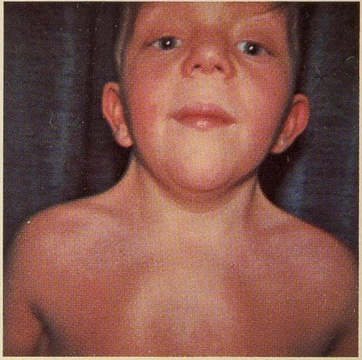
Werner syndrome
Rare autosomal recessive disorder causing premature aging.

Werner syndrome, sometimes called Werner's syndrome or adult progeria, is a rare genetic disorder passed down in an autosomal recessive pattern. It causes the body to show signs of premature aging. The condition gets its name from German scientist Otto Werner, who first described it in four siblings with early aging in his 1904 dissertation.
Fewer than 1 in 100,000 newborns worldwide have Werner syndrome, though rates are higher in Japan (1 in 20,000 to 40,000) and Sardinia (1 in 50,000). By 2006, about 1,300 cases had been documented. People with the syndrome usually develop normally until puberty, with diagnosis typically happening around age 24—often when the expected teenage growth spurt fails to appear. The youngest known case was a six-year-old. Average life expectancy is 47 to 48 years (median) or 54 years (mean), with heart disease and cancer as the leading causes of death.
The condition shows up in many ways: stunted growth and short stature, early graying hair and hair loss, wrinkled skin, and a prematurely aged face with a beaked nose. Skin can become thin and wasted, with scleroderma-like patches, and fat tissue may shrink or deposit abnormally, making arms and legs look thin. Severe ulcers often form around the Achilles tendon and ankles. Other signs include a weak, hoarse, or high-pitched voice; reduced fertility due to gonad shrinkage; cataracts in both eyes; early hardening and loss of artery elasticity; calcium deposits in blood vessels; blockages from atherosclerosis; type 2 diabetes; bone loss; spider veins; and various cancers. Rare cancers are more common in these patients.
At the gene expression level, cells from Werner syndrome patients show changes that closely mirror those seen in normal aging. The condition is caused by a mutation in the WRN gene, which is autosomal recessive—meaning a person must inherit a faulty copy from each parent. Symptoms usually start in the late teens or early twenties and get worse over time. Diagnosis relies on six key signs: early graying or hair loss, cataracts in both eyes, tight or wasted skin, soft tissue calcification, sharp facial features, and an unusual high-pitched voice. Short stature is common because the adolescent growth spurt doesn't happen. Fertility is often reduced. The earliest and most common symptom is graying and hair loss, starting on the scalp and eyebrows.
- Incidence global
- less than 1 in 100,000 live births
- Incidence japan
- 1 in 20,000–40,000
- Incidence sardinia
- 1 in 50,000
- Mean age of diagnosis
- 24 years
- Median age of death
- 47–48 years
- Mean age of death
- 54 years
- Cases reported as of 2006
- 1,300
Lore & Background
Otto Werner, a German scientist, first described the syndrome in four siblings with premature aging in his 1904 dissertation. The disorder is now known to be caused by mutations in the WRN gene on chromosome 8, which encodes the WRNp protein, a RecQ helicase important for DNA repair and genome stability. Approximately 90% of individuals with Werner syndrome have mutations in this gene.
Reader's Guide
Werner syndrome is significant as a model for studying accelerated aging, as its gene expression changes strikingly resemble those of normal aging. The disorder highlights the role of DNA repair mechanisms, particularly the WRN protein's involvement in non-homologous end joining, homologous recombinational repair, and base excision repair. Patients typically develop normally until puberty, then exhibit rapid aging symptoms including bilateral cataracts, skin atrophy, premature graying, and increased risk of atherosclerosis, type 2 diabetes, osteoporosis, and cancers such as soft-tissue sarcomas and melanoma. The condition is autosomal recessive, requiring inheritance of a mutated gene from each parent. Most patients die in their late 40s to early 50s from cardiovascular disease or cancer. The higher incidence in Japan and Sardinia suggests founder effects, and the disorder underscores the importance of genome stability in preventing age-related diseases.
Did You Know?
- The youngest person diagnosed with Werner syndrome was six years old.
- Werner syndrome patients exhibit a change in voice that is weak, hoarse, and high-pitched.
- Skin ulcers occur in about 75% of Werner syndrome patients and are not associated with normal aging.
- The WRN gene encodes a protein with a central domain resembling RecQ helicases, which are important for DNA repair.
More in Syndromes affecting stature 1-22
Spotted an error? Know more?
Reader corrections go straight into our review queue. Suggest an edit · How this site is sourced