Floating–Harbor syndrome
Rare genetic disorder with short stature, facial features, and speech delay.

Floating–Harbor syndrome, also called Pelletier–Leisti syndrome, is a rare condition, with fewer than 50 documented cases. Diagnosis typically occurs in early childhood and rests on three core features: short stature that is proportionate to the body, a delay in bone age, a distinct facial appearance, and delayed speech development. While the exact cause remains unknown, a genetic mutation is believed to be responsible. A definitive diagnosis is made when a heterozygous mutation in the SRCAP gene is found in a person who also shows the clinical signs of the syndrome.
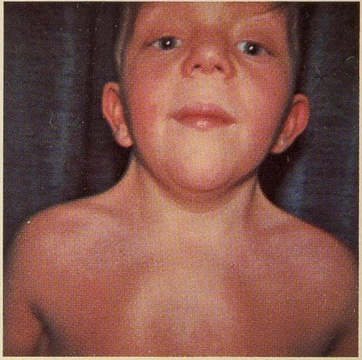
Common signs and symptoms vary from person to person. The most defining features are facial abnormalities, which include a triangular face, deep-set eyes, a short philtrum, a wide mouth with a thin upper lip, a long nose with a narrow bridge and a broad, bulbous tip, and low-set ears. Speech and voice issues are also frequent, such as dysarthria, verbal dyspraxia with imprecise sounds, hypernasality, a high-pitched voice, and severe problems with both understanding and expressing language. Bodily features include a significant delay in bone age (two standard deviations or more below average), which usually normalizes between ages six and twelve. Skeletal anomalies like brachydactyly, broad fingertips or clubbing, clinodactyly, short thumbs, prominent joints, and clavicle abnormalities are common. Adult height is short: for females, the maximum height reaches the 20th percentile; for males, the 25th percentile, though male height varies more widely. Broad thumbs can also appear in Rubinstein-Taybi syndrome, where they are a key feature, and Floating-Harbor syndrome is considered in the differential diagnosis. This overlap makes sense because the SRCAP gene interacts with CBP, the gene involved in Rubinstein-Taybi.
Behavioral issues often include tantrums in infancy, attention deficit-hyperactivity disorder (ADHD) during school years (marked by impulsivity, inattention, and restlessness), unpredictable aggressive outbursts, and in rare cases, autistic spectrum disorder, Asperger syndrome, or obsessive-compulsive disorder. Other observations include intellectual disability in all cases, ranging from borderline normal to moderate. Some girls experience early puberty, leading to menorrhagia and irregular periods.
- First identified
- 1973 at Boston Floating Hospital and 1975 at Harbor General Hospital
- Name coined
- 1988 by Robinson et al.
- Known for
- triad of short stature, facial features, and speech delay
- Cause
- heterozygous SRCAP mutation (truncating, between codons 2407 and 2517 in exon 34)
- Inheritance pattern
- suspected autosomal dominant or autosomal recessive; not fully established
Lore & Background
The first identified instances occurred in 1973 at the Boston Floating Hospital, and in 1975 at Harbor General Hospital in Torrance, California. The name Floating–Harbor syndrome was coined by Robinson et al. in 1988. Since then approximately 40 more cases have been described. The first case recorded was that of a five-year-old boy. In a 32-year follow up done in 2006, the patient was in good overall health, had never been hospitalized, and had been employed for the past 15 years. His mother stated he had a very good memory, was gregarious, had a temper, and at times was stubborn. Changes in the patient's facial configuration and body could be attributed to age and familial history (i.e., the patient shows signs of arthritis and hypertension). Still present were the low hairline, broad tip of the nose, short nasal labial distance, depressed columella, thin lips, and posteriorly positioned ears, as well as short stature and mild to moderate retardation.
Reader's Guide
Floating–Harbor syndrome is significant as a rare genetic disorder that illustrates the complexity of linking genotype to phenotype. The identification of heterozygous truncating mutations in SRCAP in 2012 provided a molecular basis for diagnosis, though some individuals with classic features carry no mutation, indicating that molecular diagnosis is not always successful. The syndrome shares clinical overlap with Rubinstein–Taybi syndrome due to the interaction of SRCAP with CBP, but distinct features such as absence of broad thumbs and microcephaly help differentiate them. Management focuses on monitoring growth, bone age, hearing, vision, dental health, and behavioral issues, with no cure available. The long-term follow-up of the first patient shows that individuals can lead productive lives despite mild to moderate intellectual disability and persistent facial features. The syndrome's variable expression and uncertain inheritance pattern underscore the need for further research and genetic counseling for families.
Did You Know?
- Fewer than 50 cases have been described in the literature.
- The first case was a five-year-old boy; a 32-year follow-up found him employed and in good health.
- Mutations in SRCAP are truncating and occur between codons 2407 and 2517 in exon 34.
- Some individuals with classic FHS features carry no SRCAP mutation.
Clinical Portrait: The Defining Triad
Floating–Harbor syndrome, alternatively called Pelletier–Leisti syndrome, is an exceedingly rare condition with fewer than fifty documented cases in the medical literature. It typically becomes apparent in early childhood and is defined by a recognizable triad: proportionate short stature accompanied by delayed bone age, a distinctive facial gestalt, and delayed speech development. The facial features are the most immediately striking hallmark. Affected individuals commonly present with a triangular face shape, deeply set eyes, a short philtrum, a wide mouth framed by a thin upper lip border, a long nose with a narrow bridge but broad and bulbous base, and low-set ears. Beyond the face, skeletal findings include brachydactyly, broad fingertips or clubbing, clinodactyly, short thumbs, prominent joints, and clavicle irregularities. Bone age is typically delayed by two standard deviations or more, though it tends to normalize between ages six and twelve. Adult height remains limited, with females capping around the twentieth percentile and males around the twenty-fifth. Dental anomalies such as caries, malocclusion, and small dysplastic teeth, along with visual impairment, round out the physical picture.
Unraveling the Genetic Basis
For years the etiology of Floating–Harbor syndrome remained a mystery, though familial clustering in a few reported pairs—a mother and son, a mother and daughter—hinted at an inherited genetic component. The breakthrough came in 2012 when a team published in the American Journal of Human Genetics used exome sequencing on a group of unrelated individuals displaying classic FHS features. They identified heterozygous truncating mutations, either nonsense or frameshift, clustered between codons 2,407 and 2,517 in exon 34 of the SRCAP gene. These mutations eliminate three C-terminal AT-hook DNA-binding motifs, crippling the protein's transactivation capacity. SRCAP encodes an SNF2-related chromatin-remodeling ATPase that serves as a coactivator for CREB-binding protein, the very gene whose dysfunction underlies Rubinstein–Taybi syndrome. This disrupted interaction plausibly accounts for the clinical overlap between the two conditions. The proposed mechanism is dominant-negative: the mutant protein interferes with the wild-type allele's function. SRCAP also transduces signals from nuclear steroid hormone receptors and Notch pathways, underscoring its broad role in gene regulation. Notably, three individuals whose phenotype most closely mimicked FHS carried no SRCAP mutation, reminding researchers that molecular testing, while powerful, is not infallible.
Speech, Cognition, and Behavioral Landscape
The developmental and behavioral footprint of Floating–Harbor syndrome extends well beyond the physical. Speech and language are profoundly affected: affected children commonly exhibit dysarthria, verbal dyspraxia with imprecise phoneme production, hypernasality, and a high-pitched voice quality. Receptive and expressive language impairment is severe and spans all functional domains. Intellectual disability is universal among documented cases, though its severity ranges from borderline-normal functioning to moderate impairment, and learning difficulties accompany every individual. Behaviorally, infancy is often marked by intense tantrums, while school-age children frequently display attention deficit-hyperactivity disorder with impulsivity, inattention, and restlessness. Unpredictable aggressive outbursts have been reported. In the small case series, one individual met criteria for autistic spectrum disorder, another for Asperger syndrome, and two for obsessive-compulsive disorder. Some girls experience early entry into puberty, which can lead to menorrhagia and irregular menstrual cycles. The heterogeneity of these manifestations means that no two patients present identically, and the full spectrum of symptoms may shift as the individual matures.
Diagnostic Pathways and the Rubinstein–Taybi Overlap
Historically, clinicians diagnosed Floating–Harbor syndrome purely on clinical observation, typically in early childhood, matching the patient's features against the published description. Today, molecular genetic testing has become a critical adjunct: sequence analysis targeting exon 34 of the SRCAP gene can detect the characteristic truncating mutations, which have been confirmed in nineteen patients to date. In most cases where classic facial features are present, the molecular test corroborates the clinical impression. A major diagnostic challenge is distinguishing FHS from Rubinstein–Taybi syndrome, given the shared SRCAP-CBP pathway involvement. However, several features help separate them: broad thumbs, narrow palate, and microcephaly are hallmarks of Rubinstein–Taybi but are characteristically absent in FHS, with the rare exception of one UK child diagnosed with both microcephaly and FHS. Inheritance patterns remain uncertain; the two familial pairs suggest possible autosomal dominant transmission with variable expressivity, while another report proposed autosomal recessive inheritance. Because no cure exists, management centers on close growth monitoring in the earliest years, annual general health screenings, and ongoing support for the individual and their caregivers.
Frequently Asked Questions
What is Floating–Harbor syndrome?
Floating–Harbor syndrome, also referred to as Pelletier–Leisti syndrome, is an extremely rare genetic condition with fewer than 50 cases documented to date. It is defined by proportionate short stature, a recognizable facial gestalt, and delayed speech development.
What are the core diagnostic features of Floating–Harbor syndrome?
The syndrome rests on a triad of proportionate short stature, a distinct facial appearance, and delayed speech, often accompanied by a delay in bone age. These features typically become apparent enough for diagnosis in early childhood.
What genetic mutation is responsible for Floating–Harbor syndrome?
A heterozygous truncating mutation in the SRCAP gene, located between codons 2407 and 2517 within exon 34, is the confirmed genetic basis. Whether the condition follows an autosomal dominant or autosomal recessive pattern has not yet been definitively established.
How did Floating–Harbor syndrome get its name?
The condition was first reported in 1973 at Boston Floating Hospital and again in 1975 at Harbor General Hospital, and the combined name was formally coined in 1988 by Robinson and colleagues. The name thus directly references the two institutions where the earliest cases were described.
Why is Floating–Harbor syndrome notable in the study of short-stature syndromes?
With fewer than 50 documented cases worldwide, it represents one of the rarest recognized causes of proportionate short stature. Identifying the specific SRCAP mutation has helped clinicians distinguish it from other overlapping short-stature conditions and has underscored how subtle genetic changes can produce a recognizable clinical picture.
More in Syndromes affecting stature 1-22
Spotted an error? Know more?
Reader corrections go straight into our review queue. Suggest an edit · How this site is sourced