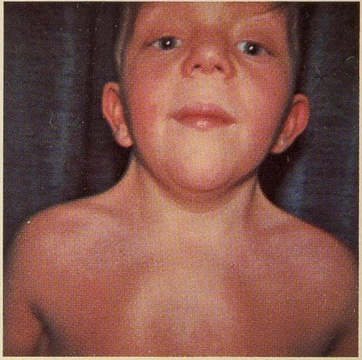
Gómez–López-Hernández syndrome
Rare neurocutaneous disorder with cerebellar and trigeminal malformations.

Gómez–López-Hernández syndrome (GLH), also known as cerebellotrigeminal-dermal dysplasia, is a rare neurocutaneous disorder affecting the trigeminal nerve and causing multiple neural and physical abnormalities. First characterized in 1979, the syndrome has been diagnosed in only 34 people, though cases may be under-reported due to overlapping features with other cerebellar malformation disorders.
- First characterized
- 1979
- Number diagnosed
- 34
- Most consistent physical feature
- bilateral scalp alopecia
- Constant neurological feature
- rhombencephalosynapsis
- Oldest known patient age at assessment
- 29
- Named for
- Manuel Rodríguez Gómez and Alejandro López-Hernández
Lore & Background
Gómez–López-Hernández syndrome presents with a range of physical and neurological abnormalities. Physical characteristics include a short, flattened skull (brachycephaly), thin lips, low-set and posterior-angled ears, and bilateral scalp alopecia—the most consistent physical feature. Many individuals also have wide-set eyes (hypertelorism), crossed eyes (strabismus), corneal scarring or clouding, and short stature. Neurologically, all cases show rhombencephalosynapsis, a malformation involving absence or partial absence of the cerebellar vermis and fusion of the cerebellum. The trigeminal nerve and foramen rotundum are absent, leading to abnormal sensations on the forehead and corneas. Reduced eye sensation, ataxia, dysmetria, hypotonia, and hydrocephalus are common. Intellectual disability ranges from moderate to severe in most cases, though one individual achieved normal learning and social skills without intervention.
Reader's Guide
Gómez–López-Hernández syndrome is significant as an extremely rare neurocutaneous disorder that highlights the complexity of cerebellar and trigeminal development. Its diagnosis relies on the consistent presence of scalp alopecia, cerebellar malformation, and delayed motor milestones, though other features vary. The syndrome has been diagnosed mostly in poorer countries, with five of the 34 cases from Brazil, including two siblings whose parents were first cousins, suggesting possible recessive inheritance. Mutations in the ACP2 gene and lack of expression of several other genes have been implicated but not confirmed. Management is similar to that for other developmental disabilities, as there is no cure for the brain malformations. The oldest known patient was 29 at assessment in 2008. The syndrome's perceived prevalence in Latin America may change as diagnostic techniques improve worldwide.
Did You Know?
- Only 34 people have been diagnosed with Gómez–López-Hernández syndrome.
- Bilateral scalp alopecia is the most consistent physical characteristic of the syndrome.
- All cases show rhombencephalosynapsis, a fusion of the cerebellum with absence of the cerebellar vermis.
- One patient is on record as having put her fingers into her eyes, causing additional corneal damage.
The Clinical Portrait
Gómez–López-Hernández syndrome presents a distinctive constellation of physical and neurological findings, though no single feature is universal. The most reliable physical marker is bilateral scalp alopecia above the ears, observed in every case except one. Other recurring traits include a short, misshapen, and often posteriorly flattened skull, thin lips, low-set ears angled backward, wide-set eyes, crossed eyes, corneal scarring or clouding, and below-average stature. Neurologically, the picture is striking: MRI consistently reveals rhombencephalosynapsis, a fusion or partial absence of the cerebellar vermis, alongside hydrocephalus and ventricular enlargement. The trigeminal nerve and its cave are absent, producing diminished sensation on the forehead and corneas. Patients experience ataxia, dysmetria, hypotonia, and delayed motor milestones. In one study, eleven of fifteen individuals showed moderate-to-severe intellectual disability. Seizures—sometimes triggered by fever, sometimes not—appear in a subset, and a reduced or absent corpus callosum has been noted in some cases.
Diagnosis and the Rarity Problem
First formally described in 1979, Gómez–López-Hernández syndrome has been confirmed in only thirty-four individuals worldwide, a number that likely underestimates true prevalence because cerebellar malformations overlap with other conditions. Diagnosis rests on a core triad: scalp alopecia (present in all but one case, though sometimes asymmetrical or unilateral), delayed motor milestones, and cerebellar malformation visible on imaging. Trigeminal anesthesia appears in roughly three-quarters of patients, while skull shape, ear rotation, and facial asymmetry vary so widely that they cannot serve as standalone diagnostic criteria. Prenatal detection is possible; in one instance, cerebellar fusion was identified by MRI at twenty-one weeks of gestation, with postnatal confirmation of craniofacial features at six weeks of life. Geographically, the majority of cases cluster in Latin America—five of the thirty-four from Brazil alone—with a single Japanese patient, two Armenian cases, and two from Europe, suggesting the condition is not confined to one population.
Genetic Mysteries and Inheritance Clues
The precise genetic architecture behind Gómez–López-Hernández syndrome remains unresolved. Mutations in the ACP2 gene have been proposed as a candidate, yet no definitive confirmation has emerged. The strongest inheritance clue comes from a pair of Brazilian siblings, both diagnosed with the condition, whose parents were first cousins—a pattern consistent with autosomal recessive transmission. The concentration of five Brazilian cases among the thirty-four known individuals further supports a hereditary component. On the molecular level, disrupted expression of several developmental genes—WNT1, FGF8, FGF17, OTX2, and their lowercase orthologs fgf8 and fgf17—has been linked to the cerebellar fusion that defines the syndrome. These pathways govern hindbrain patterning during embryogenesis, and their derangement could plausibly explain the rhombencephalosynapsis seen universally. Nevertheless, no single gene or pathway has been validated as the sole cause, and the syndrome's rarity makes large-scale genetic studies impractical, leaving the field in a state of informed speculation.
Living with GLH: Management and Outlook
Because no curative treatment exists for the structural brain malformations at the heart of Gómez–López-Hernández syndrome, care follows the general framework used for other developmental disabilities. The socioeconomic context compounds the challenge: the condition has been diagnosed predominantly in lower-income regions, and no documented educational programs have been established to assess the intellectual baseline of affected children. Behaviorally, patients may struggle with irritability, anxiety, insomnia, and self-harming impulses; reduced corneal sensation has led at least one individual to injure her own eyes, compounding the already-present corneal damage. Growth is typically stunted, with weight and height falling between the third and twenty-fifth percentiles, attributed to growth-hormone deficiency. Mobility is limited for neurological rather than skeletal reasons. Seizures, when present, risk injury, and co-occurring ADHD or bipolar episodes can provoke dangerous outbursts. Yet the picture is not uniformly bleak: one fourteen-year-old patient demonstrated normal learning and social skills without any intervention, a rare but encouraging outlier.
Frequently Asked Questions
What is Gómez–López-Hernández syndrome?
GLH is a rare neurocutaneous disorder that disrupts development of the trigeminal nerve and cerebellum, producing a cluster of neural and physical abnormalities. First formally described in 1979, it is also called cerebellotrigeminal-dermal dysplasia.
What are the signature traits of Gómez–López-Hernández syndrome?
The most consistent physical marker is bilateral scalp alopecia, while rhombencephalosynapsis (fusion of the cerebellar hemispheres) is the constant neurological finding. Together these features help distinguish GLH from other cerebellar malformation syndromes.
How rare is Gómez–López-Hernández syndrome in the canon?
Only 34 confirmed diagnoses have been recorded since 1979, making it one of the rarest neurocutaneous conditions on file. The true count is likely higher because overlapping features with other cerebellar disorders can lead to under-reporting.
What is the longest-confirmed survival in Gómez–López-Hernández syndrome's record?
The oldest patient on record was assessed at age 29, demonstrating that survival into late adulthood is possible despite the severity of the malformations. This remains a notable data point given how little is known about long-term outcomes.
Who is Gómez–López-Hernández syndrome named after?
The syndrome honors Manuel Rodríguez Gómez and Alejandro López-Hernández, who first characterized the condition in 1979. Their work established the diagnostic framework that clinicians still rely on today.
More in Syndromes affecting stature 1-22
Spotted an error? Know more?
Reader corrections go straight into our review queue. Suggest an edit · How this site is sourced