Tricho-rhino-phalangeal syndrome Type 1
Rare genetic disorder with hair, nose, and finger abnormalities.

Trichorhinophalangeal Syndrome Type I (TRPS I) is a rare genetic condition marked by distinct facial and skeletal features. Its name breaks down into three parts: “tricho” for hair, “rhino” for nose, and “phalangeal” for the fingers and toes.
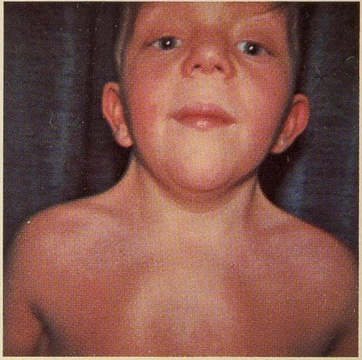
People with TRPS I often have thin, sparse, slow-growing scalp hair. Their faces show thick eyebrows, a wide nose with a rounded tip, large, protruding ears, a long, smooth philtrum, a thin upper lip, and small teeth that may be fewer or extra in number. They also tend to be short in stature, have short fingers and toes (brachydactyly), cone-shaped growth plates in the bones (epiphyses), hip dysplasia, and other bone deformities.
The condition is caused by a change in one copy of the TRPS1 gene, which is involved in tissue development. It follows an autosomal dominant inheritance pattern, so just one altered gene can cause the disorder. Diagnosis is based on physical exam, characteristic features, and X-ray findings, and can be confirmed by genetic testing for TRPS1 mutations.
Management is supportive and symptom-focused, involving a team of specialists. Orthopedic care addresses skeletal issues and improves movement. Dermatology treatments, such as topical minoxidil, can improve hair density and length. Endocrinologists monitor growth and development, and recombinant human growth hormone may be used to improve height. Dental problems like missing or extra teeth can be managed with orthodontic care.
Quick Facts
- Specialty
- Medical genetics, Orthopedics
- Symptoms
- Sparse and thin hair, bulbous nose tip, short stature, brachydactyly, cone-shaped epiphyses, joint abnormalities, distinctive facial features
- Complications
- Hip dysplasia, joint degeneration, excessive sweating
- Onset
- Congenital
- Duration
- Lifelong
- Causes
- mutation in the TRPS1 gene
- Diagnosis
- Clinical examination, genetic testing
- Treatment
- Supportive care, orthopedic interventions
- Prognosis
- Variable
- Frequency
- Rare, exact prevalence unknown
Facts from the source article.
Lore & Background
Individuals with TRPS I typically present with hair, facial features, and skeletal abnormalities. Hair abnormalities include sparse, thin, and slow-growing scalp hair. Distinctive facial characteristics include thick eyebrows, a broad nose with a rounded tip, large, protruding ears, a long, smooth philtrum, a thin upper lip, and small teeth that may be either reduced or increased in number. Affected individuals also typically exhibit short stature, brachydactyly (short fingers and toes), cone-shaped epiphyses, hip dysplasia, and other bone deformities.
Reader's Guide
TRPS I is caused by heterozygous pathogenic variants in the TRPS1 gene, which plays a role in the development of various tissues. The condition follows an autosomal dominant inheritance pattern, meaning a single copy of the altered gene can cause the disorder. Diagnosis is based on clinical evaluation, identification of characteristic physical features, and radiographic findings. Genetic testing can confirm mutations in the TRPS1 gene. Treatment is symptomatic and supportive, involving a multidisciplinary approach including orthopedic interventions to address skeletal deformities and improve mobility; dermatological care to manage hair abnormalities including topical minoxidil which has shown improvement in hair density and length. Other management approaches include endocrinological support to monitor growth and development, recombinant human growth hormone therapy has been used to improve height outcomes. Dental anomalies such as hypodontia or supernumerary teeth can also be addressed with appropriate orthodontic options.
Did You Know?
- The name TRPS I comes from 'tricho' (hair), 'rhino' (nose), and 'phalangeal' (fingers and toes).
- Topical minoxidil has shown improvement in hair density and length for affected individuals.
The Physical Signature
Individuals living with TRPS I carry a recognizable constellation of traits that span the scalp, face, and skeleton. On the head, hair tends to be sparse, fine, and slow to grow, giving a distinctive appearance. The facial profile is marked by thick, prominent eyebrows, a broad nasal bridge ending in a rounded tip, and ears that are large and project outward. The upper lip is thin, the philtrum is long and smooth, and the teeth are small—sometimes fewer in number than typical, sometimes more. Below the face, the skeletal picture includes short stature, shortened fingers and toes (brachydactyly), cone-shaped growth plates at the ends of bones, hip joint dysplasia, and additional bone deformities. Together, these features form a pattern that clinicians can identify through careful physical examination and imaging, making the syndrome visually and structurally distinct from other rare conditions.
The Genetic Blueprint
At its core, TRPS I is a single-gene disorder. A heterozygous pathogenic variant in the TRPS1 gene is sufficient to produce the condition. Because the inheritance follows an autosomal dominant pattern, only one altered copy of the gene is needed; a person does not need to inherit the variant from both parents. The TRPS1 gene itself plays a role in the development of multiple tissue types, which helps explain why the syndrome's effects are so widespread—touching hair, facial structure, and the entire skeletal framework. Diagnosis typically begins with a thorough clinical evaluation, where a physician identifies the characteristic physical features and orders radiographic imaging to confirm skeletal findings such as cone-shaped epiphyses. Genetic testing can then be used to pinpoint the specific mutation in TRPS1, providing definitive confirmation and enabling informed genetic counseling for families.
A Multidisciplinary Care Pathway
Because TRPS I affects so many body systems simultaneously, no single specialist can manage it alone. Treatment is symptomatic and supportive rather than curative, requiring a coordinated team. Orthopedic surgeons address skeletal deformities and work to preserve or improve mobility, particularly around the hips and fingers. Dermatologists manage the hair abnormalities, and topical minoxidil has shown measurable improvement in both hair density and length. Endocrinologists monitor growth and development throughout childhood, and recombinant human growth hormone therapy has been employed to help improve height outcomes. Dental and orthodontic specialists tackle the range of dental anomalies, whether teeth are missing (hypodontia) or present in excess (supernumerary teeth). This layered, team-based approach ensures that each affected system receives targeted attention while the individual's overall quality of life remains the central focus.
Decoding the Name
The very name of the condition is a compact map of its defining features. "Tricho" points to the hair—specifically the sparse, thin, slow-growing scalp hair that is a hallmark of the syndrome. "Rhino" refers to the nose, capturing the broad nasal bridge and rounded tip that give the face its characteristic look. "Phalangeal" highlights the fingers and toes, whose shortening (brachydactyly) and the cone-shaped epiphyses at their ends are among the most diagnostically significant skeletal findings. By encoding these three domains directly into the diagnosis, the nomenclature immediately communicates to any clinician which systems are involved. This naming convention also distinguishes TRPS I from other trichorhinophalangeal variants, underscoring that the specific combination of hair, nose, and digit abnormalities—along with the underlying TRPS1 mutation—defines this particular type within the broader family of rare genetic disorders.
Frequently Asked Questions
Who is Tricho-rhino-phalangeal syndrome Type 1?
TRPS I is a rare inherited genetic condition that produces a recognizable cluster of facial, hair, and skeletal differences. Its name literally spells out the three hallmark areas affected: thin hair (tricho), a broad rounded nose (rhino), and short, cone-shaped fingers and toes (phalangeal).
What are TRPS I's signature traits?
Individuals typically present with sparse, slow-growing scalp hair; thick eyebrows; a wide nose with a bulbous tip; large protruding ears; a long smooth philtrum; a thin upper lip; and small or extra teeth. Skeletally, they tend toward short stature, shortened digits, and cone-shaped epiphyses at the finger and toe joints.
How is TRPS I inherited?
The condition follows an autosomal dominant pattern, meaning a single altered copy of the TRPS1 gene is sufficient to produce the phenotype. A parent carrying the variant passes it to roughly half of their children regardless of sex.
How does TRPS I's 'story' get managed?
There is no cure, so care focuses on symptom-by-symptom support through a multidisciplinary team covering orthopedics, dentistry, audiology, and ophthalmology. Interventions are tailored to each individual's specific skeletal, dental, and hearing needs.
Why is TRPS I important in medical genetics?
It serves as a clear example of how a single-gene mutation in the TRPS1 transcription factor can ripple across multiple organ systems simultaneously. Studying it helps researchers untangle the developmental pathways that link craniofacial formation, hair growth, and bone modeling.
More in Syndromes affecting stature 1-22
Spotted an error? Know more?
Reader corrections go straight into our review queue. Suggest an edit · How this site is sourced