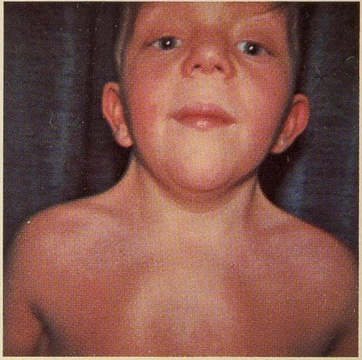
Hallermann–Streiff syndrome
Rare congenital disorder affecting eyes, growth, and development.

Hallermann–Streiff syndrome is a congenital condition impacting the eyes, overall growth, skull shape, hair growth, and teeth. Fewer than 200 individuals worldwide are known to have it. A key support organization for those affected is the German group "Schattenkinder e.V."
People with the syndrome tend to be shorter than average and may lack hair on the face, legs, and pubic area. Eye issues include smaller-than-normal eyes, bilateral cataracts, and glaucoma. Sleep apnea can also occur. Due to certain physical features, medical professionals may find intubation difficult. Intelligence is generally normal.
The condition is thought to result from a new mutation in the GJA1 gene, which codes for the connexin 43 protein, though further research is needed to confirm this link.
Diagnosis is made based on physical traits and symptoms.
There is no cure. Treatment focuses on each person’s specific symptoms. Early care often involves ensuring proper breathing and nutrition, sometimes requiring a tracheostomy. Early cataract surgery may be considered, though spontaneous resolution occurs in up to half of untreated cases. Regular eye exams are strongly advised to monitor and treat other eye problems, some of which may need surgery. Management may also include surgical correction of certain craniofacial malformations, especially in the jaw and nose, at an appropriate age. Heart defects, if present, may require medication or surgery.
The syndrome is named after German ophthalmologist Wilhelm Hallermann (1909–2005) and Italian–Swiss ophthalmologist Enrico Bernardo Streiff (1908–1988), who first described it in 1948 and 1950, respectively.
- Field
- Medical genetics, ophthalmology
- Known for
- First described the syndrome in 1948 and 1950 respectively
- Nationality
- German (Hallermann), Italian–Swiss (Streiff)
Lore & Background
The syndrome is named after German ophthalmologist Wilhelm Hallermann (1909–2005) and Italian–Swiss ophthalmologist Enrico Bernardo Streiff (1908–1988), who first described the syndrome in 1948 and 1950 respectively. Patients with this syndrome are shorter than average and may not develop hair in many places, including facial, leg, and pubic areas. They also have eye problems including reduced eye size, bilateral cataracts, and glaucoma. The syndrome can be associated with sleep apnea, and physical characteristics can result in difficult intubation by medical professionals. Intelligence is usually normal.
Reader's Guide
Hallermann–Streiff syndrome is significant as a rare congenital disorder with fewer than 200 known cases worldwide. Its cause is hypothesized to be a de novo mutation in the GJA1 gene encoding connexin 43, though further studies are needed to confirm this. Diagnosis relies on physical characteristics and symptoms, as there is no cure. Treatment centers on individual symptoms, including early measures for breathing and nutrition (possibly tracheostomy), cataract surgery (though spontaneous resolution occurs in up to 50% of untreated patients), regular ophthalmologist visits, surgical reconstruction of craniofacial malformations, and management of heart defects. The syndrome's legacy includes ongoing support from organizations like Schattenkinder e.V. and its recognition in medical databases such as Jablonski's Syndrome Database.
Did You Know?
- There are fewer than 200 people with Hallermann–Streiff syndrome worldwide.
- Spontaneous resolution of cataracts occurs in up to 50% of untreated patients.
- Intelligence is usually normal in patients with this syndrome.
Clinical Portrait of the Syndrome
Hallermann–Streiff syndrome is a rare congenital condition that leaves its mark across multiple systems of the body, touching the eyes, overall stature, skull formation, hair growth, and dental development. Individuals affected by this disorder are characteristically shorter than the general population and may experience an absence of hair in several regions, including the face, legs, and pubic area. The ocular manifestations are particularly prominent: affected eyes tend to be smaller than typical, and bilateral cataracts along with glaucoma are common features. Beyond the eyes, the syndrome can be linked to sleep apnea, and the distinctive facial and airway anatomy it produces can make intubation a challenging procedure for anesthesiologists and emergency physicians. Importantly, cognitive development is generally unaffected, and intelligence in those living with the condition is usually within the normal range. Despite its wide-ranging physical effects, the syndrome remains extraordinarily rare, with fewer than two hundred individuals identified worldwide.
Genetic Underpinnings and Diagnostic Pathway
The precise genetic origin of Hallermann–Streiff syndrome remains an area of active investigation. Current research points toward a de novo mutation in the GJA1 gene, which is responsible for producing the connexin 43 protein. Connexins play a role in forming channels between cells, but the exact mechanism by which a disruption in connexin 43 might give rise to the constellation of features seen in this syndrome is not yet fully understood. Researchers have emphasized that additional studies are necessary to either confirm or rule out the involvement of connexin proteins in the disorder's pathogenesis. Because no single definitive genetic test has been established as the gold standard, diagnosis in clinical practice relies primarily on recognizing the characteristic physical features and associated symptoms in the patient. This phenotypic approach means that careful clinical observation of the craniofacial structure, ocular findings, hair distribution, and growth pattern remains central to identifying the condition, particularly in a disorder where fewer than two hundred cases have been documented across the globe.
A Lifetime of Symptom-Focused Care
Because no curative therapy exists for Hallermann–Streiff syndrome, the medical approach is necessarily tailored to the individual symptoms each patient presents. In the earliest stages of life, priority is given to securing adequate breathing and ensuring sufficient nutritional intake; in some cases this may require a tracheostomy. Ocular care forms a major pillar of long-term management. While early surgical intervention for cataracts is often recommended, research has indicated that spontaneous resolution of these cataracts can occur in as many as fifty percent of patients who are left untreated, a finding that complicates the timing of surgical decisions. Regardless, regular follow-up with an ophthalmologist is strongly advised, as other eye conditions may develop and some of them will ultimately demand surgical correction. As the child grows, surgical reconstruction of craniofacial abnormalities—particularly those involving the mandible and nasal region—may be planned at an age deemed appropriate. Additionally, certain cardiac defects associated with the syndrome may necessitate ongoing medication or corrective surgery, adding another layer to the multidisciplinary care these individuals require throughout their lives.
From Two Ophthalmologists to a Global Community
The syndrome bears the names of two pioneering ophthalmologists who independently brought attention to this condition in the late 1940s and early 1950s. Wilhelm Hallermann, a German ophthalmologist who lived from 1909 to 2005, first described the constellation of features in 1948. Shortly after, Enrico Bernardo Streiff, an Italian–Swiss ophthalmologist (1908–1988), published his own description in 1950. Together, their observations laid the groundwork for what is now recognized as a distinct congenital entity. Despite more than seven decades of medical literature, the syndrome remains vanishingly rare, with fewer than two hundred affected individuals identified worldwide. In Germany, a registered nonprofit organization called Schattenkinder e.V. has dedicated its mission to supporting people living with Hallermann–Streiff syndrome, providing a community resource in a condition where the small global population makes specialized care and peer connection particularly valuable. The organization stands as a testament to the ongoing human effort to surround those affected by this rare disorder with understanding and practical assistance.
Frequently Asked Questions
What is Hallermann–Streiff syndrome?
It is a rare congenital disorder that simultaneously affects the eyes, overall body growth, skull structure, hair distribution, and dental development. The condition is inherited in an autosomal recessive pattern and spans the fields of medical genetics and ophthalmology.
Who are Hallermann and Streiff, and why does the syndrome carry their names?
German physician Hallermann first described the condition in 1948, and Italian–Swiss physician Streiff published a parallel account in 1950, each independently outlining its characteristic clinical picture. Their surnames were later joined to credit both contributors for recognizing it as a distinct entity.
What are the hallmark physical features of Hallermann–Streiff syndrome?
Affected individuals typically show below-average stature, little or no hair on the face, legs, and pubic region, and notably small eyes often complicated by bilateral cataracts and glaucoma. Other common findings include a distinctive skull shape, dental anomalies, and sleep apnea.
How rare is Hallermann–Streiff syndrome?
Fewer than 200 confirmed individuals worldwide are known to carry the condition, placing it firmly in the ultra-rare category. Its multi-system involvement means management often requires coordinated care across genetics, ophthalmology, and general pediatrics.
Is there a dedicated support organization for people living with Hallermann–Streiff syndrome?
Yes, the German non-profit Schattenkinder e.V. serves as the primary community and advocacy group for affected families. It offers peer support, practical resources, and awareness-raising specifically tailored to this rare syndrome.
More in Syndromes affecting stature 1-22
Spotted an error? Know more?
Reader corrections go straight into our review queue. Suggest an edit · How this site is sourced