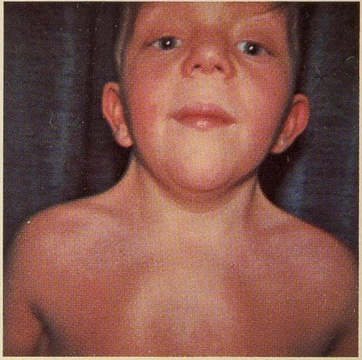
Nijmegen breakage syndrome
Rare autosomal recessive disorder causing chromosomal instability and cancer predisposition.

Nijmegen breakage syndrome (NBS) is a rare autosomal recessive congenital disorder characterized by chromosomal instability, microcephaly, a distinct facial appearance, short stature, immunodeficiency, radiation sensitivity, and a strong predisposition to lymphoid malignancy. It is caused by a mutation in the NBS1 gene, which codes for the protein nibrin, involved in DNA repair and cell cycle control. The syndrome derives its name from the Dutch city Nijmegen, where it was first described.
- Field
- Medical genetics
- Known for
- Chromosomal instability, predisposition to lymphoid malignancy, microcephaly, immunodeficiency
- Cause
- Mutation in NBS1 gene (autosomal recessive)
- First described
- Nijmegen, Netherlands
- Affected population
- Most people with NBS have West Slavic origins; largest number live in Poland
Lore & Background
Nijmegen breakage syndrome is caused by a mutation in the NBS1 gene, located on human chromosome 8q21. The disorder is inherited in an autosomal recessive manner, requiring two copies of the defective gene. The NBS1 gene codes for nibrin, a protein with two major functions: stopping the cell cycle in S phase when DNA errors occur, and interacting with FANCD2 to activate the BRCA1/BRCA2 DNA repair pathway. Mutations in NBS1 lead to higher levels of cancer.
Reader's Guide
Nijmegen breakage syndrome is significant as a model for understanding DNA repair mechanisms and cancer predisposition. The syndrome shares features with ataxia telangiectasia, and the protein mutated in AT, ATM, interacts with the MRE11/RAD50/NBS1 complex. There is no cure for NBS, but management includes intravenous immunoglobulin for agammaglobulinemia, prophylactic antibiotics for urinary tract infections, and careful avoidance of radiation therapy and certain chemotherapeutic agents in treating malignancies. Bone marrow and hematopoietic stem cell transplants are considered. Life expectancy is reduced due to early cancer development and infections related to immunodeficiency.
Did You Know?
- Most people with NBS have West Slavic origins, with the largest number living in Poland.
- The syndrome was first described in the Dutch city of Nijmegen.
- Two adult siblings heterozygous for two particular NBS1 nonsense mutations displayed cellular radiation sensitivity, chromosome instability, and fertility defects, but not the typical developmental defects.
Genetic Architecture & the Nibrin Protein
Nijmegen breakage syndrome traces its root cause to a single defective gene, NBS1, situated on chromosome 8q21. Because the condition follows an autosomal recessive inheritance pattern, a child must inherit one faulty copy from each parent before the disorder manifests; carriers typically show no symptoms themselves. The NBS1 gene encodes a protein called nibrin, which serves two critical roles in maintaining genomic integrity. First, nibrin acts as a checkpoint enforcer, halting the cell cycle during the S phase whenever DNA errors are detected. Second, it partners with the protein FANCD2 to switch on the BRCA1 and BRCA2 repair cascade, a pathway essential for mending double-strand breaks. When nibrin is compromised, the cell loses its ability to resolve double Holliday junctions and to carry out synthesis-dependent strand annealing, both key steps in homologous recombination. This molecular failure explains the elevated cancer risk seen in NBS patients, a pattern echoed in related disorders such as Fanconi anemia and Cockayne syndrome. Notably, two adult siblings who carried only one defective copy of two specific nonsense mutations exhibited radiation sensitivity, chromosome instability, and fertility problems, yet escaped the developmental abnormalities typical of full NBS, underscoring that homologous recombination is the primary process disrupted.
Clinical Portrait & Diagnostic Neighbors
The outward signature of Nijmegen breakage syndrome is immediately recognizable to clinicians: affected individuals typically present with a small head circumference, a distinctive facial gestalt, and below-average height. Beyond these physical markers, the syndrome carries a constellation of internal vulnerabilities. The immune system is weakened, making patients prone to recurrent infections, while their cells show marked sensitivity to ionizing radiation. Perhaps most concerning is the powerful drive toward lymphoid cancers, a predisposition that sets NBS apart from many other rare conditions. Because the mutated protein nibrin sits within the MRE11-RAD50-NBS1 complex—often abbreviated as the MRN complex—its loss mirrors the pathology seen in ataxia telangiectasia, where the ATM protein normally interacts with that same complex. This overlap led some researchers to label NBS as AT-variant 1 before the two conditions were clearly distinguished. Two additional rare syndromes, RAD50 deficiency and Cernunnos/NHEJ deficiency, also share overlapping clinical features, creating a diagnostic neighborhood of chromosomal instability disorders that can be challenging to differentiate without genetic testing.
Therapeutic Constraints & Supportive Care
No curative treatment currently exists for Nijmegen breakage syndrome, so management focuses on mitigating the many secondary complications that arise from the underlying DNA-repair defect. For patients who develop agammaglobulinemia, regular intravenous immunoglobulin infusions can help shore up the weakened immune defenses. Because many individuals with NBS are born with congenital kidney malformations, prophylactic antibiotic courses are often prescribed to ward off urinary tract infections. When malignancy does develop, the treatment palette narrows considerably: radiation therapy, alkylating antineoplastic drugs, and epipodophyllotoxins are all contraindicated given the patient's inherent radiation sensitivity and chromosomal fragility. Methotrexate may be used but only with extreme caution and at reduced doses. In more severe hematologic cases, bone marrow or hematopoietic stem cell transplantation is explored as a potential intervention. Supportive measures also include vitamin E supplementation, placement of a ventriculoperitoneal shunt for patients who develop hydrocephalus, and surgical correction of congenital structural deformities where feasible.
Naming, Geography & Prognosis
The syndrome bears the name of the Dutch city of Nijmegen, where it was first formally described in the medical literature. Yet the geographic distribution of affected individuals tells a strikingly different story: the vast majority of known NBS cases cluster among people of West Slavic ancestry, with Poland harboring the largest concentration of patients in the world. This unusual demographic concentration has made the condition somewhat more visible in Central European genetics clinics, even though it remains exceedingly rare on a global scale. The long-term outlook for individuals living with NBS is sobering. A 2000 review of the available evidence concluded that life expectancy is significantly shortened, driven by two principal threats: the tendency for cancers to emerge at a relatively young age, and the risk of fatal infections stemming from the underlying immunodeficiency. Together, these factors mean that even with careful supportive care, the natural history of the disease remains one of progressive vulnerability, and the absence of a definitive cure underscores the urgent need for continued research into the nibrin pathway and its role in DNA repair.
Frequently Asked Questions
What is Nijmegen breakage syndrome?
It is a rare inherited condition, passed down through both parents, that disrupts the body's ability to properly repair damaged DNA. The name comes from the Dutch city of Nijmegen, where researchers first documented the syndrome.
What are Nijmegen breakage syndrome's key traits or 'powers'?
NBS is recognized for causing a small head, a distinctive facial appearance, and below-average height in affected individuals. It also weakens the immune system and sharply raises the risk of developing lymphoid cancers.
What causes Nijmegen breakage syndrome?
A mutation in the NBS1 gene, inherited in an autosomal recessive pattern, is responsible. That gene normally produces a protein called nibrin, which helps mend broken DNA strands and keep the cell cycle in check.
Why is Nijmegen breakage syndrome important in medical genetics?
It serves as a key model for understanding how failures in DNA repair cascade into cancer and immune problems. The syndrome is most concentrated among people of West Slavic descent, with the largest affected population living in Poland.
More in Syndromes affecting stature 1-22
Spotted an error? Know more?
Reader corrections go straight into our review queue. Suggest an edit · How this site is sourced