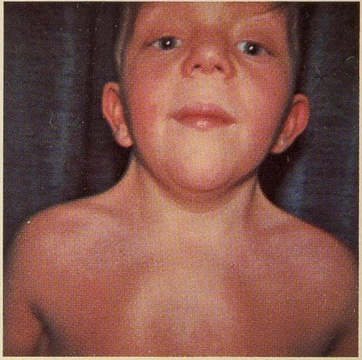
Ellis–Van Creveld syndrome
A rare skeletal dysplasia with polydactyly and heart defects.

Ellis–Van Creveld syndrome, also called mesoectodermal dysplasia, is a rare genetic disorder of the skeletal dysplasia type. It is characterized by numerous anomalies including post-axial polydactyly, congenital heart defects, neonatal teeth, fingernail dysplasia, short-limbed dwarfism, short ribs, cleft palate, and malformation of the wrist bones. The disorder is often the result of founder effects in isolated human populations, such as the Amish and some small island inhabitants, and follows an autosomal recessive inheritance pattern.
- Type
- Genetic disorder
- Caused by
- Mutation in the EVC gene or the Limbin gene
- Chromosome location
- Chromosome 4 short arm (4p16)
- Inheritance
- Autosomal recessive
- Notable populations
- Amish and some small island inhabitants
- Alternative names
- Mesoectodermal dysplasia, six-fingered dwarfism
Lore & Background
The disorder was described by Richard W. B. Ellis of Edinburgh and Simon van Creveld of Amsterdam. Each had a patient with this syndrome, as they discovered when they met in the same train compartment on the way to a pediatrics conference in England in the late 1930s. A third patient had been referred to by L. Emmett Holt Jr. and Rustin McIntosh in a textbook of pediatrics and was included in full in the paper by Ellis and Van Creveld.
Reader's Guide
Ellis–Van Creveld syndrome is significant as a classic example of a founder-effect disorder, with a notably high incidence in the Old Order Amish population of Lancaster County, Pennsylvania, where almost as many cases were known as had been reported in all medical literature up to that time. The syndrome is part of an emerging class of diseases called ciliopathies, where the underlying cause is a dysfunctional molecular mechanism in the primary cilia structures of the cell. This connection helps explain the multi-symptom nature of the disorder and links it to other rare conditions such as Bardet–Biedl syndrome and polycystic kidney disease. The identification of the EVC gene and its allelic relationship with Weyers acrofacial dysostosis has advanced genetic understanding, though the function of the healthy EVC gene remains not well understood. There is no curative therapy; treatment focuses on orthopedic, dental, and cardiac symptoms.
Did You Know?
- Ellis–Van Creveld syndrome is caused by a mutation in the EVC gene or in a nonhomologous gene called Limbin.
- The disorder was discovered when two doctors met in a train compartment on the way to a pediatrics conference.
- Congenital heart defects, most commonly an atrial septal defect producing a common atrium, occur in 60% of affected individuals.
- The term 'six-fingered dwarfism' has been found offensive by some and is no longer considered acceptable.
Clinical Presentation and Multi-System Involvement
Ellis–Van Creveld syndrome presents as a constellation of anomalies affecting multiple body systems simultaneously. The skeletal manifestations are particularly distinctive: individuals exhibit short-limbed dwarfism following a mesomelic pattern, accompanied by shortened ribs and abnormal fusion of the hamate and capitate bones in the wrist. Post-axial polydactyly—extra digits on the outer side of the hand or foot—is a hallmark feature. Cardiac involvement is common, with approximately sixty percent of affected individuals developing a congenital heart defect, most frequently an atrial septal defect that results in a common atrium. Beyond the musculoskeletal and cardiac systems, the syndrome also produces neonatal teeth (teeth present at birth), dysplasia of the fingernails, and cleft palate. The breadth of affected structures—bones, teeth, nails, heart, and palate—reflects the disorder's classification as a skeletal dysplasia of the mesoectodermal type, underscoring how a single genetic disruption can cascade across diverse developmental pathways.
Genetics, Founder Effects, and the Ciliopathy Connection
The genetic architecture of this syndrome was uncovered through positional cloning, which mapped the responsible mutations to the short arm of chromosome 4, specifically at locus 4p16. Two genes are implicated: EVC and a neighboring nonhomologous gene called Limbin, arranged in a head-to-head configuration. The precise function of a healthy EVC gene remains poorly understood. Inheritance follows an autosomal recessive pattern, requiring both parents to carry a defective allele before a child is affected. This pattern explains the elevated incidence observed in genetically isolated populations such as the Old Order Amish and certain small island communities, where limited genetic diversity amplifies the probability of two carriers meeting. A landmark reclassification emerged when researchers recognized that EVC belongs to a broader family of disorders termed ciliopathies—conditions rooted in dysfunction of primary cilia, tiny organelles present in many cell types. Ciliary defects disrupt numerous critical developmental signaling pathways, offering a unifying explanation for the multi-system symptoms. Other recognized ciliopathies include Bardet–Biedl syndrome, polycystic kidney disease, Alström syndrome, and Meckel–Gruber syndrome. Notably, Weyers acrofacial dysostosis arises from a different mutation in the same EVC gene, making it allelic to Ellis–Van Creveld syndrome.
A Discovery Born on a Train and Confirmed in Pennsylvania
The discovery of this syndrome carries a remarkable anecdote. In the late 1930s, British pediatrician Richard W. B. Ellis of Edinburgh and Dutch physician Simon van Creveld of Amsterdam each carried a patient with the same unusual constellation of findings. Their paths crossed in a shared train compartment en route to a pediatrics conference in England, where the coincidence became apparent. A third case, originally described in the 1933 Holt and McIntosh textbook of pediatrics by L. Emmett Holt Jr. and Rustin McIntosh, was incorporated into their joint 1940 publication, which formally named the condition after both physicians. Decades later, in 1964, McCusick and colleagues conducted a pivotal study among the Old Order Amish of Lancaster County, Pennsylvania. In that inbred religious isolate, they documented the largest known pedigree for the disorder—nearly matching the total number of cases previously reported across all medical literature. This finding powerfully illustrated how founder effects in isolated populations can concentrate a rare recessive condition, transforming a handful of scattered clinical reports into a recognizable genetic entity.
Naming Controversies and the Limits of Treatment
The naming of this condition has its own history of controversy. During early studies among the Amish community, the label "six-fingered dwarfism" (also rendered as digital integer deficiency) gained currency as a practical shorthand for the medical profession and the general public. However, this term has since been regarded as offensive by some, as the reference to extra digits carries a connotation of being "freakish." The more technical alternatives—chondroectodermal dysplasia and mesoectodermal dysplasia—fail to capture the full scope of the entity and are considered unsatisfactory for everyday medical or lay usage. Consequently, Ellis–Van Creveld syndrome, with its initialism EVC, stands as the only widely accepted designation. On the therapeutic front, no causative or curative treatment currently exists. Clinical management is entirely symptomatic, addressing orthopedic complications, dental issues such as neonatal teeth, and cardiac defects like the common atrium. For surgical and anesthetic planning, specialized perioperative recommendations have been published through the OrphanAnesthesia resource, reflecting the unique challenges these patients present in the operating room.
Frequently Asked Questions
Who is Ellis–Van Creveld syndrome?
Ellis–Van Creveld syndrome is a rare autosomal recessive genetic condition classified as a skeletal dysplasia, also referred to as mesoectodermal dysplasia or six-fingered dwarfism. It is a congenital disorder that shapes the development of bones, teeth, nails, and the cardiovascular system from the earliest stages of life.
What are Ellis–Van Creveld syndrome's powers/role?
The condition presents a recognizable cluster of physical traits: short-limbed dwarfism, extra digits on the hands or feet, congenital heart defects, neonatal teeth, malformed wrist bones, short ribs, nail abnormalities, and sometimes a cleft palate. Together these features define its clinical signature and distinguish it from other skeletal dysplasias.
Why is Ellis–Van Creveld syndrome important?
It is a textbook illustration of a founder effect, having been documented at notably higher rates in genetically isolated groups such as the Amish and certain small-island communities. Its strict autosomal recessive inheritance pattern also makes it a frequently cited case in human genetics education.
What is Ellis–Van Creveld syndrome's origin/backstory?
The disorder originates from pathogenic mutations in either the EVC gene or the Limbin gene, both mapped to the short arm of chromosome 4 at position 4p16. A person must inherit two affected copies—one from each parent—for the full constellation of features to appear.
More in Syndromes affecting stature 1-22
Spotted an error? Know more?
Reader corrections go straight into our review queue. Suggest an edit · How this site is sourced