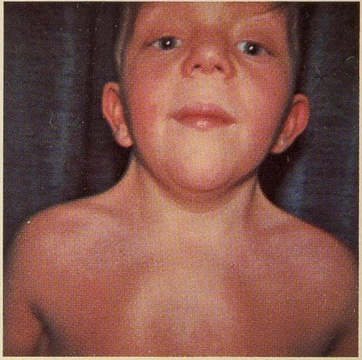
Robinow syndrome
Rare genetic disorder causing dwarfism and distinctive facial features.

Robinow syndrome is a very rare genetic condition marked by short-limbed dwarfism, distinct facial and head features, external genital abnormalities, and problems with vertebral segmentation. It was first identified in 1969 by human geneticist Meinhard Robinow, together with doctors Frederic N. Silverman and Hugo D. Smith, in a report published in the *American Journal of Diseases of Children*. By 2002, more than 100 cases had been recorded in medical literature.
The condition comes in two forms: dominant and recessive, with the dominant type occurring more often. People with the dominant form usually have milder symptoms. Those with the recessive form tend to have more severe physical features and more skeletal issues. The recessive type is especially common in Turkey, likely because many affected families trace back to a single town in eastern Turkey. Clusters of this recessive form have also been seen in Oman and Czechoslovakia.
Other names for the syndrome include Robinow-Silverman-Smith syndrome, Robinow dwarfism, fetal face syndrome, fetal facies syndrome, acral dysostosis with facial and genital abnormalities, and mesomelic dwarfism-small genitalia syndrome. The recessive form was once called Covesdem syndrome.
**Signs and symptoms**
Robinow described the facial appearance of affected individuals as resembling a fetus, coining the term "fetal facies." This includes a small face, widely spaced eyes, a short upturned nose, a prominent forehead, and a flat nasal bridge. The upper lip may appear tented, which can reveal crowded teeth, a tongue tie, or gum overgrowth. Although the eyes themselves do not bulge, abnormalities in the lower eyelid can create that impression; surgery may be needed if the eyes cannot close fully. Ears may be low-set or have a misshapen pinna.
Dwarfism is present, along with short lower arms, small feet, and small hands. Fingers and toes may be unusually short and bent sideways (laterally or medially). The thumb may be displaced, and some patients—particularly in Turkey—have ectrodactyly (missing digits). All patients have vertebral segmentation problems. Those with the dominant form typically have at most a single butterfly vertebra, while those with the recessive form may have hemivertebrae, fused vertebrae, and rib abnormalities. Some cases resemble Jarcho-Levin syndrome or spondylocostal dysostosis.
Quick Facts
- Causes
- disorder to the ROR2 gene on position 9 of the long arm of chromosome 9
Facts from the source article.
Lore & Background
Robinow syndrome was first described in 1969 by human geneticist Meinhard Robinow, along with physicians Frederic N. Silverman and Hugo D. Smith, in the American Journal of Diseases of Children. The disorder is characterized by short-limbed dwarfism, abnormalities in the head, face, and external genitalia, and vertebral segmentation. Two forms exist: dominant and recessive, with the dominant form being more common and generally less severe. The recessive form is particularly frequent in Turkey, with patients' families traced to a single town in Eastern Turkey, and clusters have also been documented in Oman and Czechoslovakia.
Reader's Guide
Robinow syndrome is significant as a rare genetic disorder that illustrates the interplay between genetic inheritance and phenotypic expression. The disorder's two forms—dominant and recessive—show distinct severity patterns, with the recessive form often more physically marked and associated with more skeletal abnormalities. Genetic studies have linked the recessive form to the ROR2 gene on chromosome 9, while the dominant form has been linked to WNT5A, DVL1, DVL3, FZD2, and NXN genes, all part of the WNT signaling pathway. The syndrome's legacy includes its role in understanding fetal facies, vertebral segmentation, and the genetic basis of skeletal development. Treatment is typically managed by a multidisciplinary team, and prenatal diagnosis via ultrasound is possible from 19 weeks. The disorder's association with congenital heart defects in about 15% of patients and developmental delays in another 15% underscores its clinical complexity.
Did You Know?
- The disorder was first described in 1969 by Meinhard Robinow, Frederic N. Silverman, and Hugo D. Smith.
- About 15% of reported patients suffer from congenital heart defects, most commonly pulmonary stenosis and atresia.
- The autosomal dominant form has been linked to the WNT5A, DVL1, and DVL3 genes.
Discovery, Nomenclature & Early Documentation
The condition entered the medical record in 1969 when Meinhard Robinow, a German-American human geneticist who lived from 1909 to 1997, co-authored a description with physicians Frederic N. Silverman and Hugo D. Smith in the American Journal of Diseases of Children. Over the ensuing decades the syndrome accumulated a striking catalogue of alternative labels, each reflecting a different phenotypic window through which clinicians first encountered it: Robinow-Silverman-Smith syndrome, Robinow dwarfism, fetal face, fetal face syndrome, fetal facies syndrome, acral dysostosis with facial and genital abnormalities, and mesomelic dwarfism-small genitalia syndrome. The recessive variant carried yet another historical tag, Covesdem syndrome. By 2002, more than one hundred individual cases had been documented in the literature, a pace that underscores how slowly this extremely rare disorder was being recognized. The proliferation of names testifies to the fact that physicians initially met the condition through skeletal, facial, or genital presentations before the unifying genetic picture finally coalesced.
Clinical Presentation & Phenotypic Spectrum
The defining facial feature is what Robinow termed fetal facies: a small face with widely spaced eyes, a short upturned nose, a prominent forehead, and a flat nasal bridge. The upper lip may appear tented, exposing dental crowding, tongue tie, or gum hypertrophy. Although the globes themselves do not protrude, lower-eyelid abnormalities can create that illusion, and surgical intervention may be needed when full eyelid closure is unattainable. Ears can sit low on the head or display pinnae deformity. Skeletally, affected individuals show short-limbed dwarfism, small hands and feet, abnormally short or bent digits, and thumb displacement; some Turkish patients additionally experience ectrodactyly. Vertebral segmentation defects are universal, yet their severity diverges sharply between the dominant form, where at most a single butterfly vertebra appears, and the recessive form, which can produce hemivertebrae, vertebral fusion, and rib anomalies that sometimes mimic Jarcho-Levin syndrome or spondylocostal dysostosis. Genital findings include micropenis in males with normally developed testes, undescended testicles, or hypospadias; in females, a reduced clitoris, underdeveloped labia, and occasionally vaginal atresia or haematocolpos.
Genetics & Geographic Clusters
Molecular work has anchored the autosomal recessive form to the ROR2 gene on the long arm of chromosome 9, a gene governing bone and cartilage growth that also underlies autosomal dominant brachydactyly B. The dominant variant, by contrast, maps to three genes—WNT5A, DVL1, and DVL3—with two additional candidates, FZD2 and NXN, also implicated. All of these belong to the WNT signaling pathway, a metabolic system critical to the secretion of various compounds during both fetal and adult life. The dominant form is frequently the product of de novo mutations and tends to be milder. Geographically, the recessive form clusters strikingly in Turkey, where affected families trace back to a single town in the eastern part of the country, pointing to a common ancestral origin. Comparable autosomal recessive clusters have been documented in Oman and in what was then Czechoslovakia, reinforcing the role of founder effects in shaping the syndrome's global distribution.
Diagnosis, Treatment & Associated Conditions
Suspected through clinical findings and family history, the diagnosis is confirmed by identifying typical ROR-2 biallelic pathogenic variants via molecular genetic testing. Prenatal detection is achievable by fetal ultrasound as early as nineteen weeks, though separating the milder dominant phenotype from a more severe recessive case can prove difficult; genetic counseling is offered when a relevant family history exists. Management is inherently multidisciplinary, addressing a broad constellation of comorbidities. These include frequent ear infections, hearing loss, hypotonia, respiratory difficulties, eating problems, light sensitivity, and esophageal reflux. Roughly fifteen percent of reported patients carry congenital heart defects, most commonly pulmonary stenosis or atresia, while a similar proportion exhibit developmental delays despite generally normal intelligence. Renal involvement—hydronephrosis and cystic dysplasia of the kidney—elevates the risk of urinary tract infections. Fertility data remain sparse, though every documented male who reproduced carried the dominant form, leaving the reproductive potential of recessive-variant patients uncertain.
Frequently Asked Questions
Who is Robinow syndrome?
Robinow syndrome is a very rare genetic condition first identified in 1969 by human geneticist Meinhard Robinow together with Frederic N. Silverman and Hugo D. Smith, who published their findings in the American Journal of Diseases of Children. It is also referred to as Robinow-Silverman-Smith syndrome in medical genetics literature.
What are Robinow syndrome's powers/role?
The condition presents with short-limbed dwarfism, distinctive facial and head features, external genital abnormalities, and vertebral segmentation problems. It exists in two inheritance forms—autosomal dominant (more common) and autosomal recessive.
Why is Robinow syndrome important?
As one of the earliest well-characterized forms of short-limbed dwarfism with clearly defined dominant and recessive inheritance patterns, it helped shape how geneticists classify and study skeletal dysplasias. By 2002, more than 100 cases had been documented, cementing its place in medical genetics.
When was Robinow syndrome first introduced?
The condition was formally described in a 1969 report by Robinow, Silverman, and Smith, marking its debut in the medical literature. Over the following decades, case reports accumulated until the total surpassed one hundred by the early 2000s.
More in Syndromes affecting stature 1-22
Spotted an error? Know more?
Reader corrections go straight into our review queue. Suggest an edit · How this site is sourced