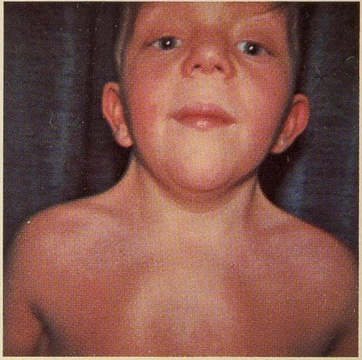
Rothmund–Thomson syndrome
Rare genetic disorder with poikiloderma, cataracts, and cancer risk.

Rothmund–Thomson syndrome (RTS) is a rare autosomal recessive skin condition characterized by a sun-sensitive rash with poikiloderma and telangiectasias, juvenile cataracts, saddle nose, congenital bone defects, and an increased incidence of osteosarcoma. The syndrome is caused by mutations in the RECQL4 gene, which encodes a DNA helicase essential for DNA replication initiation and repair, and is associated with features of accelerated aging.
- Field
- Medical genetics
- Known for
- Rare autosomal recessive skin condition with poikiloderma, juvenile cataracts, bone defects, and increased cancer risk
- Genetic cause
- Mutation in RECQL4 gene at chromosome 8q24.3
- Inheritance
- Autosomal recessive
- Associated cancer
- Osteosarcoma
Lore & Background
The condition was originally described by August von Rothmund in 1868, and further descriptions were published by Matthew Sydney Thomson in 1936. RTS is caused by a mutation of the RECQL4 gene, located at chromosome 8q24.3, and is inherited in an autosomal recessive manner, meaning two copies of the defective gene are required for the disorder to manifest. Parents of an affected individual each carry one copy of the defective gene but typically show no signs or symptoms.
Reader's Guide
Rothmund–Thomson syndrome is significant as a model for understanding the relationship between DNA repair defects and accelerated aging. The RECQL4 gene plays a crucial role in DNA end resection, the initial step for homologous recombination-dependent double-strand break repair, and is also necessary for non-homologous end joining, nucleotide excision repair, and base excision repair. Deficient RECQL4-mediated DNA repair is consistent with the DNA damage theory of aging. In humans, individuals with RTS and the RECQL4 germline mutation exhibit clinical features of accelerated aging, including atrophic skin, pigment changes, alopecia, osteopenia, cataracts, and increased cancer incidence. RECQL4 mutants in mice also show features of accelerated aging. The syndrome's association with osteosarcoma highlights the importance of DNA helicases in tumor suppression.
Did You Know?
- The skin is normal at birth; between 3 and 6 months of age, poikiloderma develops on the cheeks.
- There have been several reported cases of RTS associated with osteosarcoma.
Frequently Asked Questions
What is Rothmund–Thomson syndrome?
Rothmund–Thomson syndrome is a rare, inherited medical-genetics condition that affects the skin, eyes, and skeletal system. It presents with a sun-sensitive rash showing poikiloderma and telangiectasias, early-onset cataracts, a characteristic saddle-shaped nose, and congenital bone abnormalities.
What is Rothmund–Thomson syndrome's root cause?
The condition is traced to mutations in the RECQL4 gene located at chromosome 8q24.3. This gene encodes a DNA helicase protein that plays a key role in initiating DNA replication and repairing genetic damage, and its dysfunction also drives features resembling accelerated aging.
What are Rothmund–Thomson syndrome's hallmark features?
The most recognizable signs include a poikilodermic rash that worsens with sun exposure, juvenile cataracts, a flattened nasal bridge, and congenital skeletal defects. Together these give affected individuals a distinctive appearance that often leads to early diagnosis.
How is Rothmund–Thomson syndrome inherited?
It follows an autosomal recessive pattern, meaning a person must receive two defective copies of the RECQL4 gene—one from each parent—to develop the syndrome. Parents who carry only one mutated copy are typically unaffected but can pass the variant to their children.
What is Rothmund–Thomson syndrome's most significant long-term risk?
Individuals with this syndrome face a notably elevated incidence of osteosarcoma, a malignant bone tumor. Because of this heightened cancer susceptibility, ongoing surveillance and periodic screening are a standard part of long-term medical management.
More in Syndromes affecting stature 1-22
Spotted an error? Know more?
Reader corrections go straight into our review queue. Suggest an edit · How this site is sourced