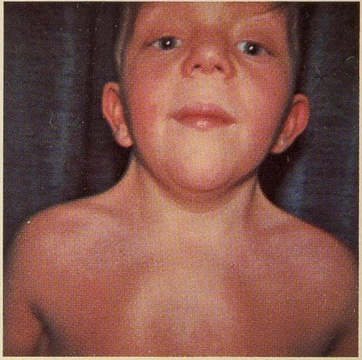
Tatton-Brown–Rahman syndrome
Rare overgrowth and intellectual disability syndrome.

Tatton-Brown–Rahman syndrome (TBRS) is a rare condition marked by excessive growth and intellectual disability. It results from autosomal dominant mutations in the DNMT3A gene, and was first identified in 2014 by Katrina Tatton-Brown, Nazneen Rahman, and their team.
People with TBRS show overgrowth along with mild to severe intellectual disability. All individuals have some degree of developmental delay or intellectual disability; about 86% of well-documented cases are in the mild to moderate range. Most have height, head circumference, and weight at least two standard deviations above average. Generalized joint hypermobility occurs in roughly 75% of cases, and low muscle tone in about 55%, often linked to musculoskeletal pain and joint instability. Around half of individuals have behavioral or psychiatric issues, most commonly autism spectrum disorder. Febrile and afebrile seizures are reported in about 20% of cases. The facial features include a round face, thick horizontal low-set eyebrows, vertically narrow eye openings, and prominent upper front teeth; these typically become most noticeable in adolescence. Congenital heart defects and aortic root dilation are seen in about 10% of cases. About 20% of males have undescended testicles. Vesicoureteral reflux and hypospadias have also been reported. Brain imaging may show abnormalities such as corpus callosum anomalies, a small posterior cranial fossa, asymmetric arcuate and uncinate fasciculi, a deep left Sylvian fissure, and increased cortical thickness.
The condition is caused by autosomal dominant mutations in the DNMT3A gene. Nearly all cases arise from new mutations; rarely, a pathogenic variant is inherited from an affected parent or an unaffected parent with mosaicism. These mutations are thought to interfere with the enzyme's role in H3K36me2-regulated non-CpG DNA methylation.
Most individuals with TBRS are generally healthy. Specific symptoms are treated as needed. Early childhood intervention and special education (such as IFSP and IEP in the United States) are recommended. Because DNMT3A mutations are common in acute myeloid leukemia, TBRS may carry an increased risk of cancer.
Quick Facts
- Synonym
- DNMT3A overgrowth syndrome
- Field
- Medical genetics
- Symptoms
- Intellectual disability, overgrowth, facial dysmorphisms
- Onset
- Present at birth
- Causes
- DNMT3A mutation
- Diagnosis
- Molecular genetic testing
- Differential
- Cohen–Gibson syndrome, Fragile X syndrome, Malan syndrome, Simpson–Golabi–Behmel syndrome, Sotos syndrome, Weaver syndrome
- Treatment
- Based on symptoms
- Frequency
- 90 reported cases
- Named After
- Nazneen Rahman
Facts from the source article.
Lore & Background
TBRS is defined by overgrowth and mild-to-severe intellectual disability. All individuals with TBRS experience some degree of developmental delay and/or intellectual disability, with 86% of well-documented cases falling in the mild to moderate range. Most individuals with TBRS exhibit increased stature, head circumference, and weight at least two standard deviations above the mean. Generalized joint hypermobility and hypotonia are observed in ~75% and ~55% of cases, respectively, and are often associated with musculoskeletal pain and joint instability. Approximately half of individuals exhibit behavioral or psychiatric issues; the most common diagnosis is autism spectrum disorder. Febrile seizures and afebrile seizures have been reported in ~20% of individuals with TBRS. The facial gestalt of TBRS includes a round face; thick, horizontal, low-set eyebrows; vertically narrow palpebral fissures; and prominent maxillary central incisors. These features often become most clinically recognizable in adolescence. Congenital heart defects and aortic root dilatation have been observed in ~10% of cases. Approximately 20% of males with TBRS have cryptorchidism. Vesicoureteral reflux and hypospadias have been reported in some cases. Neuroimaging findings may include corpus callosum anomalies, small posterior cranial fossa, asymmetric arcuate and uncinate fasciculi, deep left Sylvian fissure, and increased cortical thickness.
Reader's Guide
TBRS is caused by autosomal dominant mutations in the DNMT3A gene. Nearly all cases are caused by de novo mutations; rarely, a pathogenic variant can be inherited from an affected parent or an unaffected mosaic parent. DNMT3A overgrowth mutations are hypothesized to interfere with the enzyme's role in H3K36me2-regulated non-CpG DNA methylation. The majority of individuals with TBRS are in good health. An individual's specific features are treated and managed as indicated. Early childhood intervention and special education (IFSP and IEP in the United States) are recommended. Because DNMT3A mutations are commonly observed in acute myeloid leukemia, TBRS may be associated with increased cancer risk. The syndrome's recognition in 2014 by Tatton-Brown, Rahman, and collaborators provided a framework for diagnosis and management of this overgrowth syndrome, distinguishing it from related conditions such as Sotos syndrome and Weaver syndrome.
Did You Know?
- 86% of well-documented cases of TBRS fall in the mild to moderate range of intellectual disability.
- Approximately half of individuals with TBRS exhibit behavioral or psychiatric issues, most commonly autism spectrum disorder.
More in Syndromes affecting stature 1-22
Spotted an error? Know more?
Reader corrections go straight into our review queue. Suggest an edit · How this site is sourced