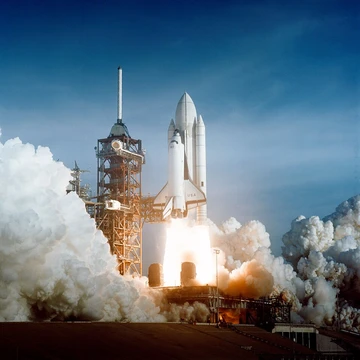
STS-8
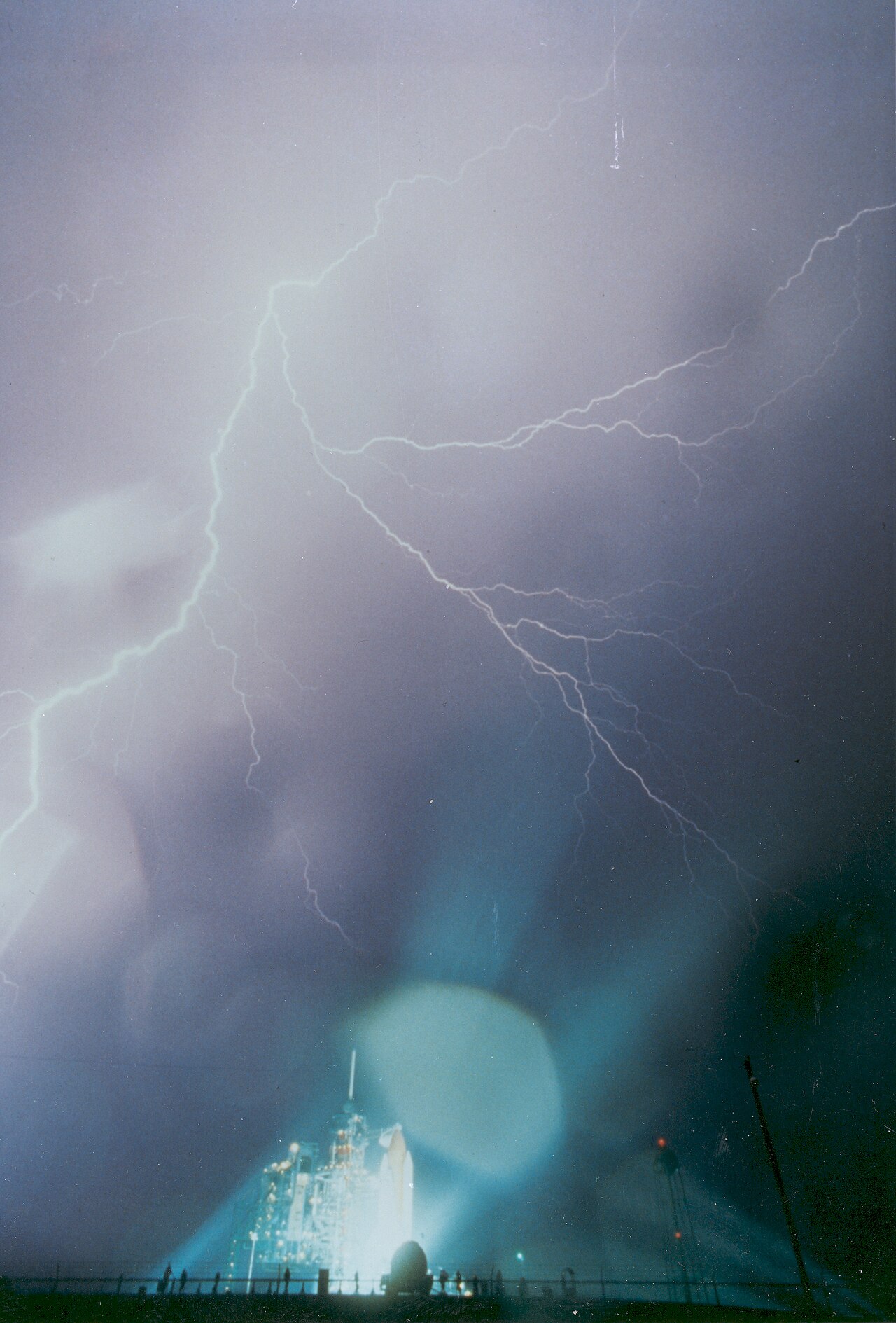
First night launch and landing of the Space Shuttle program.

NASA/Otis Imboden · Public domain
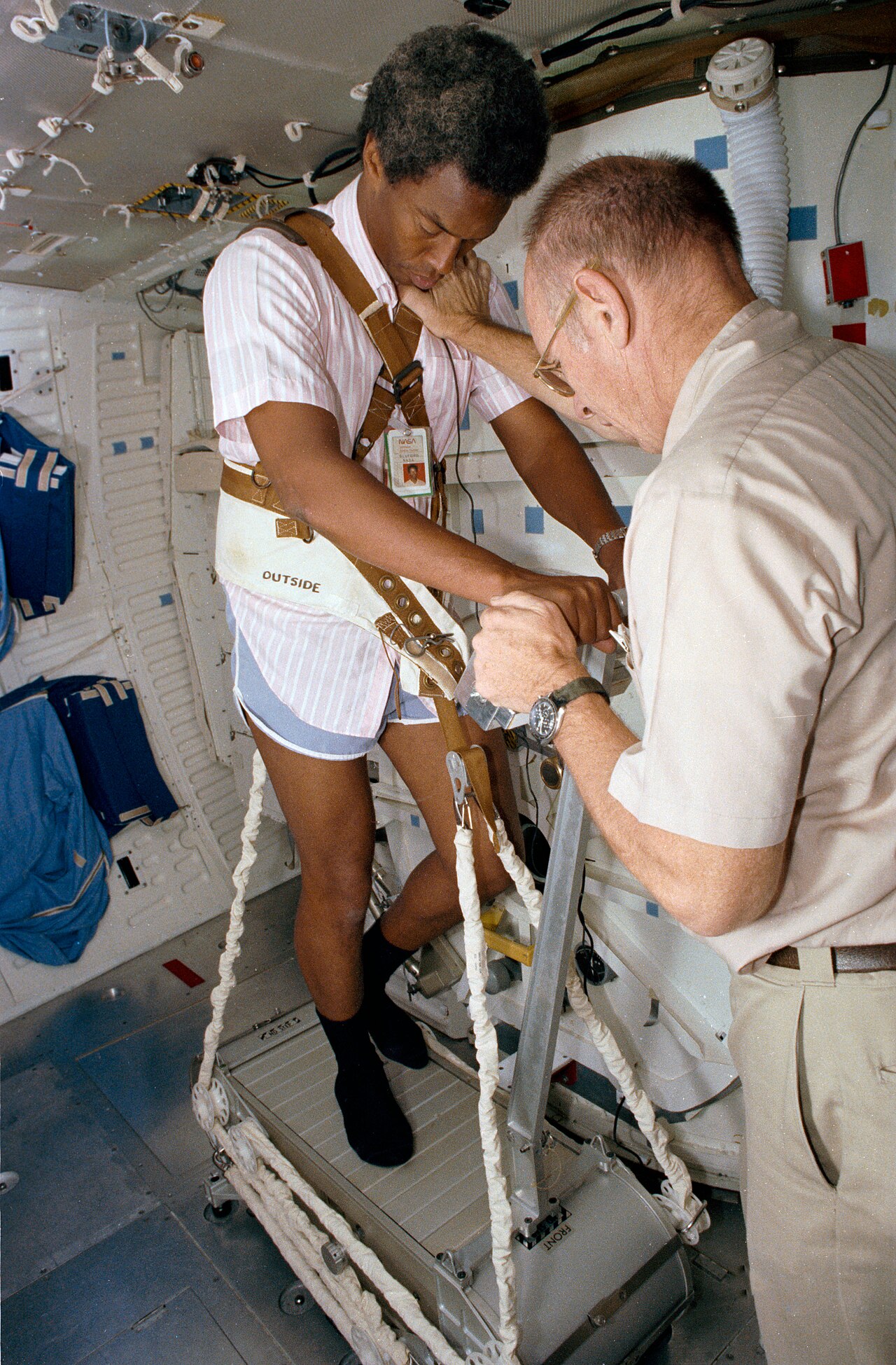
STS-8 marked the eighth flight of NASA’s Space Shuttle program and the third mission for the orbiter Challenger. Launched on August 30, 1983, and returning to Earth on September 5, it achieved the program’s first nighttime launch and first nighttime landing. The crew included Guion Bluford, who became the first African-American astronaut to travel into space. Although all planned research goals were met, the mission was later noted for a nearly catastrophic malfunction in one of its solid-fuel rocket boosters, discovered after the fact.
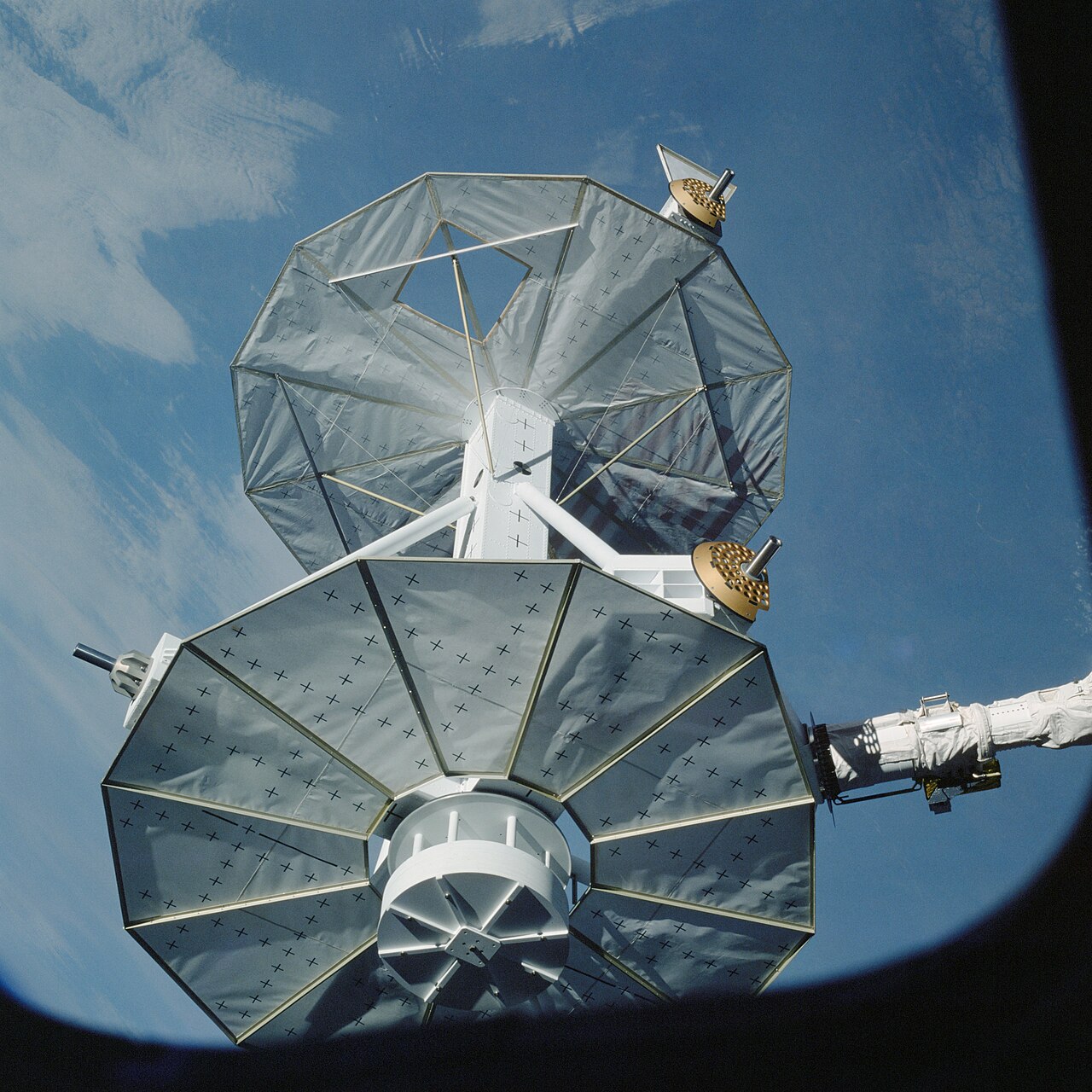
The main objective was deploying INSAT-1B, an Indian satellite designed for communications and weather observation, which the orbiter released before the satellite’s own PAM-D booster sent it into geostationary orbit. Replacing a delayed NASA communications satellite, an approximately 1.8-metric-ton dummy payload served as a secondary payload, used to test the shuttle’s Canadarm robotic arm. Scientific work aboard Challenger included testing new spacecraft materials and hardware in the space environment, studying biological materials in electric fields under microgravity, and investigating space adaptation syndrome, commonly called space sickness. The flight also served as a shakedown test for the TDRS-1 satellite, which was needed to support the upcoming STS-9 mission.
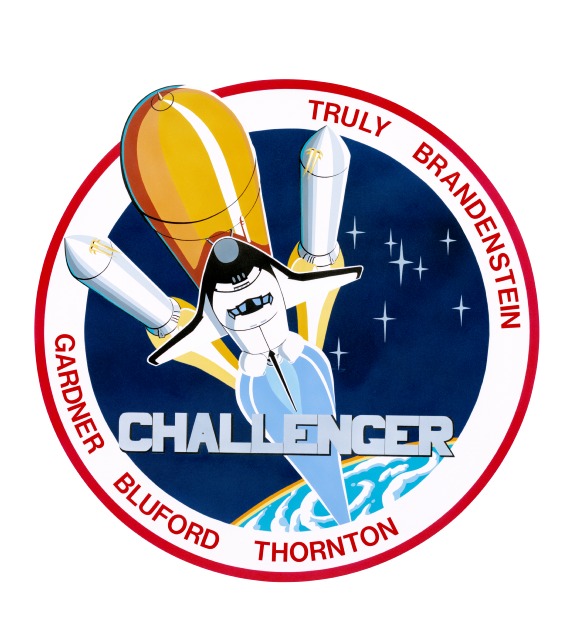
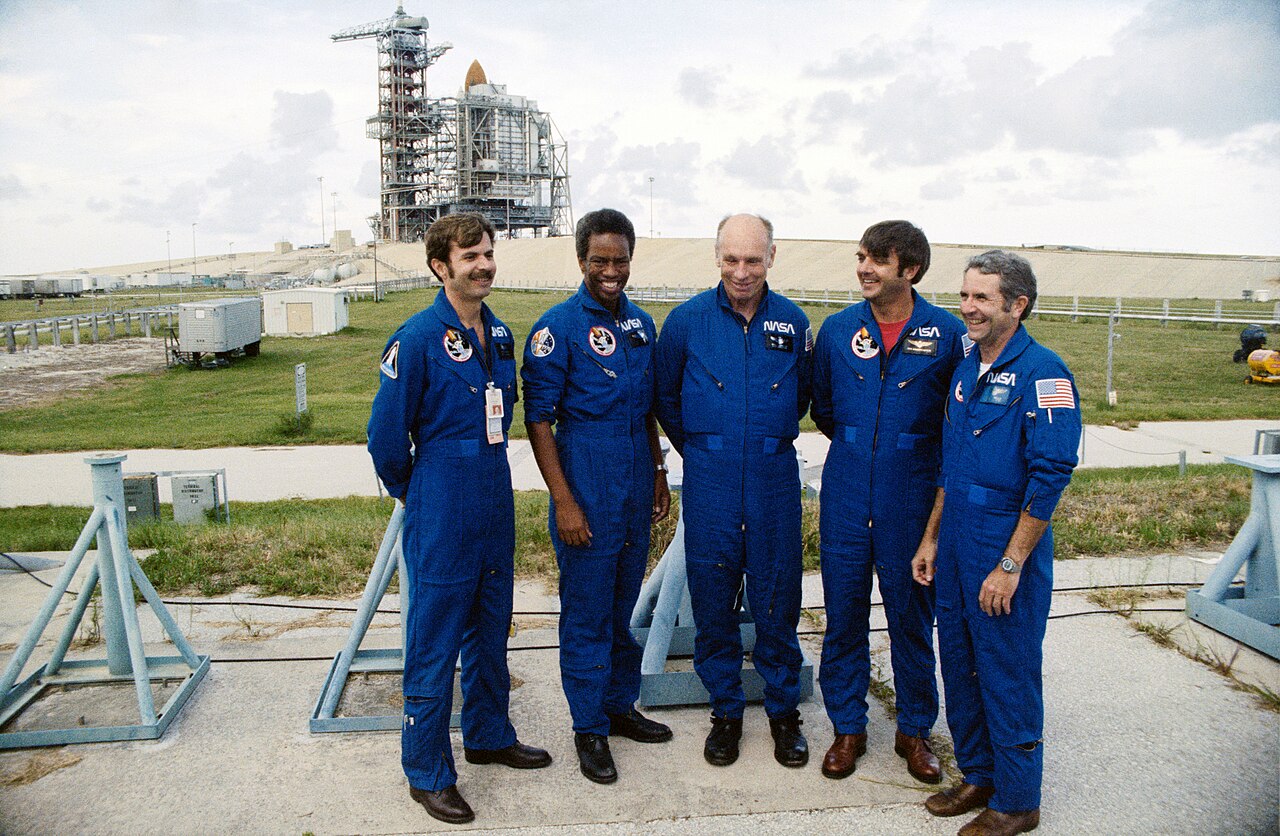
The five-person crew included three mission specialists, making STS-8 the second mission (after STS-7) to carry five people, the largest crew for a single spacecraft at that time. Commander Truly was the only veteran, having piloted STS-2 and flown on two Approach and Landing Tests aboard Enterprise in 1977, and earlier served as capsule communicator for all three Skylab missions and the Apollo-Soyuz Test Project. Brandenstein, Gardner, and Bluford were all recruited in 1978 and had been training since 1979. Originally planned for four crew members, Thornton was added as a third mission specialist in December 1982, eight months after the crew was named. Like Truly, he joined NASA in 1967 during the Apollo era. His role included running tests to gather data on physiological changes linked to space sickness, a growing concern as astronauts experienced it on shuttle flights. The orbiter carried two Extravehicular Mobility Units for emergency spacewalks, to be used by Truly and Gardner if needed.
Quick Facts
- Names List
- Space Transportation System-8
- Mission Type
- Communications satellite deployment
- Operator
- NASA
- Distance Travelled
- 4046660 km
- Orbits Completed
- 98
- Spacecraft
- 099
- Launch Mass
- 110108 kg
- Landing Mass
- 92508 kg
- Payload Mass
- 12011 kg
- Crew Size
- 5
- Crew Members
- Richard Truly · Daniel Brandenstein · Guion Bluford · Dale Gardner · William E. Thornton
- Launch Site
- Kennedy, LC-39A
Facts from the source article.
Lore & Background
The crew consisted of five astronauts: commander Truly, pilot Brandenstein, and mission specialists Gardner, Bluford, and Thornton. Truly was the only veteran, having flown on STS-2 and two Approach and Landing Tests. Bluford, Gardner, and Brandenstein were recruited in 1978. Thornton was added in December 1982, eight months after the crew was named, to conduct research on space adaptation syndrome.
Reader's Guide
STS-8 deployed the Indian satellite INSAT-1B and tested the Canadarm with a dummy payload. It carried experiments on atomic oxygen, heat pipes, and biological materials in electric fields. The mission was marred by the later discovery that a solid-fuel rocket booster had nearly malfunctioned catastrophically during launch. It also tested the TDRS-1 satellite for future missions.
Did You Know?
- STS-8 was the first Space Shuttle mission to launch and land at night.
- Guion Bluford became the first African-American astronaut to fly in space on this mission.
- The mission carried an approximately 1.8-metric-ton dummy payload to test the Canadarm.
- A solid-fuel rocket booster was later found to have almost malfunctioned catastrophically during launch.
A Career Measured in Orbits
Few spacecraft in history can claim a résumé as dense as Discovery's. Across twenty-seven years of active service, the orbiter lifted off and touched down thirty-nine times, a record that, as of late 2024, places it ahead of every other vehicle in the fleet. Its payload manifest reads like a catalogue of American ambition: the Hubble Space Telescope was deployed from its bay, and Discovery later returned twice to perform the second and third servicing missions that kept Hubble's optics sharp for decades. It also delivered the Ulysses solar probe and three Tracking and Data Relay Satellites into their operational orbits. In 1998, seventy-seven-year-old John Glenn rode aboard STS-95, becoming the oldest human to reach space at that point in history. The following year, on May 27, 1999, Discovery became the first shuttle to dock with the International Space Station during STS-96, opening a chapter of assembly work that would define the rest of its career. Between research flights and ISS construction sorties, Discovery accumulated nearly a full year of cumulative time in orbit before its final landing.
Twice Chosen to Fly Again
When the Space Shuttle program faced its darkest hours, Discovery was the vehicle NASA turned to for redemption. After the Challenger disaster of 1986, the program was grounded for over two years, and when it finally resumed, Discovery was selected as the Return to Flight orbiter in 1988. The same distinction was bestowed upon it again after the Columbia tragedy of 2003: Discovery was named for both of the twin Return to Flight missions that flew in July 2005 and July 2006. In the wake of those two losses, Discovery also became the oldest surviving member of the shuttle fleet, a title that carried quiet weight. The shadow of tragedy also reshaped its operational plans. A West Coast mission, STS-62-A, had been slated for 1986 out of Vandenberg Air Force Base, but it was scrapped in the aftermath of Challenger. Discovery had even been modified alongside Challenger to accept the liquid-fueled Centaur-G booster, a capability that never saw operational use. Through it all, the orbiter endured, carrying the program back from the brink on two separate occasions.
Engineered to Be Different
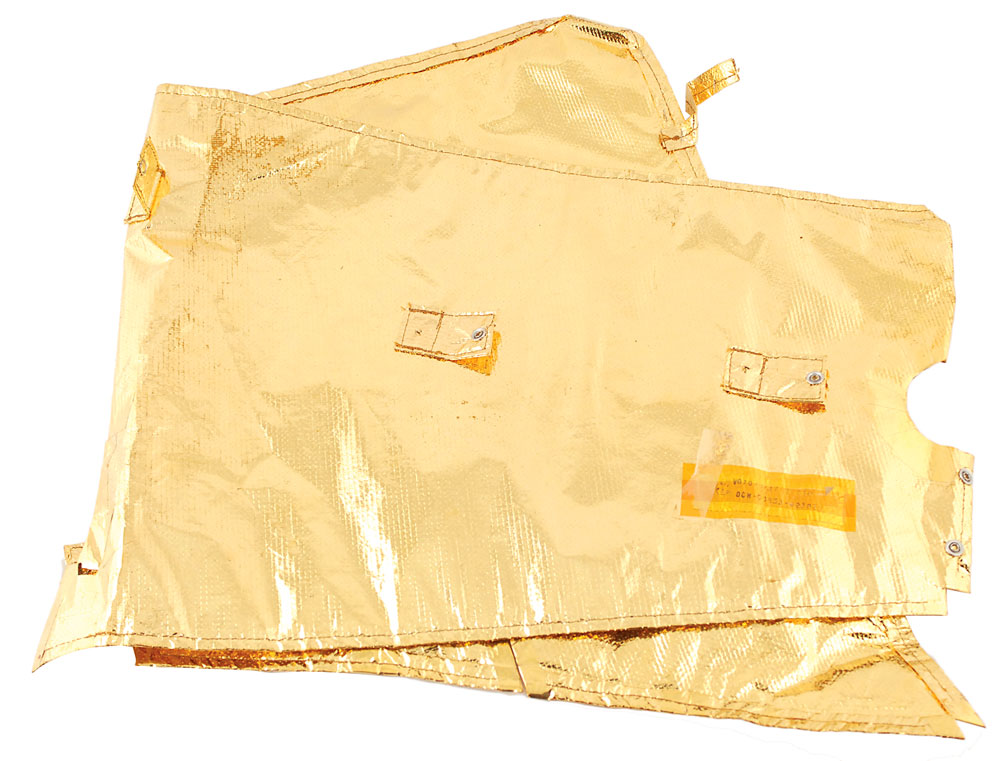
Discovery entered service in 1983 already lighter than its predecessors. Lessons from building and testing Enterprise, Columbia, and Challenger let engineers shave roughly 6,870 pounds off the orbiter's mass compared to Columbia. It weighed just six pounds more than Atlantis and 363 pounds more than Endeavour, reflecting ongoing refinements. Key optimizations included swapping white LRSI tiles on the fuselage for quilted AFRSI blankets, and building payload bay doors plus certain wing spars and beams from graphite epoxy instead of aluminum. Nearly 25,000 heat-resistant tiles still covered the vehicle to shield it from re-entry temperatures. A curious detail near the middle starboard window—black tiles where white ones were expected—gave Discovery a distinctive "teardrop" marking that let experienced observers identify it without reading its name. In late 1995, a nine-month maintenance period in Palmdale, California, added a fifth set of cryogenic tanks and an external airlock to prepare it for ISS work. It was ferried back to Kennedy on the back of a modified Boeing 747 in June 1996.
The Long Goodbye
Discovery was the first operational shuttle to be retired, touching down for the last time at Kennedy Space Center on March 9, 2011, after completing STS-133. It was followed in retirement by Endeavour and then Atlantis. After a month-long decontamination process, NASA offered the orbiter to the Smithsonian Institution's National Air and Space Museum for preservation and public display. It replaced Enterprise, which had occupied the Steven F. Udvar-Hazy Center until 2011. The journey to its new home was itself a spectacle: on April 17, 2012, Discovery rode piggy-back on a modified Boeing 747 to Washington Dulles International Airport, and two days later it was transferred to the Udvar-Hazy Center, where a welcome ceremony was held. Around 5:30 in the afternoon, the orbiter was rolled to what staff called its "final wheels stop." Even in retirement, Discovery's story continues to evolve. In 2025, Texas senators John Cornyn and Ted Cruz added a provision to the One Big Beautiful Bill Act allocating $85 million to relocate a space vehicle that has flown astronauts, a move widely understood to target Discovery for a return to Texas.
Gallery
Frequently Asked Questions
What is STS-8?
STS-8 was the eighth operational flight of NASA's Space Shuttle program, piloted by the orbiter Challenger. It lifted off on August 30, 1983, and splashed down on September 5, 1983, after a six-day mission.
Why is STS-8 considered a landmark mission?
It set two firsts for the program simultaneously: the very first nighttime launch and the very first nighttime landing of a Shuttle. It also carried Guion Bluford into orbit, making him the first African-American to travel to space.
What was the main objective of STS-8?
The primary payload was INSAT-1B, a communications satellite built for India, which the crew successfully deployed into orbit. Additional research experiments were also conducted, and all planned science goals were completed.
Did STS-8 experience any problems in flight?
After the mission, engineers identified a near-critical malfunction in one of the solid rocket boosters that could have endangered the vehicle. The issue was caught in post-flight inspection rather than during the flight itself.
Who flew on STS-8?
A five-person crew handled the mission, the most prominent name being Guion Bluford, whose flight broke a historic barrier as the first African-American astronaut. The remaining four crew members shared duties in piloting, mission operations, and payload management.
More in Space Shuttle missions 1-24
Spotted an error? Know more?
Reader corrections go straight into our review queue. Suggest an edit · How this site is sourced