STS-5
First operational shuttle mission deploying commercial satellites.

NASA · Public domain
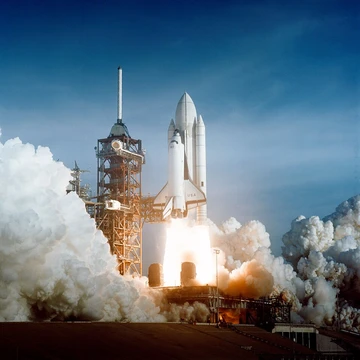
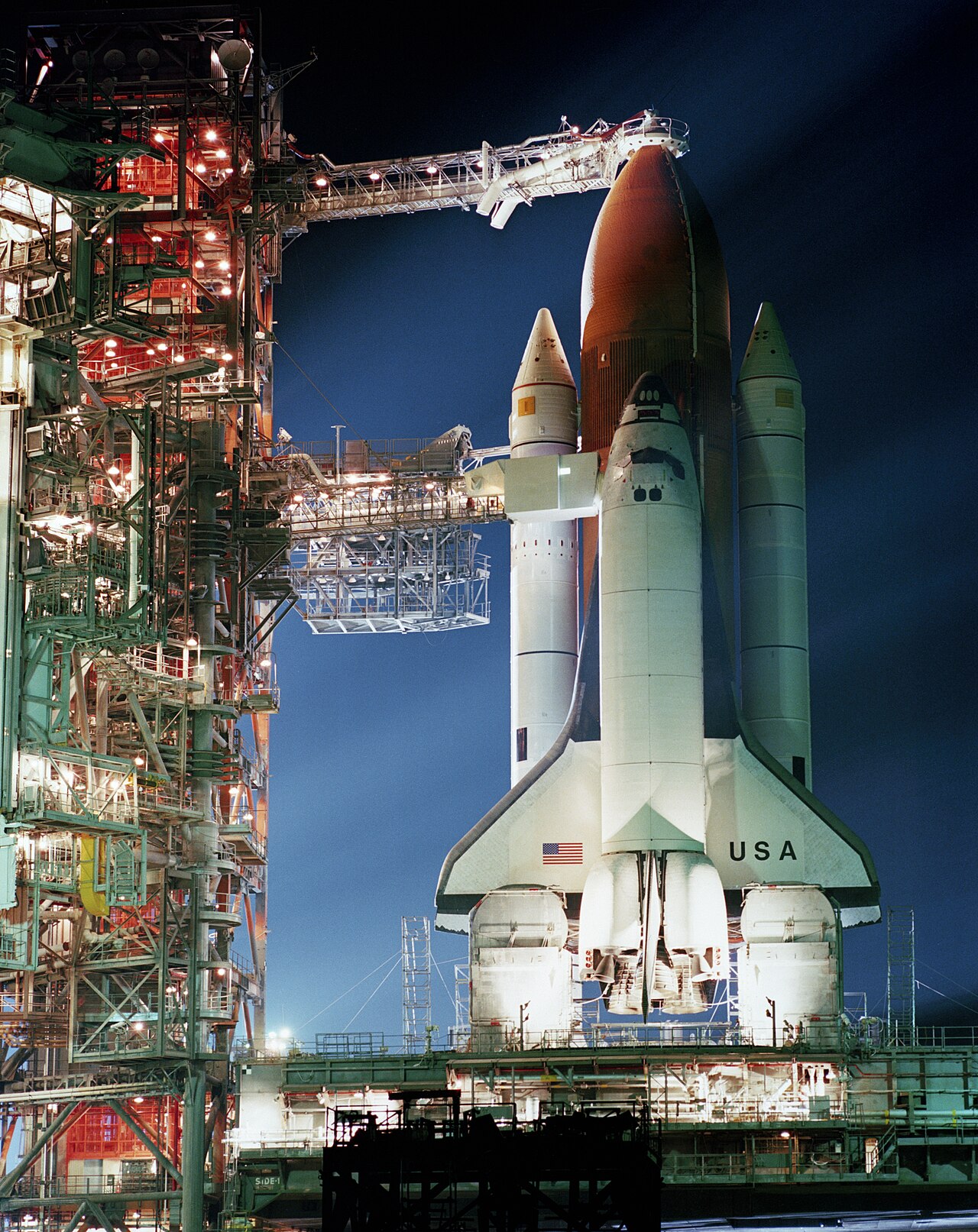
STS-5 marked the fifth launch of the Space Shuttle Columbia and the fifth mission in NASA's Space Shuttle program. Liftoff occurred on November 11, 1982, from Kennedy Space Center, with landing on November 16, 1982. This mission was notable as the first to place communications satellites in orbit from a shuttle and was officially designated the program's first operational flight.
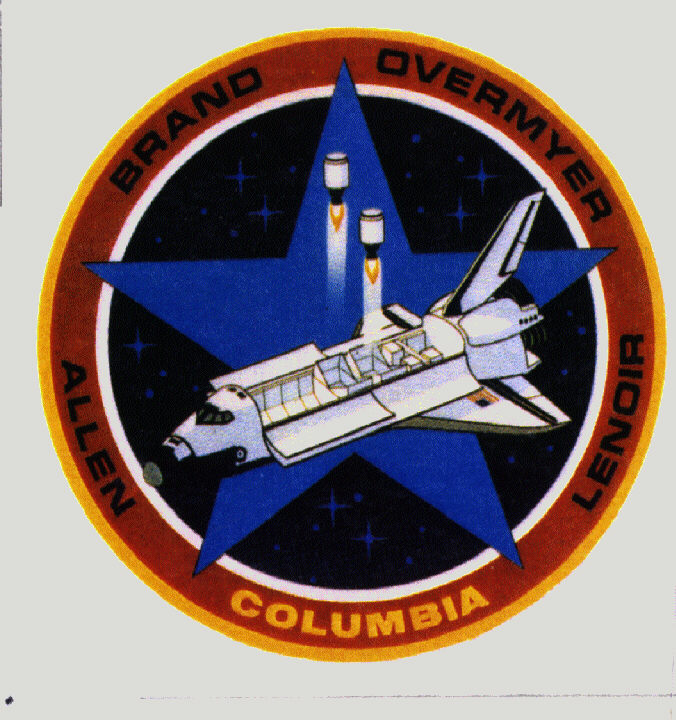
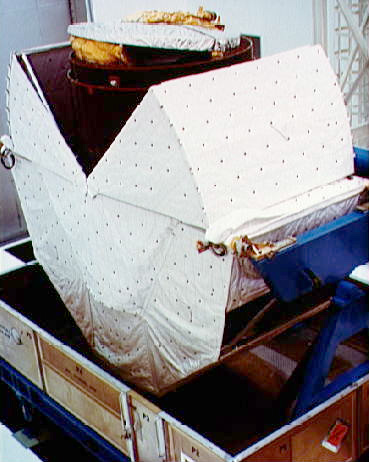
The crew of four—the largest ever to fly in space at that time—included Vance D. Brand, Robert F. Overmyer, Joseph P. Allen, and William B. Lenoir. Columbia launched on schedule at 07:19 a.m. EST. Onboard were two commercial communications satellites: SBS-3, owned by Satellite Business Systems, and Anik-C3, owned by Telesat Canada, both built by Hughes as HS-376-series models. These satellites were successfully deployed and later boosted to geosynchronous orbits using McDonnell Douglas PAM-D kick motors. The payload bay also carried a West German microgravity experiment canister.
A planned spacewalk—the first for the Shuttle program—was intended to test new space suits. However, astronaut Lenoir experienced motion sickness, delaying the test by a day. Then a faulty oxygen regulator in Lenoir's suit and a broken recirculation fan in Allen's suit forced the cancellation of the extravehicular activity entirely, marking the first time in spaceflight history that suit problems scrubbed an EVA.
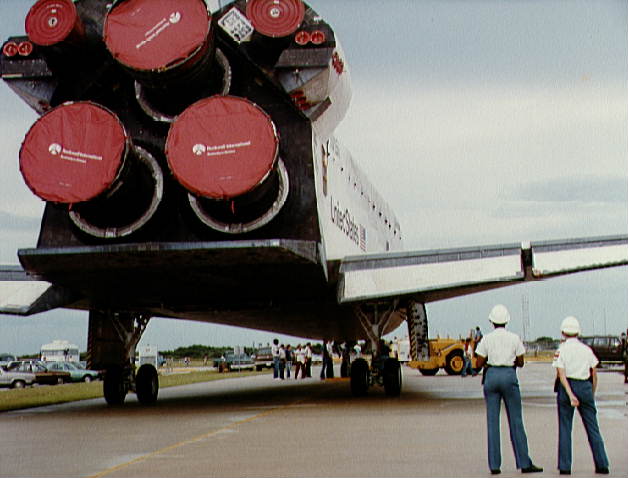
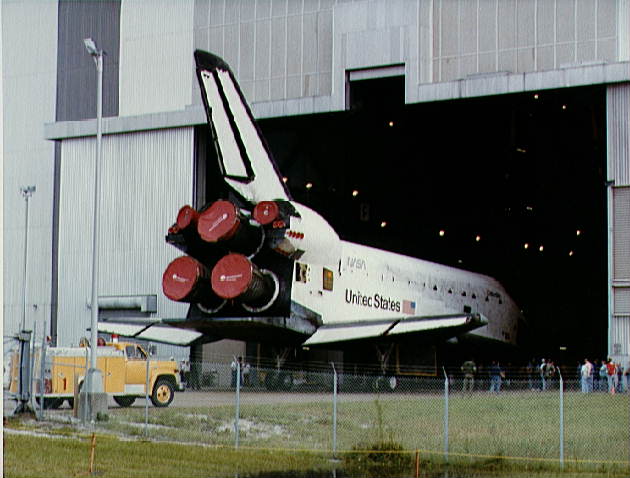
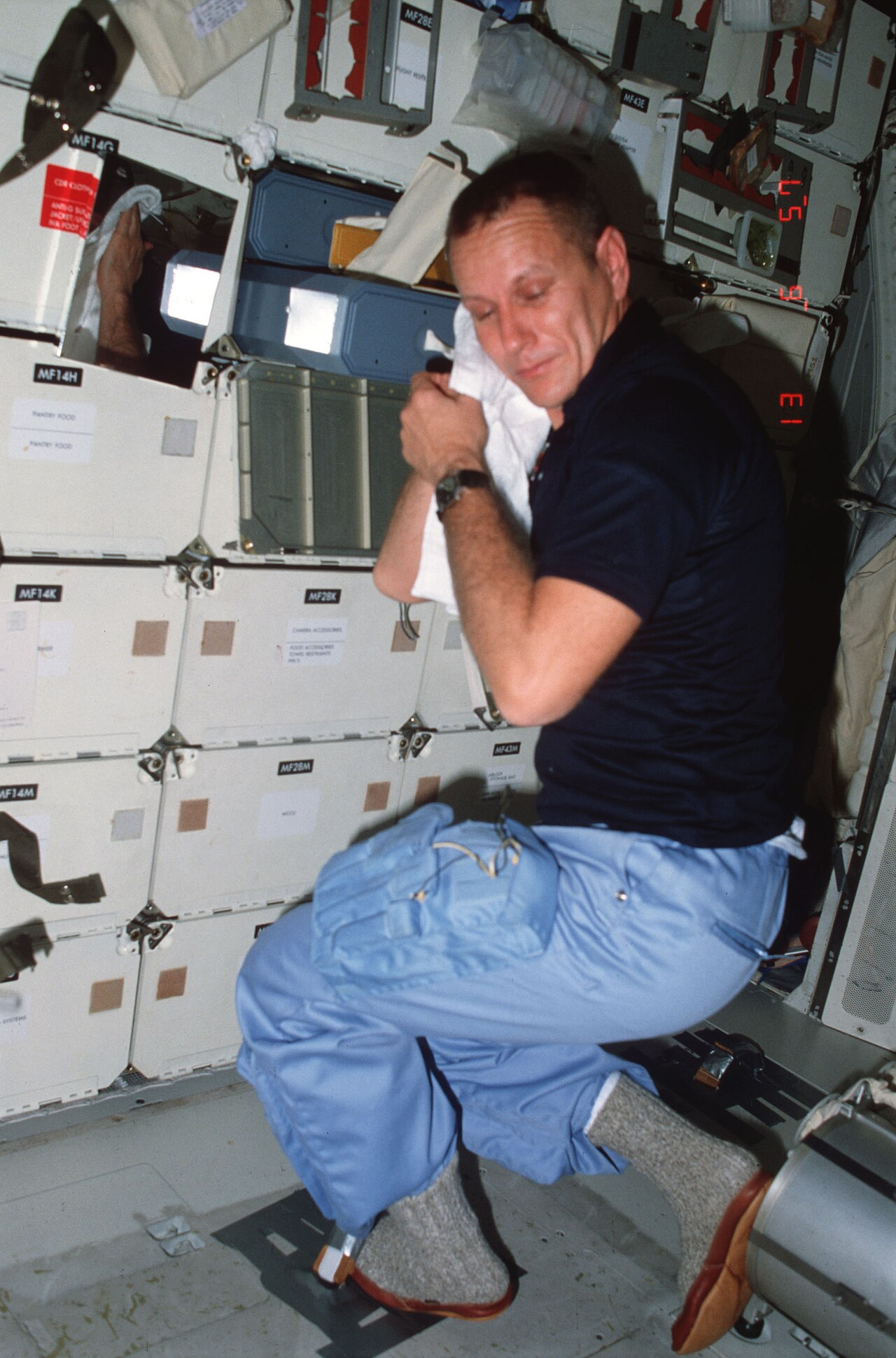
Columbia landed on Runway 22 at Edwards Air Force Base on November 16, 1982, at 06:33 a.m. PST, after 81 orbits and 3,397,082 kilometers traveled. The mission lasted 5 days, 2 hours, 14 minutes, and 26 seconds. Columbia returned to Kennedy Space Center on November 22. STS-5 was also the first Shuttle flight where the crew did not wear pressure suits during launch, reentry, or landing—a practice similar to Soviet Voskhod and Soyuz missions before the Soyuz 11 tragedy in 1971.
Although the Shuttle was declared operational after STS-4, the Columbia Accident Investigation Board later argued in its report on the 2003 Columbia disaster that the orbiter remained an experimental vehicle. The board noted that operational aircraft require thousands of safe flights in a final configuration, while the Shuttle had flown fewer than 200 missions with continuous modifications.
Quick Facts
- Names List
- Space Transportation System-5
- Mission Type
- Communications satellites deployment
- Operator
- NASA
- Distance Travelled
- 3397082 km
- Orbits Completed
- 81
- Spacecraft
- 102
- Launch Mass
- 112088 kg
- Landing Mass
- 91841 kg
- Payload Mass
- 14551 kg
- Crew Size
- 4
- Crew Members
- Vance D. Brand · Robert F. Overmyer · William B. Lenoir · Joseph P. Allen
- Launch Site
- Kennedy, LC-39A
Facts from the source article.
Lore & Background
STS-5 carried a crew of four, the largest spacecraft crew up to that time, and the first two commercial communications satellites to be flown aboard a shuttle. The satellites, SBS-3 owned by Satellite Business Systems and Anik-C3 owned by Telesat Canada, were deployed successfully and propelled into geosynchronous orbits by McDonnell Douglas PAM-D kick motors. Both were Hughes-built HS-376-series satellites. The mission also carried a West German-sponsored microgravity Getaway Special experiment canister in the payload bay.
Reader's Guide
STS-5 marked a transition in the Space Shuttle program, being the first mission declared 'operational' after STS-4. However, the Columbia Accident Investigation Board later asserted that the orbiter should never have been considered operational, noting that operational aircraft require thousands of safe flights in final configurations, whereas the shuttle had conducted under 200 flights with continuous modification. The mission also saw the first cancellation of an extravehicular activity in space program history due to space suit issues: a poorly functioning oxygen regulator in Lenoir's suit and a broken recirculation fan in Allen's suit forced the cancellation of the planned spacewalk. Additionally, STS-5 was the first shuttle flight in which the crew did not wear pressure suits for launch, reentry, and landing, a practice similar to Soviet Voskhod and Soyuz missions prior to Soyuz 11.
A Name Borrowed from the Sea
Named for a two-masted research vessel that served the Woods Hole Oceanographic Institution between 1930 and 1966, the orbiter OV-104 carried a maritime heritage into the stratosphere. Built by Rockwell International at its Southern California facility, Atlantis was delivered to Kennedy Space Center in eastern Florida in April 1985, arriving as the fourth operational shuttle and the second-to-last of the fleet. Its construction was notably faster than that of its predecessor Columbia, taking roughly half the time, and the finished vehicle weighed nearly three and a half short tons less. Standing 17.2 meters tall with a wingspan of 23.7 meters and a length of 37.2 meters, the orbiter tipped the scales at 68,635 kilograms with its three main engines installed. Among its unique capabilities, Atlantis shared with Challenger the distinction of being one of only two orbiters fitted to carry the Shuttle-Centaur upper-stage booster, a configuration that opened the door to deeper-space payload delivery.
First Flights and Planetary Pioneers
Atlantis lifted off for its maiden voyage on October 3, 1985, flying mission STS-51-J, which served as the second dedicated Department of Defense shuttle flight. Just fifty days later, the orbiter returned to space on STS-61-B, the program's second nighttime launch, setting a record for the shortest turnaround between consecutive missions. The Challenger disaster in 1986 then grounded the entire fleet, but when operations resumed, Atlantis flew ten missions between 1988 and 1992. Two of those, both in 1989, proved historic: STS-30 released the Magellan probe bound for Venus, making Atlantis the first shuttle to deploy an interplanetary spacecraft, while STS-34 sent Galileo on its long journey to Jupiter. These deployments marked a pivotal expansion of the shuttle's role beyond low Earth orbit, transforming the vehicle from a laboratory and satellite platform into a launchpad for deep-space exploration.
The Day the Tiles Fell
During the 1988 launch of STS-27, a fragment of insulation broke free from the right solid rocket booster and slammed into the orbiter's belly. The impact shattered more than seven hundred thermal protection tiles and knocked one completely away. The crew, directed to inspect the damage with the remote manipulator arm, confirmed extensive harm to the right wing's underside. Because the mission carried classified payloads, the only photographs transmitted to mission control were encrypted and of such low resolution that ground personnel dismissed the damage as mere 'lights and shadows,' ordering the crew to continue the flight as planned. The decision infuriated many aboard. When Atlantis touched down, it became the most heavily damaged shuttle ever to land safely. The crew's survival is credited to a steel L-band antenna plate that happened to sit directly beneath the missing tile. The parallel to the 2003 Columbia disaster, where a similar tile strike proved fatal on a more vulnerable carbon-carbon panel, makes this near-miss one of the program's most chilling footnotes.
Closing the Chapter
On July 8, 2011, Atlantis launched on STS-135, its thirty-third and final flight, which also marked the last mission of the entire Space Shuttle program. The flight had been authorized in October 2010 after STS-134, flown by Endeavour, was originally expected to close the era. STS-135 cleverly leveraged the processing already underway for a contingency 'Launch on Need' mission that would have been required if STS-134's crew had become stranded in orbit. Atlantis touched down at Kennedy Space Center on July 21, 2011, completing a career that spanned 4,848 orbits and nearly 126 million miles—more than 525 times the distance to the Moon. Along the way, the orbiter had delivered the Destiny laboratory and Quest airlock to the International Space Station, carried the Columbus module, serviced the Hubble Space Telescope, and docked seven times with Mir. Today, Atlantis rests on public display at the Kennedy Space Center Visitor Complex, a monument to the Space Shuttle era.
Gallery
Frequently Asked Questions
What is STS-5?
STS-5 was the fifth flight of Space Shuttle Columbia and the fifth mission in NASA's shuttle program, launching from Kennedy Space Center on November 11, 1982. NASA officially designated it the program's first fully operational flight, distinguishing it from the earlier developmental test missions.
Why is STS-5 considered a turning point in shuttle history?
It was the first time a shuttle placed commercial communications satellites into orbit, proving the vehicle could handle real revenue-generating payloads rather than just experimental hardware. That milestone effectively shifted the program from proving the orbiter worked to putting it to practical, operational use.
Who flew on the STS-5 crew?
Commander Vance D. Brand, Pilot Robert F. Overmyer, and Mission Specialists Joseph P. Allen and William B. Lenoir made up the four-person team. At the time of the flight, that was the largest crew ever carried in space.
What payload did STS-5 deploy?
Columbia carried two Tracking and Data Relay Satellite (TDRS) spacecraft intended for the Department of Defense and NASA. Their successful release marked the first commercial satellite deployment from a shuttle orbiter.
How long did the STS-5 mission last?
The flight ran for five days, two hours, fourteen minutes, and twenty-six seconds, from liftoff at 07:19 a.m. EST on November 11 to landing on November 16, 1982. Columbia touched down on schedule after completing the satellite deployments and remaining in-flight experiments.
More in Space Shuttle missions 1-24
Spotted an error? Know more?
Reader corrections go straight into our review queue. Suggest an edit · How this site is sourced