STS-26
First Space Shuttle mission after the Challenger disaster.

National Aeronautics and Space Administration. Lyndon B. Johnson Space Center. 2 · Public domain
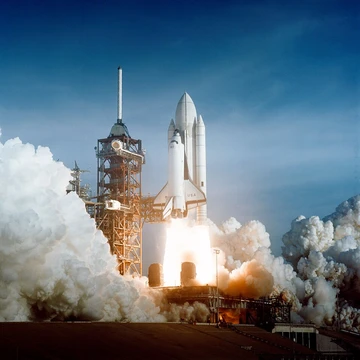
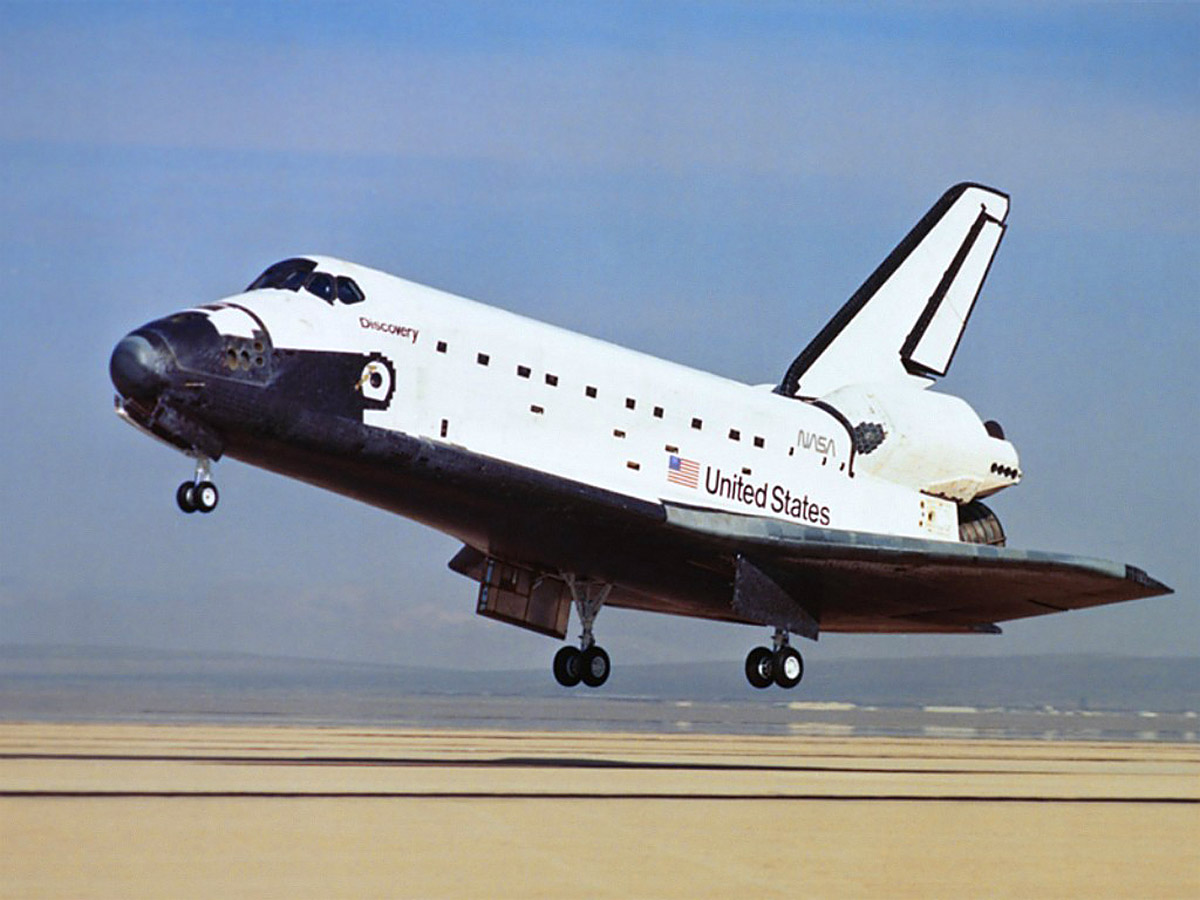
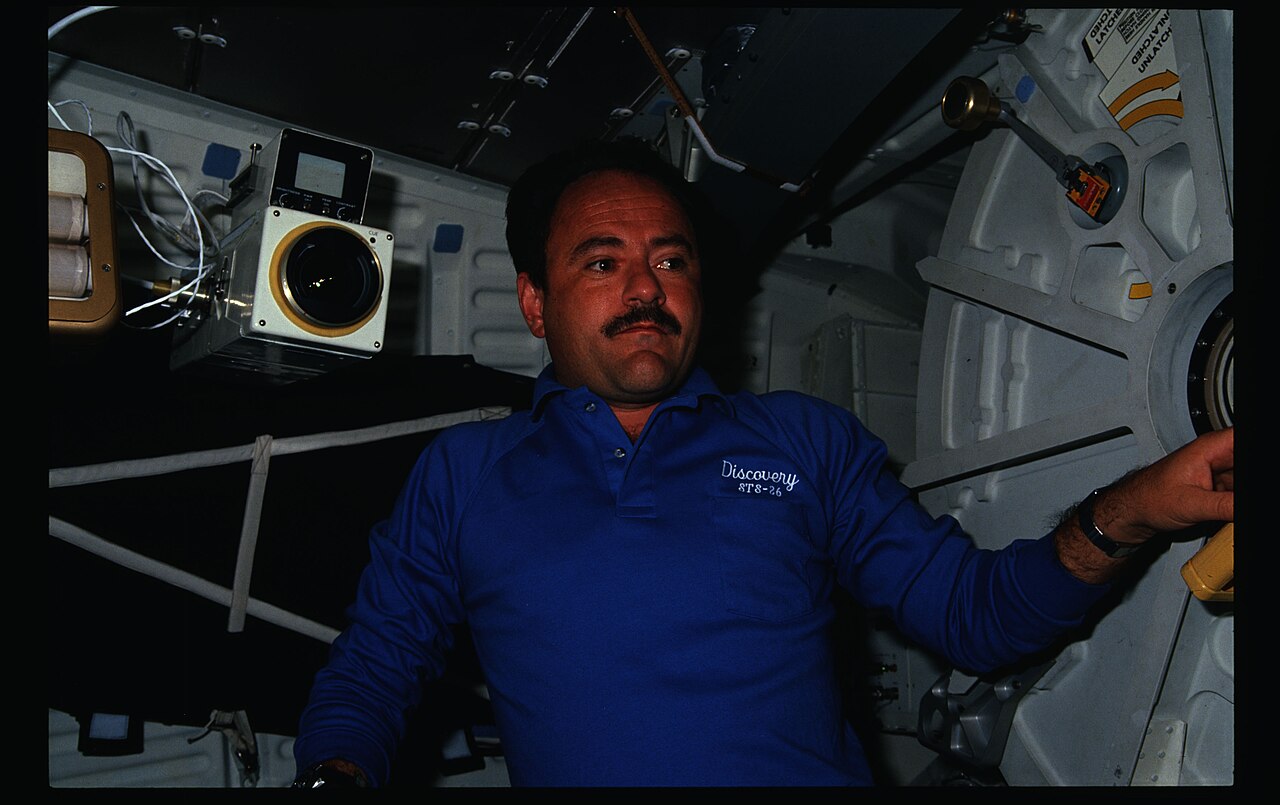
STS-26 marked NASA’s return to human spaceflight after the Challenger disaster, lifting off from Kennedy Space Center on September 29, 1988, and touching down four days later on October 3. It was the 26th Space Shuttle mission overall and Discovery’s seventh flight. The mission was the first since STS-9 to use the original STS numbering system, the first since STS-4 to require all crew members to wear pressure suits during launch and landing, and the first since STS-4 to include a bailout capability. It was also the first U.S. space mission since Apollo 11 to fly an all-veteran crew—every member had flown at least one prior mission. Technically designated STS-26R, the “R” stood for 'Reflight' or 'Return to Flight' and was used to avoid confusion with the original STS-26 designation that was canceled after Challenger. Only STS-26 through STS-28 (or STS-26R through STS-28R) used the 'R' designation.
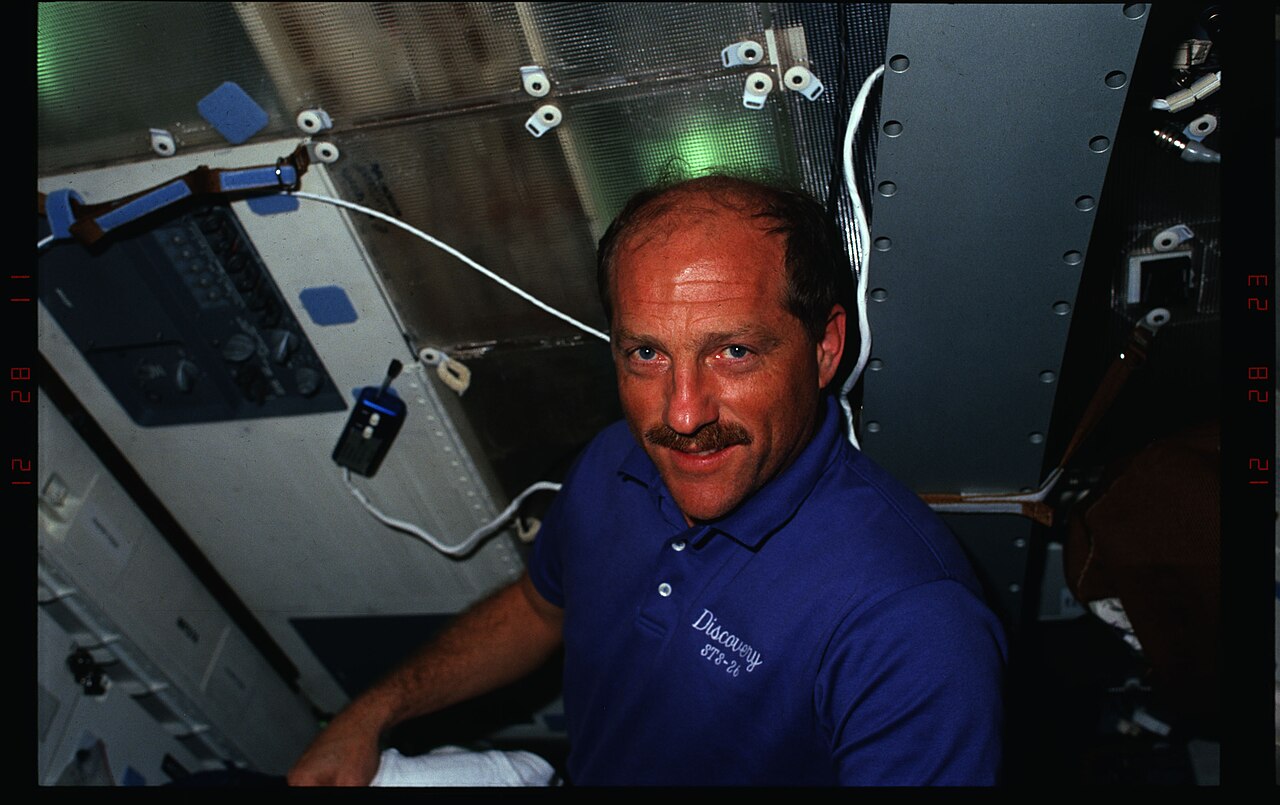
The crew was originally assigned to STS-61-F, a canceled mission that would have launched the Ulysses probe from Challenger in 1986. Commander Frederick H. “Rick” Hauck, Pilot Roy D. Bridges Jr., and Mission Specialists John M. “Mike” Lounge and David C. Hilmers were all on that roster. Richard O. Covey was not on that crew. Bridges never flew again after Challenger but later became director of Langley Research Center. Covey had served as CAPCOM during the STS-51-L launch, uttering the words “Challenger, go at throttle up” shortly before the orbiter broke apart; he would have been CAPCOM for the canceled STS-61-F as well.
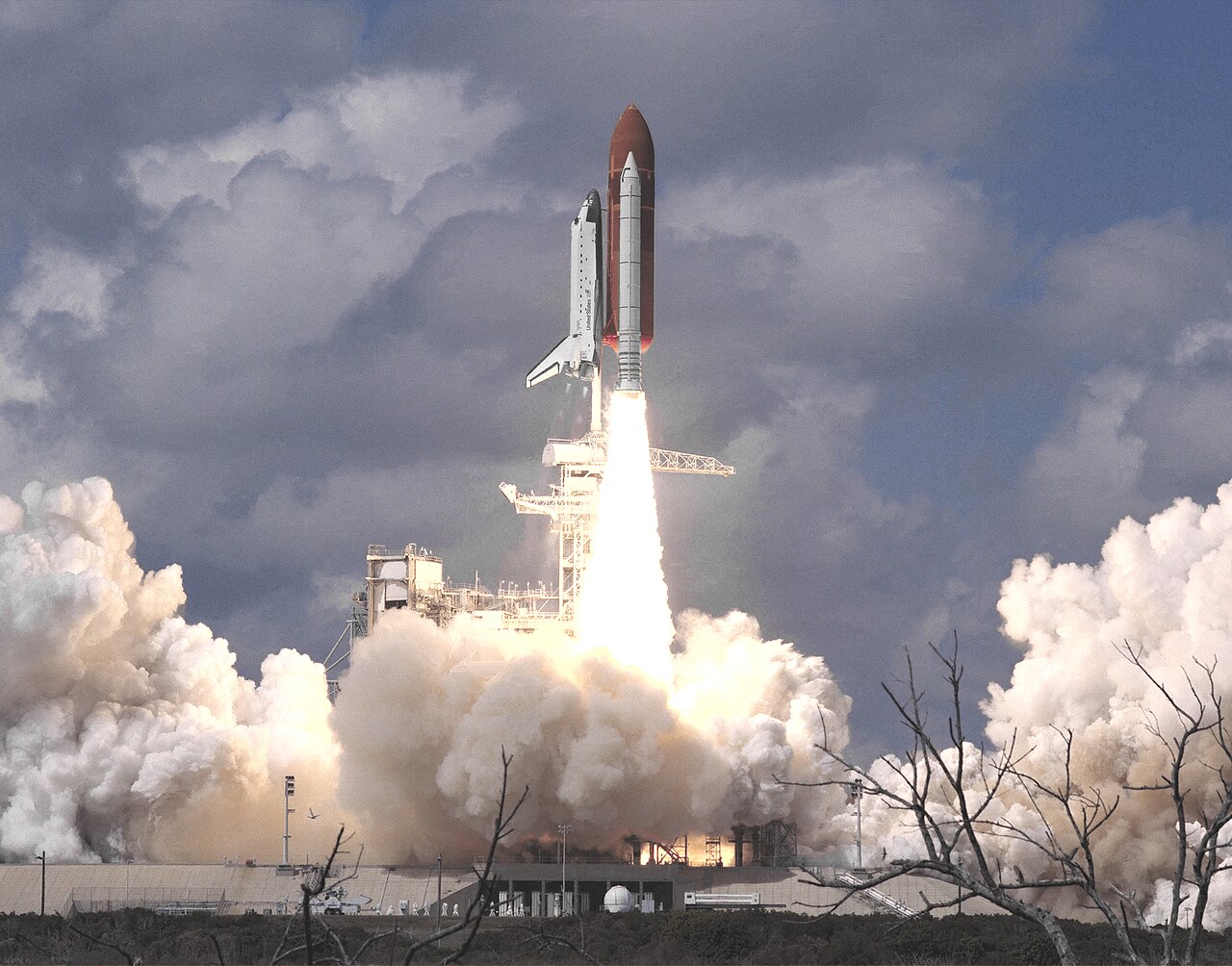
Discovery lifted off from Launch Complex 39B at 11:37 a.m. EDT on September 29, 1988—975 days after the Challenger disaster. The launch was delayed about one hour and 38 minutes primarily due to weather (crosswinds) and a minor issue with a cooling system fuse for one crew member's suit. After repairs, a waiver was issued for the wind conditions, as officials judged the safety margin for wind loads on the orbiter’s wing leading edges sufficient. At T−1:30, a cabin air pressure issue threatened a further hold at T−0:31, but it was quickly traced to oxygen system activation in the crew’s suits, and the launch proceeded. The primary payload, TDRS-C (later TDRS-3), was deployed successfully, and 11 mid-deck experiments were conducted. Redesigned solid rocket booster segment joints showed no signs of leakage or overheating.
Quick Facts
- Names List
- Space Transportation System-26 / STS-26R
- Mission Type
- Return to Flight and / TDRS-C deployment
- Operator
- NASA
- Distance Travelled
- 2703000 km
- Orbits Completed
- 64
- Spacecraft
- 103
- Launch Mass
- 115487 kg
- Landing Mass
- 88078 kg
- Payload Mass
- 21082 kg
- Crew Size
- 5
- Crew Members
- Frederick H. Hauck · Richard O. Covey · John M. Lounge · David C. Hilmers · George D. Nelson
- Launch Site
- Kennedy, LC-39B
Facts from the source article.
Lore & Background
The crew roster for STS-26 was based on the original crew assignment for STS-61-F, which would have launched the Ulysses probe from Challenger in 1986. Hauck, Lounge, and Hilmers were assigned to that flight, with Roy D. Bridges Jr. as pilot. Richard O. Covey was not on that crew. Covey was the CAPCOM operator during the STS-51-L launch who uttered the words, 'Challenger, go at throttle up' shortly before the orbiter disintegrated. The mission launched 975 days after the Challenger disaster, delayed about one hour and 38 minutes primarily due to weather (crosswinds) and a minor issue with a cooling system fuse for one crew member's suit.
Reader's Guide
STS-26 marked NASA's return to human spaceflight after the Challenger disaster, restoring confidence in the Space Shuttle program. It was the first mission since STS-4 to have all crew members wear pressure suits for launch and landing, and the first with bailout capacity since STS-4. The mission successfully deployed the TDRS-C satellite, conducted 11 mid-deck experiments, and tested a Voice Control Unit that revealed weightlessness alters human speech. Post-flight analysis showed severe damage to thermal protection tiles from cork insulation debris, a precursor to the Columbia disaster. The mission's all-veteran crew and successful execution demonstrated NASA's commitment to safety improvements.
Did You Know?
- STS-26 was the first U.S. space mission with an all-veteran crew since Apollo 11.
- The mission was delayed 975 days after the Challenger disaster.
Forged in California, Named for the Sea
Space Shuttle Atlantis, designated OV-104, was constructed by Rockwell International at its facility in Southern California before being transported to the Kennedy Space Center in eastern Florida, where it arrived in April 1985. As the fourth operational orbiter and the second-to-last of the fleet to be built, it represented a notable acceleration in production: its construction took roughly half the time required to build Columbia. When it rolled out of the Palmdale assembly plant, the vehicle weighed 68,635 kilograms—nearly 3.5 short tons less than its predecessor—while measuring 37.2 meters in length, 17.2 meters in height, and 23.7 meters in wingspan. Alongside Challenger, Atlantis was one of only two orbiters configured to carry the Shuttle-Centaur booster. Its name honors the RV Atlantis, a two-masted sailing vessel that served as the primary research ship for the Woods Hole Oceanographic Institution between 1930 and 1966, linking the orbiter to a long tradition of oceanic exploration.
Pioneering the Early Years
Atlantis made its first journey to orbit on October 3, 1985, aboard mission STS-51-J, which served as the second dedicated Department of Defense flight in the shuttle program. Just 50 days later, it launched again on STS-61-B—the program's second nighttime launch—setting a record for the shortest turnaround between consecutive missions for any orbiter. After the Challenger disaster grounded the entire fleet in 1986, Atlantis returned to service and went on to fly ten missions between 1988 and 1992. Two of those, both in 1989, were particularly historic: STS-30 released the Magellan probe toward Venus, making Atlantis the first shuttle to launch an interplanetary spacecraft, while STS-34 sent the Galileo probe on its long journey to Jupiter. These planetary deployments marked a new chapter for the program, extending its reach far beyond low Earth orbit and into the outer solar system.
The STS-27 Tile Crisis
During the 1988 launch of STS-27, a fragment of insulation broke loose from the right solid rocket booster and slammed into the belly of the orbiter, shattering more than 700 thermal protection tiles and knocking one completely free. The crew was directed to use the remote manipulator arm to inspect the damaged area beneath the right wing. Because the mission carried classified payloads, the only photographs transmitted to mission control were encrypted and of such poor quality that ground personnel dismissed the visible damage as mere "lights and shadows," ordering the crew to continue operations as planned. This decision deeply angered many aboard the vehicle. Despite the extensive tile loss, Atlantis touched down safely, becoming the most heavily damaged shuttle to ever complete a successful landing. The crew's survival is credited to a steel L-band antenna plate that happened to sit directly beneath the missing tile. A comparable tile-strike scenario would tragically claim the shuttle Columbia in 2003.
Closing the Shuttle Era
Atlantis's later career was defined by its contributions to the International Space Station and the Hubble Space Telescope. In 2001, it delivered the Destiny laboratory module on STS-98 and the Quest Joint Airlock on STS-104, both critical to U.S. operations aboard the station. After the Columbia disaster, it flew STS-115 in September 2006 to carry truss segments and solar arrays, and in 2008 it brought the Columbus laboratory—the European Space Agency's largest single contribution to the ISS. In May 2009, Atlantis carried a seven-person crew to Hubble for Servicing Mission 4, during which five spacewalks totaling 37 hours installed new cameras, batteries, and a gyroscope. Its final voyage, STS-135, launched July 8, 2011, and concluded with a landing at Kennedy on July 21. By that point, Atlantis had circled the Earth 4,848 times, covering nearly 126 million miles. Today it stands on display at the Kennedy Space Center Visitor Complex.
Gallery

Frequently Asked Questions
What is STS-26?
STS-26 was the 26th flight of the Space Shuttle program, piloted by Discovery on its seventh mission. It launched from Kennedy Space Center on September 29, 1988, and landed four days later on October 3.
Why is STS-26 so important to shuttle history?
It was the very first human Space Shuttle flight after the January 1986 Challenger loss, making it a symbolic return to crewed spaceflight for NASA. The mission also restored the original STS mission-numbering sequence that had been interrupted since STS-9.
What payload did STS-26 carry?
The primary cargo was the TDRS-C (also called TDRS-3) communications satellite, which joined the Tracking and Data Relay Satellite constellation to relay signals between Earth stations and orbiting spacecraft.
Who was on the crew and what made them notable?
Five astronauts flew on the mission, and every single one of them had previously been to space. That made STS-26 the first U.S. crewed mission with an entirely veteran crew since Apollo 11 in 1969.
What new safety rules did STS-26 introduce?
It was the first shuttle flight since STS-4 to mandate that all crew members wear pressure suits during both launch and re-entry. The mission also brought back an in-flight bailout capability for the first time since that same 1982 mission.
More in Space Shuttle missions 1-24
Spotted an error? Know more?
Reader corrections go straight into our review queue. Suggest an edit · How this site is sourced