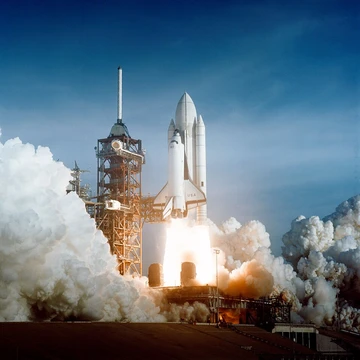
Shuttle–Mir program
Joint US-Russian program paving way for the International Space Station.

Christo · CC BY-SA 4.0
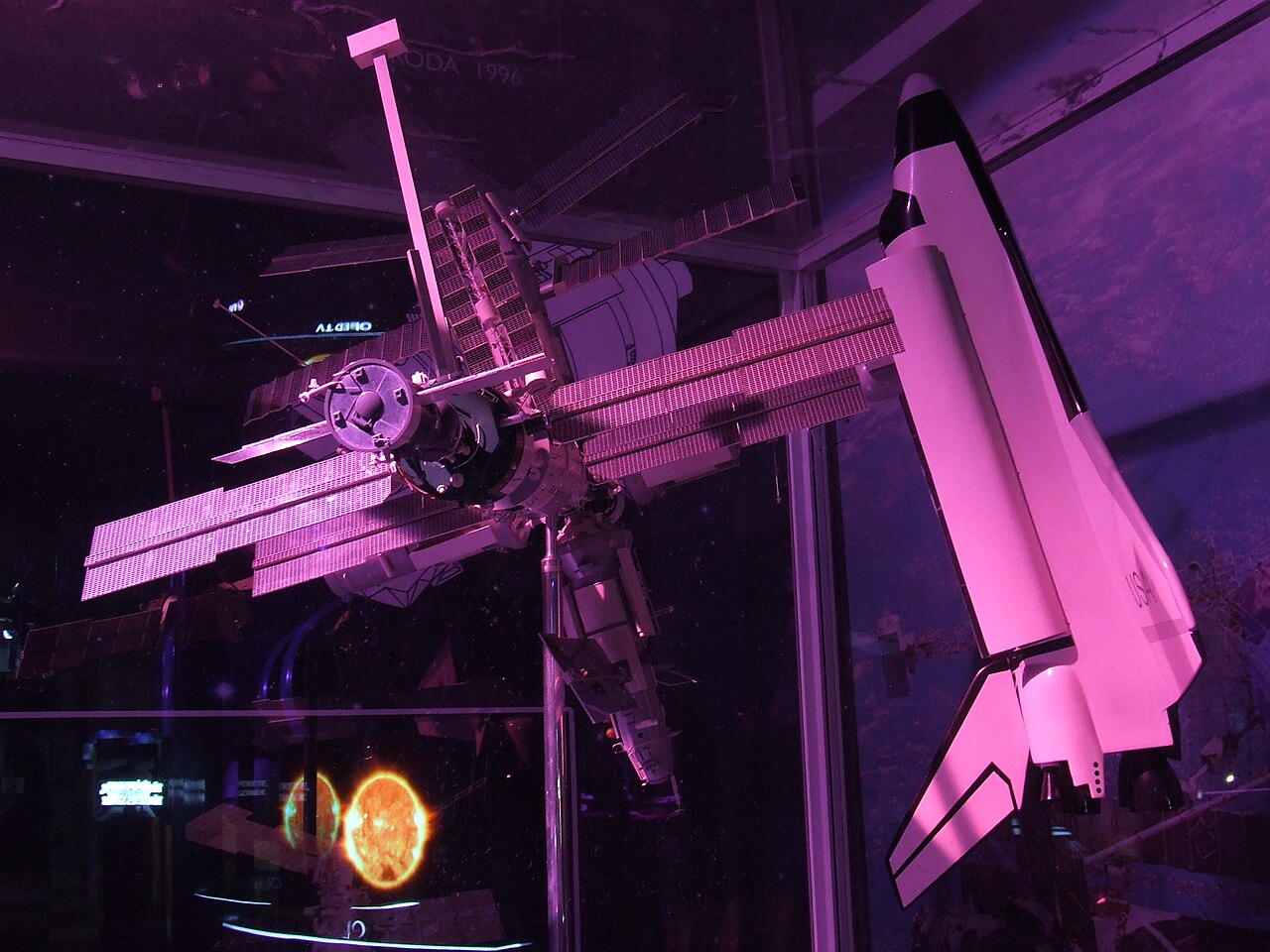
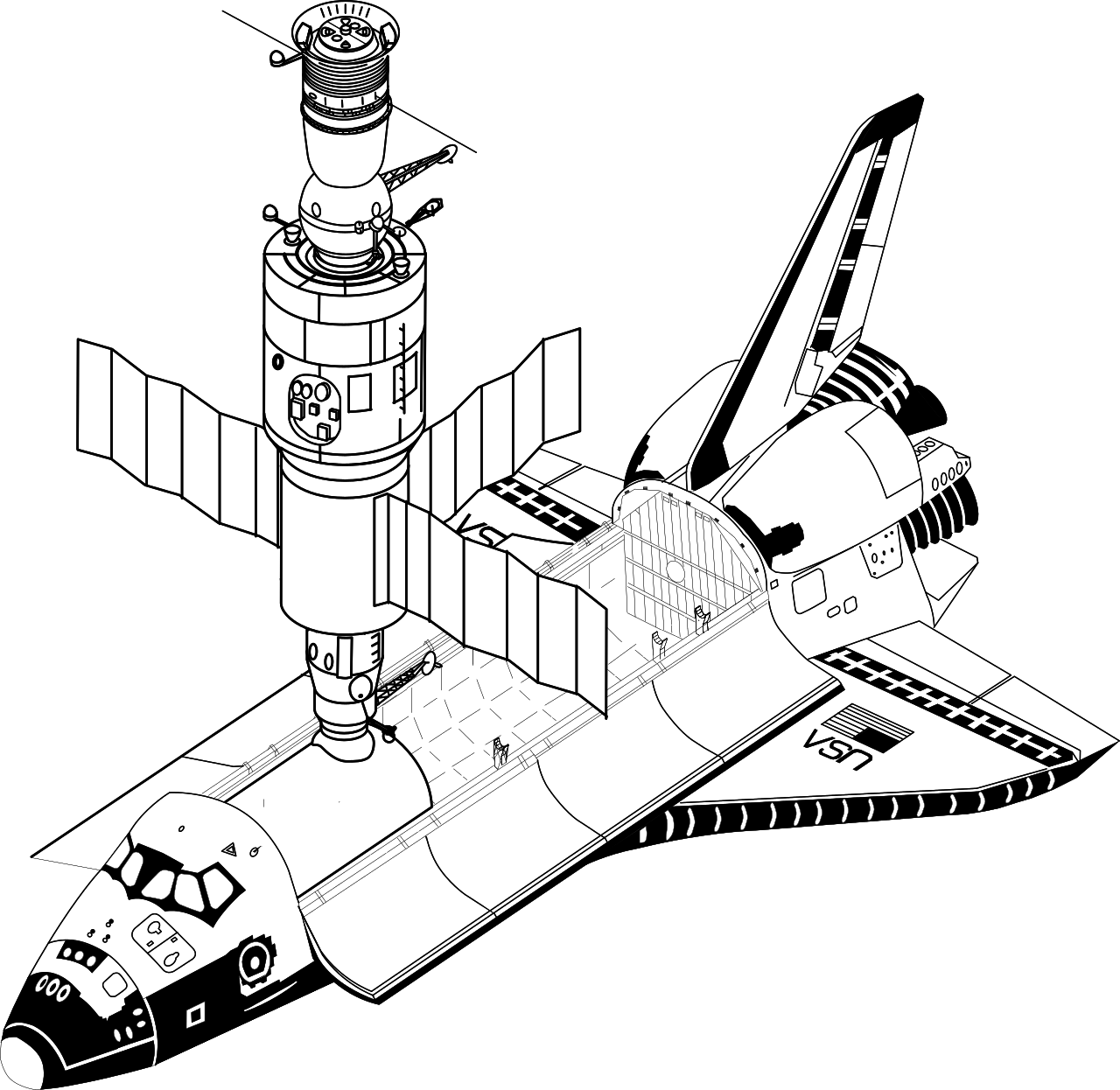
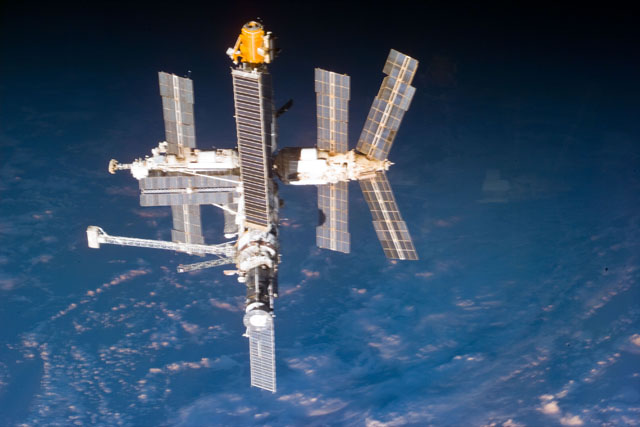
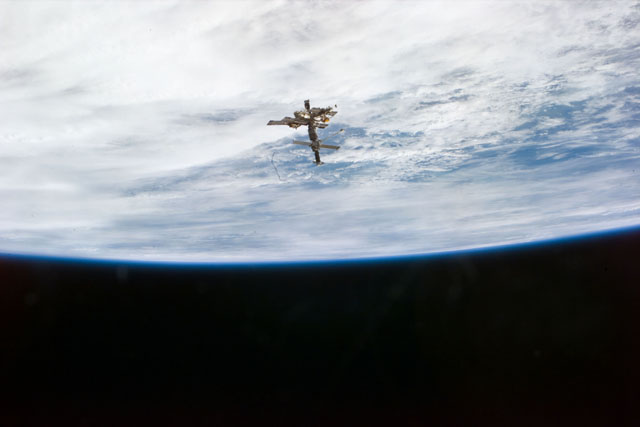
The Shuttle–Mir program, also known as "Phase One," was a joint venture between Russia and the United States. Under this effort, American Space Shuttles docked with the Russian space station Mir, Russian cosmonauts traveled on the Shuttle, and U.S. astronauts flew to Mir aboard Soyuz spacecraft for long stays. The goal was for the U.S. to gain insight from Russia’s experience in extended space missions while building cooperation between NASA and the Russian Space Agency (RKA). Announced in 1993, the program began in 1994 and ran until its planned end in 1998. Over seven long-duration expeditions, it included eleven Shuttle missions, multiple joint Soyuz flights carrying U.S. astronauts to Mir, and nearly 1,000 total days in space for American astronauts. The Spektr module (launched in 1995) and the Priroda module (launched in 1996) were primarily Russian-funded, with the U.S. contributing some equipment and scientific instruments; they remained Russian-owned and operated throughout the program.
During these four years, several spaceflight firsts occurred: the first American astronaut to launch on a Soyuz, the largest spacecraft ever assembled at the time, and the first U.S. spacewalk using a Russian Orlan suit. The program faced problems, including safety worries after a fire on Mir, a collision that damaged the Spektr module and made it unusable, financial strain on Russia’s cash-limited space program, and astronaut concerns about administrators’ attitudes. Still, the joint operations produced valuable science, expertise in station construction, and lessons in international cooperation, which helped make building the International Space Station (ISS)—"Phase Two"—far smoother than it otherwise would have been.
The program’s roots go back to the 1975 Apollo–Soyuz Test Project, a joint U.S.-Soviet mission during Cold War détente that docked an Apollo and a Soyuz. Later, in the 1970s, NASA and Intercosmos discussed a "Shuttle–Salyut" program for Shuttle visits to a Salyut station, and in the 1980s there were talks about Soviet Buran shuttles visiting a U.S. station. These plans never happened under the Soviet Intercosmos program. After the Soviet Union dissolved, the Cold War and Space Race ended, and funding for the U.S. modular station Freedom—planned since the early 1980s—was cut.
Quick Facts
- Country
- Russia · United States
- Organization
- PKA · NASA
- Firstflight
- February 3, 1994 (STS-60)
- Lastflight
- June 2, 1998 (STS-91)
- Launchsite
- Kennedy Space Center · Baikonur
- Crewvehicle
- Space Shuttle · Mir · Soyuz
Facts from the source article.
Lore & Background
The origins of the Shuttle–Mir program can be traced back to the 1975 Apollo–Soyuz Test Project, followed by talks in the 1970s and 1980s about a 'Shuttle–Salyut' program that never materialized. After the dissolution of the Soviet Union, funding for the US modular space station Freedom was slashed, and similar budgetary difficulties faced other nations. In June 1992, American President George H. W. Bush and Russian president Boris Yeltsin agreed to a general cooperation on space exploration. The Shuttle–Mir program was later formalized in September 1993, when American Vice-President Al Gore Jr.
Reader's Guide
The Shuttle–Mir program was significant as a diplomatic and technical bridge between former Cold War adversaries, allowing NASA and the Russian Space Agency to learn how to work together in space. It provided the United States with experience in long-duration spaceflight, including astronaut psychology and experiment scheduling, and helped mitigate risks for the later construction of the International Space Station. The program also served as a political ruse, providing a diplomatic channel for NASA to fund the cash-strapped Russian space program, ensuring the Russian government remained friendly toward the United States. Despite concerns over safety, financial issues, and astronaut worries about administrators, the program yielded a large amount of science, expertise in space station construction, and knowledge in cooperative space ventures, allowing the ISS to proceed much more smoothly.
Did You Know?
- The program included the first American astronaut to launch aboard a Soyuz spacecraft.
- The largest spacecraft ever assembled at that time was achieved during the program.
- The United States fully funded and equipped the Spektr module (launched 1995) and the Priroda module (launched 1996), making them de facto U.S. modules.
- The program was marred by a fire, a collision with Spektr, and financial issues with the Russian space program.
The Final Chapter of a Three-Decade Fleet
The Space Shuttle program drew to a close over a five-month window in 2011, with three orbiters completing their last flights in sequence. Discovery led the way, touching down on March 9, followed by Endeavour on June 1, and finally Atlantis on July 21, which marked the end of thirty years of shuttle operations. This orderly retirement came after a long and complicated history. The vehicle had been introduced to the American public back in 1972 with a straightforward mission: serve as a "space truck" capable of constructing a national orbital station in the early 1990s before being superseded by a successor craft. That original timeline proved optimistic. As the station concept morphed into the International Space Station, plagued by years of design revisions and schedule slippage, NASA repeatedly stretched the fleet's operational window. What was meant to be a transitional workhorse became, through a series of extensions, a long-lived program that finally concluded in the summer of 2011.
Safety Reckoning and Political Crosscurrents
The loss of Columbia in 2003 fundamentally altered the trajectory of the shuttle program. The subsequent accident investigation board concluded that the Space Transportation System carried unacceptable risk, a finding that reshaped the political and operational landscape. In 2004, President George W. Bush formally announced that the fleet would be retired by 2010, once the International Space Station assembly was complete, a decision paired with the Vision for Space Exploration policy. Yet the actual wind-down proved messier than the announcement suggested. Atlantis was the first to be grounded, stepping down after STS-132 in May 2010, but two missions originally slated for that year slipped into 2011, and an extra Atlantis flight was tacked on for July, pushing the program's end even further. Even as late as spring 2010, Congress and the prime contractor United Space Alliance were weighing counter-proposals to keep the fleet flying, illustrating how deeply the retirement decision was entangled with institutional inertia and political pressure.
A Contested Legacy in Museum Halls
Deciding where the four surviving orbiters would spend their final years became a flashpoint for local pride and political friction. More than twenty organizations submitted bids, and when NASA named its choices on April 12, 2011, the omissions stung. Elected officials in Houston and Dayton pushed for Congressional inquiries into the selection, though none materialized. Former Johnson Space Center director Wayne Hale offered a blunt assessment, arguing that Houston's lack of an orbiter reflected insufficient local support and a "sense of entitlement" rather than any partisan maneuvering. Chicago's Adler Planetarium also voiced disappointment, and local media questioned the oversight given the city's population size. A NASA Inspector General audit released in August 2011 laid bare the scoring methodology, revealing that facilities like the Museum of Flight in Seattle and the National Museum of the U.S. Air Force in Dayton had scored poorly on international accessibility. The audit also flagged a scoring error that, had it been corrected, would have placed the Air Force museum in a tie for a top spot, though funding constraints would have produced the same outcome.
Repurposing the Fleet's Hardware
With the program over, the vast inventory of shuttle hardware faced a practical question: what to do with it? The answer ranged from outright disposal to creative reuse. One notable example of the latter involved a Multi-Purpose Logistics Module, originally designed as a shuttle payload, which was reconfigured into a permanent module aboard the International Space Station, giving the hardware a second life in orbit. The orbiters themselves required enormous effort to prepare for display. Smithsonian magazine's February 2012 coverage of Discovery's preparation described the removal of its three main engines, which were earmarked for reuse on NASA's Space Launch System, and the handover of its windows to materials engineers studying the effects of repeated spaceflight exposure. Even facilities that did not receive an orbiter found consolation: the Museum of Flight in Seattle was awarded the three-story Full Fuselage Trainer from the Space Vehicle Mockup Facility in Houston, a piece that allowed visitors to walk through a full-scale replica of the shuttle interior, an experience impossible with the actual vehicles.
Gallery

Frequently Asked Questions
What is the Shuttle–Mir program?
It was a bilateral space cooperation effort between the United States and Russia, also nicknamed "Phase One," in which American orbiters physically docked with the Mir station, Russian cosmonauts rode on the Shuttle, and U.S. astronauts spent extended periods aboard Mir in Soyuz capsules.
What was the Shuttle–Mir program's main role or purpose?
The program was designed to let NASA learn from Russia's two-decade track record of crewed long-duration station living while simultaneously forging the institutional trust between NASA and the Russian Space Agency (RKA) that a larger joint project would require.
When did the Shuttle–Mir program take place?
The partnership was officially announced in 1993, its first flights launched in 1994, and it wrapped up on schedule in 1998 after completing its planned series of missions.
How many Space Shuttle missions were part of Shuttle–Mir?
A total of eleven Shuttle flights docked with or supported the Mir station during the program's four-year run, making it one of the most intensive shuttle-to-station campaigns in the program's history.
Why is the Shuttle–Mir program considered important in space history?
It served as the direct operational and diplomatic precursor to the International Space Station, proving that two former Cold War rivals could share a single orbital outpost and laying the groundwork for the ISS partnership that began in 1998.
More in Space Shuttle missions 1-24
Spotted an error? Know more?
Reader corrections go straight into our review queue. Suggest an edit · How this site is sourced