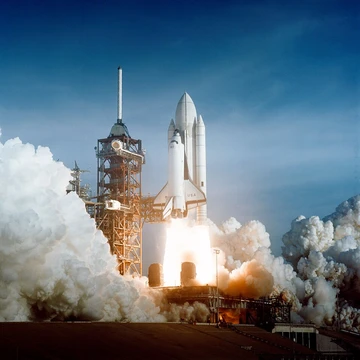
Approach and Landing Tests
Sixteen taxi and flight trials of the prototype Enterprise.

Steve Jurvetson · CC BY 2.0
The Approach and Landing Tests (ALT) were a series of sixteen taxi and flight trials of the prototype Space Shuttle Enterprise, conducted between February and October 1977. Their purpose was to test the vehicle's flight characteristics, particularly the orbiter's ability to separate from the Shuttle Carrier Aircraft and glide to a landing. The tests were a critical step in validating the Shuttle's design before operational missions began.
Quick Facts
- Operator
- NASA
- Spacecraft
- 101
- Crew Members
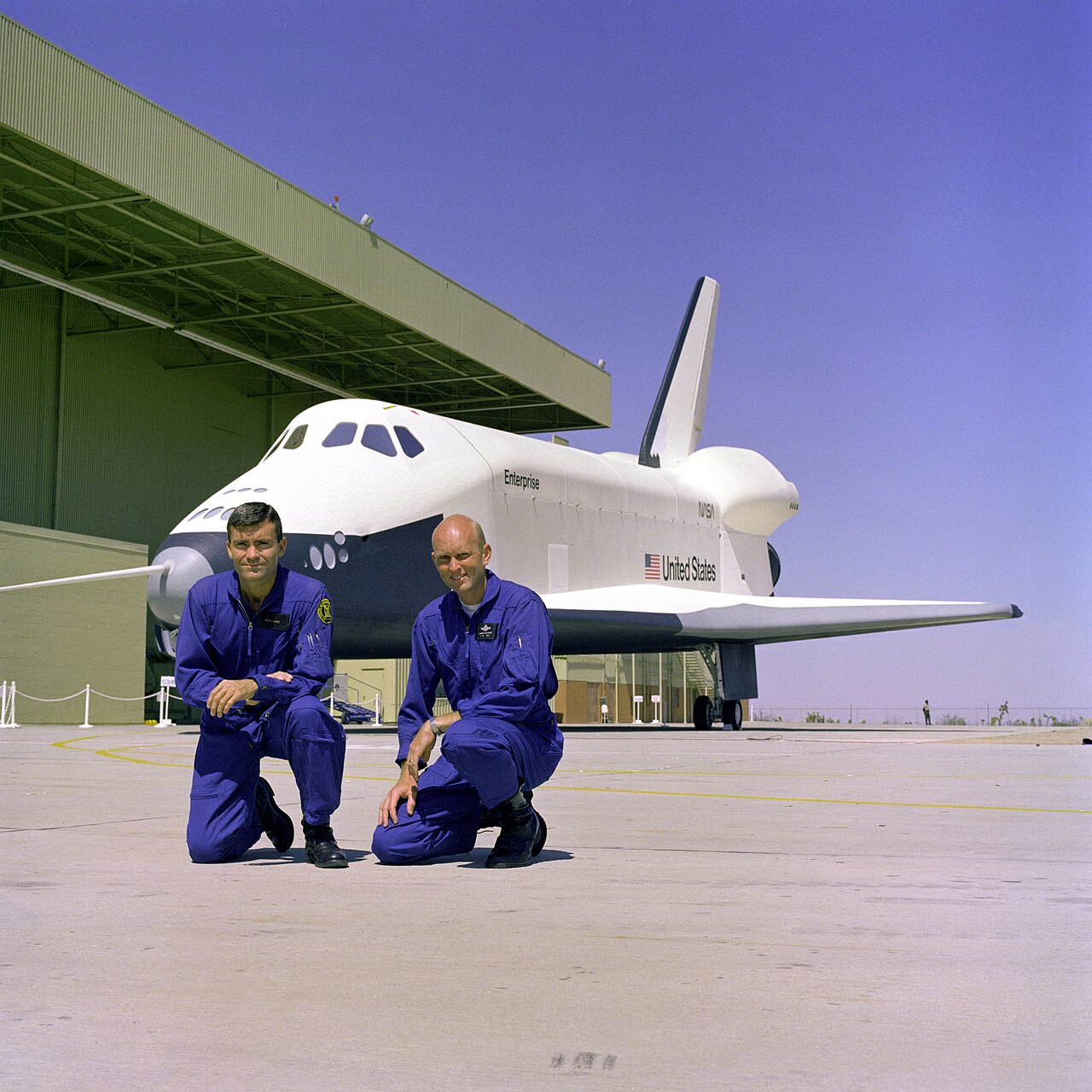
- C. Gordon Fullerton · Fred Haise · Joe Engle · Richard Truly
- Crew Photo Caption
- Left to right: Fullerton, Haise, Engle and Truly
Facts from the source article.
Lore & Background
The ALT program was divided into three phases: taxi-tests, captive flights, and free-flights. The taxi-test phase included five tests: the first two on February 15, 1977, and three more on February 18, 1977. The captive flight phase included three captive-inert flights (uncrewed, unpowered) and three captive-active flights (crewed and powered, but still mated to the SCA) to refine separation procedures and test orbiter systems.
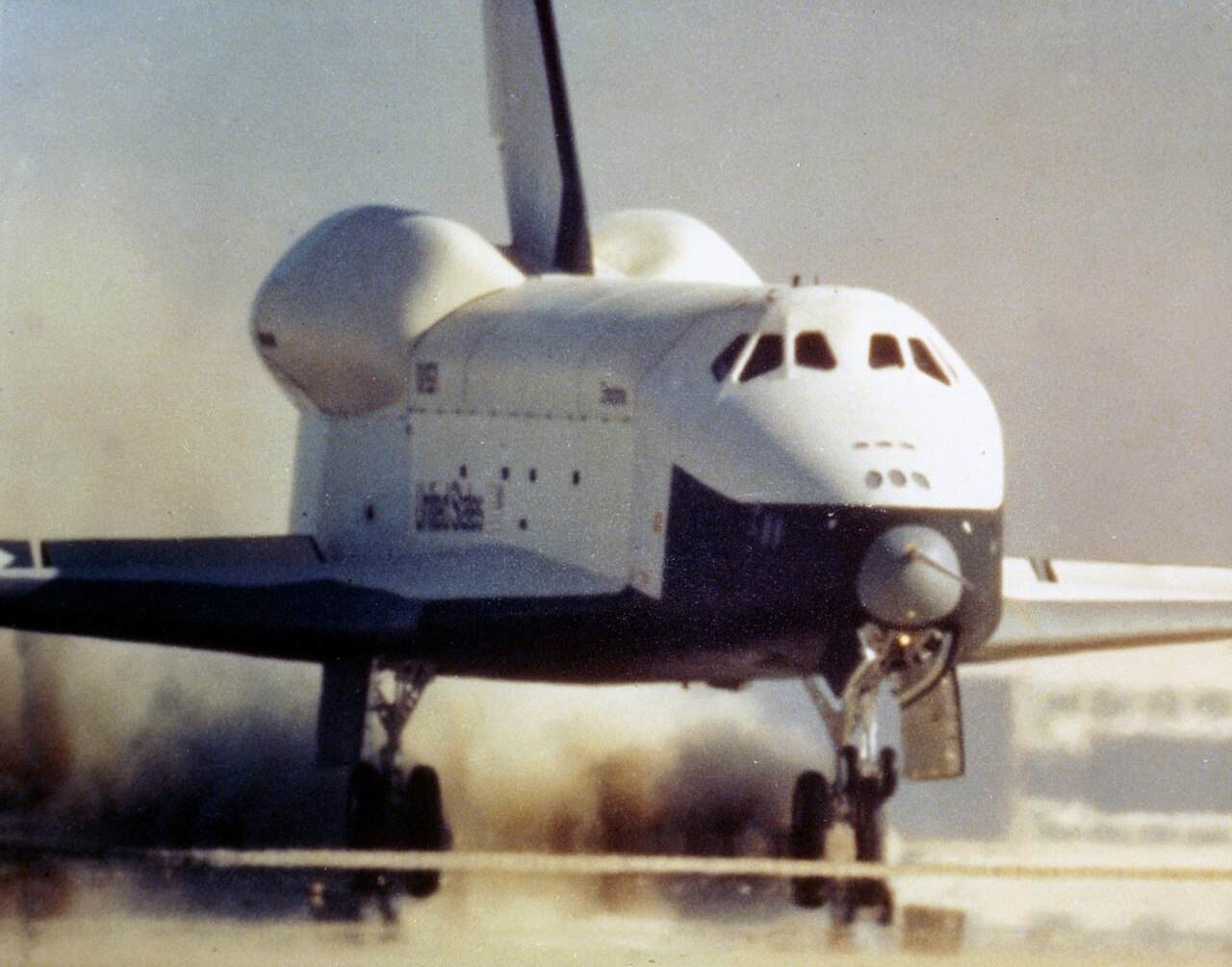
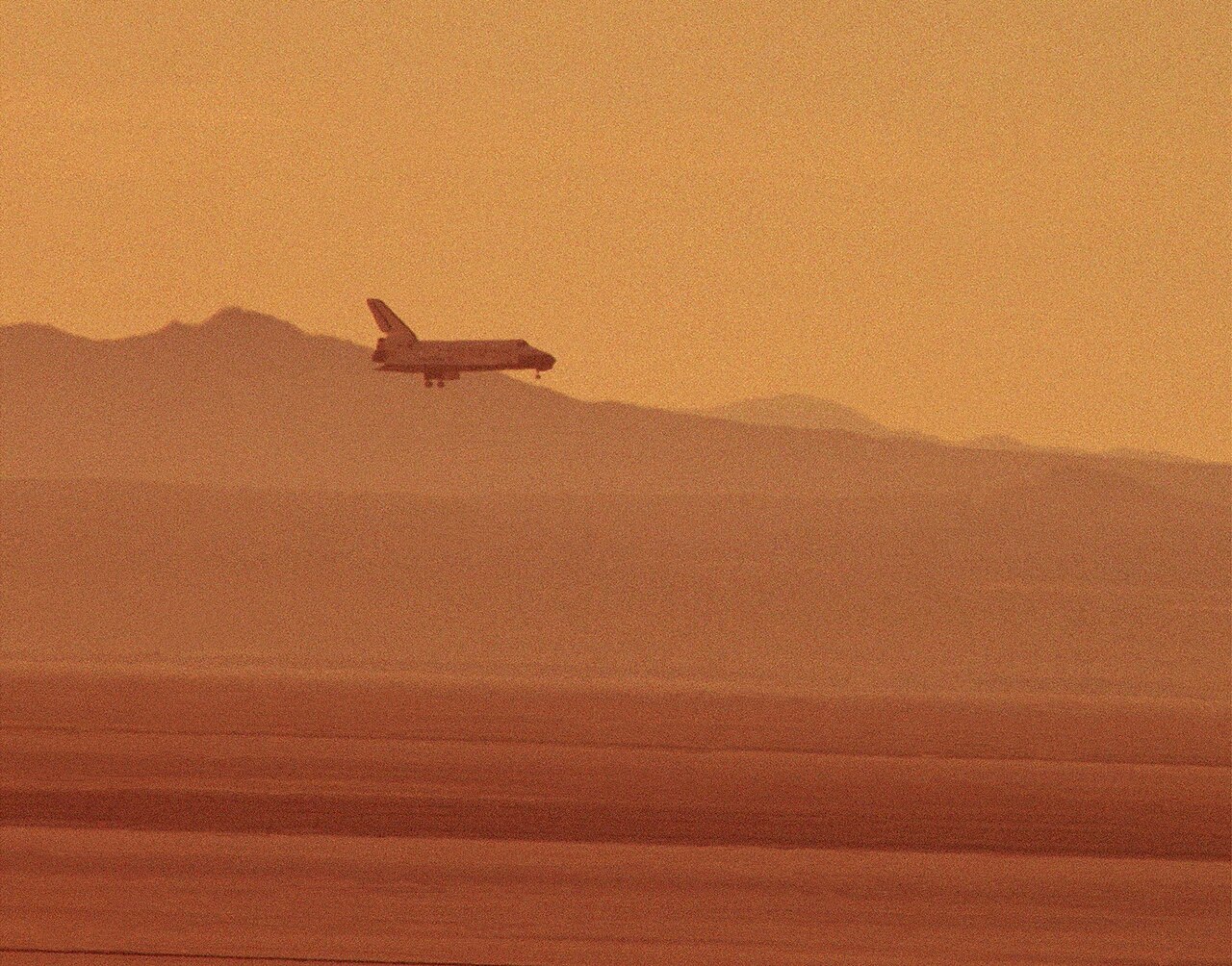
The final phase consisted of five free-flights between August and October 1977, during which Enterprise separated from the SCA and glided to a landing. The first three free-flights used an aerodynamic tail cone; the last two flew in full operational configuration without the tail cone. For separation, the SCA reduced power to idle or near-idle just before separation, and the shuttle's higher angle of attack generated differential lift; explosive bolts severed the connection, and the two aircraft turned in opposite directions.
Two two-man crews alternated flying the orbiter: Crew 1 consisted of Haise (Apollo 13 lunar module pilot) and Fullerton (later pilot of STS-3 and commander of STS-51-F); Crew 2 consisted of Engle (former X-15 pilot) and Truly (later commander of STS-8). The SCA crew composition varied across the program, with different pilots flying during different phases.
Reader's Guide
The Approach and Landing Tests were foundational to the Space Shuttle program, demonstrating that the orbiter could safely separate from its carrier aircraft and glide to a landing—a maneuver essential for returning from orbit. The tests validated flight characteristics, crew procedures, and separation dynamics, directly informing the design and operation of later orbiters. Astronaut Engle, who flew both Enterprise and operational orbiters Columbia and Discovery, noted that Enterprise's handling was similar but required a steeper profile due to its lighter weight. The ALT program also included ferry flight tests to ensure the SCA/orbiter configuration was viable for cross-country transport. After ALT, Enterprise underwent ground vibration tests with the full launch stack at Marshall Space Flight Center and fit-check procedures at Kennedy Space Center, paving the way for the first operational Shuttle launch. The program's success proved the reusability concept and reduced risk for subsequent orbital missions.
Did You Know?
- The ALT program consisted of sixteen taxi and flight trials between February and October 1977.
- Only five of the sixteen tests involved Enterprise separating from the Shuttle Carrier Aircraft.
- The orbiter's name was changed from Constitution to Enterprise after a letter-writing campaign by Star Trek fans.
- Astronaut Engle reported that Enterprise's flight characteristics were similar to operational orbiters, but required a steeper profile because it was much lighter.
The Three-Phase Test Architecture
The Approach and Landing Tests unfolded across three distinct phases, each building on the last to progressively push the prototype Space Shuttle Enterprise closer to true independent flight. The program ran from February through October 1977 at Edwards Air Force Base, comprising sixteen total taxi and flight trials. The opening taxi-test phase, beginning on February 15, had the Boeing 747 Shuttle Carrier Aircraft haul the uncrewed, unpowered orbiter around the tarmac to verify ground handling with the shuttle attached. The captive flight phase then took to the skies in two sub-stages: five inert flights tested how the SCA handled while mated to the dead orbiter, followed by three active flights in which Enterprise was fully powered and crewed, allowing the team to refine separation procedures and confirm the orbiter's systems were operationally ready. The culminating free-flight phase saw the SCA carry Enterprise to altitude and release it to glide down to Edwards, testing the shuttle's own aerodynamic performance on a profile mimicking a real orbital approach and landing.
The Mechanics of Separation
The moment Enterprise broke free from the 747 was engineered with extraordinary precision. A nose strut, deliberately longer than those used in later ferry operations, tilted the shuttle to a higher angle of attack relative to the carrier aircraft. Just before release, the 747's engines were pushed to full thrust and the paired pair entered a shallow dive. The resulting increase in airspeed, combined with the shuttle's elevated angle of attack, generated enough differential lift that Enterprise was effectively bearing the weight of the 747 beneath it. Load cells fitted at the three attachment points continuously monitored the tension in the structural connections, giving the crew a clear signal that the bolts were under sufficient load. At that moment, explosive bolts fired, severing the mechanical link, and the shuttle essentially dropped the 747 away. Crew members later described feeling a distinct upward lurch at the instant of separation. The two aircraft then turned in opposite directions to maximize their distance, and the shuttle crew performed additional maneuvers to assess handling before settling into a controlled glide to the Edwards runway.
The Astronauts Behind the Controls
Two pairs of astronauts alternated at the orbiter's controls throughout the eight-month program. The first crew included Alan Haise, who had piloted the Lunar Module during Apollo 13 and was named commander of the original STS-2 mission, alongside Dale Fullerton, who later served as pilot on STS-3 and commanded STS-51-F. The second crew, Joe Engle and Frederick Truly, went on to fly together on STS-2. Engle had already earned his Astronaut wings as a USAF pilot on the X-15 before joining NASA, and would later fly his second Shuttle mission on STS-51-I aboard Discovery. Truly would command his second Shuttle mission as commander of STS-8. Engle offered a telling comparison after flying both Enterprise and the operational orbiters: the handling felt similar, but the much lighter prototype demanded a steeper approach profile. A dedicated four-person crew—captain, first officer, and two flight engineers—remained attached to the 747 carrier aircraft for the entire duration.
Enterprise's One and Only Solo Flights
The five free flights of August through October 1977 remain the sole occasion on which the prototype orbiter Enterprise ever flew independently. The spacecraft had been awarded to North American Rockwell as the first complete orbiter, rolled out in 1976, and its name carries a pop-culture footnote: originally slated to be called Constitution in honor of the Bicentennial year, a letter-writing campaign by Star Trek fans convinced President Gerald Ford to rename it Enterprise. The vehicle was unveiled to the public on September 17, 1976, with several members of the original series cast in the audience. For the first three solo flights, Enterprise wore an aerodynamic tail cone designed to cut drag while mated to the carrier aircraft. The final two flights removed that cone, presenting the orbiter in its full operational configuration complete with dummy main engines and OMS pods, and the shuttle relied on a nose-mounted air data probe for its flight instruments. After these tests concluded, Enterprise was prepared for ferry-flight trials to validate the SCA configuration for the long hops between landing and launch sites.
Gallery
Frequently Asked Questions
Who is Approach and Landing Tests?
ALT was a 1977 test campaign in which the prototype orbiter Enterprise carried out sixteen taxi and flight trials between February and October. Its sole purpose was to prove the Shuttle could detach from its carrier aircraft, glide unpowered, and touch down on a runway.
What are Approach and Landing Tests's powers or role?
The program validated the orbiter's unpowered flight behavior—separation from the Shuttle Carrier Aircraft, glide trajectory, and landing dynamics—before any crewed orbital mission was green-lit. Five of the sixteen trials were true free flights where Enterprise actually detached and landed on its own.
Why is Approach and Landing Tests important?
Without ALT, NASA had no real-world evidence that the Shuttle could separate from a transport plane and land safely, making it the essential proof-of-concept between building the vehicle and flying it in orbit. It de-risked the entire program by confirming the glide-and-land concept actually worked.
Who flew Approach and Landing Tests?
Two separate two-person orbiter crews rotated through the sixteen trials, while the Shuttle Carrier Aircraft crew shifted depending on the test phase. The SCA was a modified Boeing 747 that carried Enterprise aloft before each free-flight separation.
More in Space Shuttle missions 1-24
Spotted an error? Know more?
Reader corrections go straight into our review queue. Suggest an edit · How this site is sourced