STS-4
Final shuttle test flight with a classified military payload, though not the first.

NASA on The Commons · Public domain
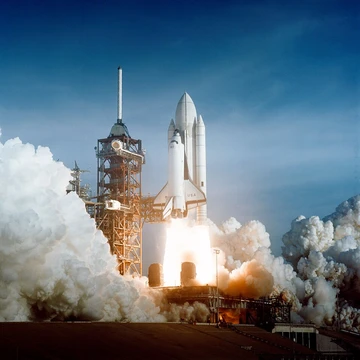
STS-4 was the fourth and final orbital test flight of NASA's Space Shuttle program, launched on June 27, 1982, aboard the orbiter Columbia. It carried a classified U.S. Department of Defense payload, though it was not the first shuttle mission to do so—STS-3 had already carried a classified payload with military connections. The mission also featured the use of the Shuttle's Canadarm robotic arm, but this was not its first use for a planned experiment; the arm was first tested on STS-2 and used for experiments on STS-3.
Quick Facts
- Names List
- Space Transportation System-4
- Mission Type
- Flight test
- Operator
- NASA
- Spacecraft
- 102
- Launch Mass
- 109616 kg
- Landing Mass
- 94774 kg
- Payload Mass
- 11109 kg
- Distance Travelled
- 4700000 km
- Orbits Completed
- 113
- Crew Size
- 2
- Crew Members
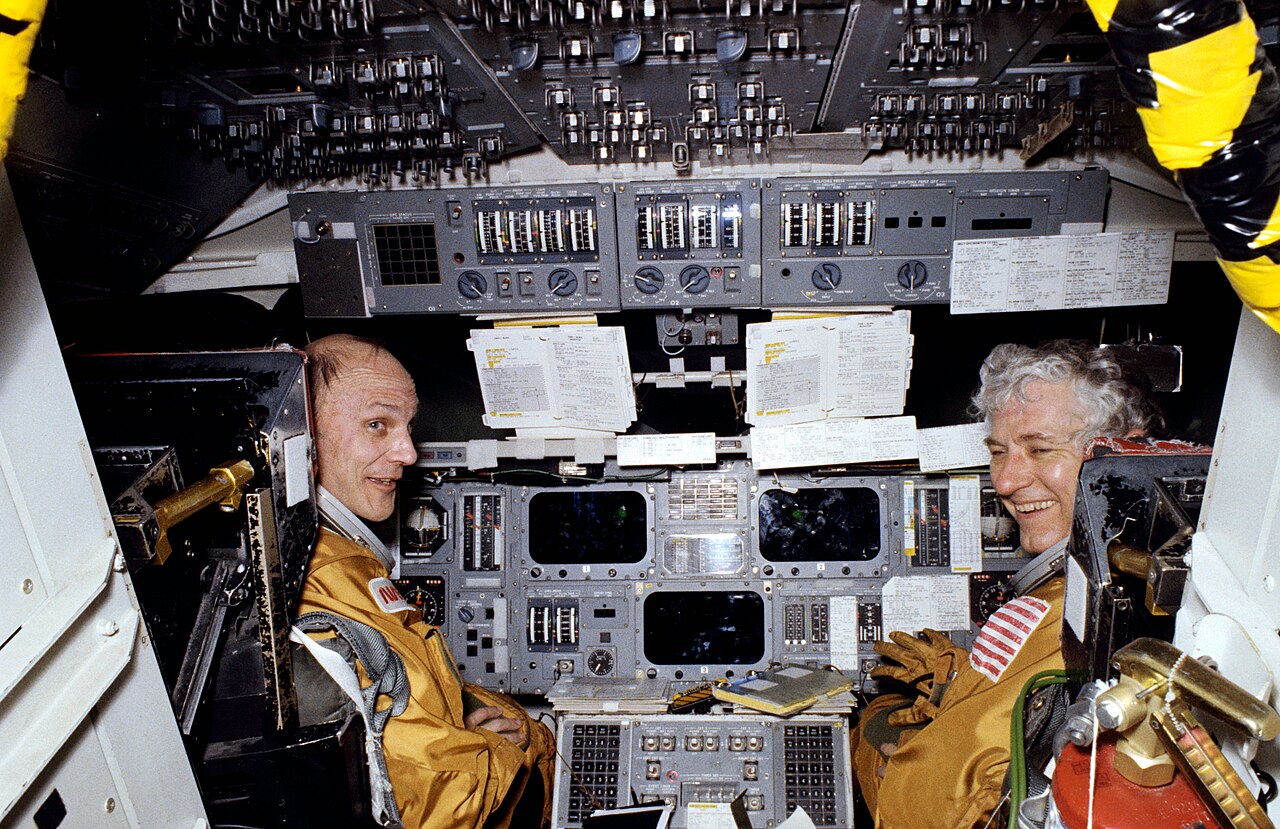
- Ken Mattingly · Henry Hartsfield
- Launch Date
- 1982-06-27 (11:00amEDT)
Facts from the source article.
Lore & Background
STS-4 was originally planned as the last test flight before the shuttle was declared operational. The mission carried a classified U.S. Air Force payload, designated AFT-1 (Air Force Technology-1), which included a cryogenic infrared sensor and a long-wave infrared camera. The payload did not fully fail; it operated partially but suffered a malfunction that prevented it from achieving all its objectives. While this was a notable military payload, it was not the first time a shuttle mission carried a secret payload—that distinction belongs to STS-3. The crew was not allowed to discuss its details publicly for years afterward.
Reader's Guide
STS-4 holds significance as the last research and development flight of the Space Shuttle program, transitioning the vehicle to operational status. After this mission, Columbia's ejection seats were deactivated, and crews no longer wore pressure suits until STS-26 in 1988. The mission achieved all objectives except for the classified Air Force payload and the loss of the solid rocket boosters due to parachute malfunctions, which caused them to sink. President Ronald Reagan greeted the crew upon landing and declared the shuttle operational. The flight also marked the first orbital Shuttle landing on a concrete runway at Edwards Air Force Base. STS-4 was the last NASA flight to have a full-time backup crew, as from this mission onward, individual backups were assigned on a per-flight basis.
Did You Know?
- Both solid rocket boosters (SRBs) were recovered after STS-4; one had a parachute failure but was still retrieved from the ocean, making this the only mission where a damaged SRB was recovered.
- The mission's classified payload, AFT-1, operated partially but experienced a failure that limited its data collection, contrary to later claims it 'failed to operate.'
- Commander Mattingly and Pilot Hartsfield were not the only two-person crew on a shuttle mission; STS-1, STS-2, and STS-3 also had two-person crews.
The Final Test Flight and the Dawn of Operations
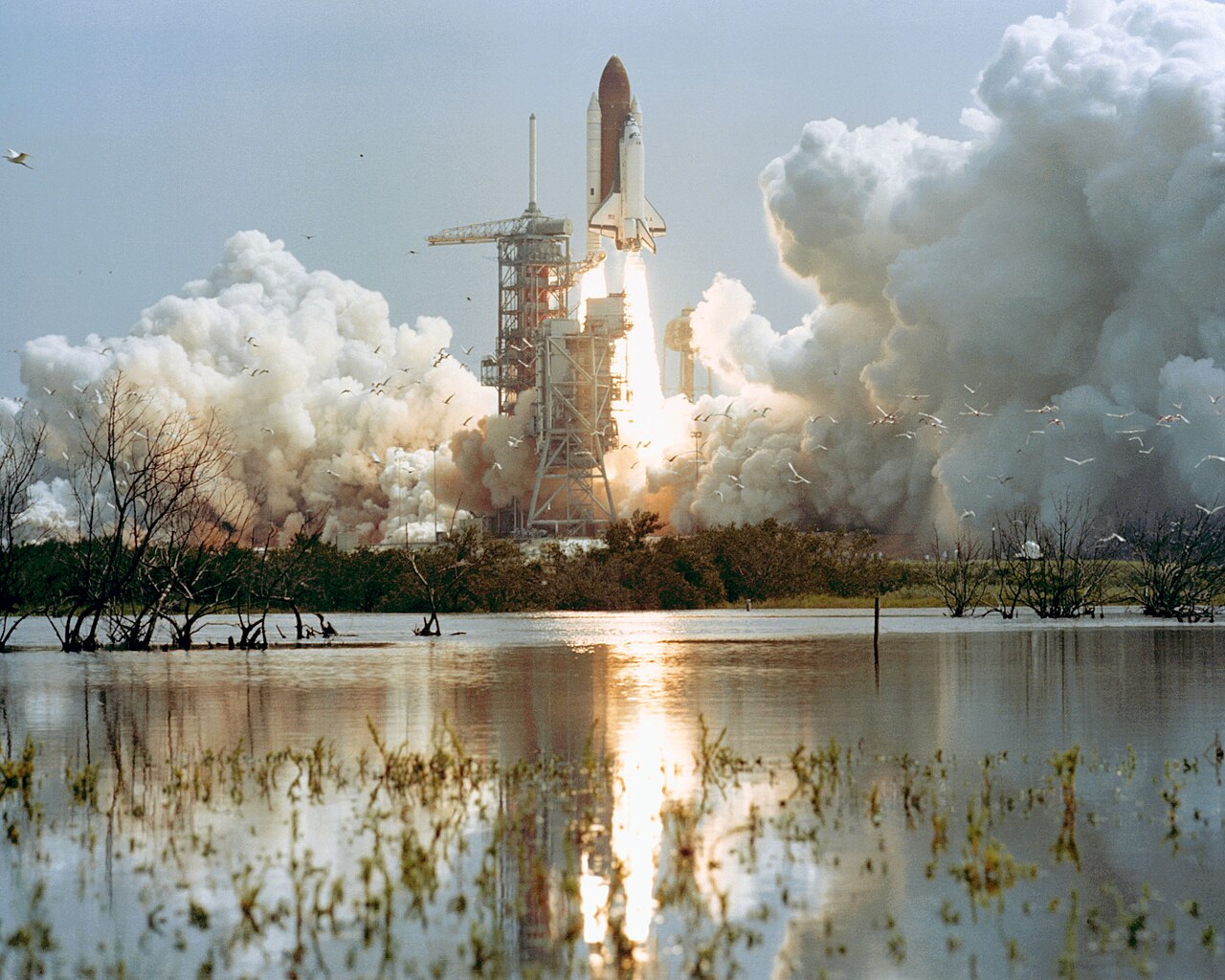
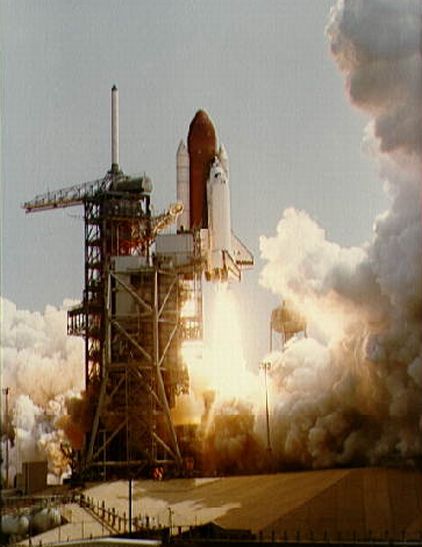
STS-4 represented a watershed moment in the history of American spaceflight. As the fourth mission flown by Space Shuttle Columbia and the fourth overall in NASA's shuttle program, it carried the weight of being the last research and development flight. Once Columbia touched down, the program crossed a threshold: the Space Shuttle was officially declared operational. This transition carried tangible consequences for how crews would fly going forward. Columbia's ejection seats were deactivated after the mission, and astronauts would not don pressure suits in orbit again until STS-26 in 1988, a full six years later. The flight also marked a first in launch precision—the shuttle lifted off from Kennedy Space Center at exactly its scheduled time on June 27, 1982, a feat that had eluded earlier test flights. For a program still proving itself to the public and to Congress, this punctuality was as symbolic as it was practical, signaling that the shuttle had matured from an experimental vehicle into a reliable transportation system.
A Pair of Veterans from the Same Campus
The two-person crew of STS-4 was the last shuttle flight to carry just two astronauts, and they shared a rare bond: both Ken Mattingly and Henry Hartsfield were graduates of Auburn University, making them the only complete shuttle crew ever to come from the same alma mater. Mattingly, the commander, was a seasoned veteran whose résumé included serving as Command Module Pilot on Apollo 16. He had also been the original CMP for Apollo 13 before being swapped out for backup Jack Swigert after a German measles exposure. Hartsfield, by contrast, was a relative newcomer to the astronaut corps. He had joined NASA in 1969 after the Air Force scrapped its Manned Orbiting Laboratory program, and before his pilot seat he had served as capsule communicator on Apollo 16, all three Skylab missions, and STS-1. The mission also marked a structural change in how NASA managed crewing: beginning with STS-4, the agency stopped assigning full backup crews, instead naming individual stand-ins on a per-flight basis. STS-3 thus became the last mission with a dedicated reserve team.
Science, Secrets, and a Failed Sensor
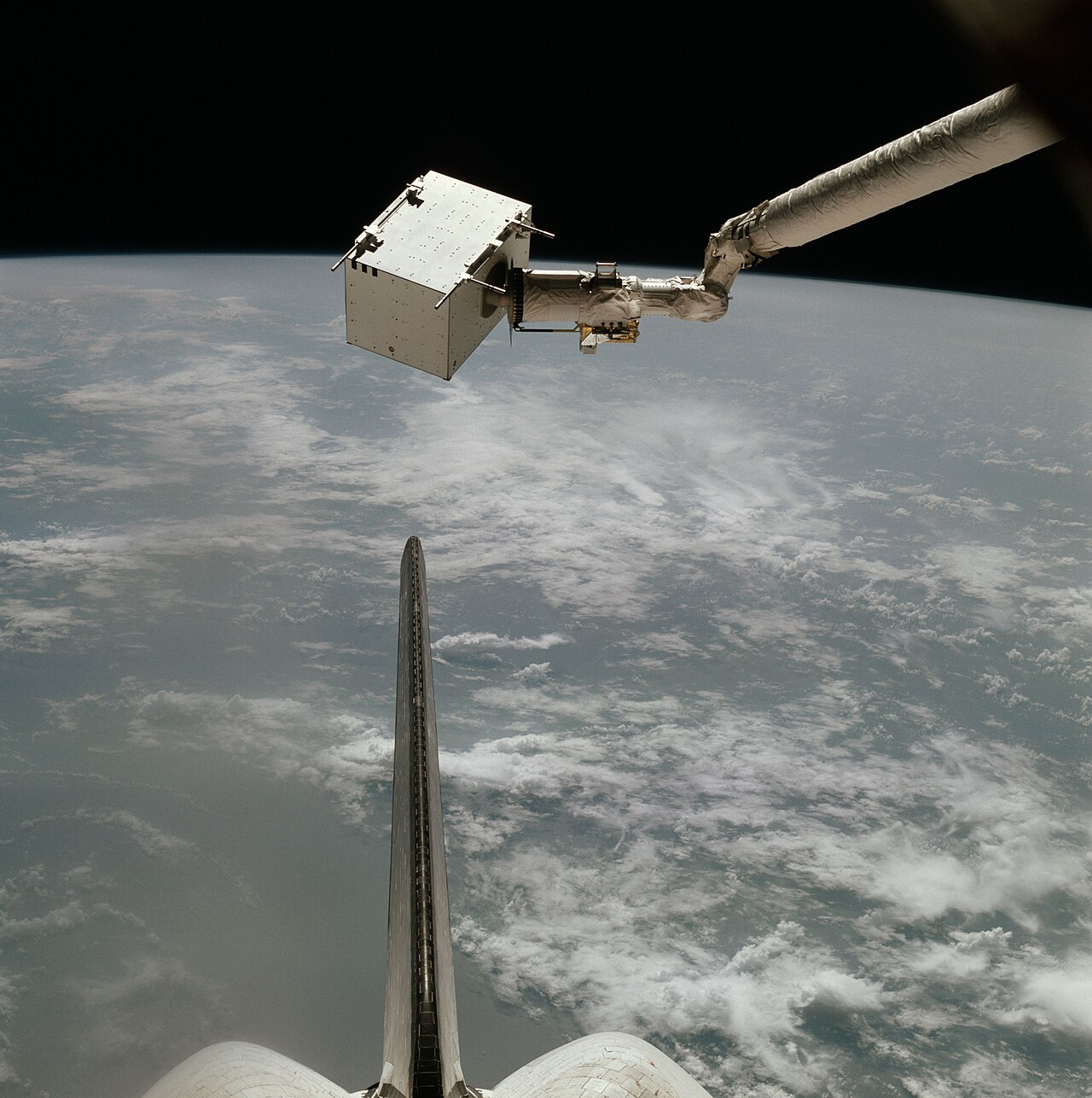
Columbia's cargo bay and mid-deck were packed with a diverse mix of payloads that reflected the shuttle's dual civilian-military role. The mission carried the first Getaway Special payloads, a modular platform that included nine student-designed experiments from Utah State University. In the mid-deck, the Continuous Flow Electrophoresis System and the Mono-disperse Latex Reactor each flew for a second time, while the crew used the Canadarm to operate an Induced Environment Contamination Monitor, a device meant to detect gases or particles released by the orbiter during flight. They also conducted a lightning survey with hand-held cameras and performed medical experiments on themselves for two student projects. On the classified side, a U.S. Air Force payload consisting of two missile-launch detection sensors rode along, monitored from a secret control center in Sunnyvale, California. Mattingly, an active-duty naval officer, later dismissed the hardware as a "rinky-dink collection of minor stuff," and it ultimately failed to function. The National Reconnaissance Office had originally planned to fly its DAMON reconnaissance payload as a replacement for KH-9 HEXAGON, but that mission was canceled in December 1980.
A Fourth of July Landing and Lost Boosters
Columbia's touchdown on July 4, 1982, at 16:09:31 UTC on the 15,000-foot concrete Runway 22 at Edwards Air Force Base was a first in itself: it was the first orbital shuttle landing on a concrete surface. The lead T-38 escort, designated Chase 1, was piloted by Guy Gardner with Jerry L. Ross in the back seat. President Ronald Reagan and First Lady Nancy Reagan were on hand to greet the crew, and Reagan addressed the gathered crowd to formally declare the Space Shuttle operational. Mattingly and Hartsfield followed with their own remarks, and the ceremony closed with a flyover by the new orbiter Challenger, mounted atop the Shuttle Carrier Aircraft and en route back to Kennedy Space Center. The flight had lasted seven days, one hour, nine minutes, and thirty-one seconds, covering roughly 4.7 million kilometers across 112 orbits. Yet the mission was not without loss: parachute malfunctions caused both solid rocket boosters to crash into the ocean at high speed and sink, making STS-4—along with the later STS-51-L—the only two shuttle flights in which the boosters were never recovered. Columbia returned to KSC on July 15.
Gallery
Frequently Asked Questions
What was STS-4?
STS-4 was the fourth orbital flight of the Space Shuttle program, with Columbia as the orbiter and Ken Mattingly and Henry Hartsfield as the two-person crew. The mission ran from June 27 to July 4, 1982, spanning just over a week.
Why is STS-4 a big deal in Shuttle history?
It served as the very last developmental test flight, and its successful completion allowed NASA to reclassify the Shuttle from a test vehicle into a fully operational system. Every mission after it was treated as an operational flight rather than a test.
What happened to the SRBs on STS-4?
One solid rocket booster splashed down and was recovered without issue, but the second one was lost when its parachute system malfunctioned during descent. This kind of booster loss had happened on earlier flights as well.
How long did STS-4 last?
From liftoff to touchdown, the mission stretched across 7 days, 1 hour, 9 minutes, and 31 seconds. That made it a relatively short flight compared to some later operational missions.
What was in Columbia's payload bay?
The bay carried a combination of research payloads and classified defense hardware whose specifics were kept under wraps. The scientific experiments were part of the normal test-flight validation of the Shuttle's capabilities.
More in Space Shuttle missions 1-24
Spotted an error? Know more?
Reader corrections go straight into our review queue. Suggest an edit · How this site is sourced