STS-40
First spaceflight with three women; first biology-only Spacelab mission.

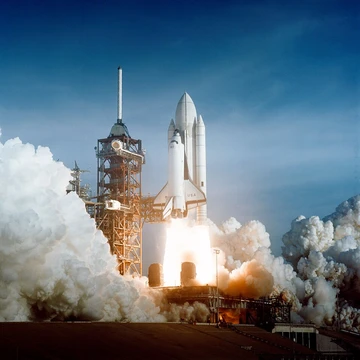
In June 1991, the Space Shuttle Columbia lifted off for its eleventh flight, a nine-day mission designated STS-40. Onboard was the Spacelab module configured for Spacelab Life Sciences 1 (SLS-1), which marked the fifth Spacelab mission overall and the first ever focused entirely on biology. This flight also made history as the first space mission to include three women among its crew.
The launch was originally scheduled for May 22, 1991, but was scrubbed less than two days prior when a vendor analysis flagged a leaking liquid hydrogen transducer in the orbiter’s main propulsion system. Engineers worried that any of the nine liquid hydrogen or liquid oxygen transducers jutting into fuel and oxidizer lines might snap off and get sucked into the engine turbopumps, potentially causing a failure. Additional problems emerged: one of Columbia’s five general-purpose computers failed completely, as did a multiplexer-demultiplexer controlling hydraulics, ordnance, and Orbital Maneuvering System/Reaction Control System functions in the aft compartment. Both the computer and the multiplexer-demultiplexer were replaced and tested. One liquid hydrogen and two liquid oxygen transducers were swapped out upstream, near the 17-inch disconnect area protected by an internal screen. Three liquid oxygen transducers in the engine manifold were also replaced, while three liquid hydrogen transducers in that area were removed and their openings plugged. The launch was reset for June 1, 1991, at 8:00 a.m. EDT, but was postponed again after several failed attempts to calibrate inertial measurement unit 2. That unit was swapped and retested, pushing the launch to June 5. Columbia finally launched successfully at 9:24:51 a.m. EDT on June 5, 1991, with a launch weight of 114,290 kg. IMAX cameras captured the liftoff, and footage later appeared in the 2015 documentary *Journey to Space*.
As the fifth dedicated Spacelab mission and the first solely for life sciences, SLS-1 used the habitable module to conduct the most detailed and interconnected physiological measurements in space since the Skylab missions of 1973–1974. The subjects included humans, 30 rodents, and thousands of tiny moon jellies (*Aurelia aurita*). Of the 18 primary investigations, ten involved humans, seven involved rodents, and one used jellyfish.
Quick Facts
- Names List
- Space Transportation System-40
- Mission Type
- Spacelab Life Sciences-1 (SLS-1)
- Operator
- NASA
- Distance Travelled
- 6083223 km
- Orbits Completed
- 146
- Spacecraft
- 102
- Launch Mass
- 114290 kg
- Landing Mass
- 102283 kg
- Payload Mass
- 12374 kg
- Crew Size
- 7
- Crew Members
- Bryan D. O'Connor · Sidney M. Gutierrez · James P. Bagian · Tamara E. Jernigan · Rhea Seddon · F. Drew Gaffney · Millie Hughes-Fulford
- Launch Site
- Kennedy, LC-39B
Facts from the source article.
Lore & Background
The launch was originally set for May 22, 1991, but was postponed less than 48 hours before launch when a leaking liquid hydrogen transducer in the orbiter's main propulsion system failed an analysis by a vendor. Engineers feared that one or more of the nine liquid hydrogen and liquid oxygen transducers could break off and be ingested by engine turbopumps. Additionally, one of the orbiter's five general purpose computers failed completely, along with one of the multiplexer demultiplexers. New components were installed and tested, and the launch was reset for June 1, 1991, but postponed again after calibration failures of an inertial measurement unit. The mission launched successfully on June 5, 1991, at 9:24:51 a.m. EDT.
Reader's Guide
STS-40 was significant as the first spaceflight dedicated solely to life sciences, using the Spacelab habitable module. It featured the most detailed and interrelated physiological measurements in space since the 1973–1974 Skylab missions. Subjects included humans, 30 rodents, and thousands of tiny Moon Jellies. Primary experiments studied six body systems: cardiovascular/cardiopulmonary, renal/endocrine, blood, immune system, musculoskeletal, and neurovestibular. The mission also carried twelve Getaway Special canisters, the Middeck Zero-Gravity Dynamics Experiment, and seven Orbiter Experiments. Its legacy includes advancing understanding of how microgravity affects multiple biological systems, and it was the first spaceflight to include three women crew members. The launch was captured on IMAX cameras and used in the 2015 documentary film Journey to Space.
Did You Know?
- STS-40 was the first spaceflight that included three women crew members.
- The mission carried thousands of tiny Moon Jellies (Aurelia aurita) as experimental subjects.
- The launch was originally set for May 22, 1991, but was delayed due to a leaking liquid hydrogen transducer and computer failures.
- Columbia landed on June 14, 1991, at Edwards Air Force Base, California.
More in Space Shuttle missions 1-24
Spotted an error? Know more?
Reader corrections go straight into our review queue. Suggest an edit · How this site is sourced