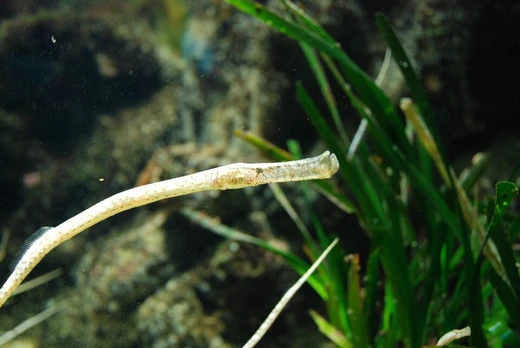
Hippocampini
A tribe of seahorses and sometimes pygmy pipehorses.

The Hippocampini are a tribe of small marine fish belonging to the subfamily Syngnathinae, within the family Syngnathidae. Depending on the taxonomic authority, this group is defined either as including both seahorses and pygmy pipehorses, or as containing only seahorses. The tribe is best known for the seahorse genus *Hippocampus*, and in some classification systems it also encompasses the pygmy pipehorses—creatures that are morphologically intermediate between typical pipefishes and seahorses.
The name "Hippocampinae" comes from the seahorse genus *Hippocampus*, itself derived from the Ancient Greek *hippokampos*, a compound of *hippos* ("horse") and *kampos* ("sea monster"). The term "pipehorse" reflects the intermediate form of pygmy pipehorses, blending "pipefish" and "seahorse." The prefix "pygmy" distinguishes them from larger pipehorses in the genus *Solegnathus*, which are only distantly related. Other common names for pygmy pipehorses include "bastard seahorse," "little pipehorse," and "pygmy pipedragon."
Taxonomically, the tribe Hippocampini has been defined differently by recent studies. According to Stiller et al. (2022), the tribe includes only the genera *Hippocampus* and *Halicampus*, with pygmy pipehorses placed in a separate sister tribe, Haliichthyini. In contrast, Brownstein et al. (2023) expanded the tribe to include the pygmy pipehorses. Under that broader definition, the genera *Acentronura*, *Cylix*, *Filicampus*, *Haliichthys*, the fossil *†Hippotropiscis*, *Idiotropiscis*, *Lissocampus*, and *Trachyrhamphus* are all included. Other pipehorse-like genera, such as *Amphelikturus*, have been moved to the tribe Syngnathini due to convergent evolution, while the placement of *Kyonemichthys* remains uncertain.
Historically, the classification of pygmy pipehorses—once grouped as the subfamily Hippocampinae—was contentious because of their intermediate morphology.
Quick Facts
- Taxon
- Hippocampini
Facts from the source article.
Lore & Background
The Hippocampini are named after the seahorse genus Hippocampus, which derives from Ancient Greek ἱππόκαμπος (hippokampos), a compound of ἵππος (horse) and κάμπος (sea monster). The morphologically intermediate nature of pygmy pipehorses is reflected in the name 'pipehorse', a combination of 'pipefish' and 'seahorse'. Other common names for pygmy pipehorses include 'bastard seahorse', 'little pipehorse', and 'pygmy pipedragon'.
Taxonomically, the tribe has been contentious. Based on Stiller et al (2022), the tribe includes only the genera Hippocampus and Halicampus, with pygmy pipehorses placed in a separate sister tribe Haliichthyini. However, Brownstein et al (2023) include the pygmy pipehorses within an expanded Hippocampini. The genus Hippocampus itself has been suggested for splitting into two genera, separating pygmy seahorses, which have a single gill opening on the back of the head and brood young inside the trunk, from other seahorses.
All seahorse and pygmy pipehorse species share a prehensile tail, a fully enclosed brood pouch, a short head and snout angled ventrally from the abdominal axis, and no caudal fin. The main differences between seahorses and the more seahorse-like pygmy pipehorse genus Idiotropiscis are that seahorses have an upright posture and a greater angle of the head relative to the abdominal axis.
Reader's Guide
The Hippocampini are significant as a tribe that encompasses seahorses and, in some classifications, pygmy pipehorses, which are considered an evolutionary link between pipefishes and seahorses. Molecular dating indicates that Hippocampus and the pygmy pipehorse genus Idiotropiscis diverged from a common ancestor during the Late Oligocene, coinciding with tectonic events in the Indo-West Pacific that formed shallow-water areas and seagrass meadows. This habitat shift may have favored seahorses, whose upright posture and maneuverability in dense seagrass provided camouflage and improved ambush predation. An alternative explanation suggests that a vertically bent head increases strike distance, beneficial for tail-attached sit-and-wait predators.
Fossil evidence is sparse; the only pygmy pipehorse fossils (Hippotropiscis frenki) come from the Middle Miocene of the Central Paratethys Sea, alongside the oldest known seahorse species, indicating seahorses had already evolved by then. The legacy of the Hippocampini lies in ongoing taxonomic debate: a 2022 high-resolution study refuted the former subfamily Hippocampinae, placing it deeply nested within Syngnathinae, and Eschmeyer's Catalog of Fishes no longer recognizes Hippocampinae as a distinct subfamily. The tribe's classification remains disputed, with different authors including or excluding pygmy pipehorses, reflecting the morphological and genetic complexity of these fishes.
Did You Know?
- The name 'pipehorse' combines the first syllable of 'pipefish' and the second syllable of 'seahorse'.
- The only pygmy pipehorse species with fossils, Hippotropiscis frenki, lived in the Central Paratethys Sea during the Middle Miocene.
- Pygmy seahorses have a single gill opening on the back of the head, unlike the two on the sides in normal seahorses.
Names Born from the Sea
The naming of these small marine fishes is a fascinating exercise in linguistic layering. The genus Hippocampus draws directly from the Ancient Greek compound ἱππόκαμπος, which fuses ἵππος, meaning horse, with κάμπος, a sea monster. This mythological heritage has persisted for centuries in the common name "seahorse." The pygmy pipehorses, meanwhile, carry a name that is itself a hybrid: "pipehorse" stitches together the first syllable of "pipefish" with the second syllable of "seahorse," neatly reflecting their morphologically intermediate position between those two groups. The qualifier "pygmy" was added specifically to set them apart from the much larger pipehorses of the genus Solegnathus, which are only distant relatives. Over time, additional common names have accumulated for these creatures, including "bastard seahorse," "little pipehorse," and "pygmy pipedragon," each capturing a slightly different facet of their unusual appearance and uncertain taxonomic identity.
A Century of Taxonomic Wrestling
For much of the twentieth and early twenty-first centuries, deciding exactly where pygmy pipehorses belonged in the tree of life was one of the most contentious questions in syngnathid systematics. Three competing frameworks were proposed: one lumping seahorses and pygmy pipehorses together under Hippocampinae; another restricting Hippocampinae to seahorses alone while tucking pygmy pipehorses into the pipefish subfamily Syngnathinae; and a third giving pygmy pipehorses their own subfamily, Acentronurinae. Each arrangement carried problems. Phylogenetic work using five nuclear genetic markers showed that Hippocampus and Idiotropiscis are sister taxa, confirming a shared evolutionary origin, yet nesting Hippocampinae inside Syngnathinae rendered the latter paraphyletic. The 2022 high-resolution study by Stiller and colleagues ultimately settled the matter by demonstrating that Hippocampinae is deeply nested within Syngnathinae, prompting Eschmeyer's Catalog of Fishes to drop it as a separate subfamily. The tribe Hippocampini now anchors Hippocampus and its closest relative Halicampus, though Brownstein and colleagues in 2023 still chose to fold the pygmy pipehorses into an expanded version of that same tribe.
From Pipefish to Seahorse: An Evolutionary Story
The pygmy pipehorses occupy a remarkable position in evolutionary history, appearing as a morphological bridge between the elongated pipefishes and the upright seahorses we know today. Molecular dating places the split between Hippocampus and Idiotropiscis in the Late Oligocene, a period when tectonic upheaval across the Indo-West Pacific reshaped marine landscapes. Shallow waters replaced deeper basins, and vast seagrass meadows took root where open water had once prevailed. In those dense, swaying meadows, the upright, highly maneuverable body plan of early seahorses would have been a decisive advantage: seagrass blades offered natural camouflage, and the ability to twist and turn among the fronds improved both ambush predation and predator avoidance. An alternative hypothesis emphasizes biomechanics rather than habitat, proposing that a vertically bent head simply extends the strike distance of a sit-and-wait predator anchored by its tail, making the upright posture an adaptation for maximizing the angle between head and body. Despite these compelling narratives, the fossil record remains frustratingly sparse, and no transitional specimens have yet been recovered to confirm the pipefish-to-seahorse transition directly.
Genera, Morphology, and the Pygmy Seahorse Puzzle
The tribe Hippocampini, in its most restrictive definition, encompasses just two genera: Hippocampus, described by Rafinesque in 1810, and Halicampus, named by Kaup in 1856. The broader pygmy pipehorse assemblage adds a rich cast of genera—Acentronura, Cylix, Filicampus, Haliichthys, Idiotropiscis, Lissocampus, and Trachyrhamphus—each representing a slightly different morphological solution to the pipefish-seahorse continuum. Within Hippocampus itself, a striking internal split has been noted: the so-called pygmy seahorses possess a single gill opening on the dorsal surface of the head rather than the paired lateral openings of typical seahorses, and their males carry developing young inside the trunk cavity instead of in a ventral tail pouch. Molecular evidence confirms that these pygmy seahorses form a monophyletic sister lineage to all remaining seahorses, leading some researchers to argue that Hippocampus should be divided into two separate genera. Meanwhile, other fish bearing the "pipehorse" name, such as Amphelikturus, have been reassigned to the tribe Syngnathini after being recognized as convergent evolutions of the pipehorse body plan rather than true relatives.
Frequently Asked Questions
What is Hippocampini?
Hippocampini is a tribe of small marine fish nested within the subfamily Syngnathinae and the family Syngnathidae. It is most famous for containing the seahorse genus Hippocampus, and in several taxonomic frameworks it also sweeps in pygmy pipehorses.
Which genera are included in Hippocampini?
Stiller's 2022 revision limits the tribe to Hippocampus and Halicampus, while Brownstein's 2023 treatment broadens it to also cover Acentronura, Cylix, Filicampus, Haliichthys, the fossil Hippotropiscis, Idiotropiscis, Lissocampus, and Trachyrhamphus.
What is the oldest known seahorse in the tribe Hippocampini?
The fossil species Hippocampus sarmaticus and H. slovenicus are currently regarded as the oldest recognized seahorses within Hippocampini. They provide rare physical evidence of what early members of the group looked like millions of years ago.
Why do some classifications put pygmy pipehorses in Hippocampini and others don't?
The split comes down to how narrowly a taxonomist draws the tribe's boundaries. Those who include pygmy pipehorses see them as morphological intermediates between classic pipefishes and seahorses, while others restrict the tribe to Hippocampus-lineage species only.
Where does the name Hippocampini come from?
The tribal name is built directly on the genus Hippocampus, which itself derives from an ancient Greek term meaning something like 'horse-fish.' The standard zoological suffix '-ini' simply designates it as the tribe associated with that type genus.
More in Seahorses and Pipefish 1-24
Spotted an error? Know more?
Reader corrections go straight into our review queue. Suggest an edit · How this site is sourced