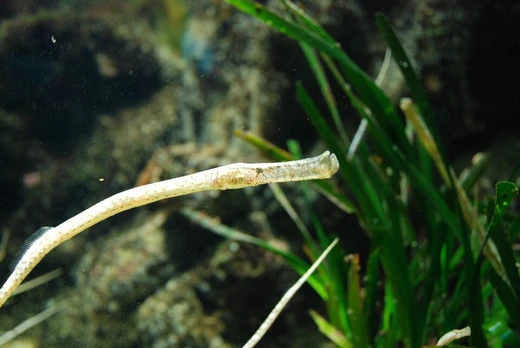
Cylix tupareomanaia
First new syngnathid in New Zealand in a century, named with Māori iwi.

Cylix tupareomanaia, known as the Manaia pygmy pipehorse, belongs to the syngnathid family, which includes seahorses and pipefish, and is found only in New Zealand. Described for the first time in 2021, it lives in the northern waters of the North Island. This discovery marked the first new syngnathid species identified in New Zealand in a century, and it is also the first animal species to be formally named with the involvement of an indigenous group, the Ngātiwai Māori iwi.
The species was placed in a new genus, *Cylix*, from the Greek or Latin word for cup, referring to the cup-like coronet on its head. Its specific name, *tupareomanaia*, comes from the Māori phrase "Tu Pare o Manaia," meaning "the garland of the Manaia." The common name "Manaia" is the Māori word for seahorse. Genetic analysis shows that *Cylix tupareomanaia* diverged from related genera *Acentronura* and *Idiotropiscis* about 13 million years ago. Early specimens were mistaken for *Hippocampus jugumus*, a rare seahorse from the southwest Pacific, due to a shared coronet structure.
The fish has a noticeably angled head and a prehensile tail. It lives among algae, sponges, and bryozoans on coral outcrops and reefs. Its range includes temperate coastal waters off headlands at Whangaruru in Northland, as well as around the inshore islands of Nukutaunga (Cavalli Islands), Pēwhairangi (Bay of Islands), and Tawhiti Rahi and Aorangi in the Poor Knights Islands, at depths between twelve and twenty metres.
Quick Facts
- Genus
- Cylix
- Species
- tupareomanaia
Facts from the source article.
Lore & Background
The species was first described in 2021, representing the first new syngnathid species identified in New Zealand in 100 years. Genetic analysis indicates divergence from species of Acentronura and Idiotropiscis around 13 million years ago. Early collections were misidentified as Hippocampus jugumus due to superficial resemblance and the shared coronet structure. The authors established a new genus, Cylix, from the Greek or Latin word for cup, referencing the shape of the coronet on its head. The specific epithet tupareomanaia derives from Māori: Tu Pare o Manaia, translating as 'the garland of the Manaia'. The common name 'Manaia pygmy pipehorse' uses the Māori word for seahorse, Manaia. This is the first time an indigenous group (Ngātiwai) has formally named a new animal species. The head is notably angled and the tail is prehensile. It occupies habitat composed of algae, sponges, and bryozoans at coral outcrops and reefs. The species is found in temperate coastal waters of New Zealand, offshore of coastal headlands at Whangaruru in Northland and around the inshore islands Nukutaunga (Cavalli Islands), Pēwhairangi (Bay of Islands), and Tawhiti Rahi and Aorangi in the Poor Knights Islands, at depths between 12 and 20 metres.
Reader's Guide
Cylix tupareomanaia holds significance as the first new syngnathid species described from New Zealand in a century, highlighting the region's overlooked marine biodiversity. Its description in 2021 involved collaboration with the Ngātiwai people, traditional owners of the area, who provided cultural information and names. This marks the first time an indigenous group has formally named a new animal species, setting a precedent for integrating traditional knowledge with taxonomic science. The species' genetic divergence from related genera around 13 million years ago underscores its evolutionary distinctiveness. Its misidentification as Hippocampus jugumus in early collections illustrates the challenges of distinguishing cryptic species. The establishment of a new genus, Cylix, based on the coronet shape, and the use of Māori nomenclature, reflect a blending of biological and cultural heritage. The species' restricted distribution to northern North Island coastal waters and specific depth range emphasizes its vulnerability and the importance of conserving its algal, sponge, and bryozoan habitats.
Did You Know?
- It is the first animal species formally named by an indigenous group (Ngātiwai, a Māori iwi).
- Genetic analysis shows it diverged from Acentronura and Idiotropiscis around 13 million years ago.
- Early specimens were misidentified as Hippocampus jugumus due to a similar coronet structure.
Discovery and Taxonomic Significance
The formal description of Cylix tupareomanaia, published in 2021, marked a milestone in New Zealand marine biology: it was the first entirely new species of syngnathid, the family encompassing seahorses and pipefish, to be identified in the country in a full century. Genetic evidence suggests this lineage split from its closest relatives, species within the genera Acentronura and Idiotropiscis, roughly thirteen million years ago, making it a remarkably ancient branch of the Indo-Pacific pygmy pipehorse radiation. The discovery was not without earlier confusion. Because the fish bears a superficial resemblance to certain Hippocampus species, particularly through the shared presence of a crown-like coronet on the head, early specimens collected from New Zealand waters were mistakenly catalogued as Hippocampus jugumus, a rare pipehorse native to the Pacific southwest. It was only through careful genetic and morphological scrutiny that researchers recognised they were dealing with an entirely separate genus, one with no close living counterpart in the region. This reclassification underscores how easily small, cryptic marine species can be overlooked or misassigned for decades.
Indigenous Naming and Cultural Partnership
The naming of Cylix tupareomanaia stands as a landmark moment in the history of biological taxonomy. The researchers who described the species worked in direct collaboration with the Ngātiwai iwi, the Māori tribe that are traditional guardians of the coastal waters where the fish lives. Ngātiwai elders contributed cultural knowledge and, crucially, provided the name that would become the species' formal specific epithet. The term tupareomanaia draws from the Māori phrase Tu Pare o Manaia, which translates to 'the garland of the Manaia.' Manaia itself is the Māori word for seahorse, and it was adopted as part of the English common name, the Manaia pygmy pipehorse. The genus name Cylix, taken from the Greek or Latin word for a cup, references the distinctive cup-shaped coronet that crowns the animal's head. What makes this collaboration historically unprecedented is that it represents the very first instance in which an indigenous community has formally bestowed the name of a newly described animal species. This partnership between Western taxonomic practice and Māori cultural authority set a precedent for how future species descriptions might honour the people and places to which those organisms belong.
Physical Form and Reef Habitat
The Manaia pygmy pipehorse is a small, distinctive member of the syngnathid family, sharing the elongated body plan and prehensile tail characteristic of its pipehorse relatives. Its head is notably angled, giving the animal a distinctive profile, and it bears a prominent coronet, a crown-like structure on top of the skull that is also seen in certain Hippocampus species and was the feature that initially led to misidentification. The tail, like that of other pipefish, is prehensile, allowing the animal to anchor itself among the complex three-dimensional structures of its environment. In terms of habitat, Cylix tupareomanaia is associated with temperate coral outcrops and reefs in New Zealand waters, where it inhabits communities of algae, sponges, and bryozoans. These encrusting and branching organisms create a dense, textured substrate that likely provides both camouflage and foraging opportunities for this small, cryptic fish. The species' resemblance to other Indo-Pacific pygmy pipehorses suggests it occupies a similar ecological niche, clinging to reef structures in relatively shallow, structured habitats rather than open water.
Geographic Range and Endemism
Cylix tupareomanaia is strictly endemic to New Zealand, with its known range confined to the northern reaches of the North Island. The species has been recorded in temperate coastal waters at several specific locations: offshore of the coastal headland at Whangaruru in Northland, and around a cluster of inshore islands including Nukutaunga in the Cavalli Islands, Pēwhairangi in the Bay of Islands, and both Tawhiti Rahi and Aorangi within the Poor Knights Islands group. Across all of these sites, the fish occurs at depths ranging from twelve to twenty metres, placing it in the upper part of the subtidal zone where light penetrates and reef-building organisms thrive. The concentration of records in this relatively compact stretch of northern coastline highlights the species' narrow distribution and reinforces its status as a New Zealand endemic with no known populations elsewhere in the world. Its presence at both mainland headlands and offshore island groups suggests a preference for structured reef habitats common to these northern waters, while the limited number of confirmed sites also underscores how little is still known about the full extent of its range.
Frequently Asked Questions
What is Cylix tupareomanaia?
It is a tiny pipehorse in the syngnathid family (the same group that includes seahorses), commonly called the Manaia pygmy pipehorse. The species is endemic to New Zealand and was formally described in 2021.
Where does Cylix tupareomanaia live?
This pipehorse is restricted to the northern waters of New Zealand's North Island, typically at depths of 12 to 20 metres. Known localities include Whangaruru in Northland, the Cavalli Islands, the Bay of Islands, and the Poor Knights Islands.
What does the genus name Cylix refer to?
Cylix is drawn from the Greek or Latin word for 'cup,' a reference to the species' distinctive cup-shaped coronet on its head. The common name Manaia pygmy pipehorse was selected in partnership with the Ngātiwai Māori iwi.
How was Cylix tupareomanaia first identified?
The species was formally described in 2021, filling a roughly hundred-year gap in New Zealand syngnathid taxonomy. Its type locality is Whangaruru, Northland.
Why is Cylix tupareomanaia considered a landmark discovery?
It is the first new syngnathid species recorded in New Zealand in a century and the first animal species to be formally named with the direct involvement of an indigenous community, the Ngātiwai Māori iwi. That collaborative naming process made it a milestone in how taxonomy can honour local cultural knowledge.
More in Seahorses and Pipefish 1-24
Spotted an error? Know more?
Reader corrections go straight into our review queue. Suggest an edit · How this site is sourced