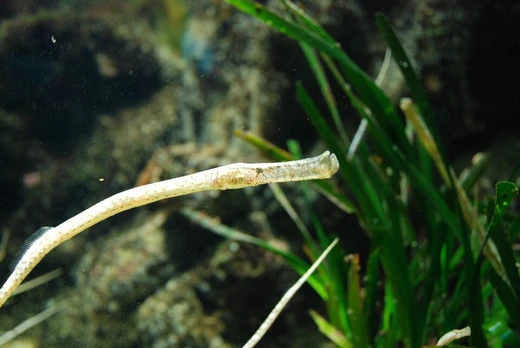
Cylix (fish)
First new syngnathid in New Zealand in a century, named with Māori collaboration.

Cylix tupareomanaia, called the Manaia pygmy pipehorse, belongs to the syngnathid family, which includes seahorses and pipefish. This fish is found only in New Zealand, specifically in the northern parts of the North Island. It was first scientifically described in 2021, marking the first new syngnathid species identified in the country in a century.
The fish gets its genus name, Cylix, from the Greek or Latin word for cup, referring to the cup-like shape of the coronet on its head. The species name, tupareomanaia, comes from the Māori phrase "Tu Pare o Manaia," meaning "the garland of the Manaia." The common name, Manaia pygmy pipehorse, also uses the Māori word for seahorse. This is the first time an indigenous group—the Ngātiwai, a Māori iwi—has formally named a new animal species. The researchers worked with Ngātiwai elders, who provided cultural knowledge and names.
The fish has a noticeably angled head and a prehensile tail. It lives among algae, sponges, and bryozoans on coral outcrops and reefs. Its range includes temperate coastal waters off headlands at Whangaruru in Northland, as well as around the inshore islands of Nukutaunga (Cavalli Islands), Pēwhairangi (Bay of Islands), and Tawhiti Rahi and Aorangi in the Poor Knights Islands. It is found at depths between twelve and twenty metres.
Genetic analysis shows that Cylix tupareomanaia diverged from species in the genera Acentronura and Idiotropiscis about 13 million years ago. Early collections of this fish were mistakenly identified as Hippocampus jugumus, a rare species from the southwest Pacific, because of a superficial resemblance to other seahorses that also have a coronet structure.
Quick Facts
- Genus
- Cylix
- Species
- tupareomanaia
Facts from the source article.
Lore & Background
The species was first described in 2021, representing the first new syngnathid identified in New Zealand in 100 years. Genetic analysis indicates divergence from species of Acentronura and Idiotropiscis around 13 million years ago. Early collections were misidentified as Hippocampus jugumus due to superficial resemblance and the presence of a coronet structure.
The authors established a new genus, Cylix, from the Greek or Latin word for cup, referencing the shape of the coronet on its head. The specific epithet tupareomanaia derives from Māori: Tu Pare o Manaia, meaning 'the garland of the Manaia'. The common name 'Manaia pygmy pipehorse' uses the Māori word for seahorse, Manaia. This is the first time an indigenous group (Ngātiwai) has formally named a new animal species.
The head is notably angled and the tail is prehensile. It occupies habitat composed of algae, sponges, and bryozoans at coral outcrops and reefs. The species is found in temperate coastal waters of New Zealand, offshore of coastal headlands at Whangaruru in Northland and around the inshore islands Nukutaunga (Cavalli Islands), Pēwhairangi (Bay of Islands), and Tawhiti Rahi and Aorangi in the Poor Knights Islands, at depths between 12 and 20 metres.
Reader's Guide
Cylix tupareomanaia holds significance as the first new syngnathid species described from New Zealand in a century, highlighting the region's overlooked marine biodiversity. Its description in 2021 marked a milestone in taxonomic collaboration with indigenous knowledge: the Ngātiwai people provided cultural information and names, resulting in the first formal naming of an animal species by an indigenous group. The genus name Cylix reflects the distinctive cup-shaped coronet, a feature that had previously led to misidentification as Hippocampus jugumus. Genetic analysis places its divergence from related genera at around 13 million years ago, underscoring its evolutionary distinctiveness. The species' restricted distribution to northern North Island coastal waters and offshore islands, at depths of 12–20 metres, emphasizes the importance of these temperate reef habitats. Its discovery and naming process set a precedent for integrating Māori cultural perspectives into scientific taxonomy, and the species was featured on RNZ Critter of the Week in August 2023, raising public awareness of New Zealand's unique syngnathid fauna.
Did You Know?
- Cylix tupareomanaia is the first new syngnathid species identified in New Zealand in 100 years.
- It is the first animal species formally named by an indigenous group (the Ngātiwai, a Māori iwi).
- The genus name Cylix means 'cup' in Greek or Latin, referring to the shape of the coronet on its head.
A Century-Long Gap Closed
The formal description of Cylix tupareomanaia in 2021 marked a remarkable milestone in New Zealand's marine biology: it was the first entirely new species of syngnathid—the family encompassing seahorses and pipefish—to be identified in the country in a full hundred years. The discovery was not without earlier confusion. Because the fish bears a superficial resemblance to members of Hippocampus, particularly due to its distinctive coronet structure on the head, early specimens were misidentified as Hippocampus jugumus, a rare species associated with the Pacific southwest. It was only through careful genetic analysis that researchers confirmed this animal represented something far older and more distinct. Molecular evidence indicates that the lineage diverged from related genera Acentronura and Idiotropiscis roughly thirteen million years ago, meaning this small pipehorse has been evolving in relative isolation for a vast stretch of geological time. Despite its physical similarity to pygmy pipehorses found across the broader Indo-Pacific region, Cylix tupareomanaia stands as a uniquely New Zealand evolutionary story, one that had remained hidden in plain sight before its proper recognition.
A Name Born of Partnership
The naming of Cylix tupareomanaia carries a significance that extends well beyond standard taxonomic convention. The genus name Cylix derives from the Greek or Latin word for "cup," a direct reference to the shape of the coronet structure crowning the fish's head. But the specific epithet tells a deeper story. The researchers worked in collaboration with the Ngātiwai people, the traditional Māori iwi who are the customary owners of the region where this species lives. Ngātiwai elders contributed cultural knowledge and helped shape the naming process, resulting in the Māori-derived name tupareomanaia, which translates from Tu Pare o Manaia as "the garland of the Manaia." The word Manaia itself is the Māori term for seahorse, and it was also adopted as part of the English common name, the Manaia pygmy pipehorse. This collaboration marked a historic first: it was the very first instance of an indigenous group formally naming a newly described species of animal. The act wove Māori language, cultural identity, and scientific taxonomy into a single, inseparable act of recognition.
Form and Function in the Reef
Cylix tupareomanaia is a small syngnathid, placing it within the same family as seahorses and pipefish, and its body plan reflects the specialized lifestyle of that group. The head is notably angled, giving the fish a distinctive profile, while the tail is prehensile—capable of grasping onto the surrounding reef structure. Perhaps the most visually striking feature is the coronet on the head, a cup-shaped structure that earned the genus its name. This same coronet is what initially led collectors to mistake the fish for a member of Hippocampus, since that genus also sports a similar crest. In its natural setting, the Manaia pygmy pipehorse inhabits complex three-dimensional environments built from algae, sponges, and bryozoans growing over coral outcrops and reef formations. These structures provide both camouflage and anchoring points for the prehensile tail, allowing the fish to hold position in the water column. Its overall appearance is comparable to other pygmy pipehorses scattered across the Indo-Pacific, yet the combination of its angled head, cup-like coronet, and specific reef habitat makes it a recognizable resident of New Zealand's northern waters.
A Narrow Northern Range
Cylix tupareomanaia is strictly endemic to New Zealand, and even within that range its distribution is confined to the northern reaches of the North Island. The species occupies temperate coastal waters, specifically offshore of coastal headlands and around inshore island groups. Known localities include Whangaruru in Northland, the Cavalli Islands (Nukutaunga) in the Bay of Islands area, Pēwhairangi also in the Bay of Islands, and two islands in the Poor Knights group—Tawhiti Rahi and Aorangi. Across all these sites, the fish is found at depths ranging from twelve to twenty metres below the surface, a relatively narrow vertical band that suggests specific environmental preferences. The restriction to these scattered northern locations, combined with the species' dependence on particular reef habitats rich in algae, sponges, and bryozoans, means its range is inherently limited. As a species formally described only in 2021, much about its ecology and population dynamics remains to be studied. The fact that it was long misidentified as the rare Pacific species Hippocampus jugumus further illustrates how easily this small, cryptic pipehorse can slip past even experienced collectors, highlighting gaps in our understanding of New Zealand's marine life.
Frequently Asked Questions
What is Cylix (fish)?
Cylix tupareomanaia, commonly known as the Manaia pygmy pipehorse, is a small syngnathid fish that is endemic to New Zealand. It sits within the same family as seahorses and pipefish and was formally described in 2021.
Where does Cylix (fish) live and how deep is it found?
This species is restricted to the northern parts of New Zealand's North Island, its type locality. It inhabits waters roughly 12 to 20 metres below the surface.
What do the names Cylix and tupareomanaia actually mean?
The genus name Cylix comes from the Greek or Latin word for 'cup,' a nod to the cup-like coronet on the fish's head. The species epithet tupareomanaia draws on the Māori phrase 'Tu Pare o Manaia,' meaning 'the garland of the Manaia,' reflecting the collaborative naming with Māori communities.
Why is Cylix (fish) a big deal for New Zealand marine biology?
Its 2021 description marked the first newly identified syngnathid species in New Zealand in roughly one hundred years. That gap made the discovery a notable milestone for the country's understanding of its coastal biodiversity.
How was Cylix (fish) named and who was involved?
The species was named in partnership with Māori, incorporating the phrase 'Tu Pare o Manaia' into its scientific binomial. This collaboration ensured the fish carries cultural significance alongside its taxonomic identity.
More in Seahorses and Pipefish 1-24
Spotted an error? Know more?
Reader corrections go straight into our review queue. Suggest an edit · How this site is sourced