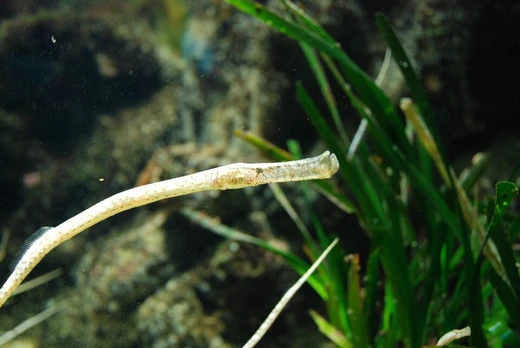
Doryrhamphus negrosensis
A small pipefish with a flag-like tail, found in Western Pacific reefs.

The Negros pipefish, also known as the flagtail pipefish, Masthead Island pipefish, or Queensland flagtail pipefish, is a marine fish belonging to the Syngnathidae family. This small, bluish to bluish-grey species grows up to 6.2 centimeters (2.4 inches) long and inhabits mud flats, coral reefs, and rocky reefs in the Western Pacific Ocean, ranging from Borneo to Vanuatu and from the Yaeyama Islands to the Rowley Shoals and the Great Barrier Reef. It typically lives at depths down to 9 meters (30 feet) and is often found near sea urchins. While generally solitary, it may appear in pairs or small groups. Its feeding habits are not well documented, but like other pipefish, it likely consumes harpacticoid copepods, gammarid shrimps, and mysids; it may also act as a cleaner fish, similar to other species in the genus *Doryrhamphus*. The Negros pipefish is ovoviviparous: males carry the eggs and give birth to live young, with males beginning to brood at a length of 4.3 centimeters. Its distinctive features include a pale stripe along the top of the head and snout, and a dark, fan-shaped tail fin with white edges and an orange base.
Quick Facts
- Taxon
- Doryrhamphus negrosensis
Facts from the source article.
Lore & Background
Doryrhamphus negrosensis is a small bluish to bluish-grey pipefish with a pale stripe along the dorsal side of the head and snout. Its most distinctive feature is a dark fan-like caudal fin that has white margins and an orange base. It inhabits mud flats and both coral and rocky reefs, where it is often associated with sea urchins. The species is rather solitary but may be found in pairs or small groups, and it lives at depths up to 9 metres (30 ft).
Reader's Guide
Doryrhamphus negrosensis is a species of marine fish in the family Syngnathidae, found in the Western Pacific Ocean from Borneo to Vanuatu and the Yaeyama Islands to the Rowley Shoals and the Great Barrier Reef. Although little is known of its feeding habits, it is expected to feed on harpacticoid copepods, gammarid shrimps, and mysids, similar to other pipefish. It may also act as a cleaner fish like other species in the genus Doryrhamphus. The species is ovoviviparous, with males carrying eggs before giving birth to live young; males may brood at a length of 4.3 cm. Its maximum recorded length is 6.2 centimetres (2.4 in). The species is known by several common names, including Negros pipefish, flagtail pipefish, Masthead Island pipefish, and Queensland flagtail pipefish.
Did You Know?
- Males may brood eggs at a length of 4.3 cm.
- It is often associated with sea urchins in its habitat.
- Its caudal fin is dark, fan-like, with white margins and an orange base.
More in Seahorses and Pipefish 1-24
Spotted an error? Know more?
Reader corrections go straight into our review queue. Suggest an edit · How this site is sourced