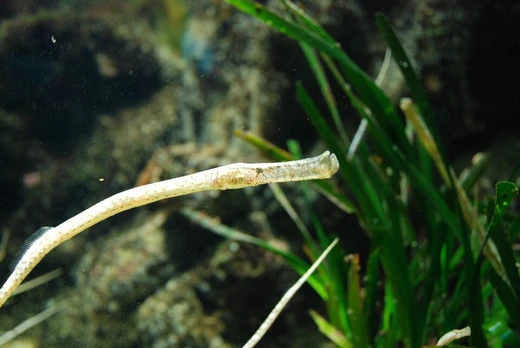
Acentronura
A genus of pygmy pipehorse lacking a tail sting.

Acentronura is a genus of pygmy pipehorse found in the Indian and Pacific Oceans. Its name comes from the Greek *a-kentron-oura*, meaning "without a sting on the tail." These fish are small, secretive, and highly camouflaged, making them rarely seen; some species may be more abundant than observations suggest. Adults inhabit shallow tropical and subtropical waters, typically less than 20 meters deep, on the continental shelf near sandy or muddy substrates, around macroalgae (especially red algae), seagrass, coral reefs, or rocky outcrops. Juveniles resemble adults but are pelagic and may be found deeper.
Three species are currently recognized: *Acentronura breviperula* (dwarf pipehorse), *Acentronura gracilissima* (bastard seahorse), and *Acentronura tentaculata* (shortpouch pygmy pipehorse). Former members have been moved to the genera *Amphelikturus* and *Idiotropiscis*. Adults range from 5 to 8 centimeters in length, averaging about 6.3 centimeters.
Like other syngnathids, they have bony armor plates that limit flexibility, so they swim sluggishly with the body horizontal, using rapid fin movements. Their tail is prehensile, used to anchor to algae or seagrass, but the front body is straight like a pipefish, not bent like a seahorse. Males are larger and more robust than females, with a brood pouch that is large relative to body size, giving them a more seahorse-like appearance. Females have a slim, linear pipefish form. Their fused jaws and small snout tip are used to snap up small invertebrates, such as planktonic crustaceans, drifting in the current. The head, with a slim snout, large eyes, and raised rear skull, resembles a seahorse, while the body is short and slim. Projections often stick out from the body and head.
Reproduction is ovoviviparous: eggs are transferred to a brood pouch on the male’s ventral surface, extending from behind the anus to about halfway along the short tail. The pouch is formed by skin folds with less bony protection, and eggs incubate in individual skin cells until they hatch and are released when the yolk sac is exhausted. *Acentronura tentaculata* is the best-known species; others likely have similar habits. These fish are often seen in pairs, suggesting monogamy, but it is unknown if pair bonds are long-lasting or changeable (as recently confirmed for some seahorses). In *A.
Quick Facts
- Taxon
- Acentronura
- Type Species
- Hippocampus gracilissimus
- Type Species Authority
- Temminck & Schlegel 1850
Facts from the source article.
Lore & Background
Acentronura species are mainly found in shallow tropical and subtropical waters of the Indo-west Pacific and the Red Sea. Adults are usually in the demersal region just above the substrate on the continental shelf, in water less than 20 metres deep. Juveniles are similar in form but pelagic, and may be found deeper. Adults occur in or above sandy or muddy substrates, around macroalgae (especially red algae), seagrass, coral reefs, or rocky outcrops.
Like other Syngnathidae, they have protective bony armor plates, limiting flexibility and causing sluggish swimming with the body held horizontally. Their tail is prehensile for anchorage, winding around algae or seagrass. The front part of the body is typical pipefish, with head and body in line, not bent like seahorses. Males are somewhat larger and more robust, with a large brood pouch giving them a more seahorse-like appearance. They have fused jaws and feed on small invertebrates such as planktonic crustacea. The head is reminiscent of a seahorse, with a slim snout, large eyes, and raised rear skull. Projections often stick out from the body and head.
Reader's Guide
Acentronura species are ovoviviparous, giving birth to live young. Eggs are transferred at mating into a brood pouch on the ventral surface of the male, extending from just behind the anus to about halfway along the tail. The pouch is formed by elongated folds of skin, less protected by bony plates. Eggs incubate within individual skin cells and hatch as the yolk sac is exhausted. Acentronura tentaculata is the best-known species; others likely have similar habits. These fish are most commonly seen in pairs, suggesting monogamy, but it is not known whether pair bonds are long-lived or changeable, as has been confirmed for some seahorse species. In A. tentaculata, newborns become free-swimming pelagic plankton until part-grown, then settle into adult habitat. Their small size, secretive nature, and excellent camouflage make them rarely seen, so some species may be more common than they appear. The genus name highlights the absence of a tail sting, a distinctive trait among pipehorses.
Did You Know?
- The name Acentronura comes from Greek ακεντρονουρα, meaning 'lack of a sting on the tail'.
- Adults are usually found in water less than 20 metres deep, while juveniles are pelagic.
- Males have a large brood pouch that gives them a more seahorse-like appearance than females.
- Acentronura tentaculata is the best-known species, but others likely have similar habits.
More in Seahorses and Pipefish 1-24
Spotted an error? Know more?
Reader corrections go straight into our review queue. Suggest an edit · How this site is sourced