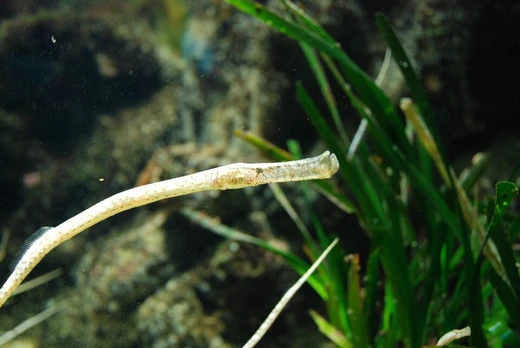
Acentronura breviperula
A small, camouflaged pipehorse with a prehensile tail and horizontal swimming.

Acentronura breviperula, commonly known as the shortpouch pygmy pipehorse, dwarf pipehorse, or northern little pipehorse, is a species of pygmy pipehorse belonging to the family Syngnathidae, which includes seahorses and pipefishes. It is notable for its small size, drab coloration, and excellent camouflage among sandy and silty habitats, as well as for its prehensile tail similar to that of a seahorse, though it lacks an angled head and swims horizontally.
Quick Facts
- Taxon
- Acentronura breviperula
Facts from the source article.
Lore & Background
Acentronura breviperula occurs in the Indo-Pacific region from the eastern Andaman Sea, through the Malay Archipelago to the Western Pacific as far east as New Guinea and the northern Great Barrier Reef. It is found at depths from 2 to 40 meters, typically on substrates of coral rubble or in areas of sparse algal growth. The species is very well camouflaged among sandy and silty habitats, and it is normally recorded in pairs, using its prehensile tail to grip onto pieces of algae or debris.
Reader's Guide
Acentronura breviperula is significant as a valid species within the pygmy pipehorse group, having previously been considered a synonym of Acentronura tentaculata, which is now restricted to the Red Sea. Its small size, drab coloration, and horizontal swimming posture distinguish it from seahorses, while its prehensile tail and brood pouch align it with syngnathid reproductive traits. In Australia, it is a listed Marine Species under the Environment Protection and Biodiversity Conservation Act 1999, indicating regulatory recognition. The species is carnivorous, feeding on small invertebrates, and exhibits sexual dimorphism: females resemble pipefish, while males have large bellies and bear more resemblance to seahorses. Its occurrence in pairs and use of prehensile tails for gripping algae or debris highlight its ecological niche in coral rubble and sparse algal habitats.
Did You Know?
- Acentronura breviperula was previously thought to be a synonym of Acentronura tentaculata but is now considered a valid species.
- Males have large bellies and resemble seahorses, while females resemble pipefish.
More in Seahorses and Pipefish 1-24
Spotted an error? Know more?
Reader corrections go straight into our review queue. Suggest an edit · How this site is sourced