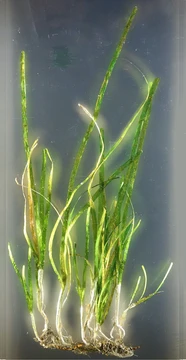
Zostera noltii
Dwarf eelgrass stabilizes sediments and supports coastal ecosystems.

Wikimedia Commons · Public domain
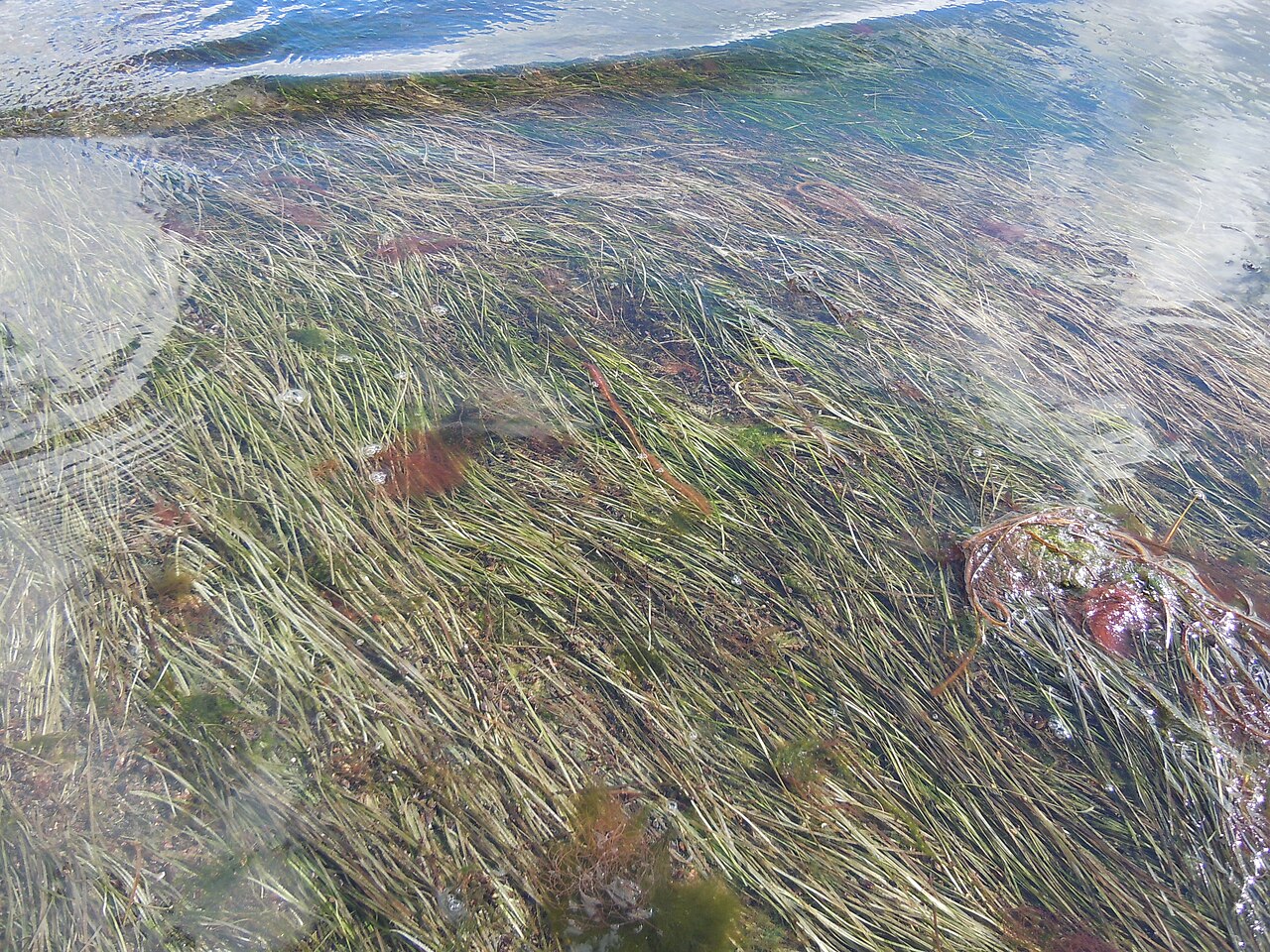
Zostera noltii, commonly known as dwarf eelgrass, is a species of seagrass found in shallow coastal waters of northwestern Europe, the Mediterranean Sea, Black Sea, Caspian Sea, and Aral Sea, as well as on Atlantic islands off northwest Africa. It is notable as an important component of intertidal and shallow subtidal ecosystems in estuaries, bays, and lagoons, and is the only seagrass species present in the Caspian and Aral Seas.
Quick Facts
- Genus
- Zostera
- Species
- noltii
Facts from the source article.
Lore & Background
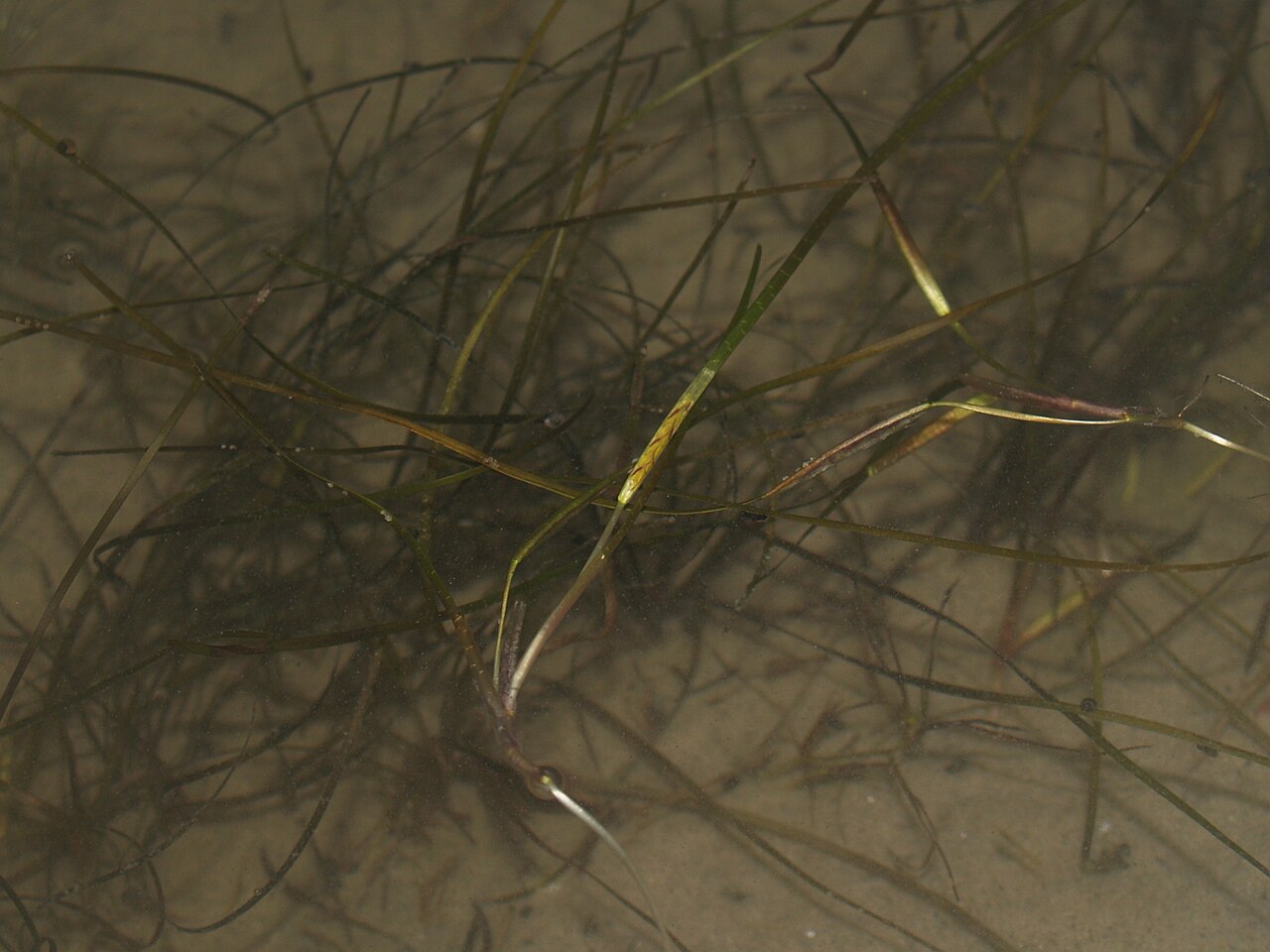
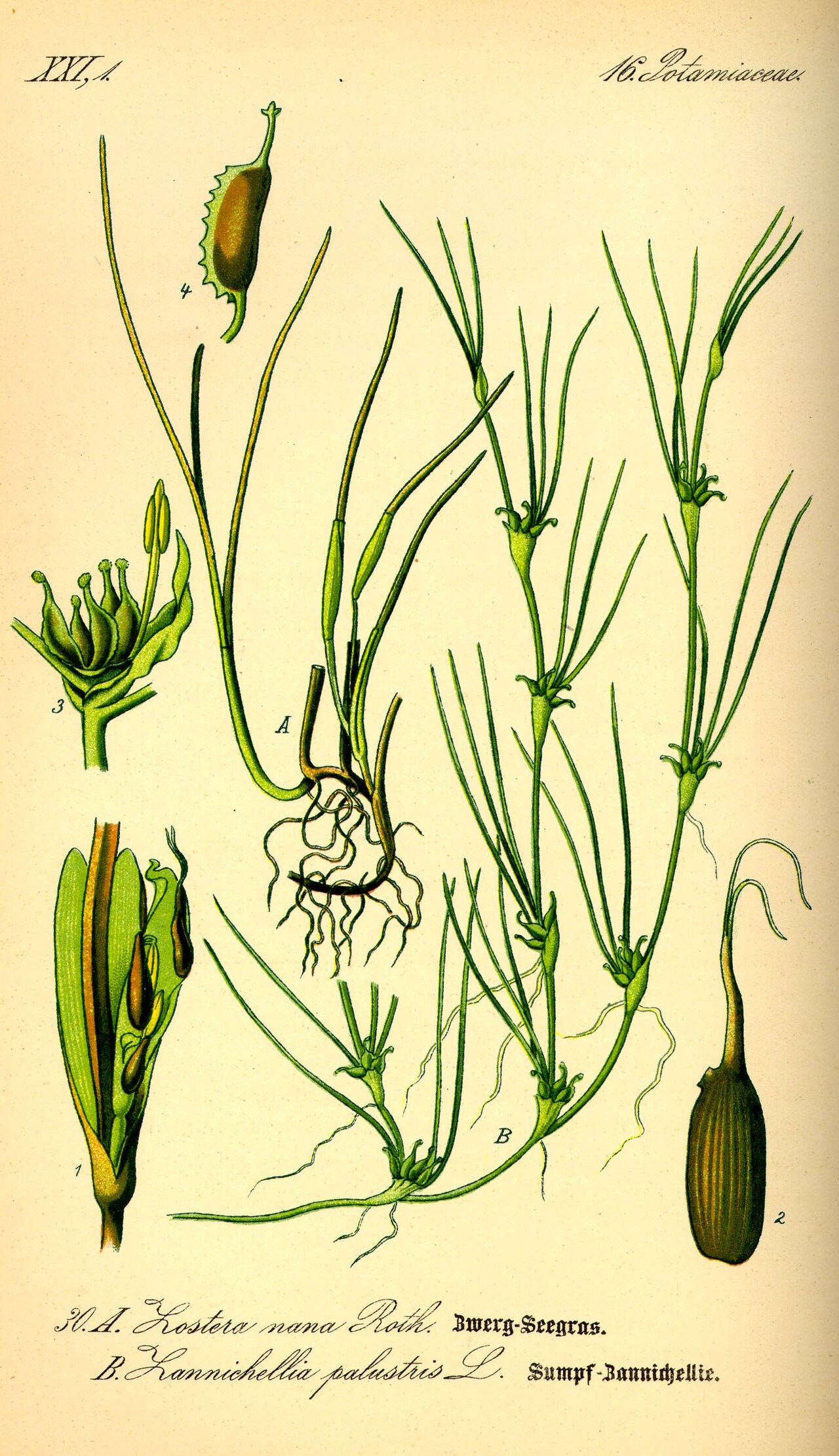
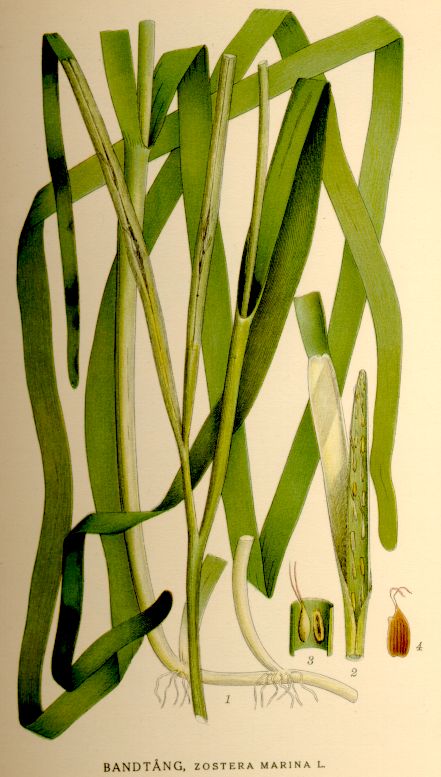
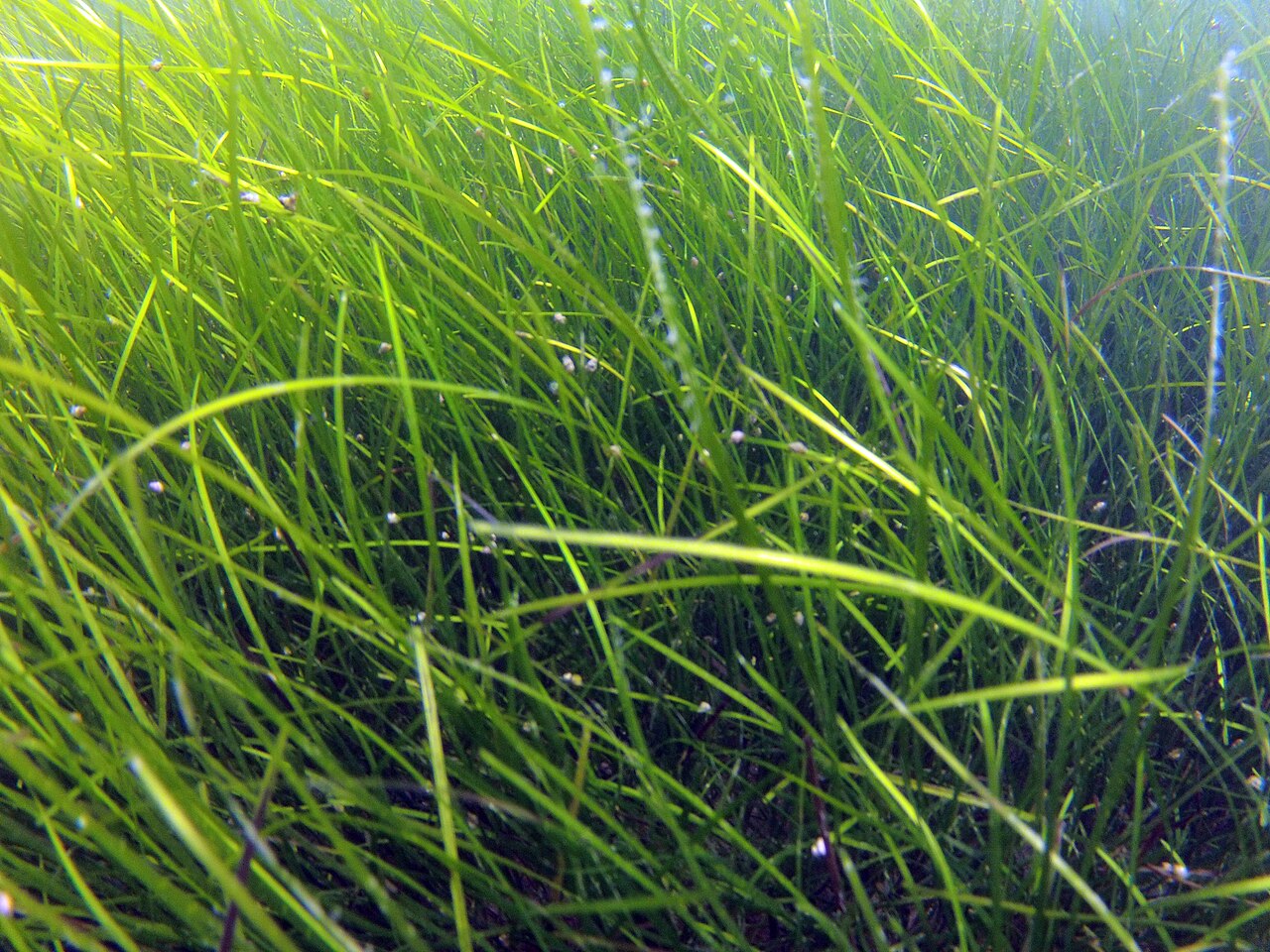
Zostera noltii has a creeping rhizome that runs under the seabed surface. Groups of two to five strap-shaped leaves grow from nodes on the rhizome, each node also bearing a tuft of up to four short roots. The leaves have three irregular longitudinal veins and blunt, notched ends, contain air spaces that make them buoyant, and reach up to 22 cm long. Separate male and female flowers grow on a short, spear-shaped lateral stem. The smooth white seeds develop inside a green capsule with membranous walls and are about 2 mm long. Growth begins in spring with new leaves and rhizome lengthening and branching. Dense beds of shoots form meadows covering intertidal flats during summer, when flowering occurs. By autumn growth stops, and over winter most leaves are broken off or eaten by birds, leaving only submerged rhizomes. A clump of rhizomes may live for many years. Male flowers release pollen strands of similar density to water, remaining capable of fertilizing female flowers for several days. Seed capsules are photosynthetic and contain an air bubble; after weeks they split open, releasing seeds that sink, or the capsules may detach and float away. Seeds are dispersed by waves, currents, or on birds' feet or in their guts. Seagrass beds are highly productive and form the basis of important coastal ecosystems. Many algae species grow epiphytically on Zostera noltii, including Cladosiphon zosterae, Halothrix lumbricalis, Leblondiella densa, Myrionema magnusii, and Punctaria crispata. A parasite, Plasmodiophora bicaudata, attacks eel grasses, including Zostera noltii. Eelgrass beds provide refuge for invertebrates and developing juvenile fish. Detritus from decaying leaves enriches sediment and supports a food chain, with protists feeding on leached organic compounds and bacteria.
Reader's Guide
Zostera noltii plays a significant role in coastal ecosystems as described in the source article. It is an important part of the winter diet of whooper swans, mute swans, brent geese, and wigeon. Overwintering brent goose populations in Europe have declined since wasting disease reduced eelgrass availability, and wigeon numbers have also declined. At least some eelgrass seeds germinate after passing through wildfowl guts, enabling dispersal over dozens of kilometers, though vegetative reproduction via detached rhizome sections is probably the most common means of spread.
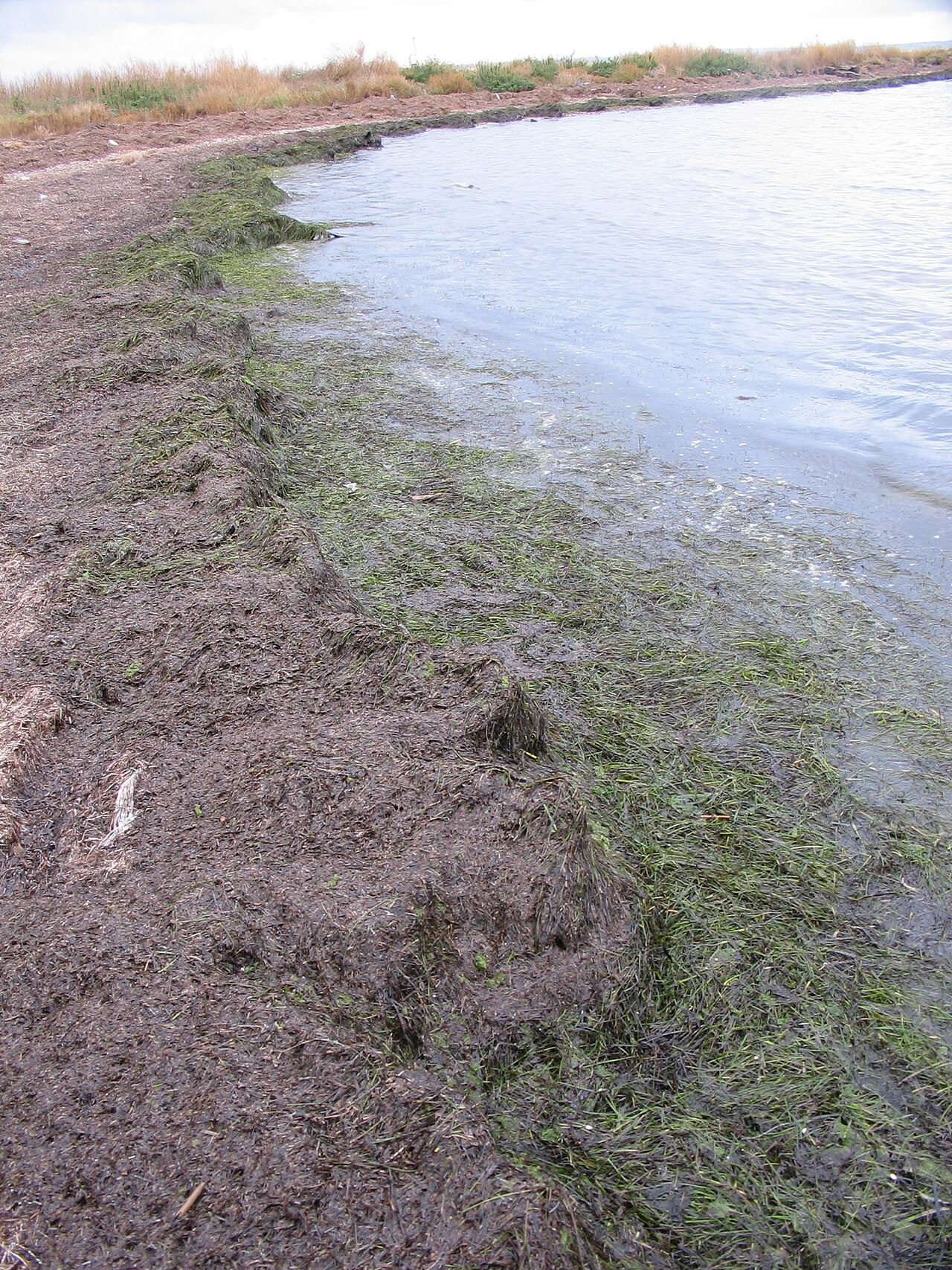
The species is important in stabilizing sediments and reducing wave energy, potentially providing coastal defense against erosion. However, it is sensitive to being smothered by shifting sediment and has low capacity to recover when buried, possibly due to its relatively short leaves and lack of vertical rhizomes. It is regularly exposed on the foreshore at low tide and is resistant to desiccation. Although it supports a biodiverse assortment of animal species, these are more numerous in subtidal beds. While populations may be declining slowly, the IUCN Red List lists it as of least concern.
Did You Know?
- Zostera noltii is the only seagrass species found in the Caspian Sea and the Aral Sea.
- Its seed capsules are photosynthetic and contain a bubble of air, allowing them to float and disperse.
- Seeds of Zostera noltii can germinate after passing through the gut of wildfowl, enabling long-distance dispersal.
Ecological Architecture & Physiological Adaptations
Zostera noltii, like its congeners, is a perennial seagrass bearing long, bright green ribbon-like leaves roughly a centimeter wide, anchored by extensive white branching rhizomes. Its flowers are tucked within leaf-base sheaths, and its bladdery fruits are buoyant enough to drift across the water surface. Ecologically, these eelgrass beds play a critical role in coastal systems: they trap sediment, stabilize substrates, provide attachment surfaces for epiphytic algae and micro-invertebrates, and serve as nursery habitat for numerous commercially important fish and shellfish species. In estuarine settings, Zostera frequently establishes in soft bay mud. The plant also functions as a food source for brant geese, wigeons, and occasionally the caterpillars of the grass moth Dolicharthria punctalis. A remarkable physiological trait is its ability to maintain constant internal turgor pressure despite tidal osmotic shifts, achieved by actively shedding solutes during ebb and reabsorbing them at flood. However, the slime mold Labyrinthula zosterae can devastate populations, triggering a wasting disease that cascades through the fauna that depend on the beds.
Geographic Range & Biogeographic Context
Zostera noltii occupies a distinctive biogeographic niche among the fifteen recognized species in its genus. Its range encompasses the shores of the Northeastern Atlantic, the Mediterranean basin, the Black Sea, and notably the land-locked Caspian Sea—making it one of the few seagrass species to colonize a fully enclosed inland body of water. This distribution contrasts with congeners such as Z. marina, which favors the North Pacific, North Atlantic, British Isles, Mediterranean, Black Sea, and Sea of Okhotsk, or Z. japonica, spanning the Russian Far East, Japan, Korea, China, and Vietnam. The genus as a whole is broadly distributed across Northern Hemisphere seashores as well as Australia, New Zealand, Southeast Asia, and southern Africa. The 2005 discovery of Z. chilensis on Chile's Pacific coast further extended the known range into South America. Z. noltii's presence in the Caspian Sea underscores the genus's capacity to adapt to varied salinity regimes, from fully marine to semi-enclosed and even land-locked environments.
Human Uses & Cultural Entanglement
Eelgrass has woven itself into human material culture across multiple continents and centuries. The Seri people of Sonora's coast in Mexico harvested rhizomes and leaf-bases, consuming them fresh or pressing them into dried cakes for winter sustenance, and even employing the plant to smoke deer meat. Their language contains a rich vocabulary of eelgrass-related terms, and April itself is named xnoois ihaat iizax, meaning the month when the eelgrass seed reaches maturity. Beyond food, dried Zostera served as packing material and stuffing for mattresses and cushions. On the Danish island of Læsø, eelgrass was thatched onto roofs; though heavy, these roofs reportedly outlast conventional thatch and are simpler to maintain. In the early 1900s, the Samuel Cabot Company of Boston commercially marketed eelgrass insulation as Cabot's Quilt, but the product vanished when Labyrinthula zosterae destroyed crops and the Great Depression collapsed homebuilding. More recently, washed eelgrass has been used as insulation in eco-houses and as permaculture ground cover, as in the Friland Danish eco-village.
Emerging Applications & Future Potential
Beyond its traditional roles, Zostera is attracting renewed scientific and industrial interest for its potential in addressing modern environmental challenges. Several studies indicate that eelgrass meadows can sequester atmospheric carbon, offering a natural mechanism to mitigate anthropogenic climate change by locking CO₂ into sediment over long timescales. Additionally, the plant can be processed into biomass energy using the Jean Pain method, a technique for converting organic matter into combustible fuel. These applications position seagrass not merely as a passive ecological asset but as an active tool in carbon-cycle management and renewable energy portfolios. The genus's broad distribution across temperate and subtropical coastlines—from the Caspian Sea to New Zealand—suggests that such applications could be scaled across diverse marine regions. However, the vulnerability of Zostera populations to pathogens like Labyrinthula zosterae, which has historically devastated beds and disrupted the fisheries and wildlife that depend on them, underscores the need for robust conservation alongside any commercial exploitation.
Gallery
Frequently Asked Questions
What is Zostera noltii?
Zostera noltii, widely recognized by its common name dwarf eelgrass, is a seagrass species that thrives in the shallow coastal waters of northwestern Europe, the Mediterranean, the Black Sea, the Caspian Sea, the Aral Sea, and Atlantic islands off northwest Africa. It is the sole seagrass species recorded in both the Caspian and Aral basins.
Where exactly does Zostera noltii grow?
You will typically find it rooted in intertidal and shallow subtidal habitats such as estuaries, bays, and lagoons. Its southernmost known population occurs in the Saloum Delta of Senegal, marking the far reach of its Atlantic distribution.
What does Zostera noltii look like up close?
Each node bears two to five narrow leaves that can reach up to 22 cm (about 9 in) in length, and up to four roots anchor the plant at the same node. Its seeds are remarkably tiny, measuring only around 2 mm (0.08 in), which is one of the features that sets it apart from larger eelgrass relatives.
What role does Zostera noltii play in its habitat?
Dwarf eelgrass is a keystone stabilizer of coastal sediments, holding the soft bottom in place and preventing erosion. It also provides structural habitat and food resources that underpin the broader intertidal and shallow subtidal food web in estuaries, bays, and lagoons.
Is Zostera noltii at risk of disappearing?
Currently the IUCN Red List classifies the species as Least Concern, meaning its population range and numbers are not showing the decline patterns that would trigger a threatened category. That said, fans and conservationists still monitor its estuarine and lagoon habitats closely, since local pressures such as sediment disturbance or eutrophication can still degrade individual meadows.
More in Seagrasses 1-24
Spotted an error? Know more?
Reader corrections go straight into our review queue. Suggest an edit · How this site is sourced