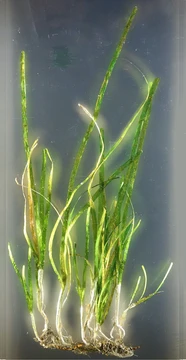
Hydrocharitaceae
A family of aquatic plants including freshwater and marine species.

Show_ryu · CC BY 3.0
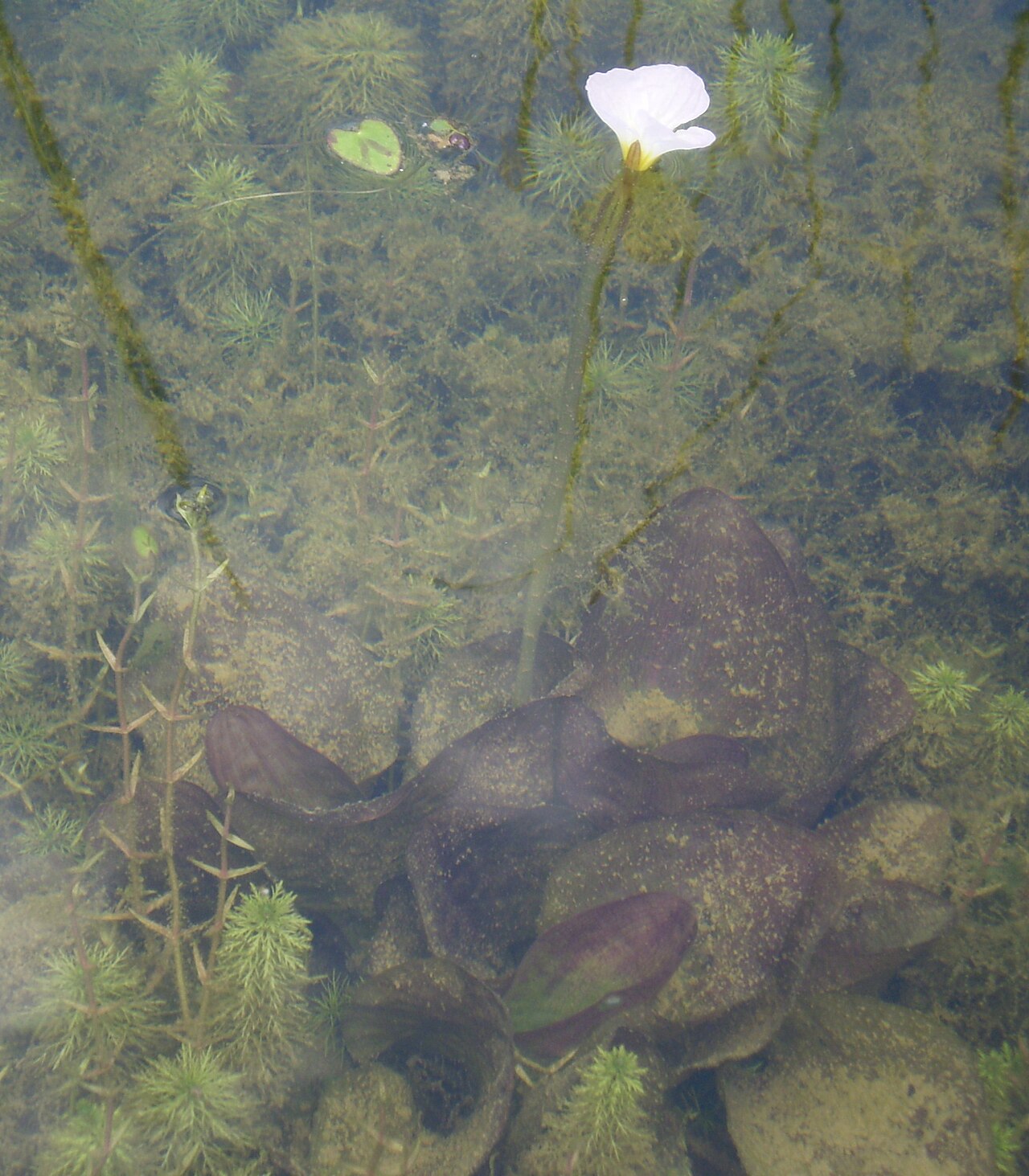
Hydrocharitaceae is a flowering plant family that includes 14 accepted genera and approximately 135 known species. The family contains a number of aquatic plants, including tape-grass, Canadian waterweed, and frogbit, and is found throughout the world in a wide variety of habitats, primarily tropical.
Quick Facts
- Taxon
- Hydrocharitaceae
Facts from the source article.
Lore & Background
The species are annual or perennial, with a creeping monopodial rhizome and leaves arranged in two vertical rows, or an erect main shoot with roots at the base and spirally arranged or whorled leaves. Leaves are simple and usually submerged, though they may be floating or partially emerse, and vary in shape from linear to orbicular, with or without a petiole or sheathing base. Flowers are arranged in a forked, spathe-like bract or between two opposite bracts, usually irregular, and either bisexual or unisexual. The perianth segments are in 1 or 2 series of 2–3 free segments; the inner series when present are usually showy and petal-like. Stamens number 1 to numerous, in one or more series, with inner ones sometimes sterile. Pollen grains are globular and free, but in the marine genera Thalassia and Halophila they are carried in chains like strings of beads. The ovary is inferior with 2–15 united carpels containing a single locule with numerous ovules on parietal placentas. Fruits are globular to linear, dry or pulpy, dehiscent or more usually indehiscent, opening by decay of the pericarp. Seeds are normally numerous with straight embryos and no endosperm. Pollination can be extremely specialised. The most recent phylogenetic treatment recognizes four subfamilies: Anacharioideae, Hydrilloideae, Hydrocharitoideae, and Stratiotoideae.
Reader's Guide
Hydrocharitaceae is notable for including both freshwater and marine aquatic plants, with a global distribution primarily in tropical habitats. The family contains well-known species such as tape-grass, Canadian waterweed, and frogbit. Its 14 accepted genera and approximately 135 species exhibit a wide range of morphological variation, from leaf shape to flower structure. A distinctive feature is the chain-like pollen grains found in the marine genera Thalassia and Halophila, which are unique within the family. Pollination in the group can be extremely specialised. Some species, particularly from the genera Egeria, Elodea, and Hydrilla, have become established as ornamental plants and subsequently serious weeds in the wild. The family is divided into four subfamilies based on phylogenetic analysis: Anacharioideae, Hydrilloideae, Hydrocharitoideae, and Stratiotoideae. These subfamilies encompass a range of genera including Enhalus, Halophila, Hydrilla, Vallisneria, and others. The family's ecological role in aquatic habitats and its potential for invasiveness make it significant in both natural and managed water systems.
Did You Know?
- The family includes both freshwater and marine aquatics.
- In the marine genera Thalassia and Halophila, pollen grains are carried in chains like strings of beads.
- Some species from the genera Egeria, Elodea, and Hydrilla have become serious weeds in the wild.
Taxonomy, Distribution, and Ecological Range
Hydrocharitaceae is a family of flowering plants that encompasses fourteen currently accepted genera and approximately one hundred and thirty-five known species, a count established in the 2016 revision by Christenhusz and Byng. What unites these diverse members is their aquatic lifestyle: the family spans both freshwater and marine environments, a breadth that sets it apart from many other plant families. Familiar names within the group include tape-grass, the well-known Canadian waterweed, and frogbit, each representing a different ecological niche. Geographically, Hydrocharitaceae members are distributed throughout the world, colonizing a wide variety of aquatic habitats. Despite this global reach, the family is predominantly tropical in its concentration of diversity, with the warm waters of the tropics sheltering the greatest number of species. The coexistence of marine and freshwater lineages within a single family underscores the adaptability of these plants to very different salinity regimes, from the open ocean to still inland ponds and slow rivers.
Growth Forms and Leaf Architecture
Members of Hydrocharitaceae display a remarkable range of growth strategies, existing as either annual or perennial plants. Two principal architectural plans dominate the family. In the first, a creeping monopodial rhizome spreads along the substrate, bearing its leaves arranged in two neat vertical rows. In the second, an erect main shoot rises from a basal cluster of roots, with leaves arranged either spirally or in whorls. The leaves themselves are simple and most commonly found fully submerged, though some species present floating or partially emersed foliage. As is typical among aquatic plants, leaf morphology within the family is highly variable: shapes range from narrow and linear to broad and orbicular, and leaves may or may not possess a distinct petiole, with or without a sheathing base where the leaf meets the stem. This plasticity allows Hydrocharitaceae species to exploit a wide spectrum of light and water-column conditions, from the dim depths of a lake to the sunlit surface of a shallow lagoon.
Floral Structure and Pollination Biology
The reproductive morphology of Hydrocharitaceae is intricate and often highly specialized. Flowers are typically borne within a forked, spathe-like bract or nestled between two opposite bracts. They are usually irregular in form, though some species show only slight asymmetry, and they may be either bisexual or unisexual. The perianth consists of one or two whorls of two to three free segments; when a second, inner series is present, those segments tend to be showy and petal-like. Stamen numbers range from a single stamen to numerous, arranged in one or more series, with the inner stamens occasionally reduced to sterile structures. One of the most striking features concerns pollen: in most genera the grains are globular and free, but in the marine genera Thalassia and Halophila the pollen grains are linked into chains resembling strings of beads. The ovary is inferior, composed of two to fifteen united carpels forming a single locule packed with numerous ovules on parietal placentas. Fruits vary from globular to linear, dry or pulpy, and are more often indehiscent, releasing seeds through pericarp decay. Seeds are typically numerous, bearing straight embryos and lacking endosperm. Pollination mechanisms within the family can be extremely specialized.
Phylogenetic Framework and Invasive Potential
The most recent phylogenetic treatment of Hydrocharitaceae recognizes four subfamilies, each grouping a distinct set of genera. Anacharioideae comprises Appertiella, Blyxa, Egeria, Elodea, Lagarosiphon, and Ottelia. Hydrilloideae includes Enhalus, Halophila, Hydrilla, Maidenia, Najas, Nechamandra, Thalassia, and Vallisneria. Hydrocharitoideae contains Hydrocharis and Limnobium, while Stratiotoideae is represented by the single genus Stratiotes. This four-fold division captures the evolutionary radiation of the family across both marine and freshwater realms. Beyond their natural ecology, several Hydrocharitaceae species have entered human-managed waterways as ornamental aquarium and pond plants. Once released or escaped, genera such as Egeria, Elodea, and Hydrilla have established themselves as serious invasive weeds in the wild, outcompeting native vegetation and disrupting aquatic ecosystems far from their original ranges. This dual identity—as beautiful ornamental and as aggressive invader—highlights the ecological complexity of a family whose members thrive in some of the planet's most dynamic aquatic environments.
Gallery
Frequently Asked Questions
What is Hydrocharitaceae?
Hydrocharitaceae is a family of flowering aquatic plants that spans both freshwater and marine environments. It comprises 14 accepted genera and roughly 135 described species, organized into four subfamilies.
Which well-known species belong to Hydrocharitaceae?
The family includes familiar names such as tape-grass, Canadian waterweed, and frogbit, among its many members. These range from small floating-leaved pond plants to larger submerged marine grasses.
Where can Hydrocharitaceae be found?
Members of this family occur across the globe in a wide variety of aquatic habitats, with the greatest concentration in tropical regions. They occupy both still and flowing freshwater as well as shallow coastal marine settings.
What makes Thalassia and Halophila special within Hydrocharitaceae?
These two marine genera are distinguished by producing chain-like pollen grains, a trait not shared by the rest of the family. This structural difference is one of the key features used to set them apart taxonomically.
Why is Hydrocharitaceae ecologically important?
As a family of aquatic plants, its members form the structural backbone of many pond, lake, and seagrass-bed ecosystems. They provide habitat, stabilize sediments, and support the food webs of countless fish, invertebrates, and other aquatic organisms.
More in Seagrasses 1-24
Spotted an error? Know more?
Reader corrections go straight into our review queue. Suggest an edit · How this site is sourced