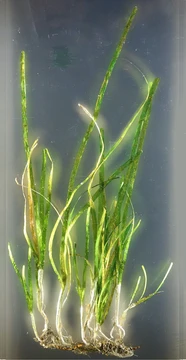
Thalassia testudinum
A perennial seagrass forming meadows in the Caribbean and Gulf of Mexico.

James St. John · CC BY 2.0
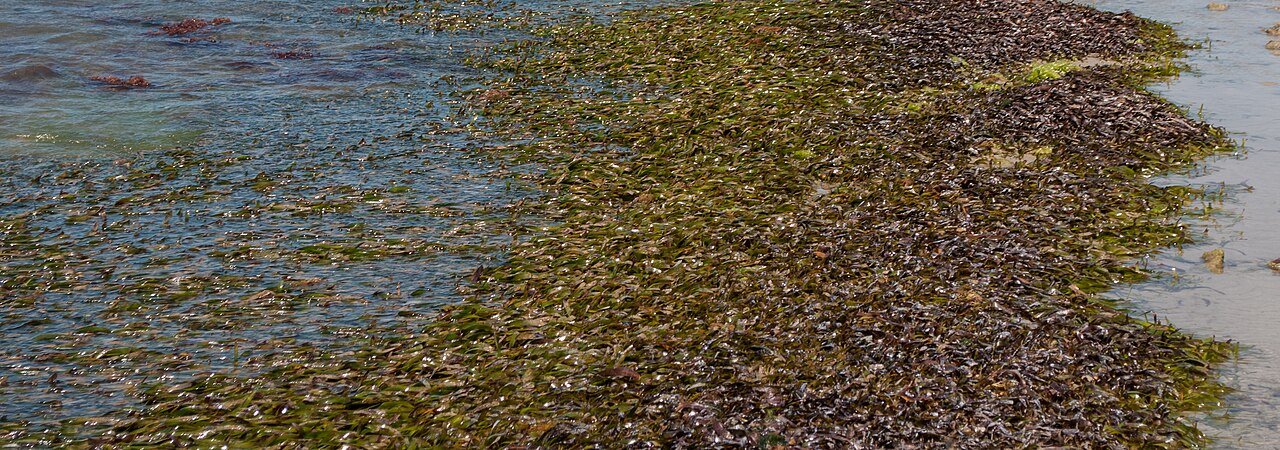
Thalassia testudinum, called turtlegrass, is a marine seagrass from the Hydrocharitaceae family. It grows in meadows across shallow, sandy waters of the Caribbean Sea and the Gulf of Mexico. These meadows serve as vital habitats and feeding areas. Turtles and herbivorous fish eat the grass, it hosts many epiphytes, and it offers shelter for young fish and numerous invertebrates.
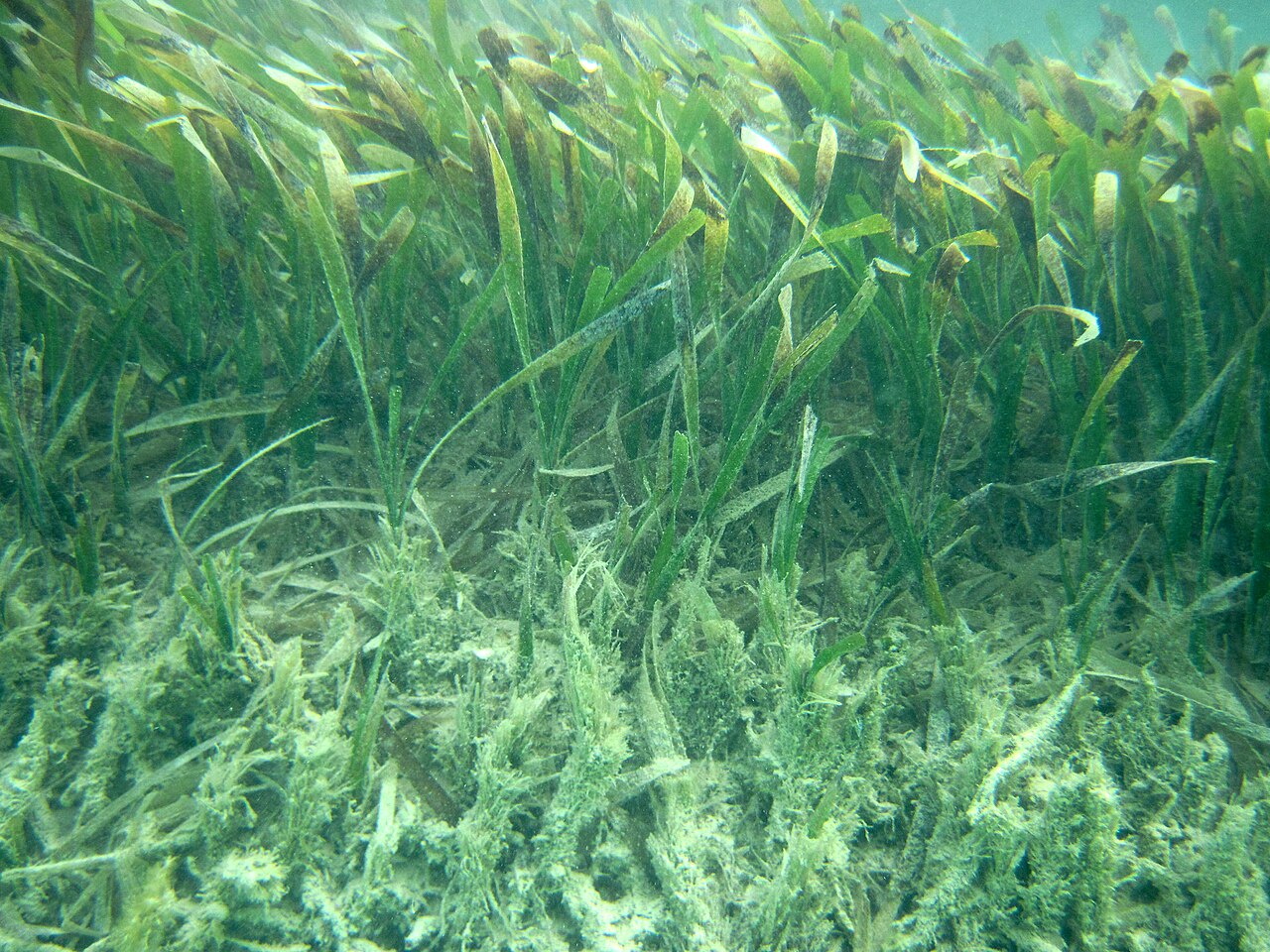
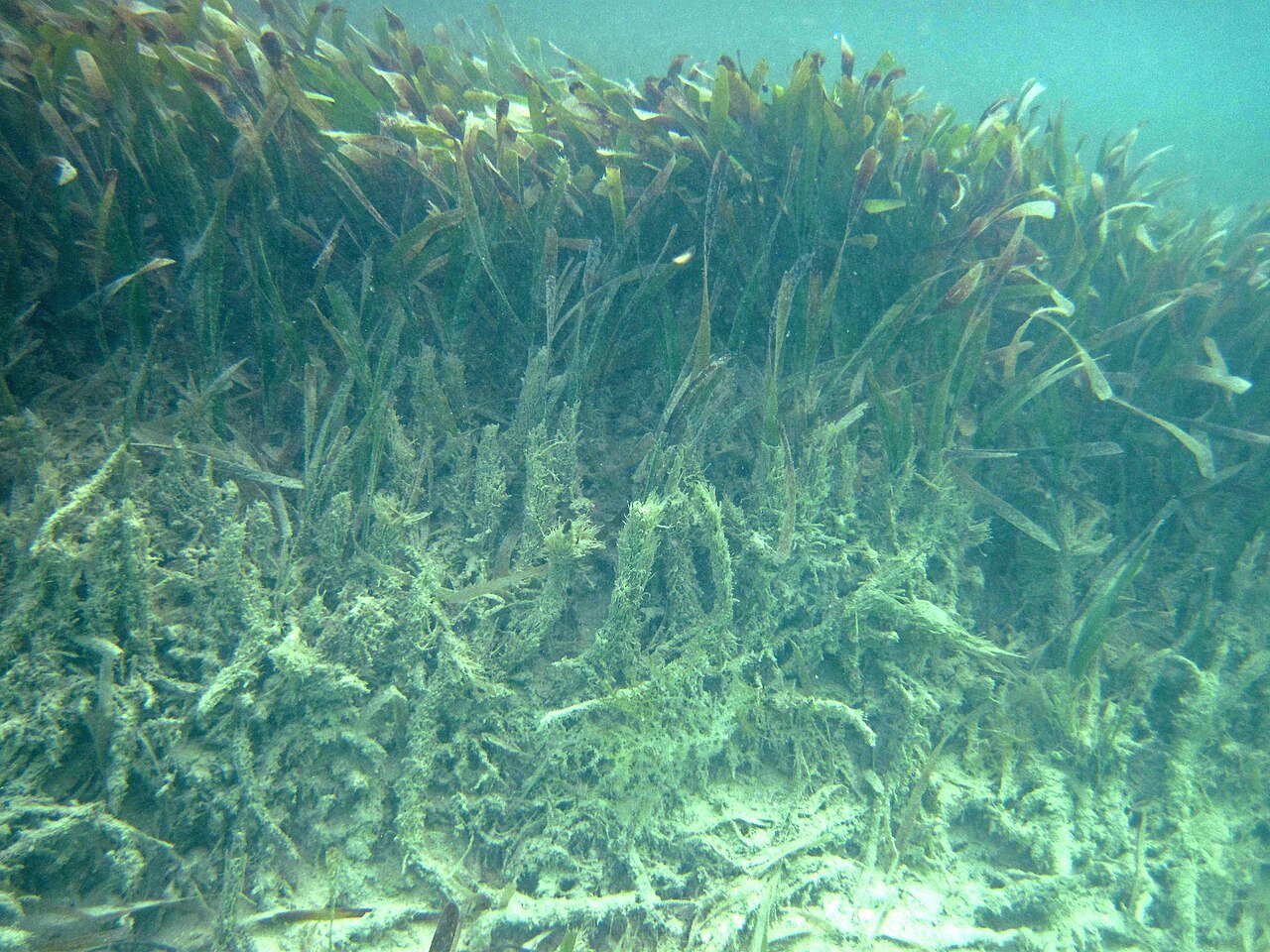
This perennial grass has a long, jointed rhizome buried 5 to 10 centimeters deep in the substrate, sometimes reaching 25 centimeters. Some nodes lack leaves, while others produce tufts of upright, linear blades up to 30 centimeters long and 2 centimeters wide, with rounded tips. Greenish-white flowers, occasionally pink-tinged, grow on short stalks from leaf axils and later form seed pods.
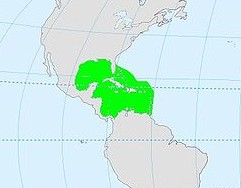
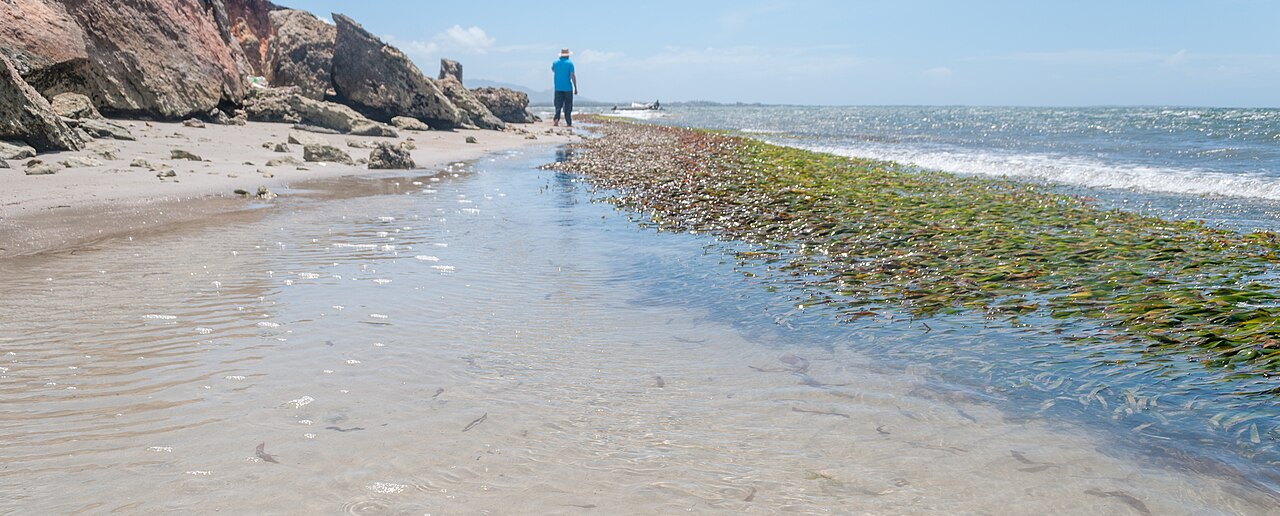
Turtlegrass meadows thrive in calm, shallow waters throughout the Caribbean and Gulf of Mexico, extending north to Cape Canaveral, Florida. They form on muddy sand, coarse sand, and clayey seabeds, especially those with calcium carbonate. The grass prefers high-salinity, low-turbidity waters like quiet lagoons. It cannot survive in fresh water but tolerates salinity as low as 10 parts per thousand, with an ideal range of 25 to 38.5 parts per thousand and temperatures between 20 and 30 °C. It grows from the low-tide line down to 30 meters, depending on water clarity, and often dominates as the climax species in mixed seagrass meadows. Its fossil record goes back to the Middle Eocene.
Reproduction occurs both vegetatively and sexually. The main method is rhizome extension, producing asexual ramets—genetic clones of the parent. While this expands the meadow, it limits genetic diversity, making the bed vulnerable to disease. Mechanical damage, like boat propeller cuts, prevents rhizome regrowth and can create holes in the meadow. Sexual reproduction involves separate male and female plants (dioecious), each producing imperfect flowers. Flowering happens from April to July, though warm winters in Tampa Bay, Florida, can trigger earlier blooms. Female plants usually grow one green flower, while males produce three to five pink or white flowers. At night, mature male flowers release mucilaginous pollen into the water; female flowers open the next morning.
Quick Facts
- Genus
- Thalassia
- Species
- testudinum
Facts from the source article.
Lore & Background
Thalassia testudinum is a perennial grass growing from a long, jointed rhizome buried in the substrate. Some nodes bear tufts of erect, linear leaf blades up to 30 cm long with rounded tips. Its flowers are greenish-white, sometimes tinged pink, and grow on short stalks in leaf axils, followed by seed pods. The plant reproduces both vegetatively through rhizome extension and sexually via underwater flowers and hydrophily. It is dioecious, with separate male and female plants. Sexual reproduction occurs from April to July depending on location, with male flowers releasing mucilaginous pollen at night and female flowers opening the following morning. Pollination can occur via water currents or through biotic pollination, where crustaceans, polychaetes, and amphipods feed on the nutritious mucilage and spread pollen. Seeds develop in 2–4 weeks after fertilization, and fruits release neutrally buoyant seeds after about 8 weeks.
Reader's Guide
Turtle grass and other seagrasses form meadows which are important habitats and feeding grounds. Associated seagrass species include Halophila engelmannii and Syringodium filiforme. Many epiphytes grow on the grasses, and algae, diatoms and bacterial films cover the leaf surfaces. The grass is eaten by turtles, herbivorous parrotfish, surgeonfish, and sea urchins, while the leaf surface films are a food source for many small invertebrates. Decaying turtle grass leaves are responsible for the majority of detritus in meadow areas. This grass is subject to periodic dieback episodes in the Florida Bay area; one such episode in 1987 killed off a large proportion of plants, leading to increased sedimentation and greater epiphyte growth that caused a secondary dieback. The affected areas have since been reseeded and planted with rhizomes and have recovered. In general, the population of this grass is stable. Rhizomatous green algae in the genus Caulerpa often live among the grasses, and many animals make seagrass meadows their home, including bivalves, polychaete worms, amphipods, juvenile fish, sea urchins, crabs, and caridean shrimps. Along with Thalassia hemprichii, turtle grass makes its way into the aquarium trade and may be cropped at 12 in/30 cm.
Did You Know?
- Turtle grass cannot grow in fresh water but can grow at a salinity as low as 10 parts per thousand.
- The plant's temporal range spans from the Middle Eocene to present.
- Male turtle grass plants produce three to five pink or white flowers, while females typically grow one green flower.
- Cut ends of rhizomes from mechanical damage, such as boat propellers, are unable to grow and may cause holes in the meadow.
Architecture of a Perennial Seagrass
Thalassia testudinum is a perennial marine grass whose entire above-water structure emerges from a long, jointed rhizome buried in the seabed. This underground stem typically sits five to ten centimetres below the surface, though in some cases it can reach as deep as twenty-five centimetres. Along its length, the rhizome alternates between bare nodes and clusters of upright, linear leaf blades. Each blade can stretch to roughly thirty centimetres in length while remaining only about two centimetres wide, and it terminates in a softly rounded tip rather than a point. When the plant is ready to flower, short stalks push out from the axils where leaves meet the stem. The blossoms themselves are modest—greenish-white in colour, occasionally flushed with a faint pink—and they are succeeded by small seed pods. This combination of a deeply anchored, creeping root system and a relatively narrow canopy of leaves gives turtlegrass a low, spreading silhouette across the sandy bottom, a form that has remained essentially unchanged since the Middle Eocene.
Range and Environmental Niche
Turtlegrass thrives in the calm, shallow waters of the Caribbean Sea and the Gulf of Mexico, pushing as far north as Cape Canaveral on Florida's coast. It favours seabeds composed of muddy sand, coarse sand, or clay, particularly when those sediments carry a calcareous component. The species is a strict saltwater plant: it cannot establish in fresh water, though a sliver of growth is possible at a salinity as low as ten parts per thousand. Its comfort zone sits between twenty-five and thirty-eight and a half parts per thousand, with water temperatures hovering between twenty and thirty degrees Celsius. Clear, low-turbidity conditions are essential, which is why tranquil lagoons are among its best habitats. Depending on how clear the water is, turtlegrass can be found from the low-tide line down to roughly thirty metres. In mixed seagrass meadows it often occupies the role of climax species, and its lineage stretches back to the Middle Eocene, making it one of the longer-lived marine plant lineages still in existence today.
Reproduction: Cloning and the Underwater Courtship
Turtlegrass primarily spreads by extending its rhizome, producing asexual ramets that are exact genetic copies of the parent. While this efficiently enlarges a meadow, it also narrows genetic diversity, leaving the whole patch vulnerable to a single disease. Mechanical injury—such as a boat propeller slicing through a rhizome—can prevent regrowth and leave permanent holes in the bed. Sexual reproduction offers a counterbalance. The species is dioecious: individual plants are either male or female, each bearing an imperfect flower of a single sex. Flowering typically runs from April through July, though warm winters in Tampa Bay have occasionally triggered blooms outside that window. Female plants usually produce a single green flower, while males put out three to five pink or white blossoms. At night, mature male flowers release a mucilaginous, carbohydrate-rich substance laden with pollen into the water. The following morning, female flowers open. Pollination can occur purely through tidal currents carrying pollen grains to receptive pistils, or through small invertebrates—crustaceans, polychaetes, amphipods—that feed on the mucilage and inadvertently ferry pollen between flowers.
A Living Ecosystem in a Meadow
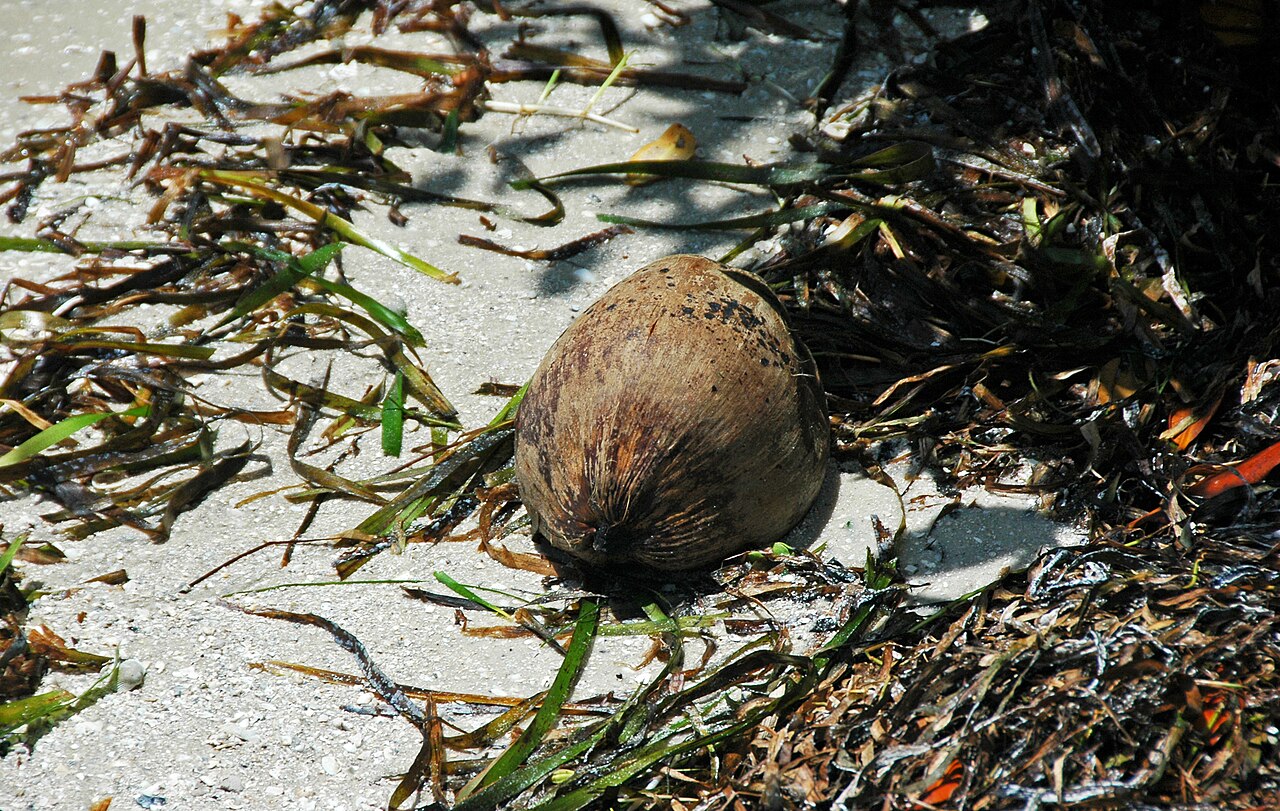
A turtlegrass meadow is far more than a single species; it is a layered habitat supporting an entire community. Algae, diatoms, and bacterial films coat every leaf blade, and numerous epiphytes attach to the stems. These surface films serve as food for small invertebrates, while the grass itself is grazed by sea turtles, parrotfish, surgeonfish, and sea urchins. As leaves die and decay, they generate the bulk of the detritus that cycles through the meadow. The meadow shelters a wide array of animals: bivalves and other molluscs, polychaete worms, amphipods, crabs, caridean shrimps, and juvenile fish that dart between the leaf blades for cover. Rhizomatous green algae in the genus Caulerpa often intermingle with the seagrass. The system is not immune to stress—Florida Bay experienced a severe dieback in 1987 that killed a large share of plants, and the resulting sedimentation and epiphyte overgrowth triggered a secondary dieback. Recovery came through reseeding and rhizome planting. Overall, however, turtlegrass populations remain broadly stable, and the meadows continue to function as critical feeding grounds and nurseries across the Caribbean and Gulf.
Gallery
Frequently Asked Questions
What is Thalassia testudinum?
Thalassia testudinum, widely known as turtlegrass, is a perennial marine seagrass belonging to the Hydrocharitaceae family. It forms extensive underwater meadows in shallow, sandy coastal waters.
Where does turtlegrass grow?
This seagrass is native to the Caribbean Sea and the Gulf of Mexico, where it thrives in shallow, sandy substrates. It tolerates salinity levels ranging from 25 to 38.5 parts per thousand.
What role does Thalassia testudinum play in its ecosystem?
Turtlegrass meadows act as critical nurseries and feeding grounds, sheltering juvenile fish and a wide variety of invertebrates. Sea turtles and herbivorous fish graze on the blades, while numerous epiphytes colonize the leaf surfaces.
What does Thalassia testudinum look like?
The plant produces upright, linear leaf blades that can reach up to 30 centimeters in length and 2 centimeters in width. Beneath the sediment, a long jointed rhizome extends 5 to 10 centimeters deep, occasionally reaching 25 centimeters.
Why is turtlegrass considered important?
As a foundational species in coastal ecosystems, it stabilizes sandy seabeds and supports an entire food web of marine life. Its meadows provide both structural habitat and a primary food source for a diverse community of animals.
More in Seagrasses 1-24
Spotted an error? Know more?
Reader corrections go straight into our review queue. Suggest an edit · How this site is sourced