Zostera
A small genus of seagrasses with ecological and cultural significance.

Blythe, Giselle · CC0
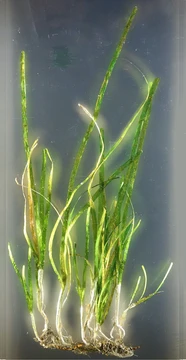
Zostera is a small genus of seagrasses found across the globe, often called marine eelgrass or simply eelgrass. It includes 15 species.
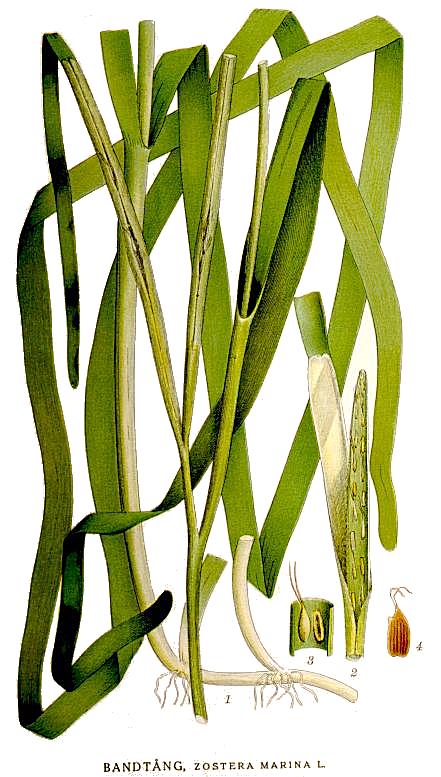
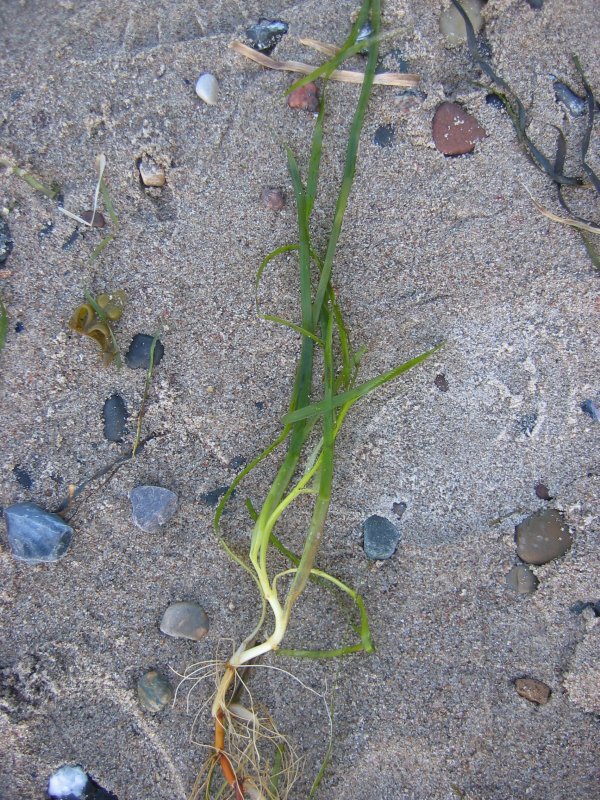
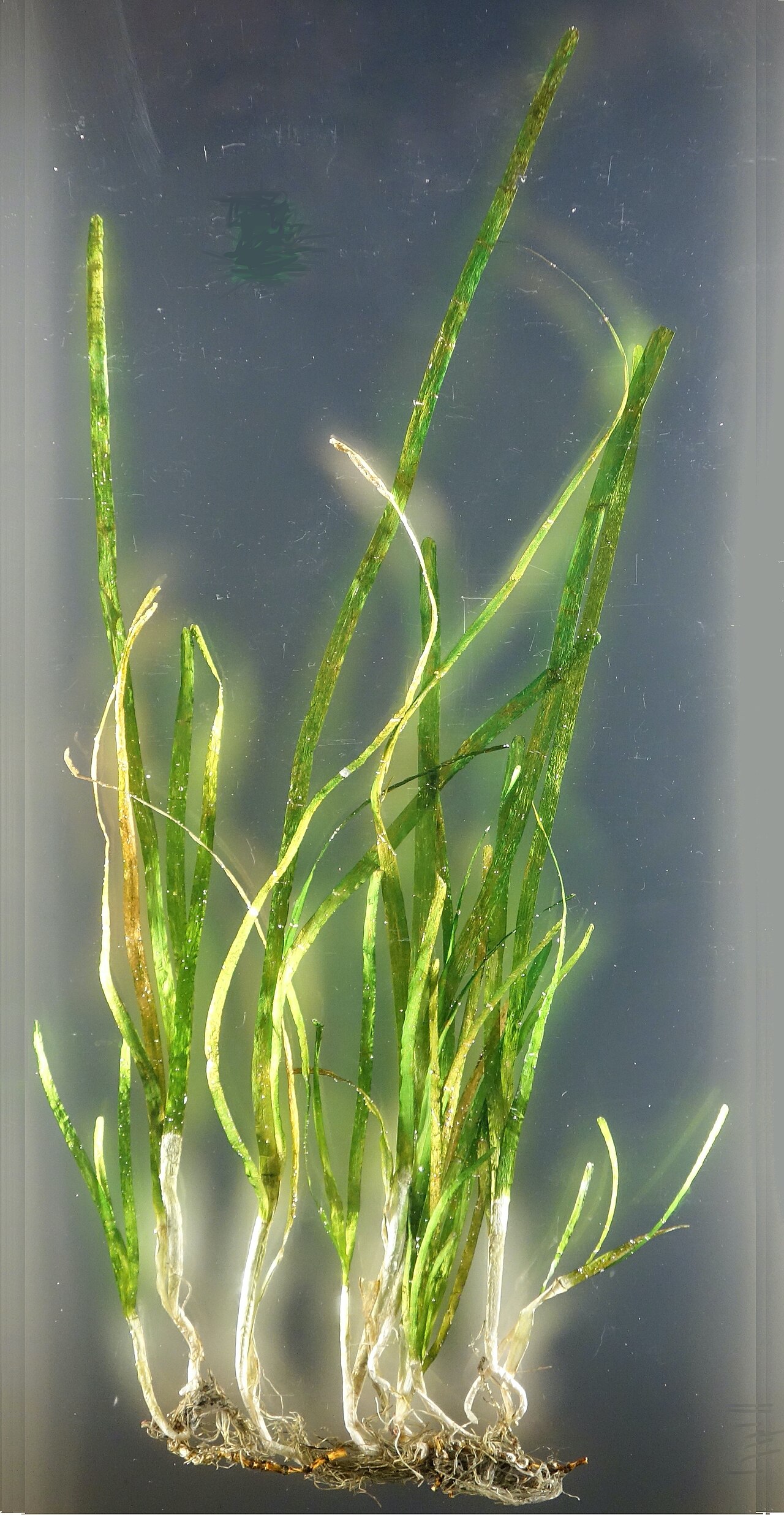
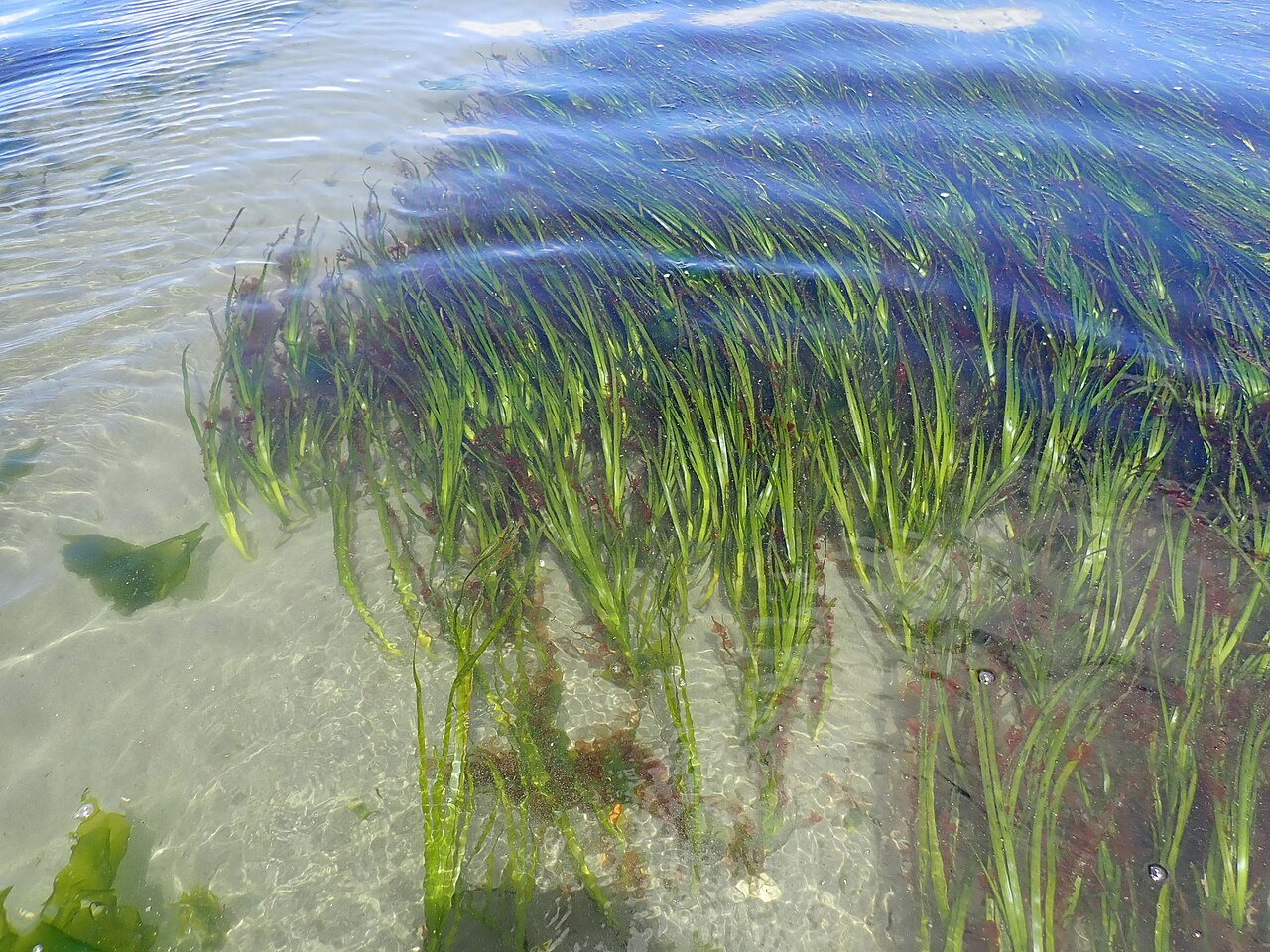
These plants typically grow on sandy bottoms or in estuaries, where they may be submerged or partly floating. Most are perennial, with long, bright green, ribbon-like leaves about 1 centimeter wide. Short stems rise from extensive, white, branching rhizomes. The flowers are hidden inside the leaf-base sheaths, and the fruits are bladder-like and can float.
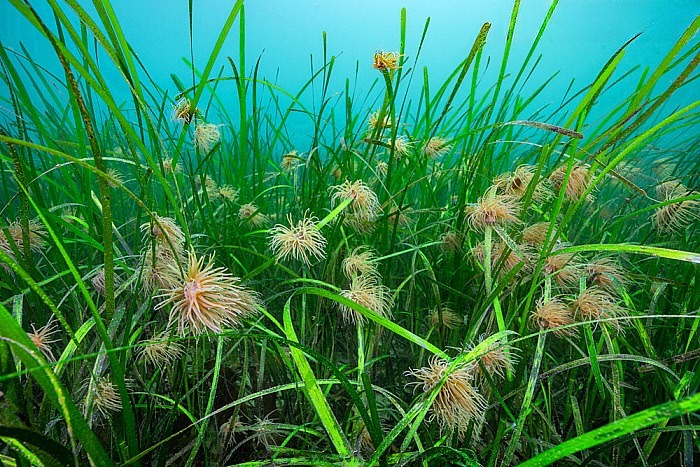
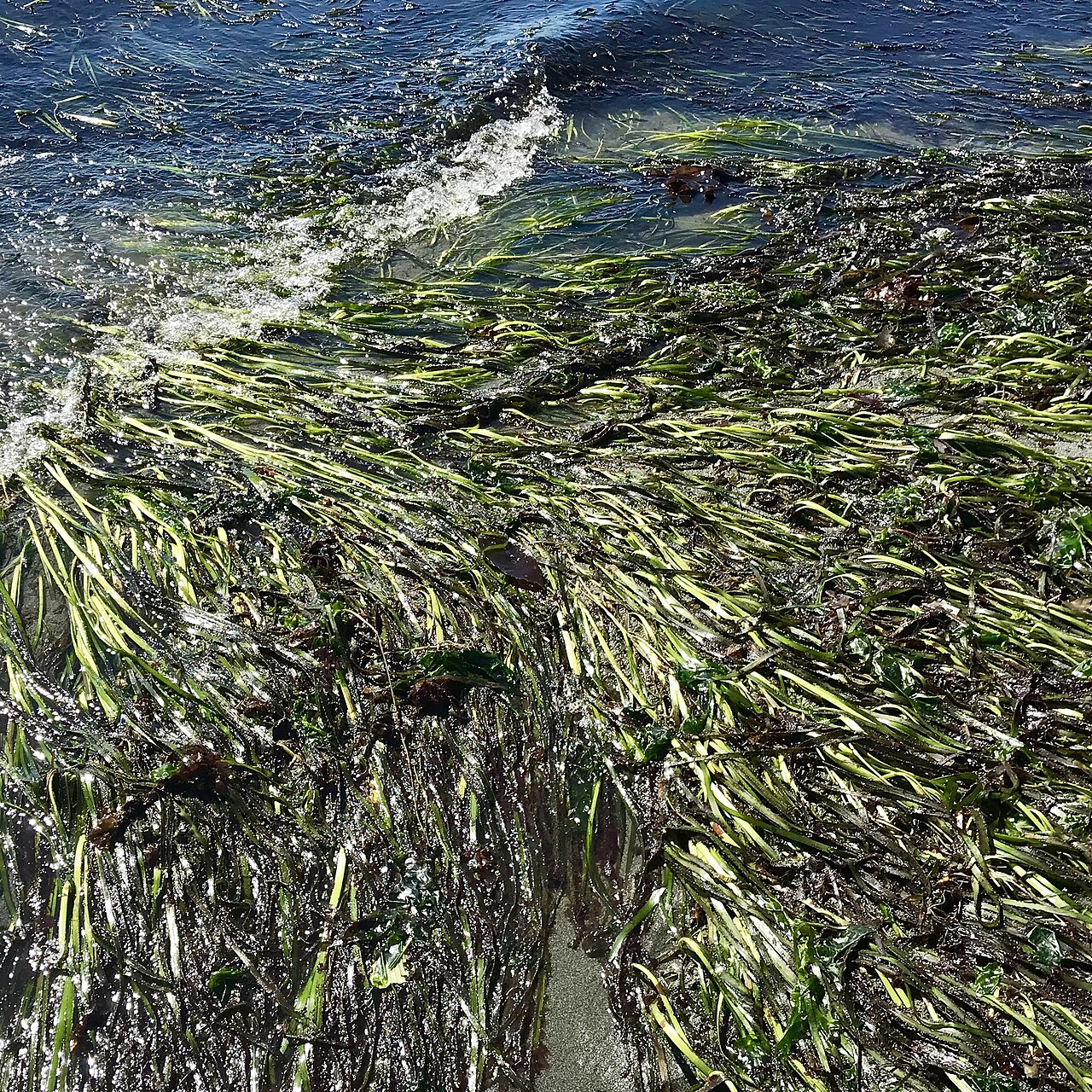
Zostera beds play a key role in trapping sediment, stabilizing the seafloor, and providing a surface for epiphytic algae and tiny invertebrates. They also serve as nursery grounds for many commercially important fish and shellfish. In estuaries, these beds often form in bay mud. The plants are an important food for brant geese and wigeons, and occasionally for caterpillars of the grass moth *Dolicharthria punctalis*. The slime mold *Labyrinthula zosterae* causes a wasting disease, especially in *Z. marina*, which can lead to population declines in animals that depend on Zostera. The plant can keep its internal pressure steady as the tide changes by losing solutes when the tide goes out and gaining them when it comes in.
The genus is widespread along seashores in much of the Northern Hemisphere, as well as Australia, New Zealand, Southeast Asia, and southern Africa. The discovery of *Z. chilensis* in 2005 added an isolated population on South America’s Pacific coast. One species, *Z. noltii*, grows in the landlocked Caspian Sea.
People have used eelgrass in many ways. The Seri tribe of Sonora, Mexico, ate the rhizomes and leaf-bases fresh or dried into cakes for winter, and used it for smoking deer meat. Their language has many words related to eelgrass and its harvest; the month of April is called *xnoois ihaat iizax*, meaning “the month when the eelgrass seed is mature.” Eelgrass has also been used as packing material and stuffing for mattresses and cushions. On the Danish island of Læsø, it was used for thatching roofs—heavy, but longer-lasting and easier to maintain than conventional thatch. More recently, dried eelgrass has been used as insulation in eco-friendly houses and as ground cover in permaculture gardens after its salt layer is washed off, as seen in the Danish eco-village Friland. In the early 1900s, the Samuel Cabot Co.
Quick Facts
- Taxon
- Zostera
Facts from the source article.
Lore & Background
Zostera species are mostly perennial, with long, bright green, ribbon-like leaves about 1 centimeter wide. Short stems grow up from extensive, white branching rhizomes. The flowers are enclosed in the sheaths of the leaf bases, and the fruits are bladdery and can float. Zostera often forms beds in bay mud in estuarine settings and is an important food for brant geese, wigeons, and occasionally caterpillars of the grass moth Dolicharthria punctalis. The slime mold Labyrinthula zosterae can cause wasting disease, particularly in Z. marina, leading to decreases in dependent fauna populations. Zostera maintains its turgor at constant pressure in response to environmental osmolarity fluctuations by losing solutes as the tide goes out and gaining solutes as the tide comes in.
The genus is widespread across the Northern Hemisphere, Australia, New Zealand, Southeast Asia, and southern Africa. The discovery of Z. chilensis in 2005 added an isolated population on the Pacific coast of South America. One species, Z. noltii, occurs along the land-locked Caspian Sea. The Seri tribe of Native Americans on the coast of Sonora, Mexico, used eelgrass for food, eating rhizomes and leaf-bases fresh or dried into cakes, and also used it for smoking deer meat. The Seri language has many words related to eelgrass and eelgrass-harvesting, and the month of April is called xnoois ihaat iizax, meaning 'the month when the eelgrass seed is mature'.
Reader's Guide
Zostera has been used historically as packing material, stuffing for mattresses and cushions, and for thatching roofs on the Danish island of Læsø. Eelgrass roofs are heavy but longer-lasting and easier to thatch and maintain than conventional thatching. More recently, dried eelgrass has been used for insulation in eco-friendly houses and as ground cover in permaculture gardens after its salt layer is washed off, as seen in the Danish eco-village Friland. In the United States, eelgrass insulation was commercially marketed in the early 1900s as Cabot's Quilt by the Samuel Cabot Co of Boston, but production ceased due to an outbreak of Labyrinthula zosterae that destroyed crops, combined with the collapse of the homebuilding industry during the Great Depression, and was replaced by fiberglass in the late 1930s. Some studies show promise for eelgrass meadows to sequester atmospheric carbon to reduce anthropogenic climate change. Zostera can also be utilized to produce biomass energy using the Jean Pain method. The genus's ecological significance includes sediment deposition, substrate stabilization, providing substrate for epiphytic algae and micro-invertebrates, and serving as nursery grounds for many species of important fish and shellfish.
Did You Know?
- The genus Zostera contains 15 species.
- The slime mold Labyrinthula zosterae can cause wasting disease, with Z. marina being particularly susceptible.
- The Seri tribe of Native Americans used eelgrass for food and called April 'the month when the eelgrass seed is mature'.
- On the Danish island of Læsø, eelgrass has been used for thatching roofs, which are heavy but longer-lasting than conventional thatching.
Ecology and Role in Marine Ecosystems
Zostera is a compact genus of fifteen seagrass species that anchors some of the most productive coastal habitats on Earth. The plants are perennials bearing long, vividly green, ribbon-shaped leaves roughly a centimeter wide, rising from a network of white, branching rhizomes that spread through sandy substrates or the soft bay mud of estuaries. In many settings the leaves remain submerged or float partially at the surface. Flowers hide within the sheaths at the leaf bases, and the resulting bladdery fruits are buoyant enough to drift and disperse. These underwater meadows serve as sediment traps, stabilize the seabed, and provide attachment surfaces for epiphytic algae and tiny invertebrates. They function as critical nursery grounds for numerous important fish and shellfish species. Above the waterline, the grasses feed brant geese, wigeons, and, on rare occasions, the caterpillars of the grass moth Dolicharthria punctalis. Remarkably, Zostera regulates its internal water pressure against tidal osmotic swings by shedding solutes at low tide and reabsorbing them at high tide, keeping its cells turgid throughout the cycle. Yet the genus remains vulnerable: the slime mold Labyrinthula zosterae triggers a wasting disease that hits Z. marina especially hard, cascading through every organism that depends on the beds.
Global Distribution and Species Diversity
The fifteen recognized species of Zostera collectively span a remarkable geographic range. The genus is most densely represented along the seashores of the Northern Hemisphere, with several species—Z. asiatica, Z. caespitosa, Z. caulescens, and Z. japonica—sharing overlapping ranges across the Russian Far East, Japan, Korea, and northeastern China. Australia hosts its own cluster, including Z. capricorni, Z. mucronata, Z. muelleri, Z. nigricaulis, and Z. polychlamys, while New Zealand is home to Z. novazelandica. In the Southern Hemisphere, Z. capensis stretches from Madagascar through Kenya to the Cape Province of South Africa, and Z. tasmanica is found in Australian waters. Z. marina occupies the broadest single-species range, lining the North Pacific, North Atlantic, British Isles, Mediterranean, Black Sea, and Sea of Okhotsk. Z. noltii extends into the land-locked Caspian Sea, a striking example of a marine genus adapting to a closed basin. The most recent addition to the genus's map is Z. chilensis, described in 2005 from an isolated population on the Pacific coast of Chile, underscoring how much of the world's seagrass diversity still awaits formal recognition.
Human Uses and Cultural Heritage
Long before modern agriculture, coastal peoples relied on eelgrass as a food source. The Seri tribe along the Sonoran coast of Mexico harvested the rhizomes and leaf-bases, eating them fresh or drying them into cakes that sustained families through winter. The same plant served as a smoking agent for deer meat. The Seri language preserves numerous terms tied to eelgrass and its harvesting, and their calendar marks April as xnoois ihaat iizax, literally "the month when the eelgrass seed is mature." Beyond food, eelgrass found practical uses across cultures. On the Danish island of Læsø, dried eelgrass was woven into roof thatch; the finished roofs are heavy but reportedly outlast conventional thatching and are simpler to maintain. In the early twentieth century, the Samuel Cabot Company of Boston marketed eelgrass insulation under the brand name Cabot's Quilt. That product line collapsed when a Labyrinthula zosterae outbreak devastated eelgrass crops just as the Great Depression shuttered homebuilding, and fiberglass—introduced in the late 1930s—filled the gap. Eelgrass has also been pressed into service as mattress stuffing, packing material, and, in the Danish eco-village of Friland, as a salt-washed ground cover in permaculture gardens.
Modern Applications and Climate Relevance
In the twenty-first century, eelgrass meadows are attracting renewed scientific interest for their potential role in mitigating anthropogenic climate change. Several studies indicate that these underwater grasslands can sequester atmospheric carbon at rates that make them valuable natural carbon sinks. Beyond carbon capture, Zostera biomass has been explored as a feedstock for energy production using the Jean Pain method, a process that converts organic matter into usable fuel. The plant's utility as a building material has also re-emerged. Dried eelgrass now appears in insulation panels for eco-friendly housing, echoing the earlier Cabot's Quilt venture while benefiting from modern manufacturing. In permaculture design, once the salt layer is washed away, eelgrass serves as a hardy ground cover, as practiced in the Friland eco-village in Denmark. These applications, however, carry an implicit caution. The same Labyrinthula zosterae pathogen that wiped out the eelgrass crops behind Cabot's Quilt in the 1930s continues to threaten Z. marina populations worldwide. Any large-scale harvest or cultivation of eelgrass must therefore be weighed against the risk of destabilizing the very ecosystems—nursery grounds, sediment stabilizers, and animal habitats—that make the plant so ecologically irreplaceable.
Gallery
Frequently Asked Questions
Who is Zostera?
Zostera is a small genus of marine seagrasses — often nicknamed eelgrass — comprising 15 species that colonize sandy seabeds and estuaries around much of the world. Its members are perennial, ribbon-leaved plants (leaves roughly 1 cm wide) that spread beneath the sediment via long, white, branching rhizomes.
What are Zostera's powers or role in the ecosystem?
Zostera beds act as natural sediment traps and seafloor stabilizers, anchoring the benthic environment while their dense leaf canopies shelter juvenile fish and invertebrates. The genus also produces bladder-like, buoyant fruits that drift on currents to seed new meadows far from the parent plant.
Where can you find Zostera in the wild?
You'll encounter Zostera across the Northern Hemisphere's seashores, in Australian, New Zealand, and Southeast Asian waters, with isolated populations on South America's Pacific coast and in the Caspian Sea. Most species favor sandy substrates in shallow, submerged or partially floating settings.
Why is Zostera important beyond just being a plant?
Beyond its ecological services — carbon sequestration, coastal protection, and nursery habitat — Zostera is a charismatic example of how a low-profile, ribbon-leaved genus can underpin entire marine food webs. Its global reach and vulnerability to wasting disease make it a rallying symbol for seagrass conservation efforts worldwide.
More in Seagrasses 1-24
Spotted an error? Know more?
Reader corrections go straight into our review queue. Suggest an edit · How this site is sourced