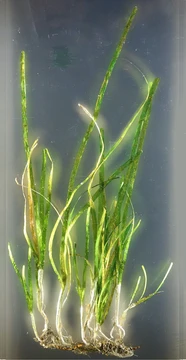
Zostera marina
The most widespread seagrass in the Northern Hemisphere.

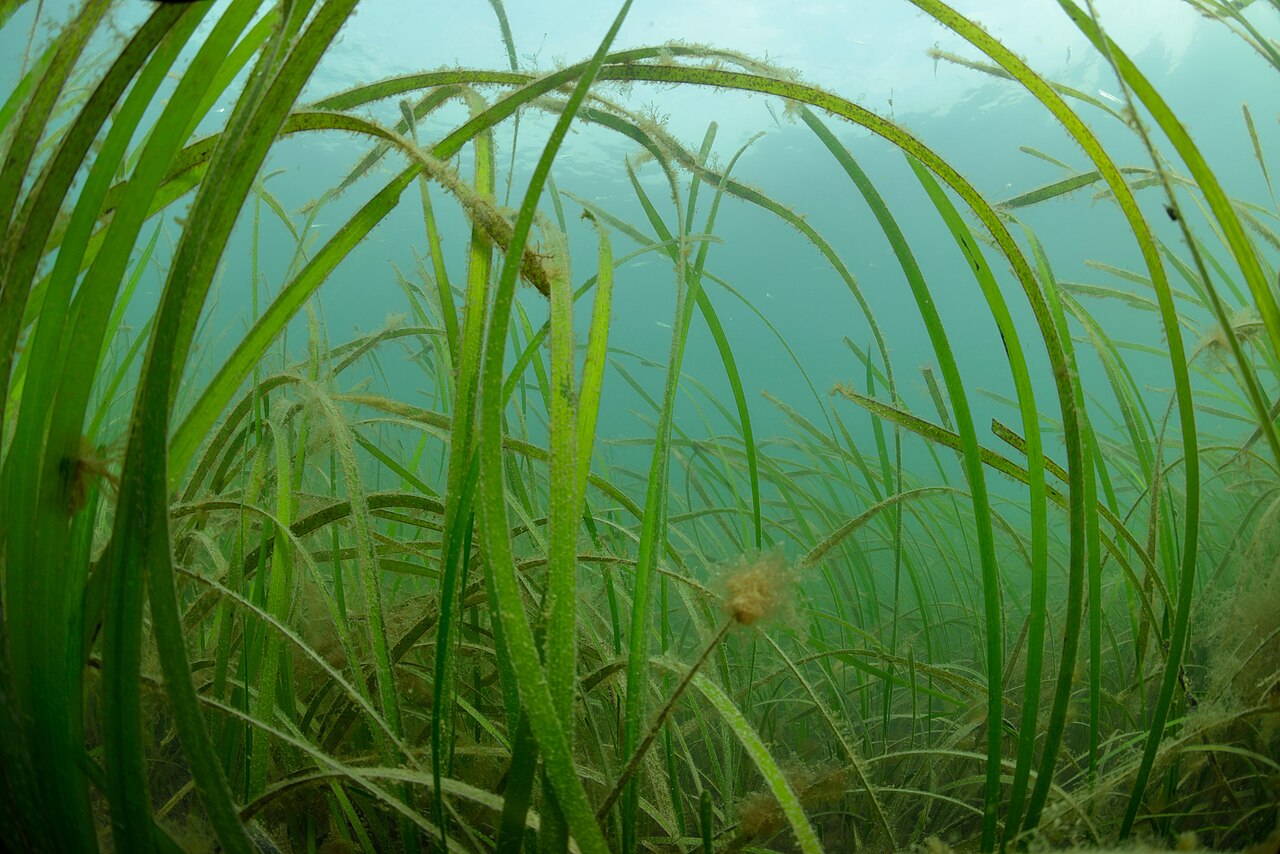
Olivier Dugornay (Ifremer) · CC BY 4.0
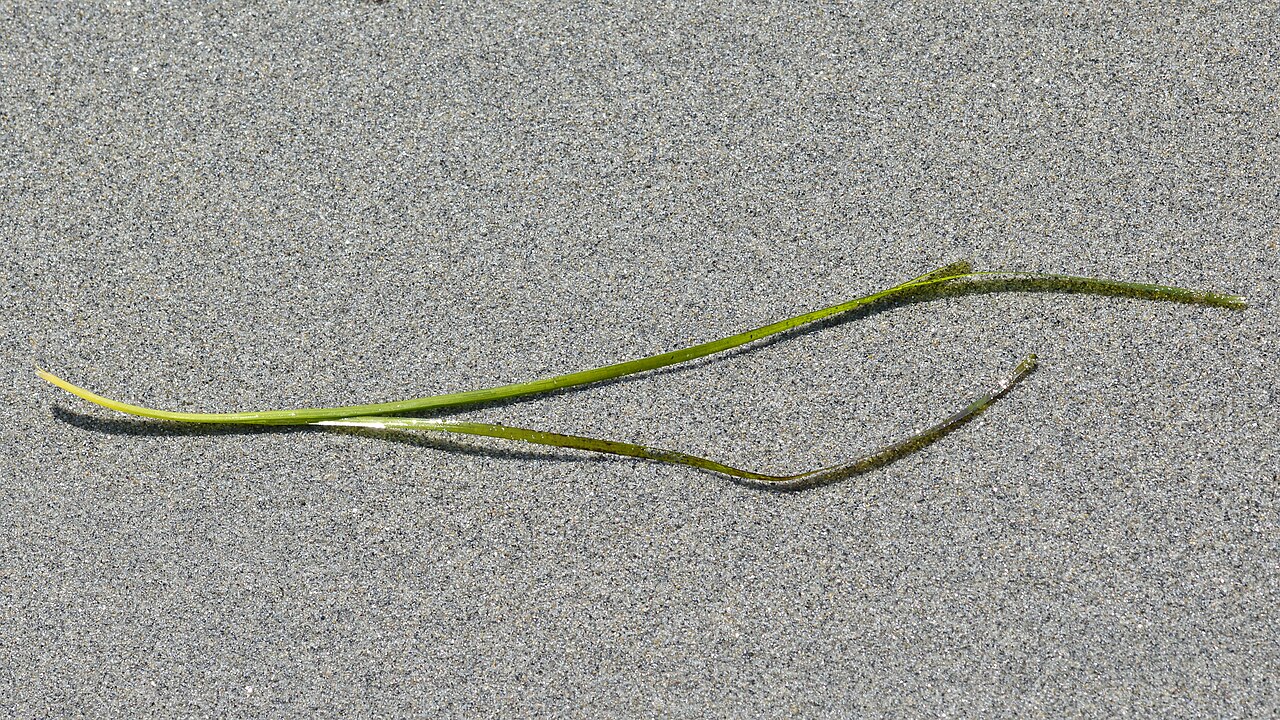
Zostera marina, most often called common eelgrass or simply eelgrass, is a flowering vascular plant and one of several seagrass species. The name "seawrack" is sometimes used, but usually for plants that have broken free from the seabed and drifted to shore. This plant grows submerged in salty, soft sediments along northern coastlines, from subtropical to subpolar zones in both North America and Eurasia.
It holds the title of the most widespread marine flowering plant in the Northern Hemisphere, and it is the most common seagrass across the temperate waters of the North Atlantic and North Pacific. In cooler oceans, it thrives year-round, but in warmer parts of its range it dies back during hot seasons. It survives in the Arctic under months of ice cover and is the only seagrass found in Iceland. You can find it in bays, lagoons, estuaries, and on beaches, though each local variety has specific habitat needs. It prefers calm, sublittoral waters where it is rarely exposed to air. It anchors itself with rhizomes in sandy or muddy bottoms, and its leaves trap floating debris, which builds up sediment around the plant bases.
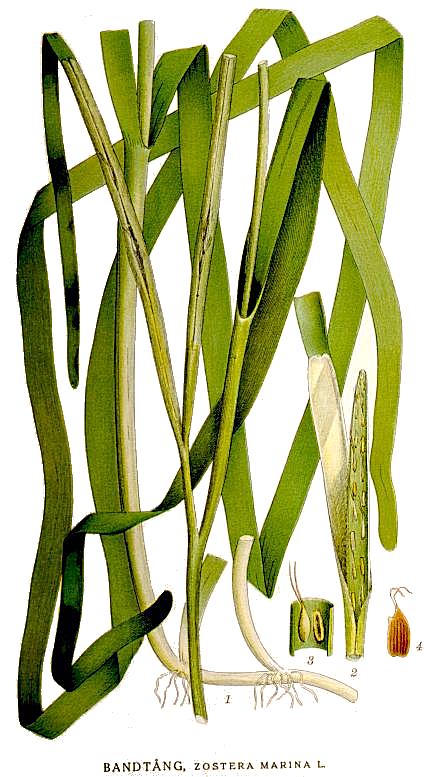
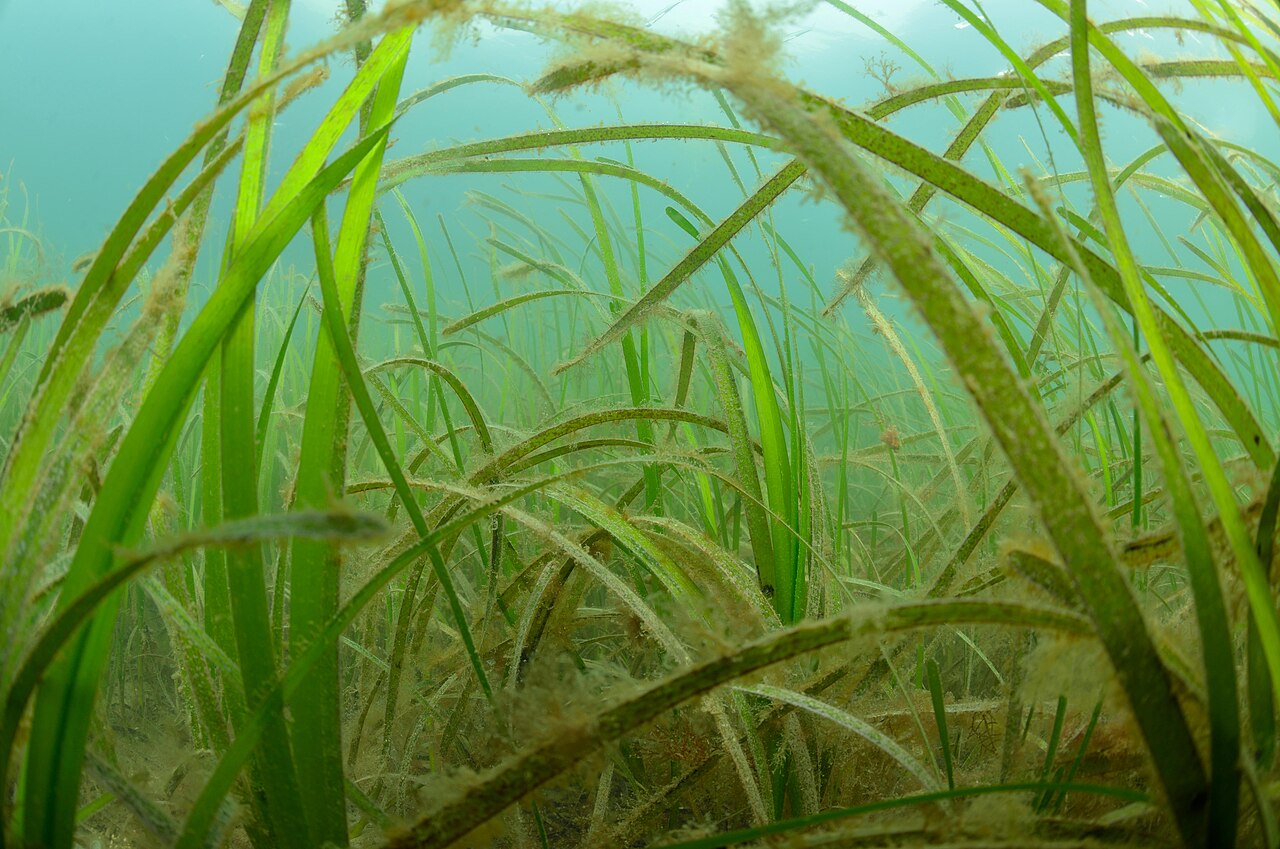
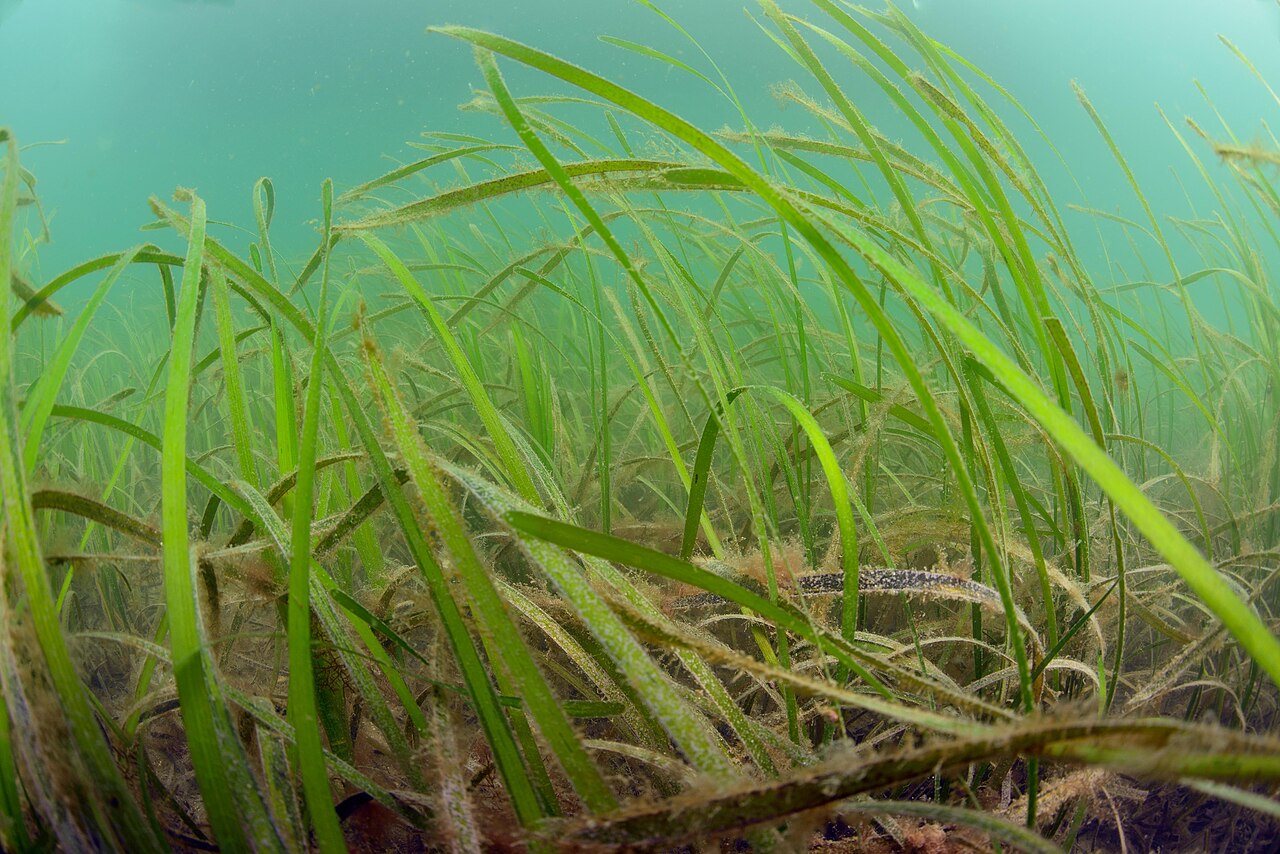
This plant is a rhizomatous herb with long, hairlike green leaves up to 1.2 centimeters wide and over a meter long. Though it is a perennial, it can also grow as an annual. The rhizome spreads horizontally through the substrate, rooting at nodes. It is monoecious, meaning one plant carries both male and female flowers in separate alternating clusters; the inflorescence is about 10 centimeters long. Its fruit is a nutlet with a clear coat holding the seed. It reproduces vegetatively by sprouting repeatedly from the rhizome, forming meadow-like colonies called genets—one such clone was found to be 3,000 years old. When it reproduces sexually, it produces thousands of seeds per square meter. Stems break off and drift, carrying seeds to new areas before sinking. Waterfowl eat the plant and may also spread its seeds.
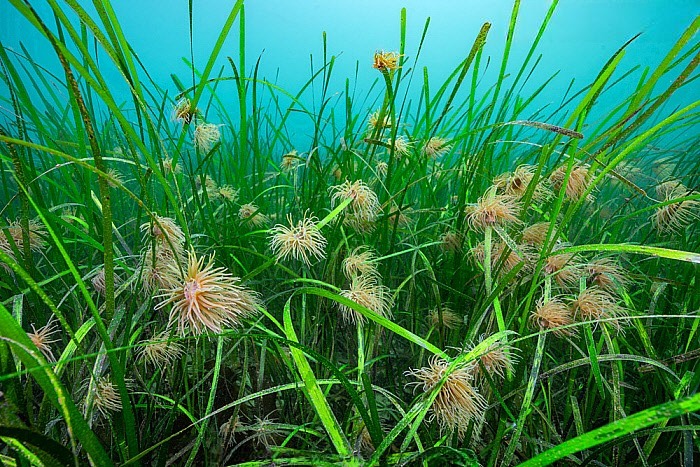
Zostera marina grows only on muddy and sandy shores at or below spring tide levels. It is a key habitat-forming species in coastal ecosystems. Pacific herring use it as a sheltered spawning ground, juvenile Atlantic cod hide in its beds, and blue mussels attach to its leaves. The green alga *Entocladia perforans* depends on it as an endophyte.
Quick Facts
- Genus
- Zostera
- Species
- marina
Facts from the source article.
Lore & Background
Zostera marina is a rhizomatous herb that produces a long stem with hairlike green leaves. It anchors via rhizomes in sandy or muddy substrates and its leaves catch particulate debris, building up the top layer of the seabed. The plant is monoecious, bearing both male and female flowers in separate alternating clusters. It can undergo vegetative reproduction, spreading into meadow-like colonies; one cloned meadow was determined to be 3000 years old genetically. When undergoing sexual reproduction, it produces large quantities of seeds, sometimes several thousand per square meter. The plant disperses large distances when its stems break away and carry fertile seeds to new areas.
This species grows in calmer waters in the sublittoral zone, rarely exposed to air. It occurs in bays, lagoons, estuaries, on beaches, and in other coastal habitat. It is the only seagrass known from Iceland. The plant is a favorite food of several species of waterfowl, which may also distribute the seeds. When eelgrass dies, detaches, and washes up on the beach, a whole new ecosystem is founded, inhabited by many species of insects and other invertebrates.
Reader's Guide
Zostera marina is a crucial component of coastal ecosystems in many areas, physically forming habitat and playing a vital role for numerous other species. It provides a sheltered spawning ground for Pacific herring, juvenile Atlantic cod hide in its beds, and blue mussels attach to its leaves. The green alga Entocladia perforans depends on this eelgrass as an endophyte. Many animals use the plant for food, including the isopod Idotea chelipes, the purple sea urchin Paracentrotus lividus, and the Atlantic brant, which subsists almost entirely on the plant.
Populations have been damaged by increased turbidity, human activities such as dredging, trawling, scallop and mussel harvesting, aquaculture, coastal development, and pollution from farms, sewage lines, fish processing plants, and oil spills. Invasive species like the European green crab destroy eelgrass by digging in the substrate and by seed predation. The slime mold Labyrinthula zosterae caused a 'wasting disease' resulting in large-scale losses in the 1930s, and localized populations are still affected. The decline of eelgrass in Antigonish Harbour has resulted in fewer Canada geese and common goldeneye. Conservation and restoration efforts, including transplants and seed-based restoration, have increased since the rapid decline started several decades ago.
People have long used this species as roof thatching, fertilizer, cattle fodder, and stuffing for mattresses and furniture. The Seri hunter gatherers of Mexico eat eelgrass grains after toasting and grinding them into a paste. Spanish chef Ángel León has planted meadows of Z. marina in the Bay of Cádiz to harvest the grains, described as 'sea rice,' which is gluten-free and high in fibre.
Did You Know?
- One cloned meadow of eelgrass was determined to be 3000 years old genetically.
- The slime mold Labyrinthula zosterae caused a 'wasting disease' that led to large-scale losses in the 1930s.
- The bacterial species Granulosicoccus coccoides was first isolated from the leaves of this plant.
Global Range and Coastal Habitat
Zostera marina holds the distinction of being the most geographically extensive marine flowering plant across the entire Northern Hemisphere, stretching through temperate waters of both the Atlantic and Pacific Oceans. Its range spans from subtropical zones up into subpolar and even Arctic waters, where it remarkably tolerates several months of annual ice cover. In the warmer southern reaches of its distribution, however, the plant cannot survive the heat of summer months and dies off seasonally. It is the sole seagrass species recorded in Icelandic waters. The eelgrass favors calmer, sublittoral environments where it is seldom exposed to air, establishing itself in bays, lagoons, estuaries, and along sandy or muddy shorelines. Multiple ecotypes exist, each tuned to particular habitat conditions. The plant anchors itself through horizontal rhizomes that send down root clusters at nodes, while its long leaves trap suspended particulate matter from the water column. Over time, this trapped debris accumulates around the base of each plant, gradually thickening and enriching the upper layer of the seabed sediment. This self-reinforcing relationship between the eelgrass and its substrate is central to how it maintains its coastal foothold across such a vast and varied range.
Growth, Reproduction, and the Ancient Genet
As a rhizomatous perennial herb, Zostera marina produces a long stem bearing hairlike green leaves that can reach over a meter in length while measuring no more than 1.2 centimeters in width. Its horizontal rhizome threads through the seabed substrate, sending down clusters of roots at each node to hold the plant firmly in place. The species is monoecious, meaning a single individual carries both male and female flowers arranged in separate alternating clusters along an inflorescence roughly ten centimeters long. The resulting fruit is a small nutlet wrapped in a transparent coat that encloses the seed. Beyond sexual reproduction, the eelgrass spreads vegetatively by repeatedly sprouting new shoots from its rhizome, forming vast meadow-like colonies called genets. One such cloned meadow has been genetically dated to approximately three thousand years of continuous growth. When the plant does flower sexually, it can produce several thousand seeds per square meter. Broken stems carry these fertile seeds far from the parent colony, eventually releasing them onto new seabed. Waterfowl that feed on the eelgrass also play a role in seed dispersal, carrying viable seeds to distant locations.
Keystone of the Coastal Food Web
Zostera marina occupies muddy and sandy shores at and below the spring-tide line, and in doing so it physically constructs the structural foundation of an entire coastal ecosystem. Pacific herring use its dense stands as a sheltered spawning ground, while juvenile Atlantic cod seek refuge within the eelgrass beds as they grow. The blue mussel anchors itself directly to the leaves, and the green alga Entocladia perforans lives as an endophyte dependent on the host plant. On the grazing side, the isopod Idotea chelipes and the purple sea urchin Paracentrotus lividus both feed on the foliage, and the Atlantic brant subsists almost entirely on eelgrass as its dietary staple. The ecological influence does not end in the water. When eelgrass dies, detaches, and washes ashore, it founds an entirely new intertidal community: the amphipod Talitrus saltator, the fly Fucellia tergina, and beetles including Stenus biguttatus, Paederus littoralis, and the seven-spotted ladybird Coccinella septempunctata all colonize the stranded vegetation. Even microbial life is tied to the plant, as the bacterium Granulosicoccus coccoides was first isolated from its leaves.
Decline, Disease, and the Long Shadow
The rapid decline of Zostera marina meadows, which began several decades ago, stems from a convergence of pressures. Because the plant depends on sunlight, increased water turbidity is particularly damaging; in response, eelgrass in deeper or murkier water grows leaves over a meter long to reach the surface, while individuals in clear shallow water may have leaves only a few centimeters long. Dredging, trawling, scallop and mussel harvesting in the Wadden Sea, aquaculture operations, coastal development, and pollution from riverside farms, sewage outflows, fish processing plants, and oil spills all degrade or destroy colonies. Invasive species compound the problem: in Nova Scotia the European green crab Carcinus maenas rakes through the substrate searching for prey, uprooting eelgrass, and Swedish experiments show the same crab preys on seeds, reducing recruitment and slowing natural recovery. The slime mold Labyrinthula zosterae triggered a devastating wasting disease in the 1930s that caused large-scale losses and still affects localized populations. The ecological ripple was profound: Atlantic brant numbers collapsed, remaining geese switched to less-preferred algae, hunters noticed a change in the taste of brant meat, and the species no longer migrates over Nova Scotia. Conservation efforts now include transplants and seed-based restoration.
Gallery
Frequently Asked Questions
What is Zostera marina?
Zostera marina, most often called common eelgrass, is a submerged, flowering vascular plant that roots itself in soft, salty sediments along coastlines. It is a true seagrass, not an alga, and belongs to the small group of flowering plants that live entirely underwater in the sea.
Where does Zostera marina grow?
It colonizes temperate to subpolar marine waters on both sides of the Northern Hemisphere, from subtropical zones up into subpolar regions. You will find it along North American and Eurasian coastlines, spanning the North Atlantic and North Pacific.
Why is Zostera marina considered special?
It holds the record as the most widespread marine flowering plant in the entire Northern Hemisphere. Its sheer geographic reach across two major oceans makes it the go-to seagrass for temperate coastal ecosystems on both continents.
How big does a Zostera marina plant get?
A single leaf can grow to roughly one meter long and about 1.2 centimeters wide, while the flowering spike (inflorescence) extends to around 10 centimeters. Despite those modest dimensions, colonies of eelgrass form vast underwater meadows that stretch for kilometers.
What does the term 'seawrack' mean in relation to eelgrass?
People sometimes call Zostera marina 'seawrack,' but that label really applies only to blades that have torn free from the seabed and drifted ashore. A living, rooted eelgrass plant growing in its meadow is simply eelgrass, not seawrack.
More in Seagrasses 1-24
Spotted an error? Know more?
Reader corrections go straight into our review queue. Suggest an edit · How this site is sourced