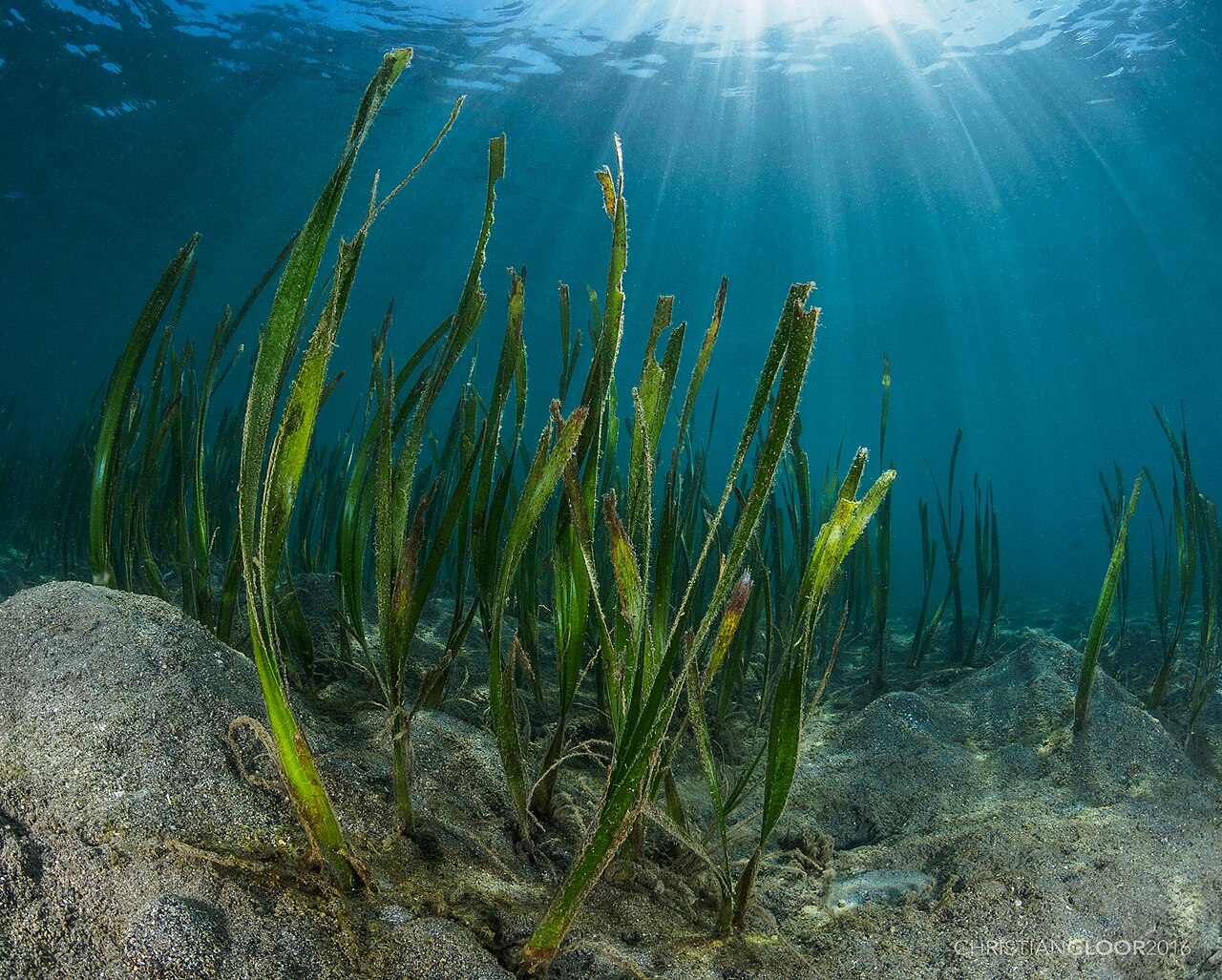
Enhalus
The only seagrass with aerial surface pollination.

Christian Gloor from Wakatobi Dive Resort, Indonesia · CC BY 2.0
Enhalus is a monotypic genus of marine flowering plants, with the sole species Enhalus acoroides. It is a large seagrass native to coastal waters of the tropical Indian and Western Pacific Oceans, notable for being the only seagrass species that performs aerial surface pollination, where both pollen and styles remain dry.
Quick Facts
- Genus
- Enhalus
- Species
- acoroides
Facts from the source article.
Lore & Background
Enhalus acoroides is a slow-growing, 'climax' species with massive rhizomes 1.5 cm in diameter that anchor it in soft mud substrates, allowing it to withstand wave action and tidal currents. Its long, strap-like leaves (30–150 cm) constitute a significant volume of total plant biomass in shallow water seagrass beds, providing large surfaces for epibiont organisms. The fruit is round and large (4–6 cm in diameter) with dark, ribbed skin containing 6–7 white seeds. The male plant bears a single pedunculate inflorescence with clusters of highly reduced flowers that act as small free-floating devices; the female plant bears a single inflorescence with a much longer peduncle.
Reader's Guide
Enhalus acoroides is ecologically significant as a dominant seagrass in mixed meadows, where it can comprise up to 90% of the meadow biomass, often alongside Thalassia hemprichii. It grows best just above the level of mean low water springs and generally to depths of 4 meters. The species is dioecious and reproduces both sexually and asexually; asexual reproduction occurs through lateral rhizome spreading, creating small isolated patches of 25 to 200 shoots. Its unique sexual reproduction involves surface pollination: male flowers detach from the plant, float to the surface, and release pollen to female inflorescences that reach the surface via an elongated stalk. After pollination, the developing fruit is drawn underwater to ripen. Flowering occurs year-round, with flower production strongly related to variations in mean water temperatures. This species is considered a slow-growing, climax species, indicating its role as a stable, late-successional component of seagrass ecosystems.
Did You Know?
- Enhalus acoroides is the only seagrass species that performs aerial surface pollination, keeping both pollen and styles dry.
- Male flowers detach from the plant and float on the water surface to reach female flowers for pollination.
- The fruit is round, 4–6 cm in diameter, with dark, ribbed skin and contains 6–7 white seeds.
- It can form isolated patches of 25 to 200 shoots through lateral rhizome spreading.
Taxonomy & Physical Architecture
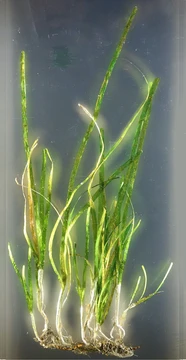
Enhalus stands as a monotypic genus in the marine flowering plant world, meaning it contains exactly one recognized species: Enhalus acoroides. This large seagrass has evolved a remarkable physical architecture suited to life in turbulent coastal environments. Its massive rhizomes, reaching about 1.5 centimeters in diameter, serve as powerful anchors that grip soft mud substrates and allow the plant to resist the constant battering of wave action and tidal currents. Above the sediment, long strap-like leaves stretch between 30 and 150 centimeters, giving the plant a substantial three-dimensional presence in the water column. The fruit is notably round and large, measuring 4 to 6 centimeters across, with a dark, ribbed outer skin enclosing six or seven white seeds. The reproductive structures differ sharply between the sexes: male plants carry a single pedunculate inflorescence bearing clusters of highly reduced flowers designed as tiny free-floating devices, while female plants produce a single inflorescence on a markedly longer stalk.
The Unique Surface Pollination Strategy
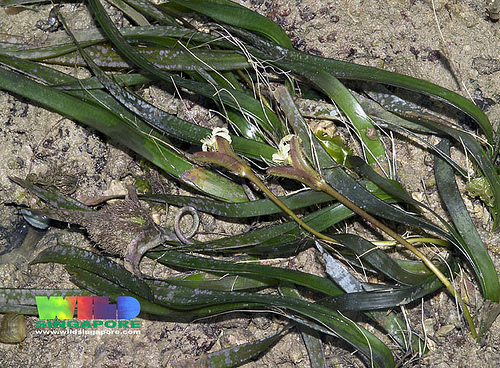
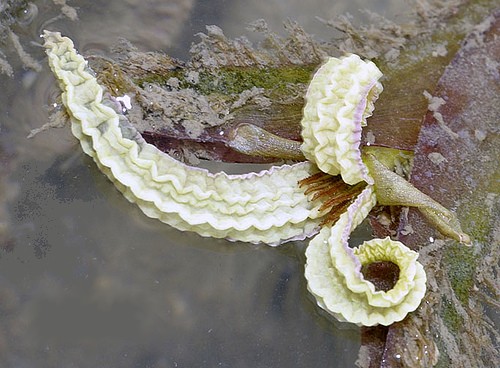
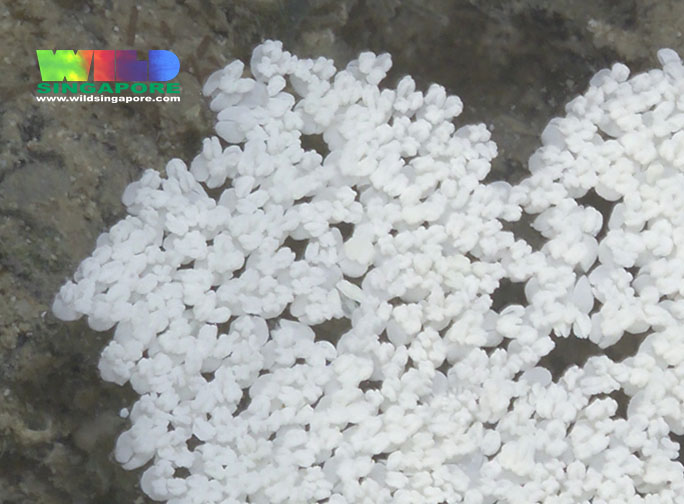
Enhalus acoroides holds a singular distinction among all seagrasses: it is the only species in the group that performs aerial surface pollination, a process in which both the pollen and the styles remain completely dry. The plant is dioecious, meaning individual specimens are either male or female. When a male flower is ready, it detaches from its spathe and rises to the water's surface, where its hydrophobic inflorescence keeps the reproductive structures above the waterline. Once floating, the male flower releases its pollen toward a nearby female inflorescence that has similarly reached the surface via an elongated stalk. After successful pollination, the developing fruit is drawn back beneath the water to complete its ripening cycle. Flowering in Enhalus is not confined to a single season but occurs year-round, with the volume of flowers produced responding strongly to fluctuations in mean water temperature. This extraordinary reproductive strategy allows the species to bypass the limitations of underwater pollen dispersal and exploit the air-water interface for successful fertilization.
Geographic Range & Habitat Preferences
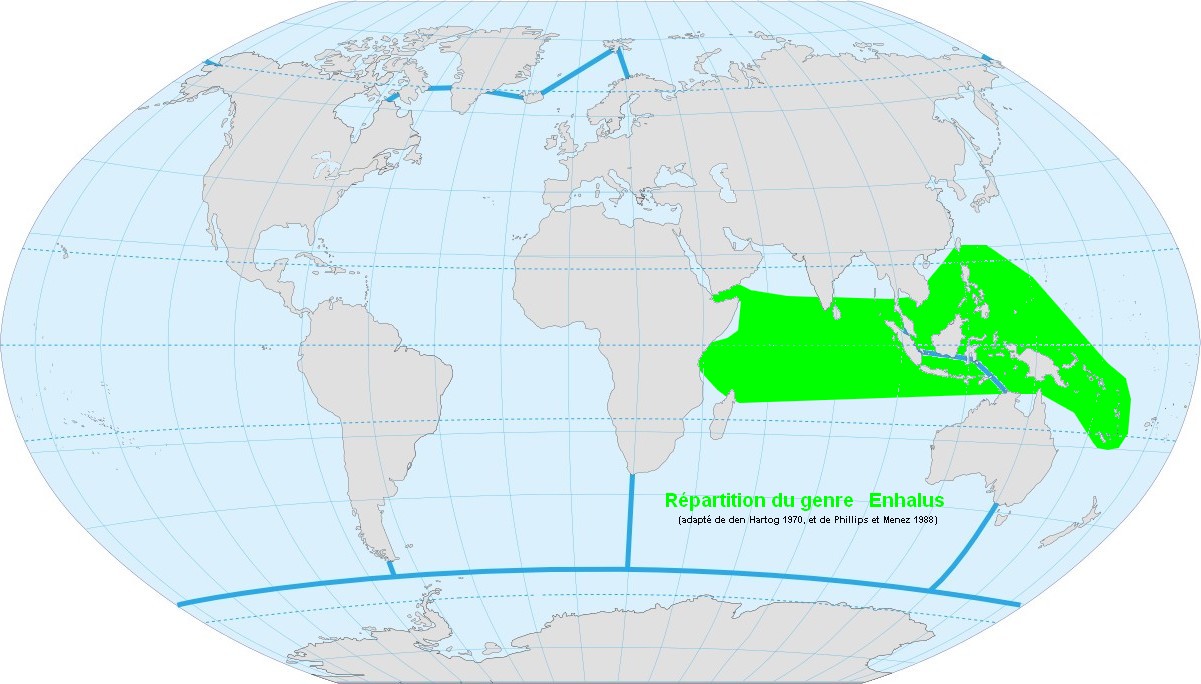
Enhalus acoroides inhabits the tropical coastal waters of the Indian and Western Pacific Oceans, with a distribution stretching from the Red Sea southward to northern Mozambique and eastward as far as Papua New Guinea. As a littoral species, it thrives in shallow soft substrates—muddy flats, sandy bottoms, and coral substrates, depending on the regional setting. It grows optimally just above the level of mean low water springs and is typically found at depths up to about four meters. In many locations, Enhalus does not grow in isolation; instead it forms mixed meadows alongside other seagrass species, most notably Thalassia hemprichii, and in these communities it can account for roughly 90 percent of the total meadow biomass. It also occurs in isolated patches where no other seagrass dominates. The species' preference for calm, shallow, soft-bottomed environments reflects the energy demands of its massive rhizome system and its need for stable anchorage against tidal and wave forces.
Growth Ecology & Community Role
Enhalus acoroides is classified as a slow-growing, climax species, indicating it represents a mature, stable stage in seagrass community development rather than a fast-colonizing pioneer. Its capacity for both sexual and asexual reproduction gives it flexible population dynamics. Through lateral rhizome spreading, it generates small isolated patches containing anywhere from 25 to 200 shoots, gradually expanding its footprint across the seafloor. The large, strap-like leaves occupy a significant volume of total plant biomass in shallow-water seagrass beds, and because of their size and elevated position in the water column, they offer extensive surface area for epibiont organisms to attach and inhabit. In mixed meadows, Enhalus can constitute up to 90 percent of total biomass, making it a structural keystone of these communities. Its slow, persistent growth and dominance in mature meadows underscore its role as a foundational species that shapes the physical and biological character of tropical shallow-water ecosystems across the Indian and Western Pacific.
Gallery
Frequently Asked Questions
Who is Enhalus?
Enhalus is a monotypic genus of marine flowering plants, represented by a single species, Enhalus acoroides. It is one of the largest seagrasses and grows in the shallow coastal waters of the tropical Indian and Western Pacific Oceans.
What makes Enhalus's pollination so special?
Enhalus acoroides is the only seagrass known to carry out aerial surface pollination, meaning its flowers open above the waterline. During this process both the pollen grains and the styles stay completely dry, a trait no other seagrass species shares.
Where can you find Enhalus in the wild?
Its range stretches from the Red Sea southward to northern Mozambique and eastward to Papua New Guinea. It favors littoral zones with soft, shallow substrates such as muddy flats, sandy bottoms, and coral rubble.
How large does Enhalus grow?
Individual leaves can reach anywhere from 30 to 150 cm in length, supported by a rhizome roughly 1.5 cm in diameter. When it fruits, the seed pod measures about 4 to 6 cm across.
Why is Enhalus important to seagrass ecology?
As the sole seagrass capable of aerial surface pollination, it occupies a unique reproductive niche that no other marine angiosperm fills. Its presence in tropical coastal habitats also provides critical structural complexity and shelter for a wide range of marine organisms.
More in Seagrasses 1-24
Spotted an error? Know more?
Reader corrections go straight into our review queue. Suggest an edit · How this site is sourced