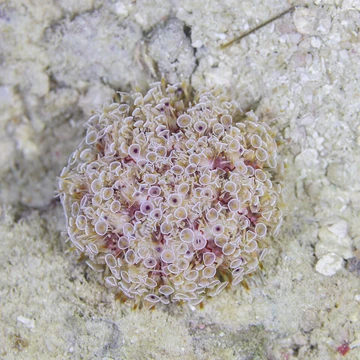
Strongylocentrotus purpuratus
First echinoderm genome sequenced; key kelp forest species.

Stefan Countryman · CC0
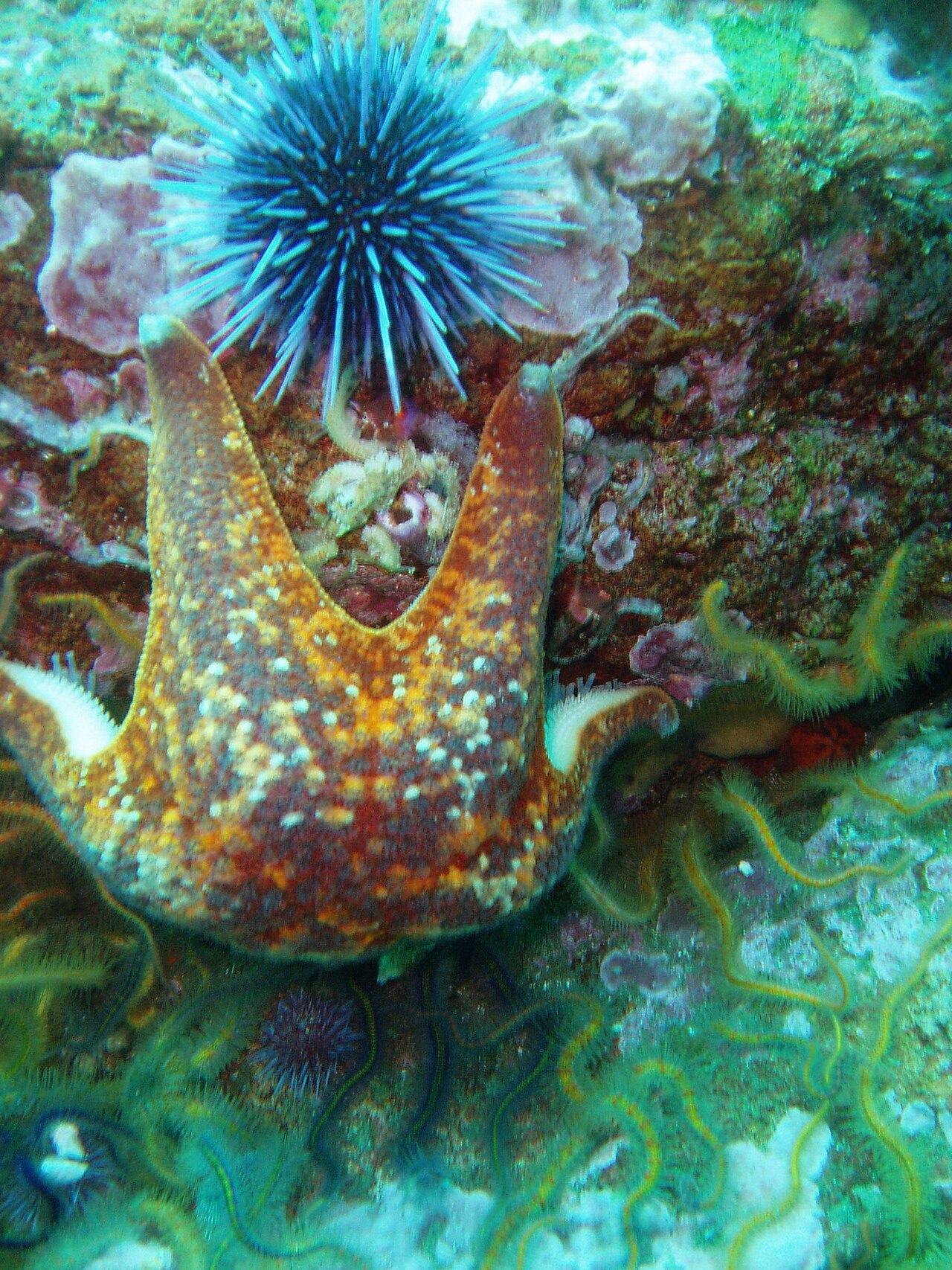
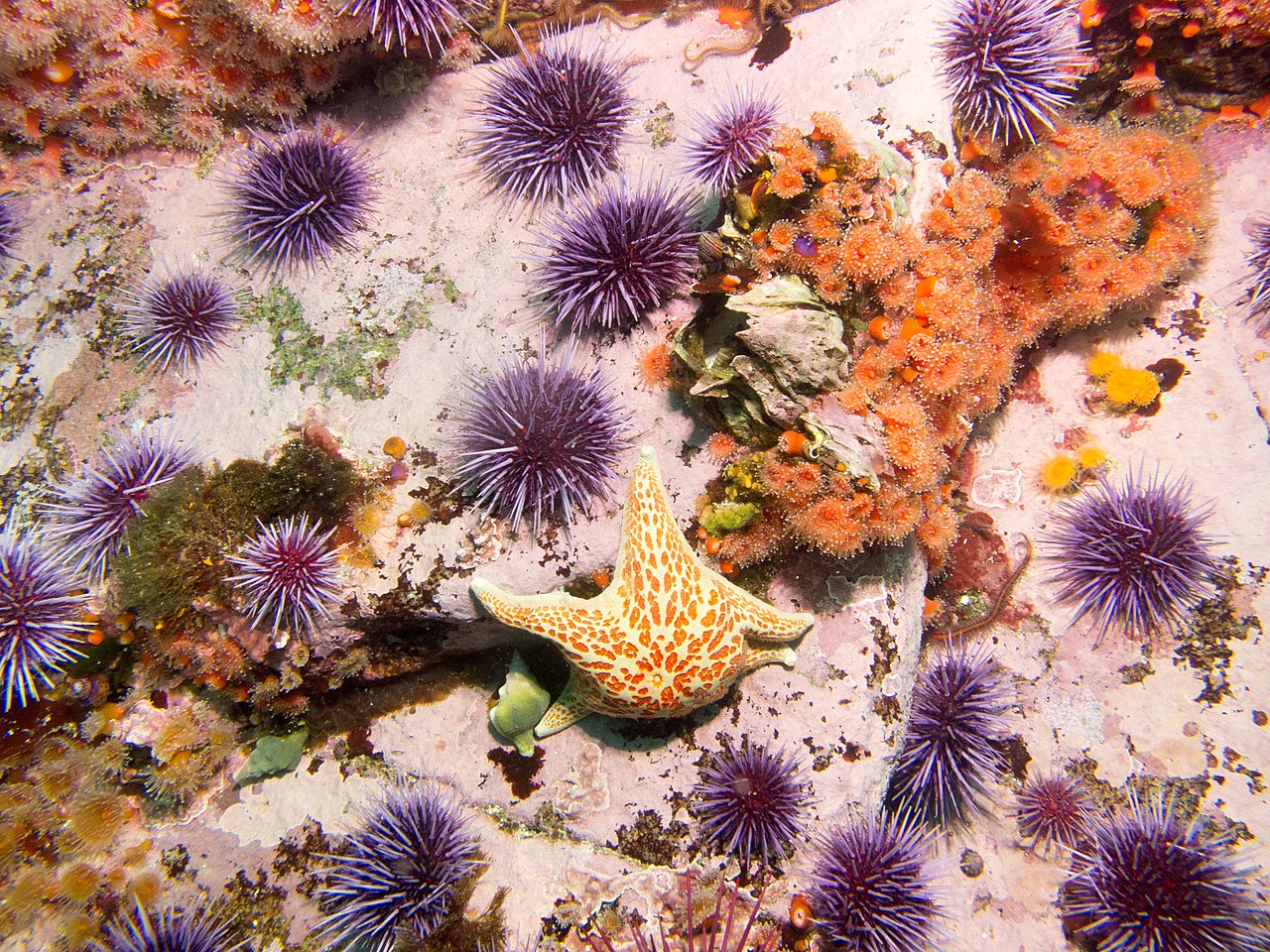
Strongylocentrotus purpuratus goes by the common names purple sea urchin and Pacific purple sea urchin. This species belongs to the family Strongylocentrotidae. Its range hugs the eastern Pacific coastline, stretching from Ensenada in Mexico up to British Columbia in Canada. The purple sea urchin is an important model organism, and its genome was the first from any echinoderm to be fully sequenced.
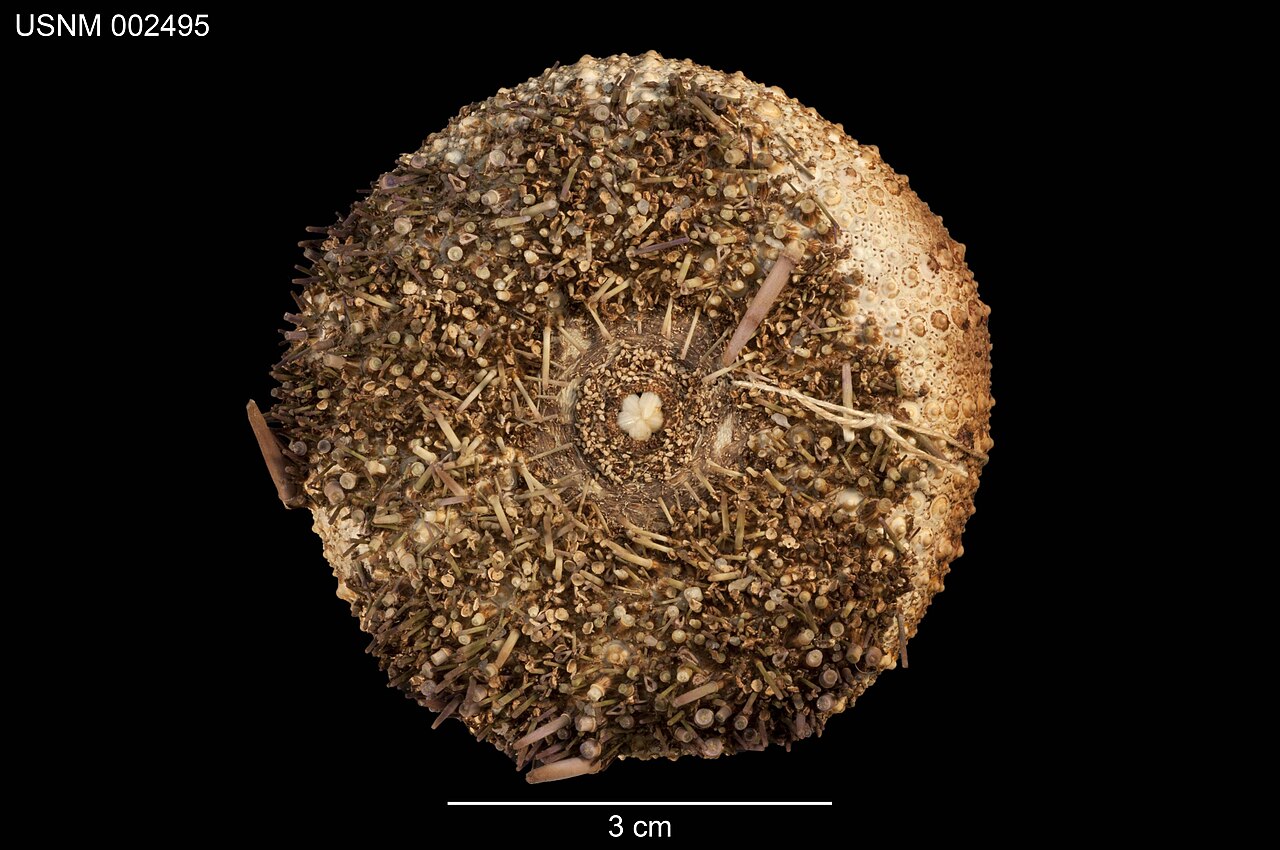
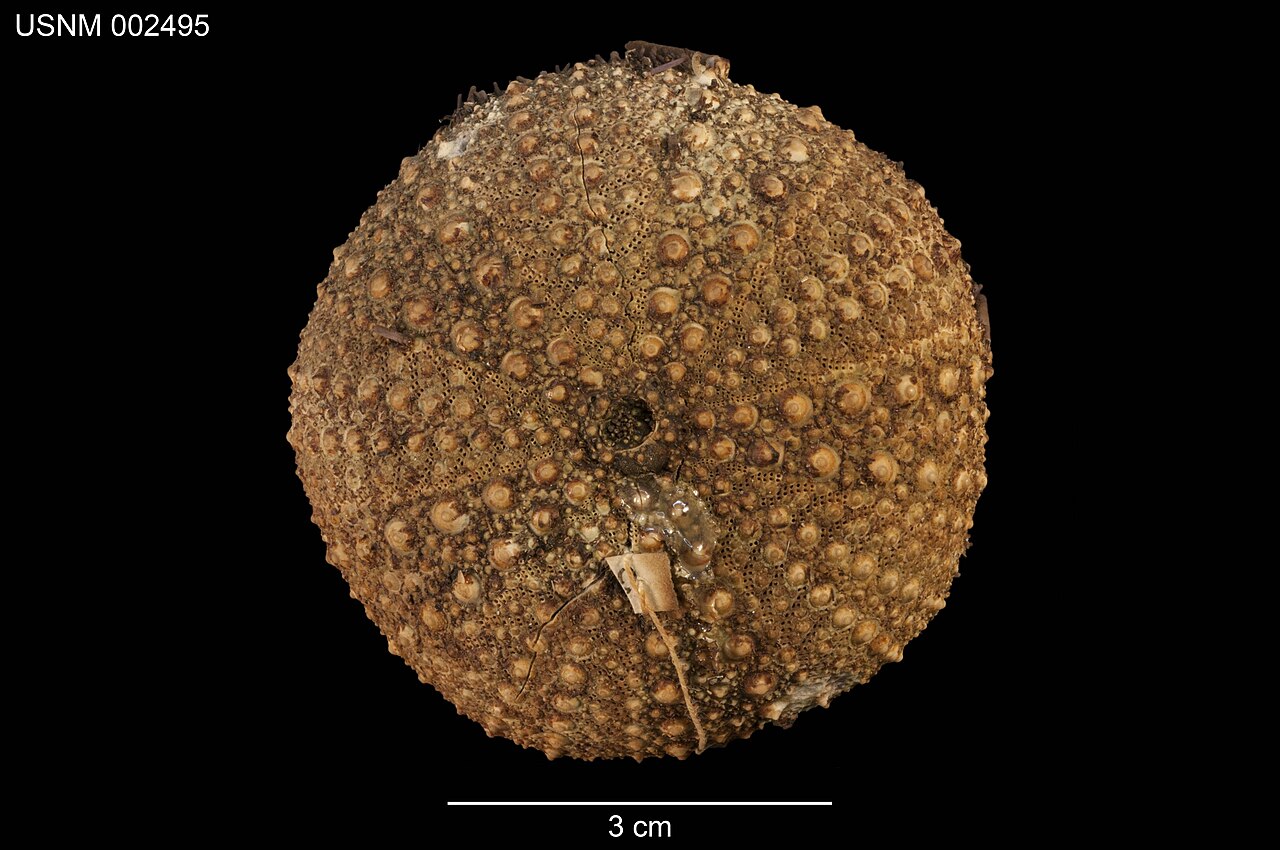
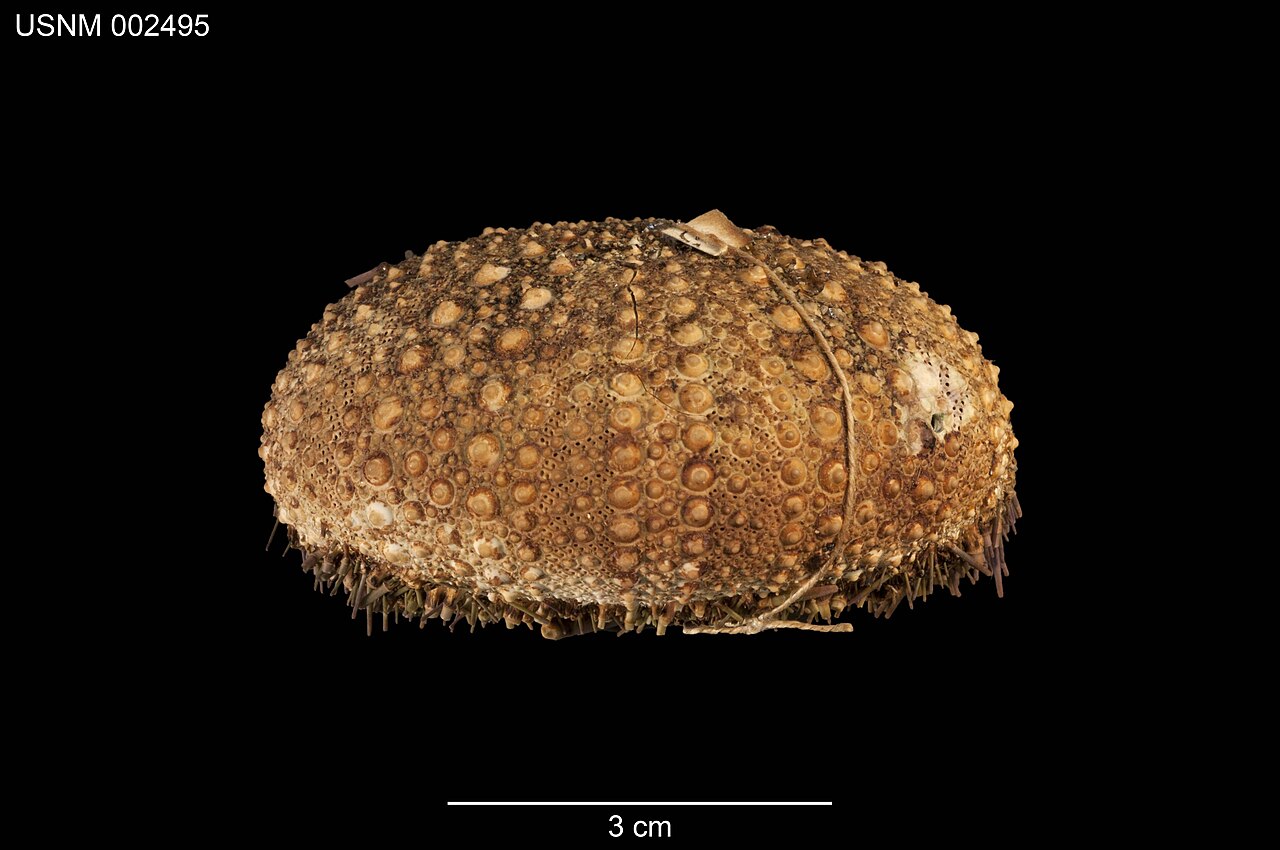
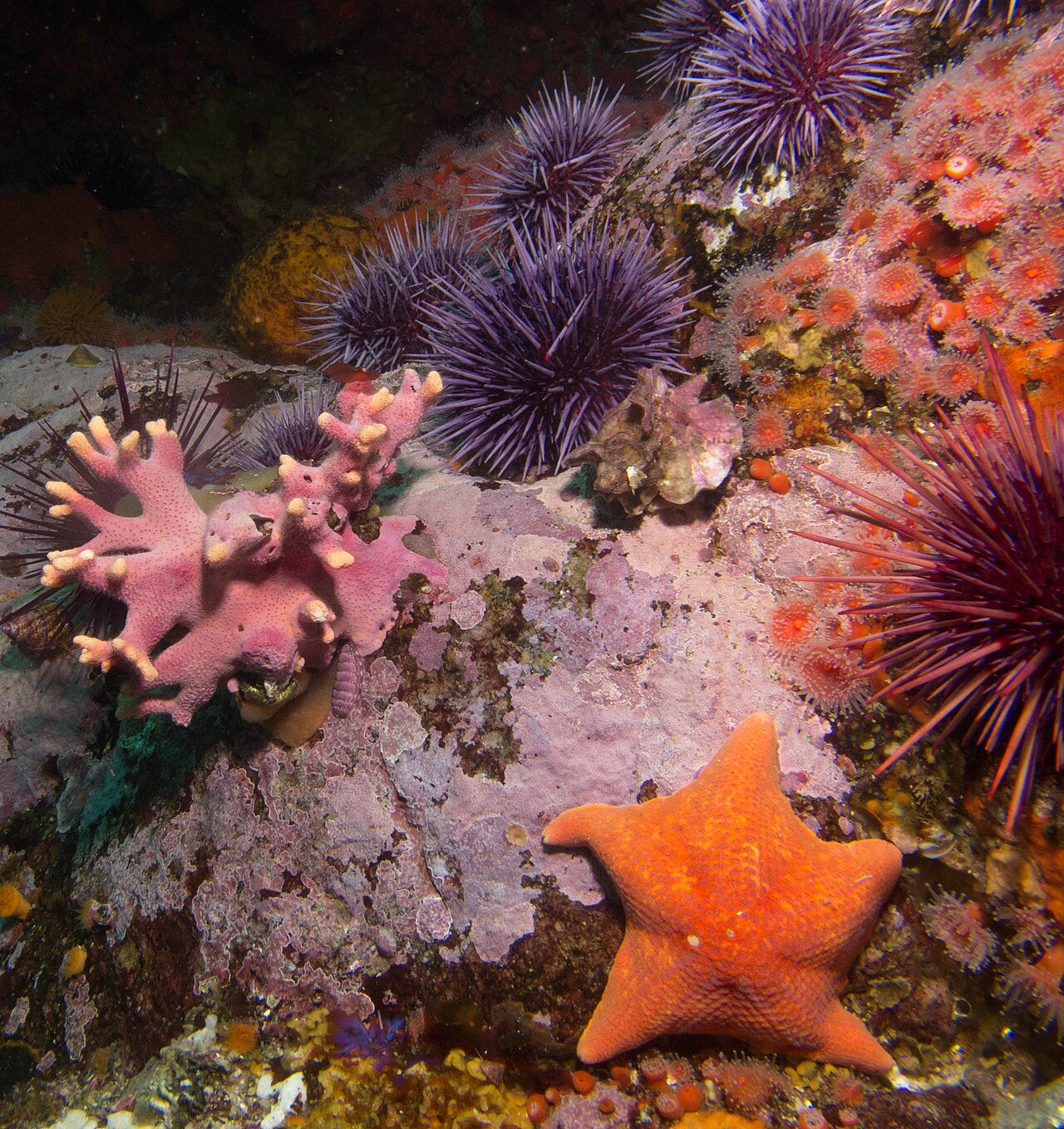
The animal is a deep purple color, as both its common and scientific names suggest. It inhabits the lower intertidal zone and nearshore subtidal areas. Reproduction happens through broadcast spawning: females release orange eggs and males release white sperm into the water, where fertilization occurs. The typical active reproductive months are January, February, and March. Sexual maturity comes at about two years of age. A full-grown individual normally reaches a diameter of roughly 10 centimeters, with a hard exoskeleton called a test. Purple sea urchins can live as long as 70 years.
The genome was completely sequenced and annotated in 2006 by scientists from more than 70 institutions, including the Kerckhoff Marine Laboratory at the California Institute of Technology and the Human Genome Sequencing Center at the Baylor College of Medicine. An improved version, Strongylocentrotus purpuratus v5.0, is now available on Echinobase. This sea urchin is one of several biomedical research model organisms used in cell and developmental biology. It was the first animal with a sequenced genome that is a free-living, motile marine invertebrate; that has a bilaterally organized embryo but a radial adult body plan; that possesses the endoskeleton and water vascular system unique to echinoderms; and that has a nonadaptive immune system with an unusually complex receptor repertoire.
The genome is estimated to encode about 23,500 genes. It contains 353 protein kinases, including members of 97% of human kinase subfamilies. Many of these genes were once thought to be vertebrate innovations or were known only from groups outside the deuterostomes. The sequencing team concluded that some genes are not vertebrate-specific as previously believed, while others found in the urchin are absent from chordates. The genome is largely non-redundant, making it comparable to vertebrate genomes but without their complexity.
Quick Facts
- Genus
- Strongylocentrotus
- Species
- purpuratus
Facts from the source article.
Lore & Background
As the common and specific names suggest, S. purpuratus is deep purple in color. It lives in lower intertidal and nearshore subtidal communities. Purple urchins are broadcast spawners, with females releasing orange eggs and males releasing white sperm into the water column, where fertilization occurs. January, February, and March function as the typical active reproductive months for the species. Sexual maturity is reached around two years. It normally grows to a diameter of about 10 centimetres (3.9 in), consisting of a form of exoskeleton called a test. They may live as long as 70 years.
After one of its main predators, the sea otter, experienced a population decline, Strongylocentrotus purpuratus became a threat to the health of kelp forests as its own population boomed. The purple sea urchin, along with sea otters and abalones, is a prominent member of the kelp forest community. The purple sea urchin also plays a key role in the disappearance of kelp forests that is currently occurring due to climate change; when urchins completely eliminate kelp from an area, it results in an urchin barren. The purple sea urchin cohabits with the red urchin (Mesocentrotus franciscanus) and the two species exhibit niche partitioning.
Reader's Guide
The genome of the purple sea urchin was completely sequenced and annotated in 2006 by teams of scientists from over 70 institutions including the Kerckhoff Marine Laboratory at the California Institute of Technology as well as the Human Genome Sequencing Center at the Baylor College of Medicine. A new improved version of the purple sea urchin genome, Strongylocentrotus purpuratus v5.0, is now available on Echinobase. S. purpuratus is one of several biomedical research model organisms in cell and developmental biology. The sea urchin is the first animal with a sequenced genome that is a free-living, motile marine invertebrate; has a bilaterally organized embryo but a radial adult body plan; has the endoskeleton and water vascular system found only in echinoderms; and has a nonadaptive immune system that is unique in the enormous complexity of its receptor repertoire. The genome is largely non-redundant, making it very comparable to vertebrates, but without the complexity. Using the strictest measure, the purple sea urchin and humans share 7,700 genes. Many of these genes are involved in sensing the environment, a fact surprising for an animal lacking a head structure. The sea urchin also has a chemical defensome that reacts when stress is sensed to eliminate potentially toxic chemicals. Many orthologs exist for genes associated with human diseases, such as Reelin and many cytoskeletal proteins of the Usher syndrome network. Increasing carbon dioxide concentrations affect the epigenome, gene expression, and phenotype of the purple sea urchin, and reduce the size of its larvae, which indicates that fitness of the larvae could be negatively impacted. In 2012, scientists at the University of St Andrews began investigating the '2A' viral region in the S. purpuratus genome which may be useful for Alzheimer's disease and cancer research. The study identified a sequence that can return cells to a 'stem-cell' like state. This trait has made the species a candidate in longevity studies, particularly because of its ability to regenerate damaged or aging tissue, which was found to be upheld in older specimens as they suffered no significant disadvantages compared to younger ones.
Did You Know?
- The purple sea urchin's genome was the first echinoderm genome to be sequenced.
- It shares 7,700 genes with humans using the strictest measure.
- After sea otter populations declined, purple sea urchin populations boomed and became a threat to kelp forests.
Gallery
Frequently Asked Questions
Who is Strongylocentrotus purpuratus?
It is the deep-purple, spiny echinoderm most people call the purple sea urchin or Pacific purple urchin, a member of the Strongylocentrotidae family. You'll typically spot it clinging to rocks in the lower intertidal zone and shallow subtidal waters along the eastern Pacific coast.
What is Strongylocentrotus purpuratus's role in its ecosystem?
As a major grazer in kelp-forest communities, it trims algae and kelp off the substrate, helping regulate algal cover and shaping the structure of the nearshore food web. Its foraging activity directly influences habitat availability for the many invertebrates and fish that depend on those rocky intertidal and subtidal zones.
How does Strongylocentrotus purpuratus reproduce?
It relies on broadcast spawning, releasing gametes directly into the surrounding water during the winter months of January through March. Individuals become sexually mature at roughly two years of age, and fertilization takes place externally in the open water column.
Why is Strongylocentrotus purpuratus important to science?
It holds the distinction of being the first echinoderm whose entire genome was fully sequenced, which made it a foundational model organism for developmental and evolutionary biology. Researchers still use it to investigate gene regulation, tissue regeneration, and the genetic roots of deuterostome body-plan evolution.
Where does Strongylocentrotus purpuratus live and how long does it survive?
Its range stretches along the eastern Pacific coastline from Ensenada in Baja California, Mexico, northward to British Columbia, Canada. A typical adult reaches about ten centimetres in diameter, and under favorable conditions an individual can live as long as seventy years.
More in Sea Urchins, Part 2 1-24
Spotted an error? Know more?
Reader corrections go straight into our review queue. Suggest an edit · How this site is sourced