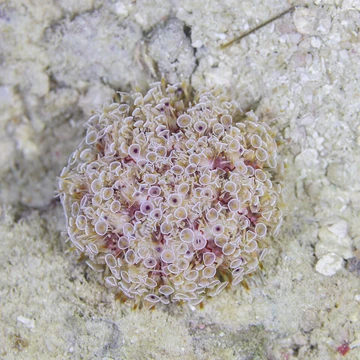
Strongylocentrotus droebachiensis
A green sea urchin found in northern oceans worldwide.

Ryan Hodnett · CC BY-SA 4.0
Strongylocentrotus droebachiensis, commonly known as the green sea urchin for its characteristic green color, is a species of sea urchin found in northern waters worldwide, including both the Pacific and Atlantic Oceans. It ranges as far north as 81 degrees latitude and as far south as Maine (in the U.S.) and England. The species name 'droebachiensis' is derived from the town Drøbak in Norway.
Quick Facts
- Genus
- Strongylocentrotus
- Species
- droebachiensis
Facts from the source article.
Lore & Background
Strongylocentrotus droebachiensis is found on rocky substratum in the intertidal and up to depths of 1,150 meters. It uses its strong Aristotle's lantern to burrow into rock, and can widen its home with spines. Usually it leaves its hole to find food and returns, but sometimes the hole's opening becomes too small for escape. It is a euryhaline species, surviving in low-salinity waters, which allows it to flourish in southern Puget Sound. Larger individuals handle osmotic tension better due to a lower surface area to volume ratio.
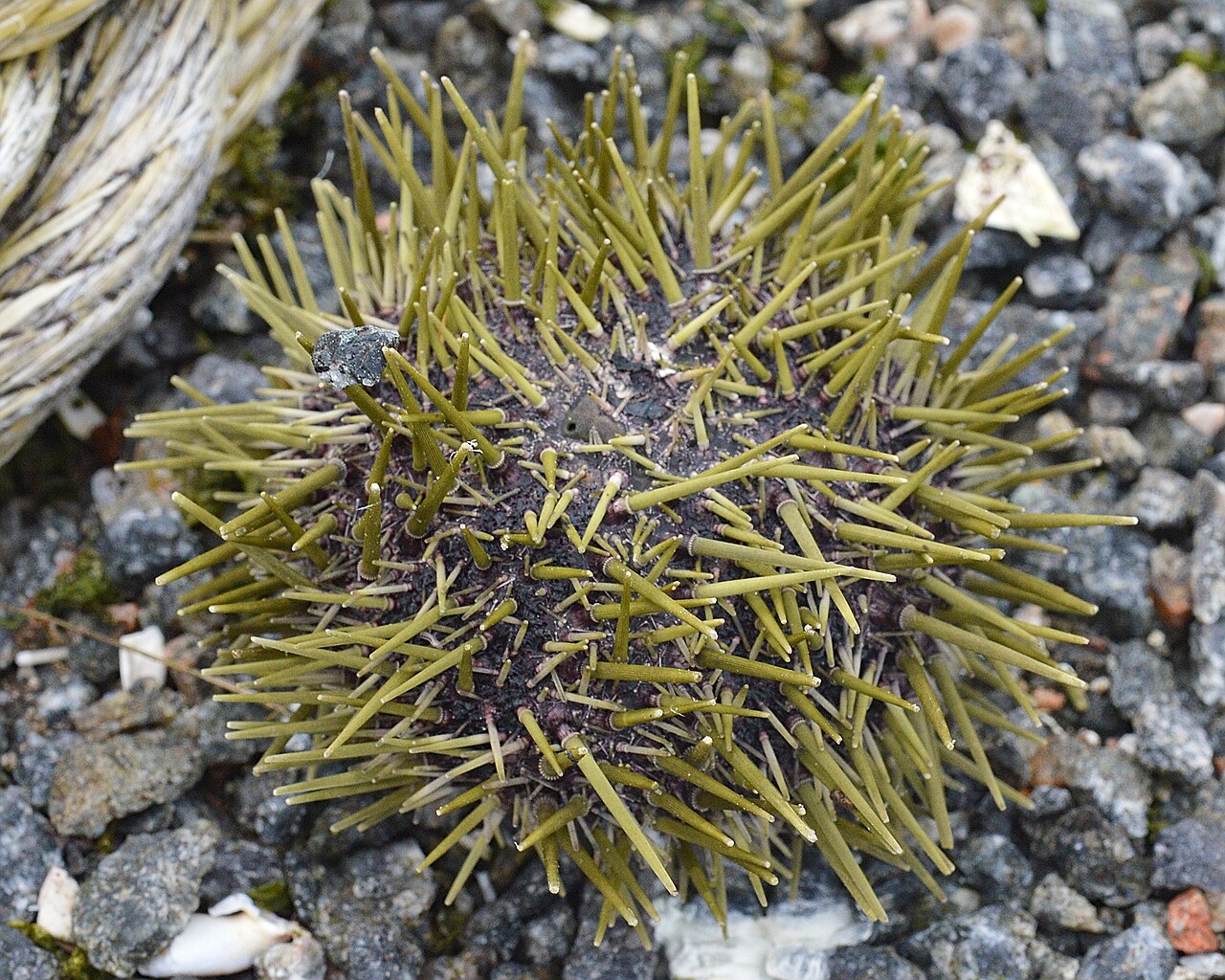
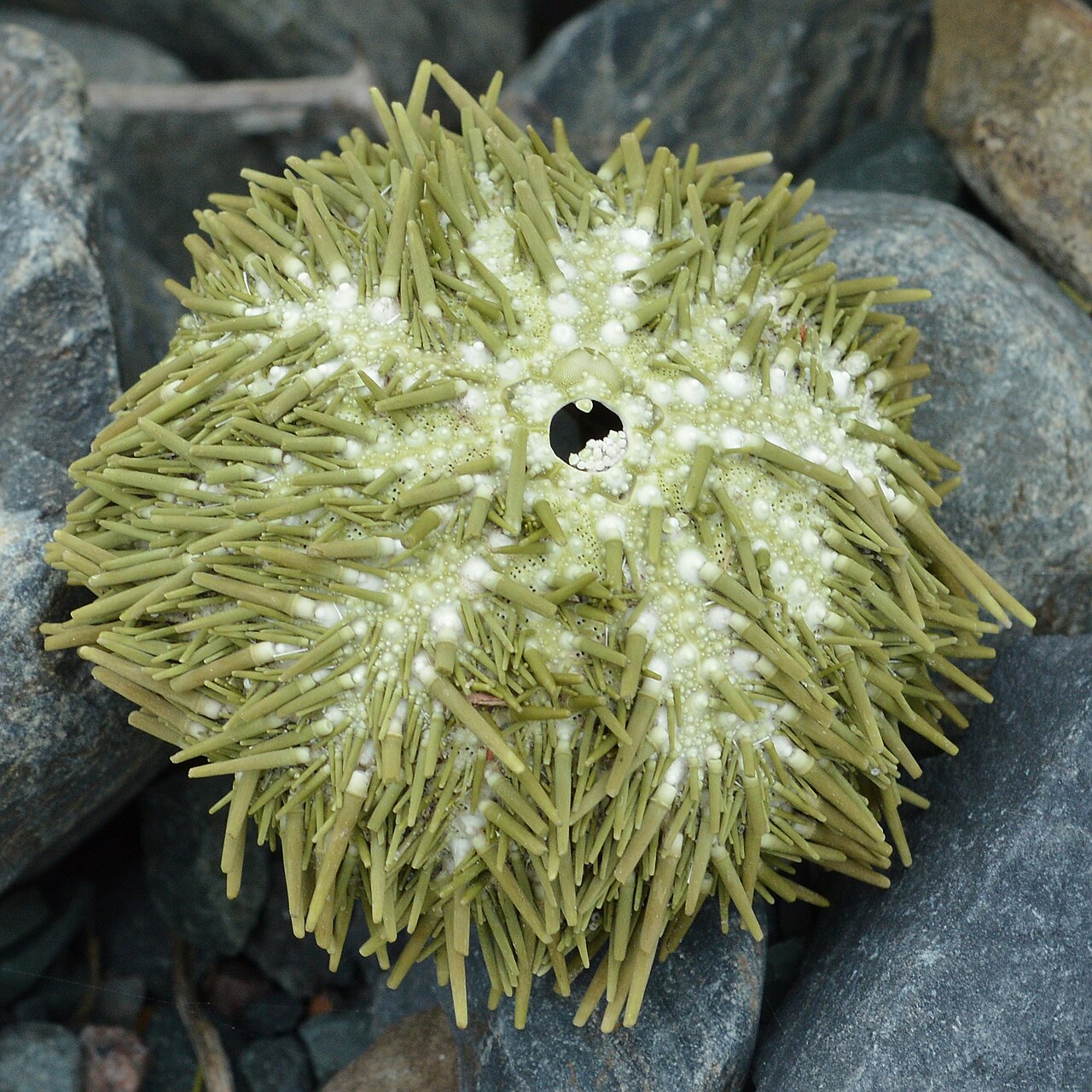
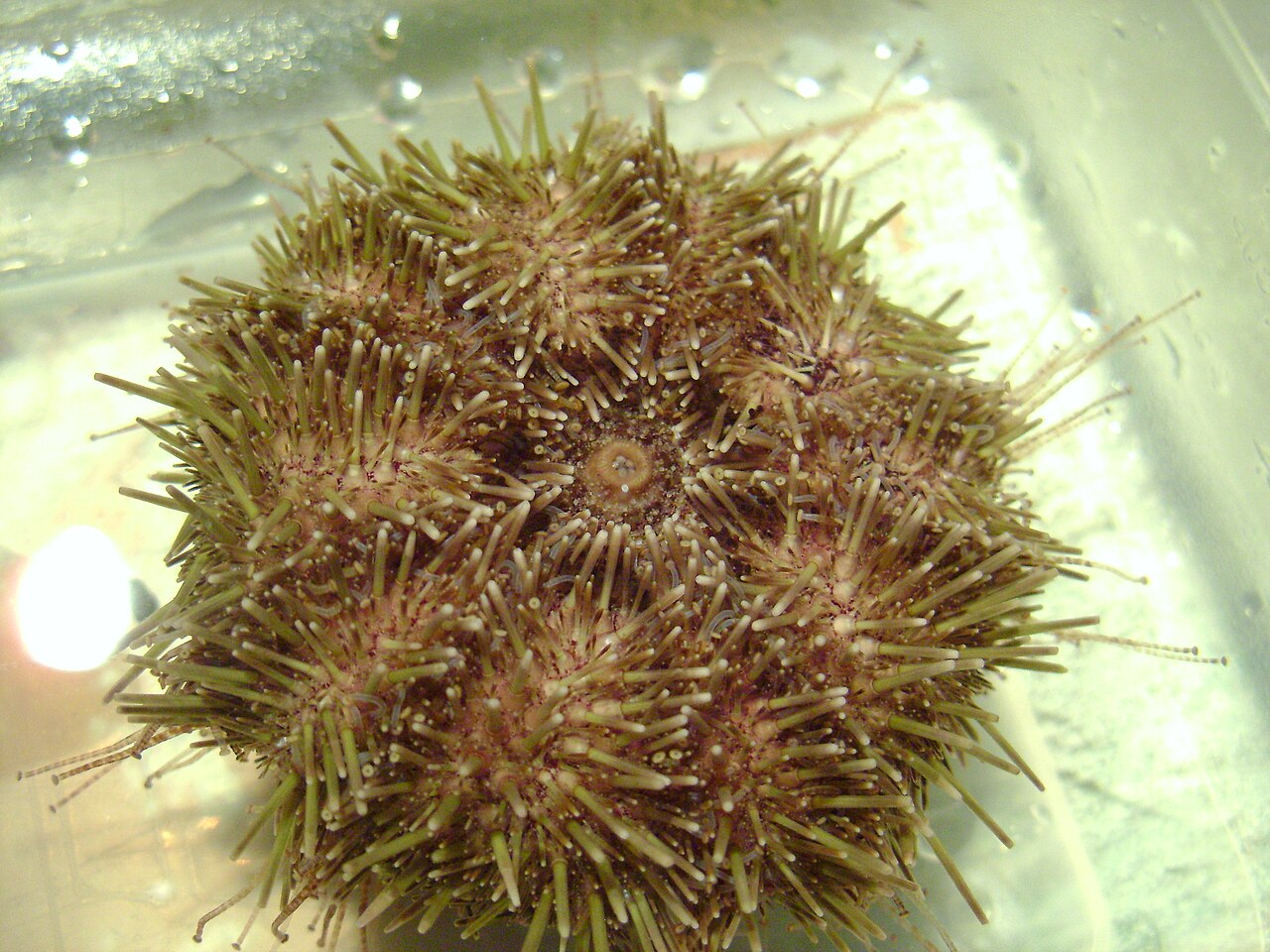
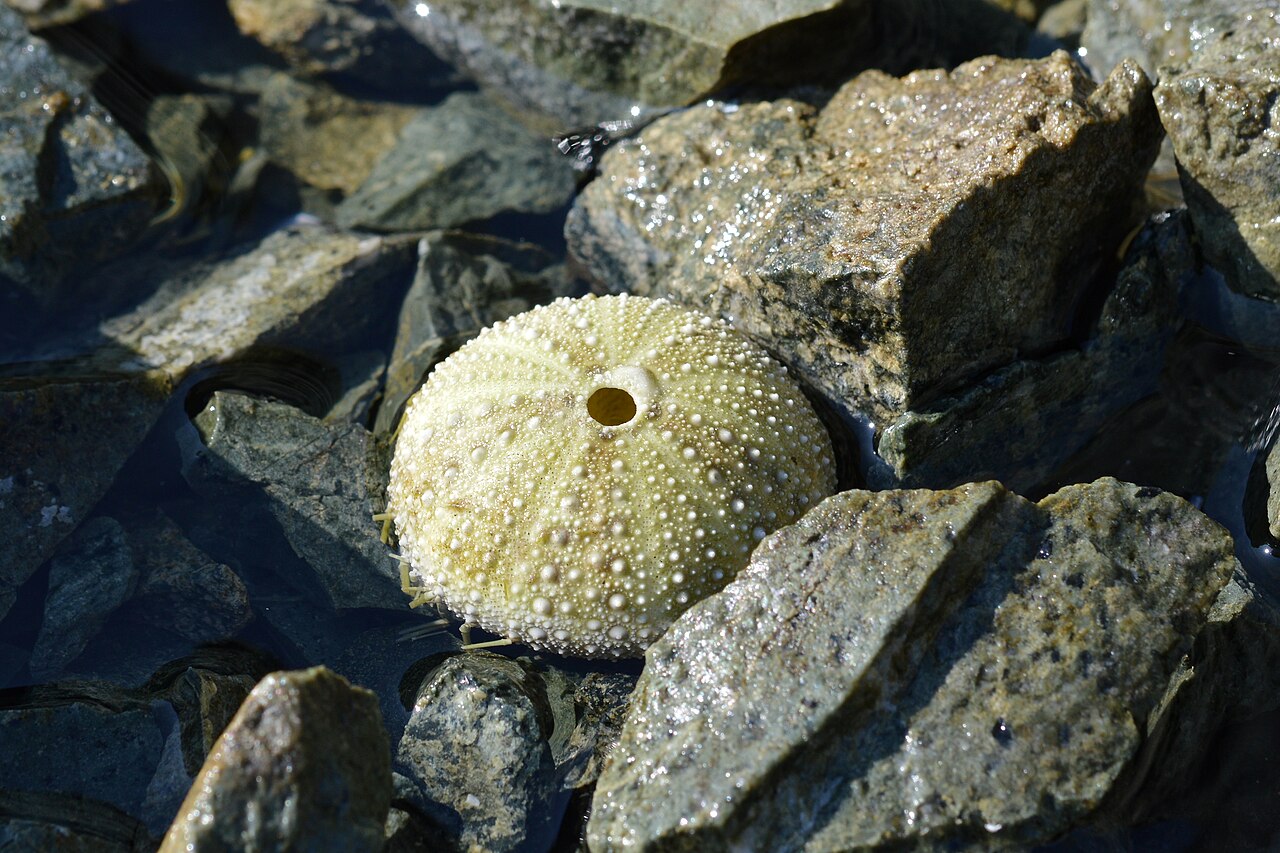
Externally, the sea urchin is a slightly flattened globe with pentameric symmetry, visible in five paired rows of tube feet. Its test is made of 20 curved calcium carbonate plates fused together; if cracked, calcium carbonate slowly fills the gaps. Spines are used for defense and locomotion, are not poisonous, and attach via ball-and-socket joints. Tube feet, composed of an ampulla and podium, use hydraulic pressure for attachment and movement. Pedicellariae—small pincher-like jaws on stalks—keep detritus off the body, collect kelp for sun protection, and can pinch predators; one of the four types on S. droebachiensis is poisonous and can paralyze small fish.
Internally, the water vascular system moves fluid through canals to propel the podia. The Aristotle's lantern has five calcareous teeth for scraping and tearing food. The digestive system includes an esophagus, intestine arranged in counter-clockwise and clockwise circuits, and a rectum leading to the anus. The green color comes from pigments of its plant food. The nervous system includes a circular nerve ring and radial nerves; sensory neurons detect touch, chemicals, and light. Sea urchins are dioecious, with five gonads near the anus, and release eggs or sperm into the water column simultaneously.
Reader's Guide
Strongylocentrotus droebachiensis is notable for its wide northern distribution, occurring in both the Pacific and Atlantic Oceans from 81 degrees north latitude to Maine and England. Its ability to burrow into rock using its Aristotle's lantern and spines, and its euryhaline tolerance allowing it to thrive in southern Puget Sound, highlight its adaptability. The species is a relatively fast-growing sea urchin, with age calculable from size at roughly one year per 10 mm. It prefers to eat seaweeds but will eat other organisms, and is preyed upon by sea stars, crabs, large fish, mammals, birds, and humans. The pedicellariae include a poisonous type that can paralyze small fish, though the species primarily eats algae. The test, made of calcium carbonate plates, can repair cracks over time. The species name honors the Norwegian town Drøbak. Its significance lies in its ecological role as a grazer and prey item in northern marine ecosystems, and its physiological traits such as salinity tolerance and regenerative abilities.
Did You Know?
- It can survive in waters of low salinity, allowing it to flourish in southern Puget Sound.
- One of its four types of pedicellariae is poisonous and can paralyze small fish.
- Its age is generally calculable based on size: one year for every 10 mm.
Global Range and Habitat
The green sea urchin occupies an astonishingly broad swath of the planet's northern waters, appearing in both Pacific and Atlantic Oceans. Its range stretches to a northerly latitude of 81 degrees and extends southward to the coastlines of Maine and England. Within this vast territory, the species favors rocky substrates, ranging from the intertidal zone down to depths of 1,150 meters. One of its most remarkable ecological traits is euryhalinity—the ability to tolerate low-salinity waters. This tolerance is what allows the species to thrive in environments like southern Puget Sound, where freshwater inflow dilutes seawater. Size and acclimation play a role in this tolerance: larger individuals benefit from a lower surface-area-to-volume ratio, which helps them manage the increased osmotic tension of diluted water. The urchin also uses its powerful Aristotle's lantern to excavate into rock, creating a sheltered home it can widen with its spines. Most individuals leave their burrow to forage and return, though some create a tapering tunnel whose narrow opening ultimately traps the resident inside.
Structural Engineering of the Test and Spines
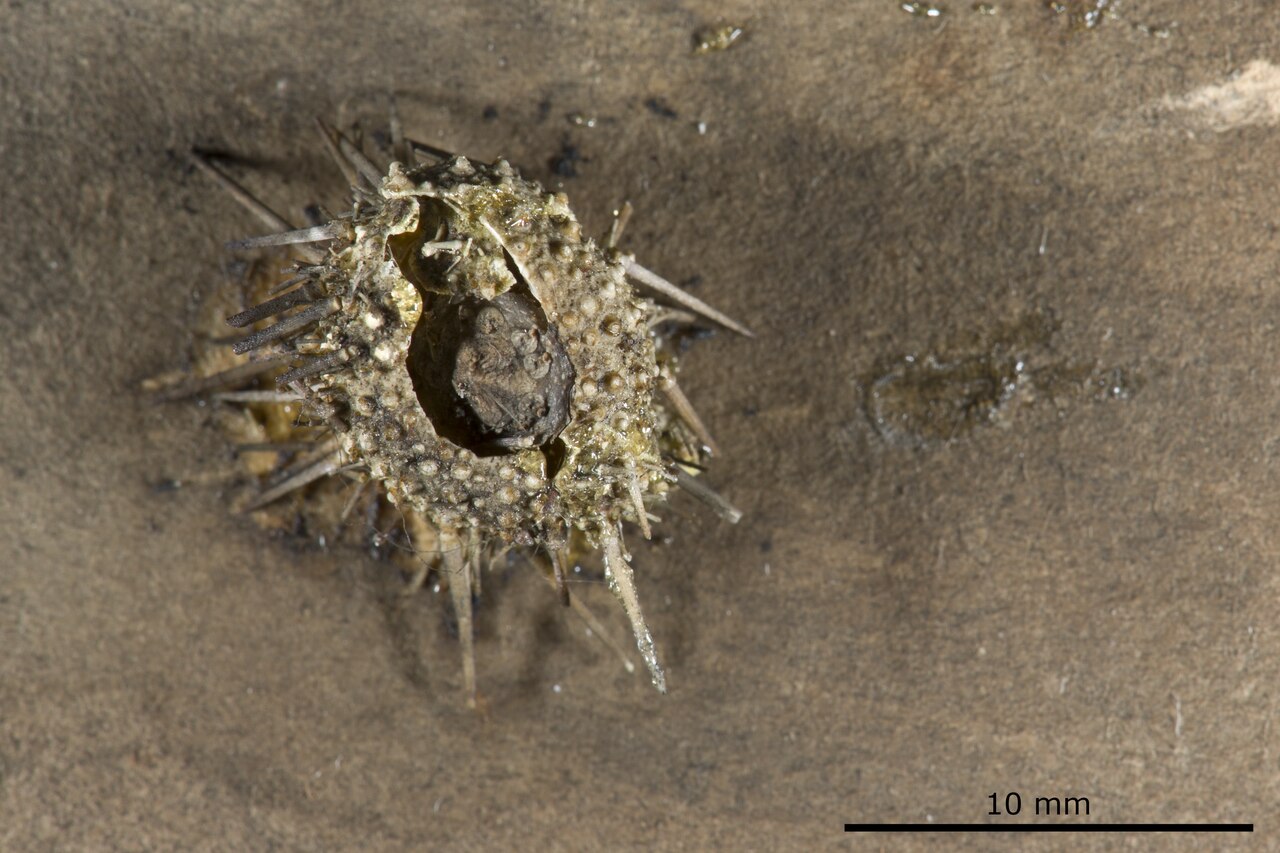
The body of the green sea urchin is a masterwork of biological engineering. Its rigid test, or exoskeleton, is formed from twenty curved ossicles fused together and composed of calcium carbonate. The test features two rows of holes through which tube feet pass. Perhaps most impressively, the test is self-repairing: if it cracks or chunks are lost, calcium carbonate gradually fills the gaps until the structure regains its full rigidity. The spines attach to small tubercles on the test via muscles that create a ball-and-socket joint, granting remarkable mobility. Each spine is round, tapers to a point, and displays ridges arranged in a fan-like pattern. The longest spines typically ring the peripheral edge of the animal. If a spine breaks, it regenerates; if it is completely torn away, the tubercle itself is reabsorbed to accommodate the slowly growing replacement. The overall body shape is a slightly flattened globe with pentameric symmetry, visible in five paired rows of tube feet running from the anus to the mouth.
The Hydraulic Locomotion System
Movement in the green sea urchin is driven by an elegant hydraulic mechanism housed within its tube feet. Each tube foot consists of two components: the ampulla, a hollow bulbous structure that lifts the foot above the surrounding skeletal plates, and the podium, the muscular, suckered extension that makes contact with the environment. When the ampulla contracts, it forces fluid into the podium, causing it to elongate and reach beyond the spines to grasp the substrate or floating food particles. Once attached, longitudinal muscles in the podium constrict, pushing fluid back into the ampulla. This shortens the podium and pulls the body forward or draws food toward the mouth. The fluid circulating through the water vascular system resembles seawater but contains free-wandering cells, proteins, and a notably high concentration of potassium ions. Cilia lining the interior of the canals help direct the flow. The entire system is robust: tube feet torn loose by rough seas regenerate quickly, ensuring the urchin's mobility is rarely permanently compromised.
Defense Arsenal and Predation
Despite its spiny exterior, the green sea urchin faces a diverse array of predators, including sea stars, crabs, large fish, marine mammals, birds, and humans. Its primary defense is its spines, which, while not poisonous, present a formidable physical barrier. More sophisticated is the pedicellariae system: small pincher-like jaws mounted on calcareous stalks at the base of spines. These structures respond to external stimuli independently of the main nervous system. When spines are lightly touched, they converge toward the pressure; when pushed forcefully, they spread apart, exposing the pedicellariae to pinch the intruder. One of the four main types of pedicellariae on this species is actually poisonous, capable of paralyzing small fish. The urchin can even use this to capture fish as supplemental food, though it primarily feeds on seaweeds. Pedicellariae also serve housekeeping roles, keeping detritus off the body and gathering kelp to shield against desiccation from sunlight. The muscles controlling these structures sit outside the test and may absorb nutrients directly from surrounding water.
Gallery

Frequently Asked Questions
What is Strongylocentrotus droebachiensis?
It is a species of sea urchin best known for its characteristic green coloration. It lives in cold northern waters spanning both the Pacific and Atlantic Oceans.
Where can you find a green sea urchin in the wild?
Its range stretches from 81 degrees latitude in the north all the way down to Maine in the U.S. and England. Vertically, it occupies habitats from the intertidal zone to depths of about 1,150 meters.
How big does Strongylocentrotus droebachiensis get?
A typical adult measures roughly 50 mm (2 inches) across, though the largest individual on record reached 87 mm (3.4 inches).
How fast does a green sea urchin grow?
It adds only about 10 mm of diameter per year, making it a notably slow-growing invertebrate. Reaching its average adult size therefore takes around five years.
Why is it called Strongylocentrotus droebachiensis?
The species epithet 'droebachiensis' honors the Norwegian town of Drøbak. The genus name places it among the strong-shouldered urchins, while the epithet ties the name to that specific Norwegian locality.
More in Sea Urchins, Part 2 1-24
Spotted an error? Know more?
Reader corrections go straight into our review queue. Suggest an edit · How this site is sourced