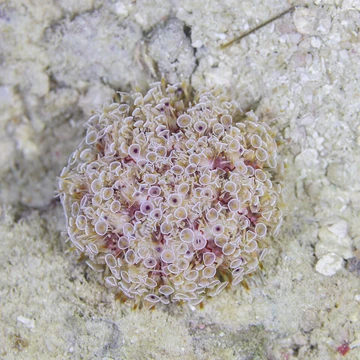
Clypeasteroida
Flat, burrowing sea urchins with a coin-like test.

Mateussf · CC BY-SA 4.0
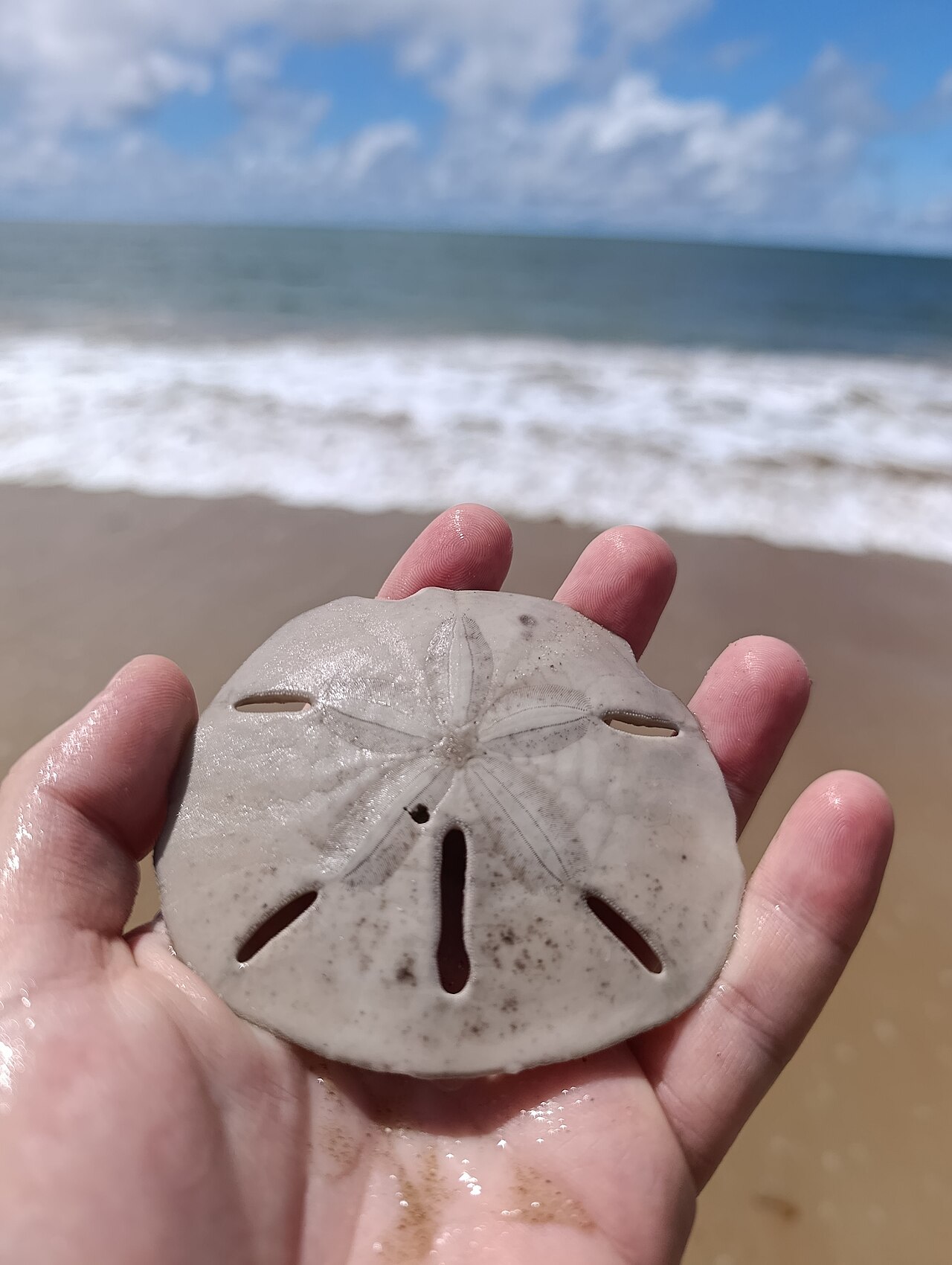
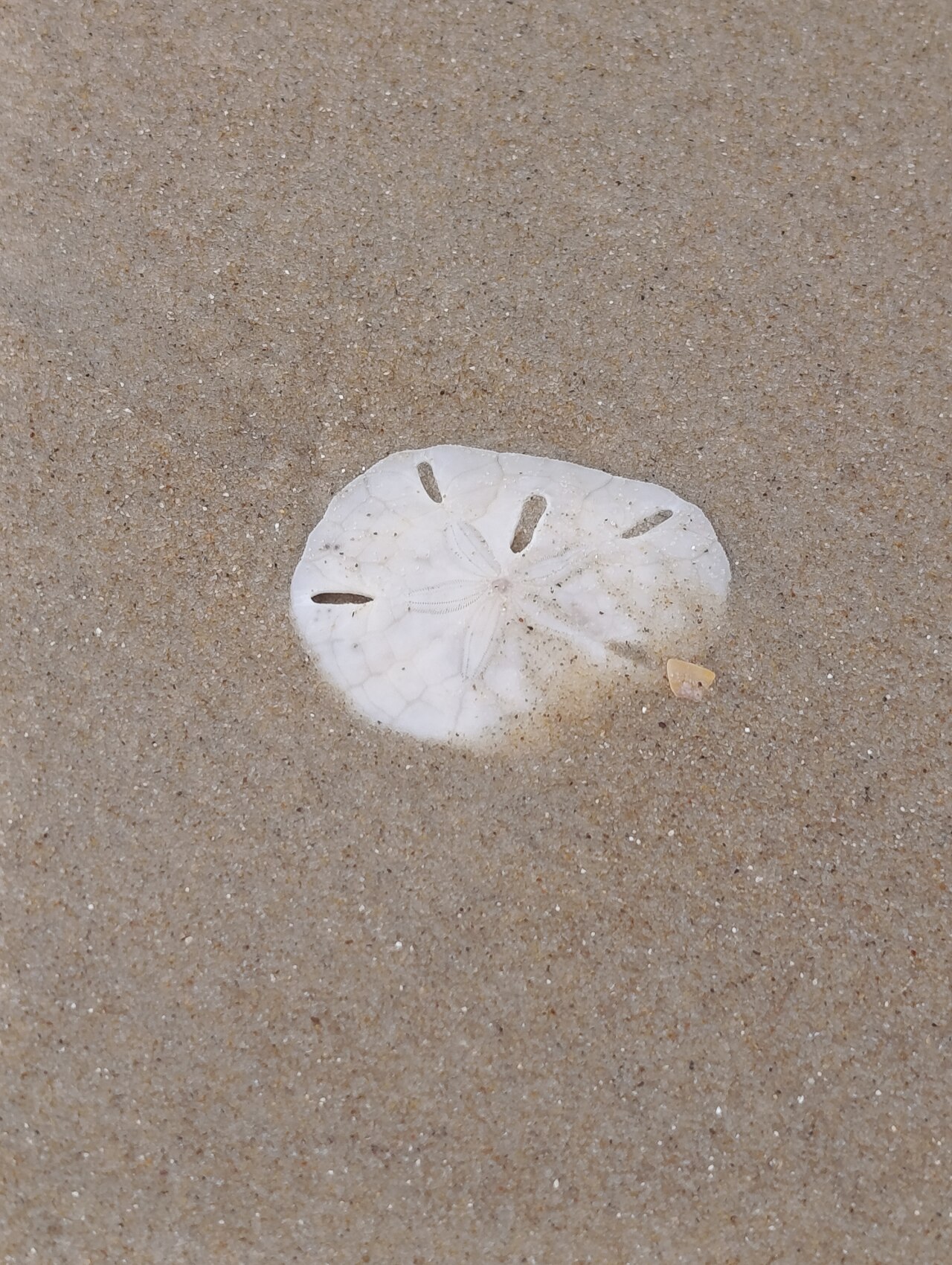
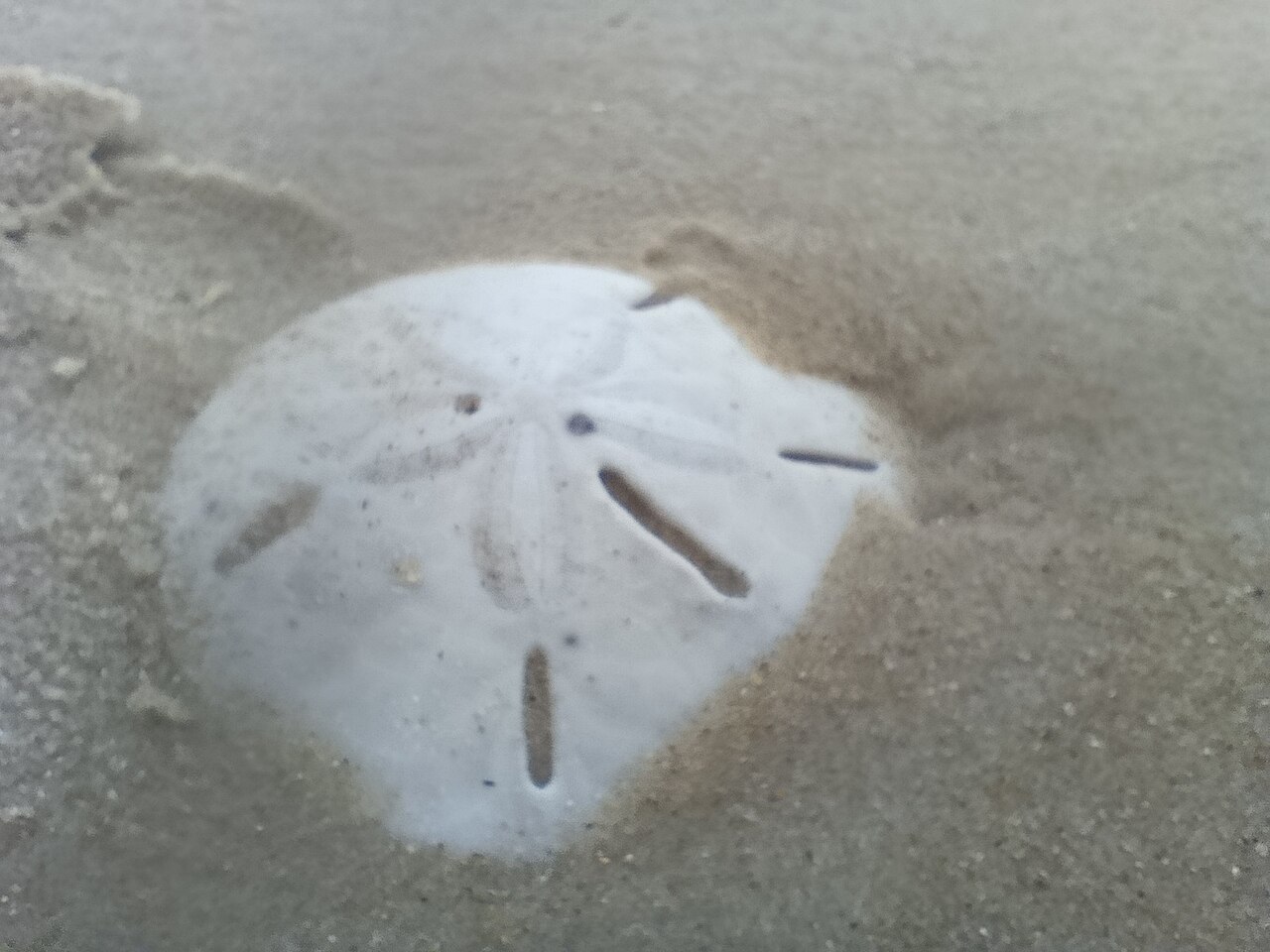
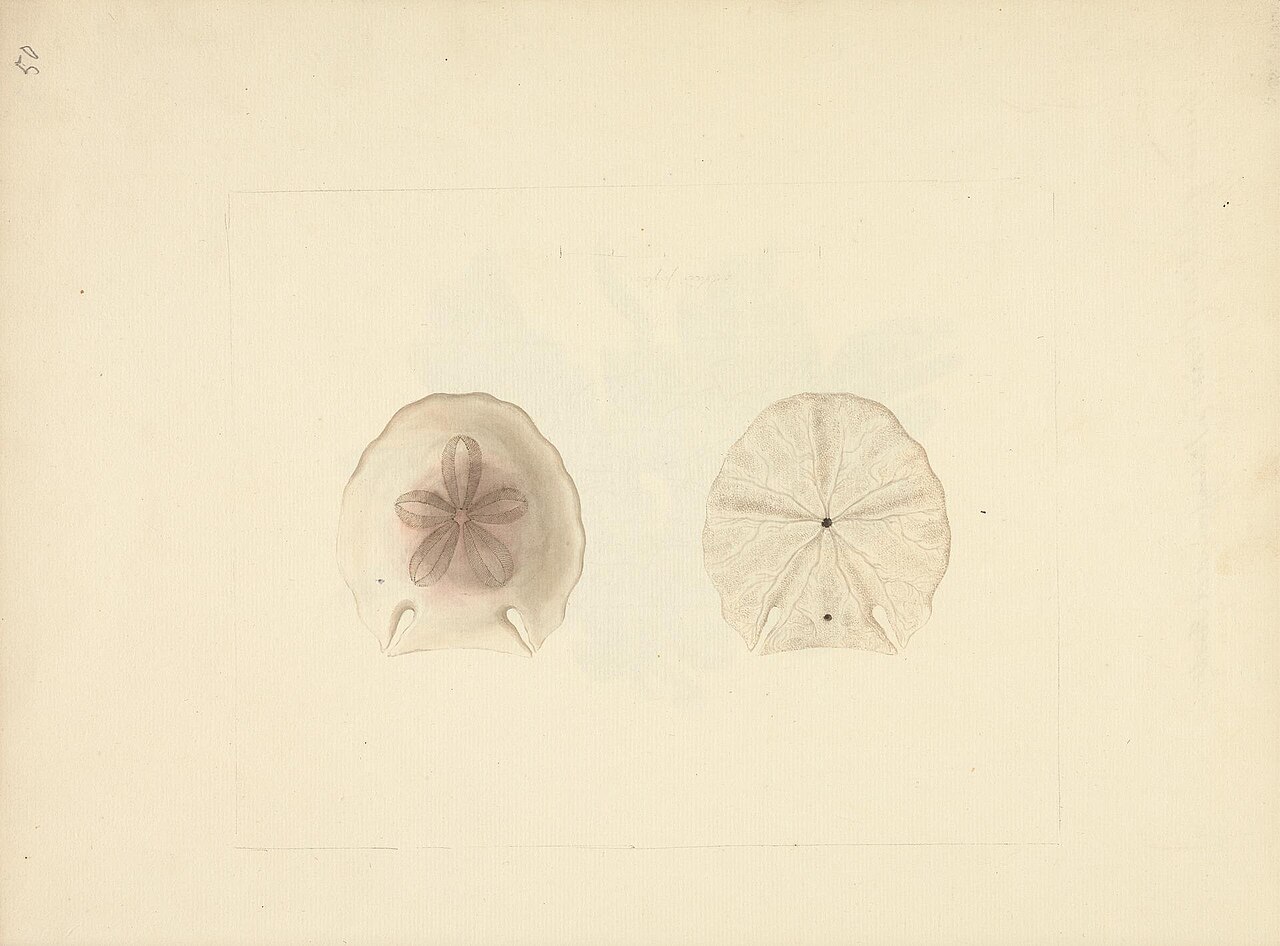
Clypeasteroida is an order of flat, burrowing sea urchins commonly known as sand dollars, sea cookies, or snapper biscuits. They are notable for their rigid, fivefold symmetric skeleton called a test, which often appears as a bleached white disc when washed ashore, resembling a large silver coin.
Quick Facts
- Taxon
- Clypeasteroida
Facts from the source article.
Lore & Background
Sand dollars diverged from other irregular echinoids during the early Jurassic, with the first true sand dollar genus, Togocyamus, arising during the Paleocene. Soon after, more modern-looking groups emerged during the Eocene. The term 'sand dollar' derives from the appearance of the tests of dead individuals after being washed ashore, which to beachcombers of the past suggested a large, silver coin such as the old Spanish dollar, which had a diameter of 38–40 mm. Other names include sand cakes, pansy shells, snapper biscuits, cake urchins, and sea cookies. In South Africa, they are known as pansy shells from their suggestion of a five-petaled garden flower. The inflated sea biscuit or Caribbean sand dollar, Clypeaster rosaceus, is thicker in height than most. In Spanish-speaking areas of the Americas, the sand dollar is most often known as galleta de mar ('sea cookie').
Sand dollars are small, averaging from 80 to 100 mm. Their test consists of calcium carbonate plates arranged in a fivefold symmetric pattern. Certain species have slits called lunules that help the animal stay embedded in the sand. In living individuals, the test is covered by a skin of velvet-textured spines covered with very small hairs (cilia). The velvety spines appear in various colors—green, blue, violet, or purple—depending on the species. Dead individuals are commonly found with their empty test bleached white by sunlight. The bodies display radial symmetry, with a petal-like pattern of five paired rows of pores for gas exchange. Unlike other urchins, sand dollars also display secondary front-to-back bilateral symmetry, with the anus located at the back rather than the top, an adaptation from living on top of the seabed to burrowing beneath it.
Reader's Guide
The order Clypeasteroida holds significance as a group of echinoids that evolved from epibenthic to endobenthic life, burrowing beneath the seabed. Their flattened test and lunules aid in staying embedded in sand, while coordinated spine movements allow movement across the seabed. Sand dollars are found in temperate and tropical zones along all continents, living below the mean low tide line on sandy and muddy areas. The common sand dollar, Echinarachnius parma, occurs in the Northern Hemisphere from the intertidal zone to ocean depths, while keyhole sand dollars (genus Mellita) are found in and around the Caribbean Sea. They feed on algae and organic matter, and some species tip on their side to catch floating organic matter. Reproduction occurs through broadcast spawning, with sexes separate and gametes released into the water. Notably, sand dollar larvae can clone themselves asexually when sensing danger from predatory fish, a process that takes up to 24 hours and creates smaller larvae. Predators include cod, flounder, sheepshead, and haddock. The order includes numerous families, such as Clypeasteridae, Dendrasteridae, and Mellitidae, among others, as listed in the World Register of Marine Species.
Did You Know?
- Sand dollars are also known as pansy shells in South Africa, from their suggestion of a five-petaled garden flower.
- Sand dollar larvae can clone themselves in response to dissolved mucus from predatory fish, a process that takes up to 24 hours.
Naming & Cultural Identity
Sand dollars carry a remarkable collection of common names that reflect how different coastal cultures have interpreted these creatures. In New Zealand and Brazil, locals call them snapper biscuits or sea cookies, while South Africans recognize them as pansy shells because their five-petaled pattern evokes a garden flower. Spanish-speaking communities across the Americas most commonly refer to them as galleta de mar, a term that has bled into English usage. The English name "sand dollar" itself is a product of beachcombing history: when a dead individual washes ashore, its velvety spine covering has long since sloughed away, and the sun has bleached the calcium carbonate test to a pale, coin-like whiteness. To early coastal residents, this disc-shaped skeleton strongly resembled a large silver coin—specifically the old Spanish dollar, which measured roughly 38 to 40 millimeters across. Other regional labels include sand cakes, cake urchins, and the less common "sand urchins." The inflated sea biscuit, Clypeaster rosaceus, stands apart as a notably thicker-bodied representative of the group.
Anatomy & the Legacy of Burrowing
The body plan of a sand dollar is a fascinating record of evolutionary compromise. Like all echinoids, adults display radial symmetry, with five paired rows of pores forming a petal-like pattern across the test. These pores are perforations in the calcium carbonate endoskeleton through which podia extend for gas exchange. The mouth sits at the center of this petal arrangement on the ventral surface. Yet sand dollars also exhibit a secondary front-to-back bilateral symmetry—a feature absent in most other urchins—along with the anus positioned at the rear rather than the top. These bilateral traits are the legacy of a major ecological shift: sand dollars evolved from ancestors that lived on top of the seabed to organisms that burrow beneath it. The test itself is composed of calcium carbonate plates arranged in fivefold symmetry, and some species develop slits called lunules that help anchor the animal in sandy substrate against wave action. Living individuals are draped in a velvet-textured coat of spines covered in tiny cilia, which move in coordinated fashion to propel the animal across the seabed. Spine colors range from green and blue to violet and purple depending on species.
Behavior, Feeding & the Cloning Discovery
Sand dollars inhabit temperate and tropical waters on every continent, dwelling below the mean low tide line on or just beneath sandy and muddy substrates. The common sand dollar, Echinarachnius parma, ranges from the intertidal zone to deep ocean depths in the Northern Hemisphere, while the three species of keyhole sand dollar (genus Mellita) favor the broad Caribbean coastline. Their diet consists primarily of algae and organic detritus on the seafloor, though some species tip onto their sides to intercept particles drifting in currents. Reproduction involves separate sexes releasing gametes into the water column for external fertilization; the resulting planktonic larvae pass through several developmental stages before the test begins to form and the juvenile settles onto the bottom. In 2008, biologists reported a striking defensive strategy: when sand dollar larvae detect dissolved mucus released by a predatory fish, they split themselves in half, effectively cloning asexually. This process can take up to 24 hours and yields offspring roughly two-thirds the original length, doubling the population while halving individual size to reduce the chance of detection.
Taxonomic Framework & Deep-Time Origins
The order Clypeasteroida traces its lineage back to the early Jurassic, when its ancestors diverged from the other irregular echinoids, the cassiduloids. The first genus recognized as a true sand dollar, Togocyamus, appeared during the Paleocene epoch. Shortly thereafter, in the Eocene, lineages with more modern morphology began to radiate. Today, the World Register of Marine Species organizes the order into two suborders. Clypeasterina contains the family Clypeasteridae along with several extinct families such as Fossulasteridae, Scutellinoididae, Conoclypeidae, Faujasiidae, Oligopygidae, and Plesiolampadidae. Scutellina is divided into two infraorders: Laganiformes, which includes Echinocyamidae, Fibulariidae, and Laganidae, and Scutelliformes, which encompasses Echinarachniidae, Rotulidae, and the superfamily Scutelloidea. The latter group houses families including Astriclypeidae, Dendrasteridae (home to the Pacific eccentric sand dollar), Mellitidae (the keyhole sand dollars), Scutellidae, Taiwanasteridae, and several extinct lineages. This taxonomic architecture spans both living and fossil groups, documenting over 180 million years of evolutionary history.
Gallery
Frequently Asked Questions
What exactly is Clypeasteroida?
Clypeasteroida is an order of low-profile, burrowing sea urchins most people know by nicknames like sand dollars, sea cookies, or snapper biscuits. Unlike the spiny, globular urchins you might picture, these animals live pressed flat against the seafloor and shift through sediment rather than crawling on top of it.
What do Clypeasteroida's skeletons look like?
Their body is enclosed in a stiff, disc-shaped test that displays a strict five-fold radial symmetry. This rigid coin-like structure is what washes up on beaches as that familiar bleached white disc, often compared to a large silver coin.
How big do Clypeasteroida typically get?
Most species in this order fall in the 80-to-100-millimetre range, roughly the width of a human palm. That makes them noticeably larger than many other urchin orders you'd encounter in a tide pool.
When did Clypeasteroida first appear in the fossil record?
The earliest known genus attributed to this order, Togocyamus, dates back to the Paleocene epoch. The broader lineage that would eventually give rise to modern sand dollars diverged from other echinoids much earlier, during the early Jurassic.
Why are Clypeasteroida so iconic to beachgoers?
Because their test is a rigid, flat disc, it survives the journey to shore intact and bleaches to a bright white, making it one of the most recognizable marine objects people pick up. That coin-like silhouette is what gives the order its 'sea cookie' and 'snapper biscuit' nicknames in the first place.
More in Sea Urchins, Part 2 1-24
Spotted an error? Know more?
Reader corrections go straight into our review queue. Suggest an edit · How this site is sourced