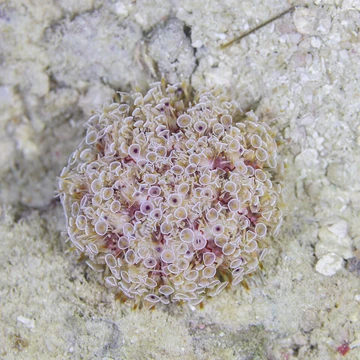
Paracentrotus lividus
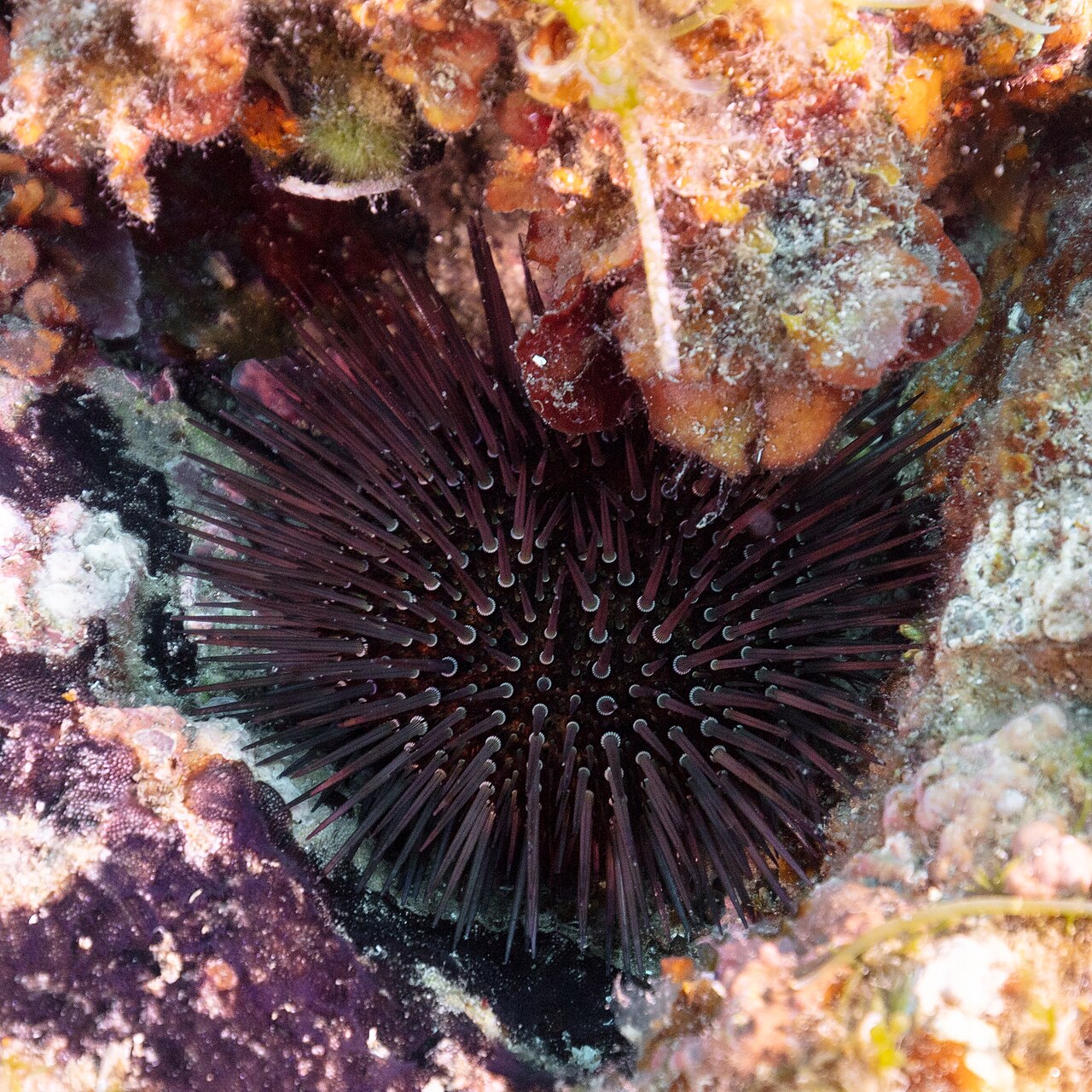
A purple-spined sea urchin of the Mediterranean and eastern Atlantic.

Diego Delso · CC BY-SA 4.0
Paracentrotus lividus, also called the purple sea urchin, belongs to the family Parechinidae and serves as the type species for its genus. Its range includes the Mediterranean Sea and the eastern Atlantic Ocean.
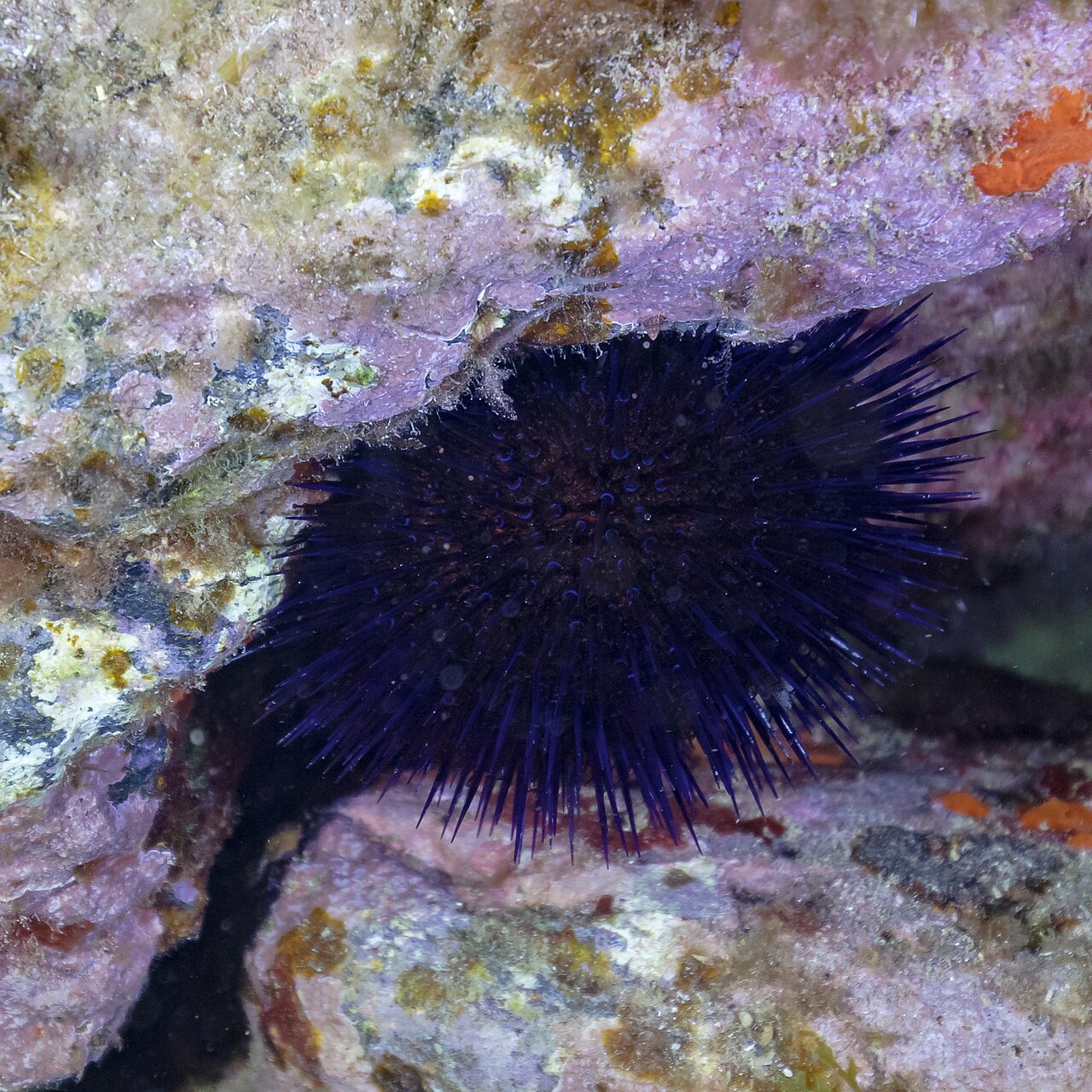
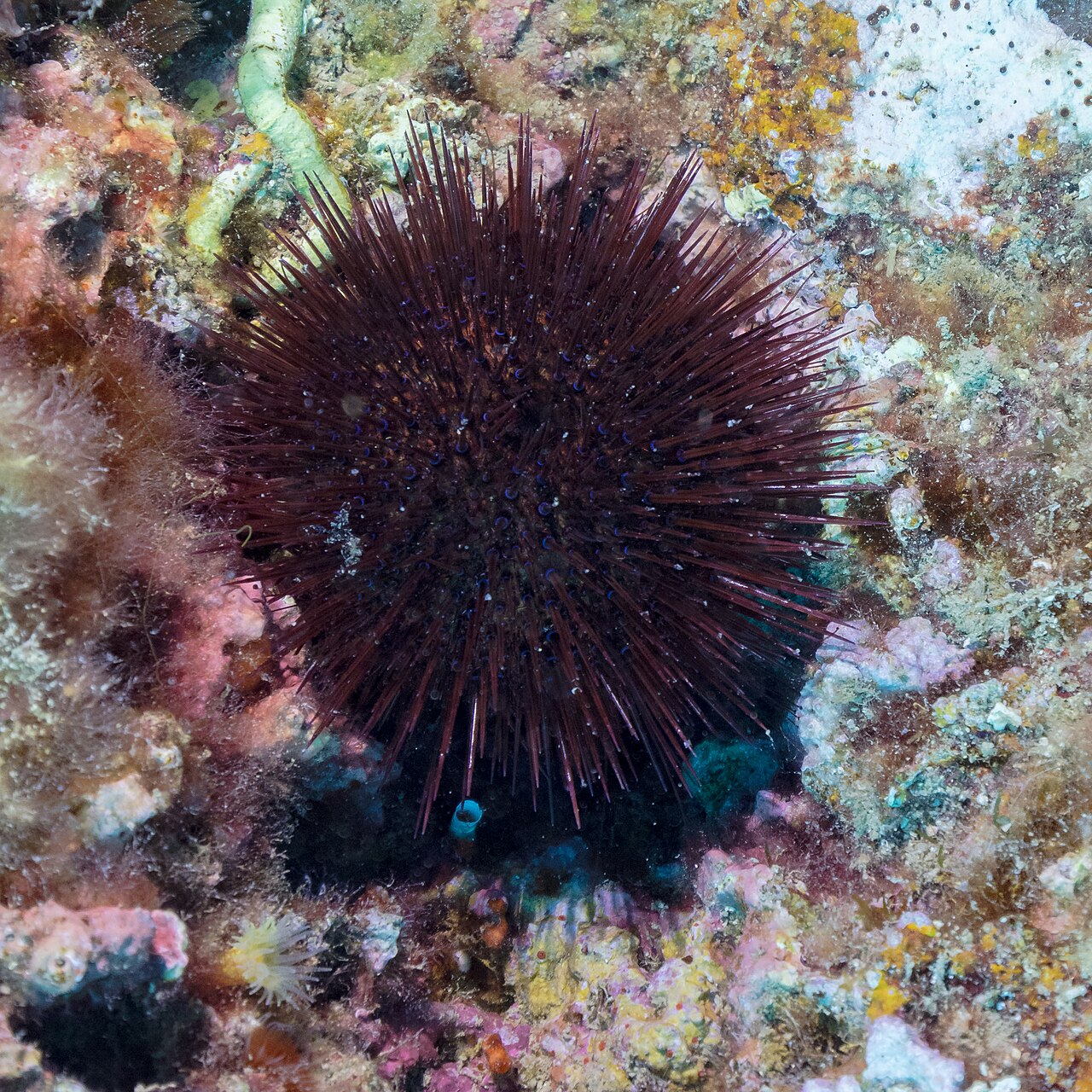
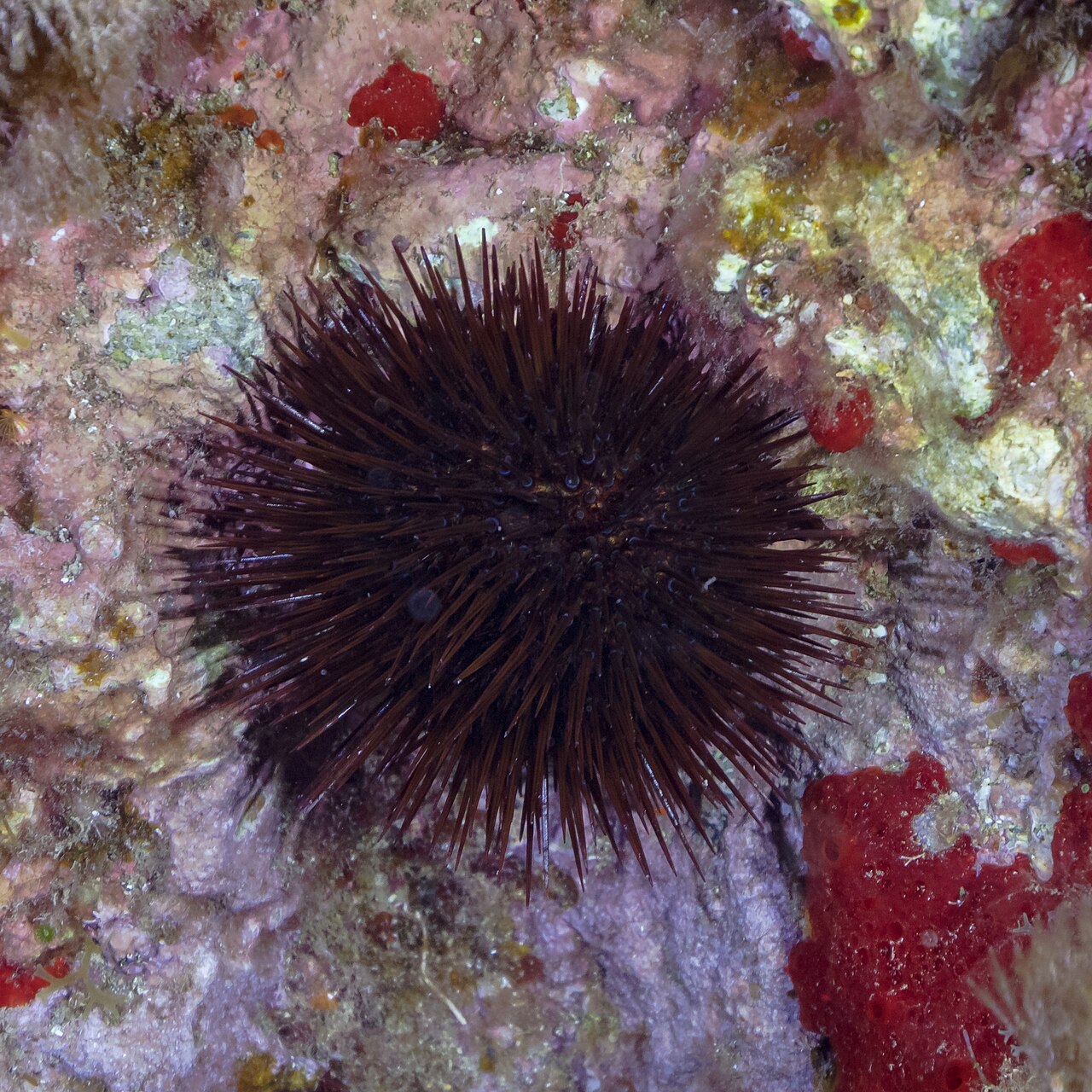
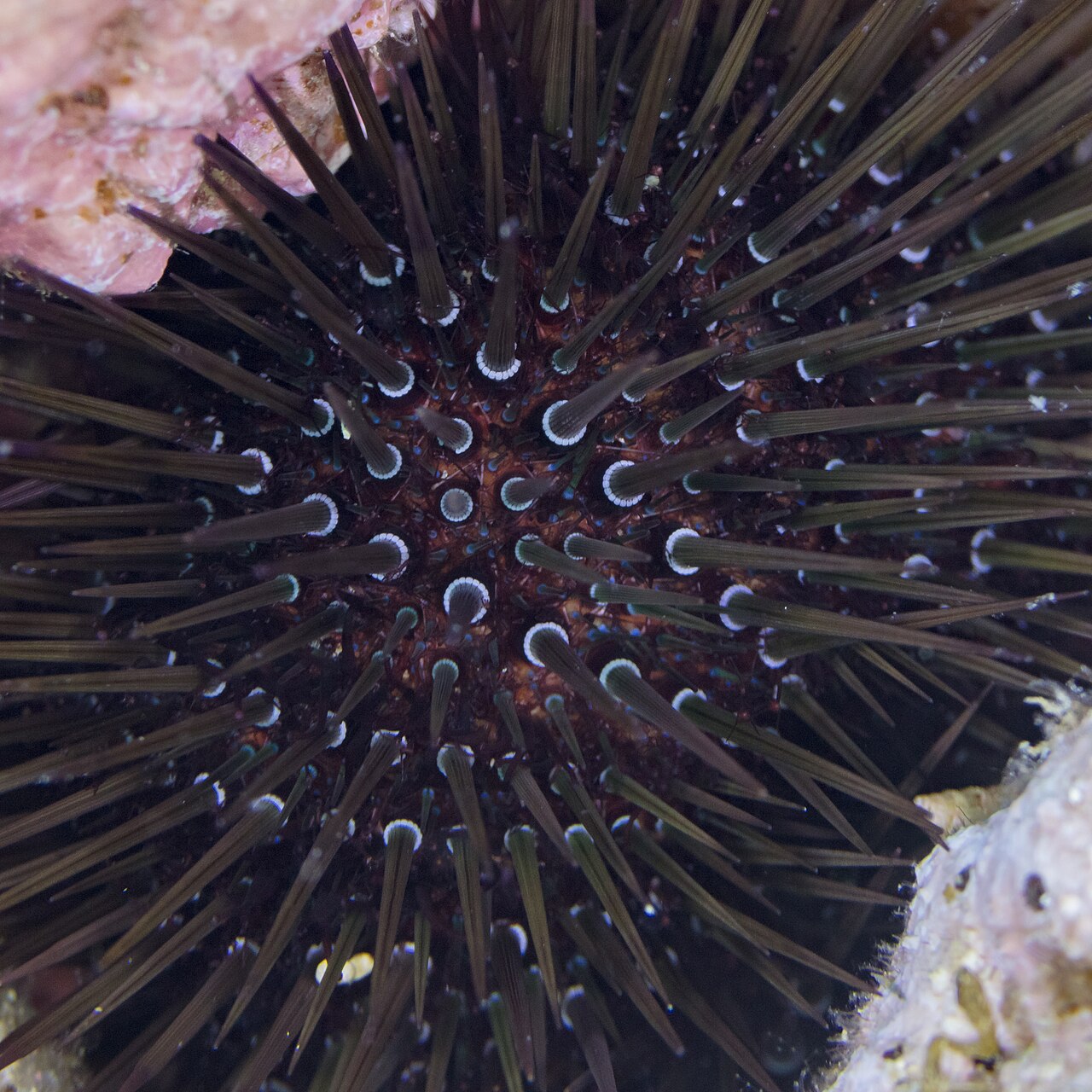
The urchin has a round, flattened greenish test up to seven centimeters across, covered in long, sharp spines that are usually purple but can also be dark brown, light brown, or olive green. Each ambulacral plate has five or six pairs of pores, and the tube feet are arranged in small arcs of five or six.
This species lives throughout the Mediterranean and in the eastern Atlantic from western Scotland and Ireland down to the Azores, Canary Islands, and Morocco. It is most common in the western Mediterranean, along the coasts of Portugal, and in the Bay of Biscay, where winter water temperatures range from 10 to 15 °C.
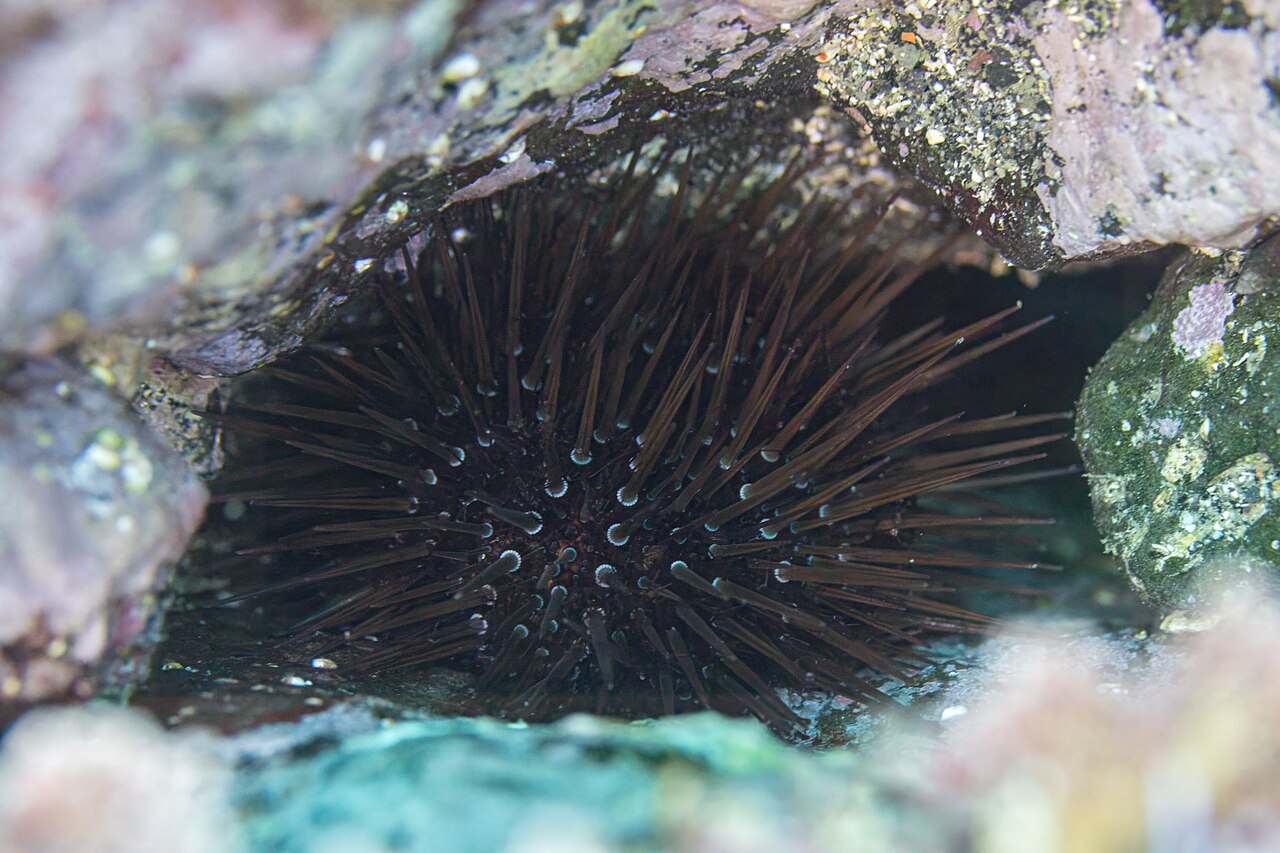
Typically found just below the low water mark down to depths of twenty meters, and sometimes in rock pools, it inhabits rocks, boulders, and seagrass meadows of Zostera marina and Posidonia oceanica. Although it prefers to eat Cymodocea nodosa, it rarely lives in meadows of that seagrass, possibly due to shifting sand or predator pressure. It avoids soft substrates and may cluster on stones or shell “islands” surrounded by sand. In shallow or exposed waters, it uses its mouth and spines to dig into soft rock, creating cavities it returns to and fits exactly; where many urchins are present, the rock can become honeycombed with these holes. Smaller individuals especially use these retreats for protection. In lagoons and rock pools, individuals are smaller than in the open sea. The urchin cannot tolerate low salinity—after heavy rain in Corsica in autumn 1993, mass mortality occurred in the Urbini Lagoon. However, it is relatively unaffected by organic pollution and heavy metals, even thriving near sewage outlets. Population densities vary widely across its range for reasons not fully understood.
Individuals are either male or female, though hermaphroditism has been observed. They gather to spawn, releasing gametes into the water. The larvae remain in the zooplankton for about 28 days before settling and metamorphosing.
A generalist browser, it eats red, green, and brown algae as well as seagrass. The benthic community is strongly influenced by urchin numbers and food preferences.
Quick Facts
- Genus
- Paracentrotus
- Species
- lividus
Facts from the source article.
Lore & Background
Paracentrotus lividus has a circular, flattened greenish test with a diameter of up to seven centimetres. The test is densely clothed in long and sharply pointed spines that are usually purple but are occasionally other colours including dark brown, light brown and olive green. There are five or six pairs of pores on each ambulacral plate, and the tube feet are in groups of 5 or 6, arranged in small arcs.
It is found throughout the Mediterranean Sea and in the eastern Atlantic Ocean from western Scotland and Ireland to the Azores, Canary Islands and Morocco. It is most common in the western Mediterranean, the coasts of Portugal and the Bay of Biscay, where the water temperature in winter varies between 10 and 15 °C. It is usually found just below low water mark at depths down to twenty metres and sometimes also in rock pools, on rocks and boulders, and in seagrass meadows of Zostera marina and Posidonia oceanica. Although Cymodocea nodosa is a preferred food item, it is seldom found in meadows of this seagrass, perhaps because the shifting sand substrate does not suit it or because of pressure from predators. It avoids soft substrates and can sometimes be found clustered on stones or shell 'islands' surrounded by sand. In shallow or exposed waters it can use its mouth and spines to dig into soft rocks to create cavities into which it returns and in which it exactly fits. Where the urchins are numerous, the rock may be honeycombed by these excavations. Smaller individuals particularly use these retreats, which provide some protection from predators. In lagoons and rock pools, individuals are smaller than they are in the open sea. P. lividus is unable to tolerate low salinity. After exceptional quantities of rain fell in Corsica in the autumn of 1993, there was mass mortality of urchins in the Urbini Lagoon. However, the urchin is relatively unaffected by organic pollution and heavy metals and flourishes near sewage outlets. There are wide swings in population densities over its range, which have not been completely explained.
Individual P. lividus are either male or female although hermaphroditism has been observed. They aggregate for spawning and release gametes into the water column. The larvae form part of the zooplankton for about 28 days before settling and undergoing metamorphosis.
Reader's Guide
Paracentrotus lividus is a generalist browser, eating a range of red, green and brown algae in addition to seagrass. The benthic community is much affected by the number of urchins and their food preferences. Where they are numerous they tend to be surrounded by 'barren ground' colonised by encrusting Corallinaceae species and characterised by a low biomass of primary producers with a small number of associated species. Where numbers are low, there tend to be forests of Laminaria and Cystoseira and a much richer, three-dimensional community. The barren grounds can persist for years though whether this is due to overgrazing by urchins or prevention of recruitment of multicellular photosynthetic organisms by encrusting algae is unclear. Some juveniles of small fish species shelter among the spines, including the clingfishes Apletodon incognitus and Lepadogaster candolii and the gobies Gobius bucchichi, Zebrus zebrus and Millerigobius macrocephalus. The main predators on P. lividus in the Mediterranean Sea are the spider crab (Maja crispata), the fish Diplodus sargus, Diplodus vulgaris, Labrus merula and Coris julis and the gastropod Hexaplex trunculus. The spiny starfish (Marthasterias glacialis) is a main predator elsewhere. Predation is dependent on size; juvenile urchins are more vulnerable as their spines are less formidable. In most locations the urchins are nocturnal feeders, but where predators are more active at night the urchins may feed during day instead. The gonads are considered a delicacy in Lebanon, France, Italy, Spain, Malta, and parts of Croatia, most notably on the island of Korčula, and are also eaten to a lesser extent in Greece and Tunisia. The urchins have been harvested for export over a wider area including Croatia, Portugal and Ireland. Additionally, sea urchin meat has been popularised in modern cuisine as 'Uni', with Paracentrotus lividus being known as 'Murasaki Uni'. It is primarily harvested in Hokkaido, Japan alongside its counterpart 'Bafun Uni'.
Did You Know?
- Paracentrotus lividus can use its mouth and spines to dig cavities in soft rocks for shelter.
- The larvae spend about 28 days as part of the zooplankton before settling.
- It is unable to tolerate low salinity, and mass mortality occurred in the Urbini Lagoon after heavy rain in Corsica in autumn 1993.
- Its gonads are considered a delicacy in several Mediterranean countries and are also harvested in Japan as 'Murasaki Uni'.
Physical Form & Coloration
The purple sea urchin presents as a compact, disc-shaped creature with a flattened test reaching up to seven centimetres across, tinged greenish in hue. Its most striking feature is the dense covering of long, sharply pointed spines that typically display a deep purple, though individuals occasionally appear in dark brown, light brown, or olive green tones. The test bears five or six pairs of pores on each ambulacral plate, and the tube feet are organized into small arcs of five or six. As the type species of its genus, P. lividus anchors the classification of the Parechinidae family. Its circular, low-profile body plan and formidable spiny armour make it instantly recognizable along rocky Mediterranean and eastern Atlantic shores.
Habitat & Survival Strategies
P. lividus favours rocky and boulder substrates just below the low-water mark, typically at depths up to twenty metres, and occasionally inhabits rock pools. It thrives among seagrass meadows of Zostera marina and Posidonia oceanica, though it notably avoids the soft sand substrates where Cymodocea nodosa grows, despite that species being a preferred food item. In shallow or exposed settings, the urchin uses its mouth and spines to carve cavities into soft rock, creating snug retreats into which it fits precisely; where populations are dense, the rock becomes honeycombed with these excavations. Smaller individuals rely heavily on these shelters for predator protection. The species cannot tolerate low salinity, as demonstrated by mass mortality events in Corsica's Urbini Lagoon following exceptional rainfall in autumn 1993. Conversely, it shows remarkable resilience to organic pollution and heavy metals, even flourishing near sewage outlets. Population densities fluctuate widely across its range for reasons not yet fully understood.
Ecological Influence & Food Web
As a generalist browser, P. lividus feeds on red, green, and brown algae alongside seagrass, and its population density profoundly shapes the surrounding benthic community. In areas where urchins are abundant, they create barren ground dominated by encrusting Corallinaceae species, with low primary-producer biomass and few associated organisms. Where urchin numbers are low, the seafloor supports lush forests of Laminaria and Cystoseira, hosting a richer, three-dimensional assemblage. The persistence of barren grounds over years remains debated, with uncertainty over whether overgrazing or the encrusting algae themselves prevent recruitment of larger photosynthetic organisms. The urchin also serves as a nursery habitat, with juvenile clingfishes Apletodon incognitus and Lepadogaster candolii, plus gobies Gobius bucchichi, Zebrus zebrus, and Millerigobius macrocephalus, sheltering among its spines. Predation pressure comes from spider crabs, several fish species, and the gastropod Hexaplex trunculus in the Mediterranean, while the spiny starfish Marthasterias glacialis preys on them elsewhere. Juveniles face greater vulnerability due to less formidable spines, and feeding behaviour shifts between day and night depending on local predator activity.
Culinary Heritage & Global Trade
The gonads of P. lividus are prized as a delicacy across the Mediterranean, particularly in Lebanon, France, Italy, Spain, Malta, and the Croatian island of Korčula, with more modest consumption in Greece and Tunisia. Harvesting for export extends to Croatia, Portugal, and Ireland, reflecting the species' broad commercial appeal. In modern gastronomy, sea urchin meat has gained wider recognition under the name Uni, and P. lividus is specifically known as Murasaki Uni. It is primarily harvested in Hokkaido, Japan, where it is gathered alongside its counterpart Bafun Uni. The species' distribution from western Scotland and Ireland through the eastern Atlantic to the Azores, Canary Islands, and Morocco, combined with its highest densities in the western Mediterranean, Portuguese coasts, and Bay of Biscay, provides a wide geographic base for both local culinary traditions and international trade.
Gallery
Frequently Asked Questions
Who is Paracentrotus lividus?
Paracentrotus lividus, commonly known as the purple sea urchin, is the type species of its genus within the family Parechinidae. It presents as a round, slightly flattened greenish test reaching up to seven centimetres in diameter, crowned with long, needle-sharp spines that are most often purple but can appear dark brown, light brown, or olive green.
What are Paracentrotus lividus's powers or role?
Its dense coat of rigid spines acts as a powerful deterrent against would-be predators, while rows of tiny tube feet—grouped in arcs of five or six along each ambulacral plate—let it cling to rocks and slowly traverse the seafloor. In its ecological niche it functions as a grazer, nibbling algae and detritus on shallow substrates.
Why is Paracentrotus lividus important?
It plays a significant role in shaping Mediterranean and eastern-Atlantic benthic communities by controlling algal growth on rocky reefs and seagrass beds. Taxonomically, it anchors the entire genus Paracentrotus as the type species, giving scientists a stable reference point for classifying related urchins.
Where does Paracentrotus lividus's story take place?
Its home range covers the full extent of the Mediterranean Sea and stretches into the eastern Atlantic Ocean. It is a shallow-water resident, typically encountered on rocky or sandy substrates at depths no greater than about twenty metres.
More in Sea Urchins, Part 2 1-24
Spotted an error? Know more?
Reader corrections go straight into our review queue. Suggest an edit · How this site is sourced