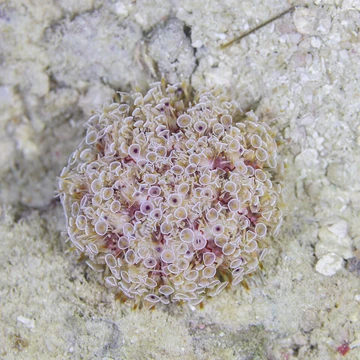
Evechinus chloroticus
Endemic New Zealand sea urchin, overabundant due to overfishing and climate change.

Baker, A N · CC BY 4.0
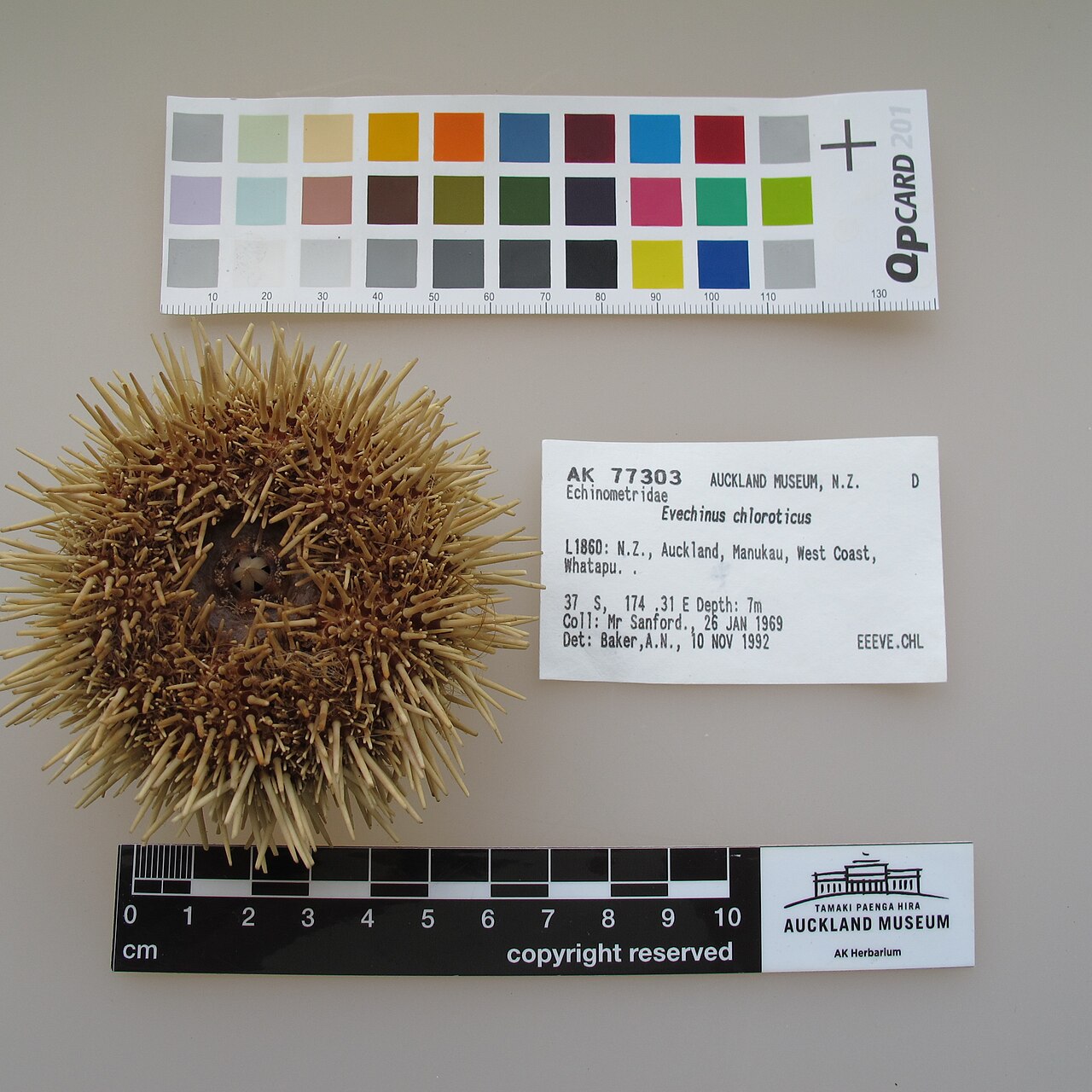
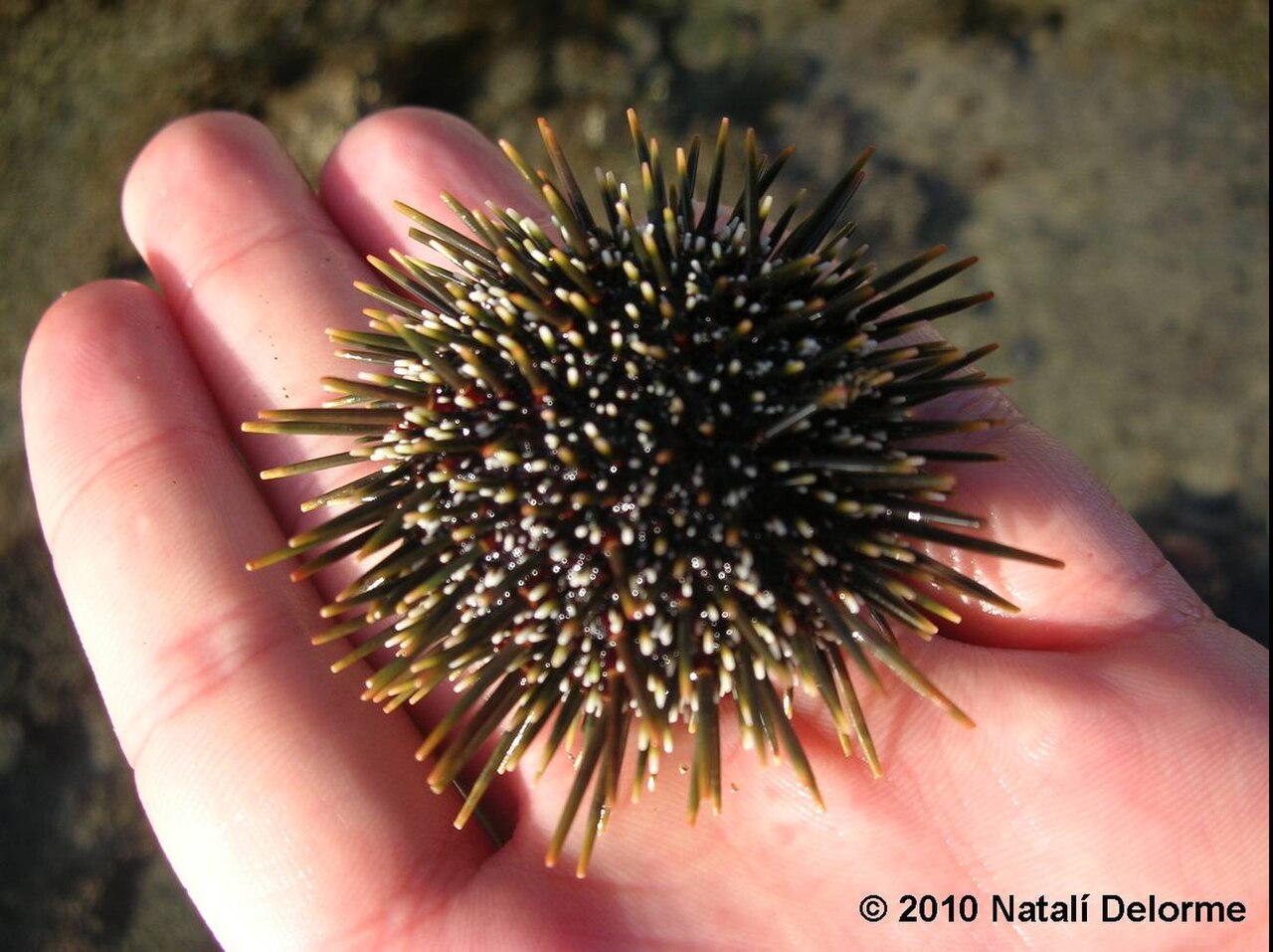
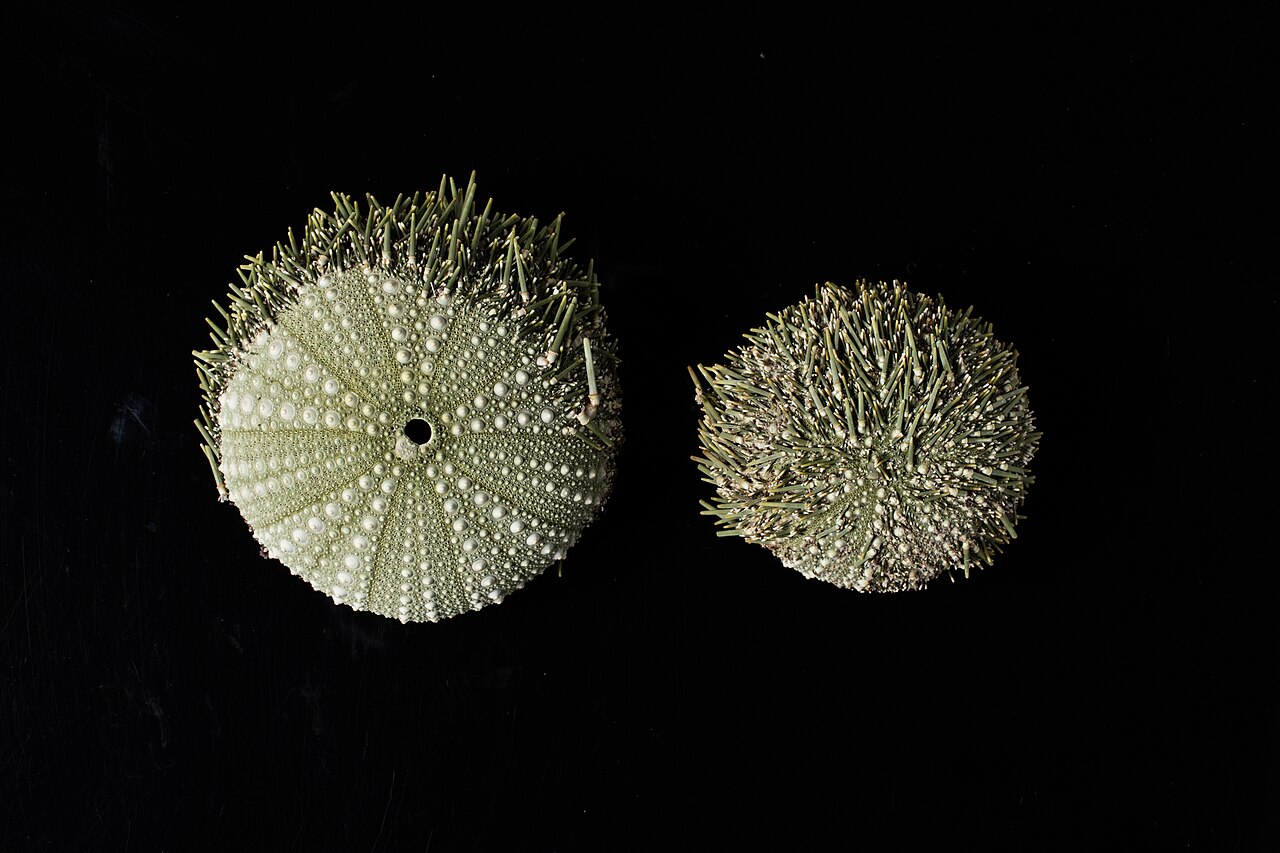
Evechinus chloroticus, called the common sea urchin, sea egg, or kina, is a sea urchin found only in New Zealand. It belongs to the family Echinometridae and grows up to 16–17 cm across. It is the most widespread sea urchin in the country and has become well known because its numbers have exploded due to overfishing and climate change. This boom leads to overgrazing that severely harms kelp forest ecosystems.
In English, it is known as the common sea urchin, kina, or sea egg. In Māori, the urchin itself is called kina (with kina ariki referring to long-spiked ones) or pūrau, while its roe is called ateate.
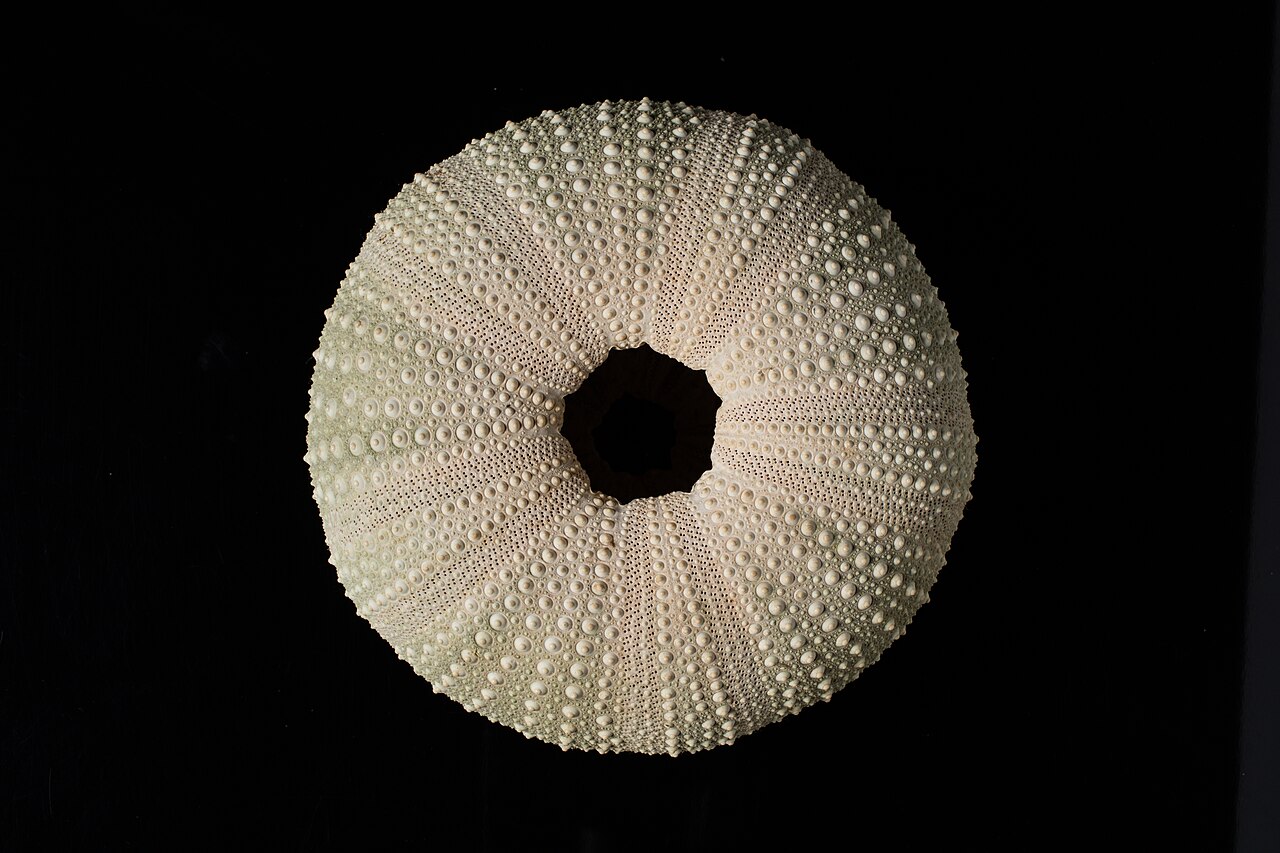
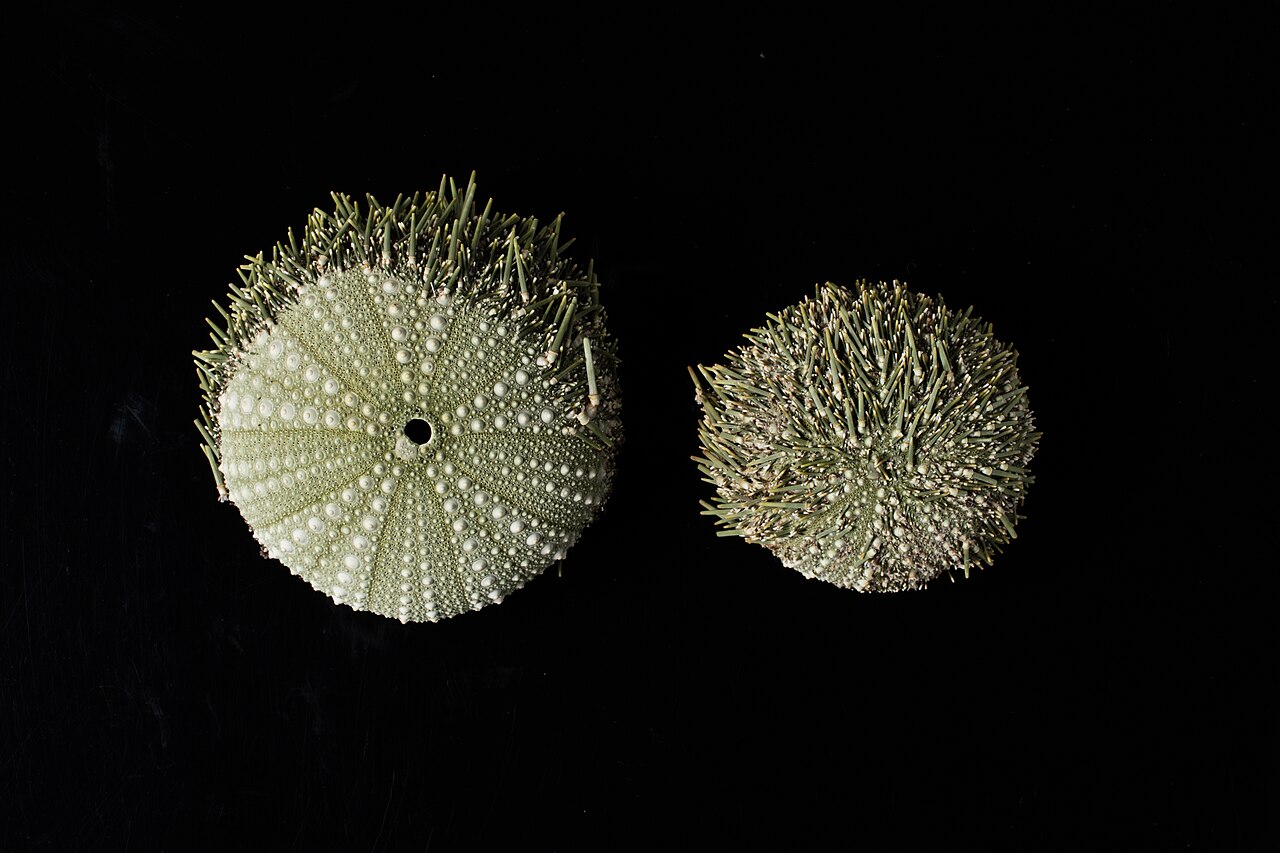
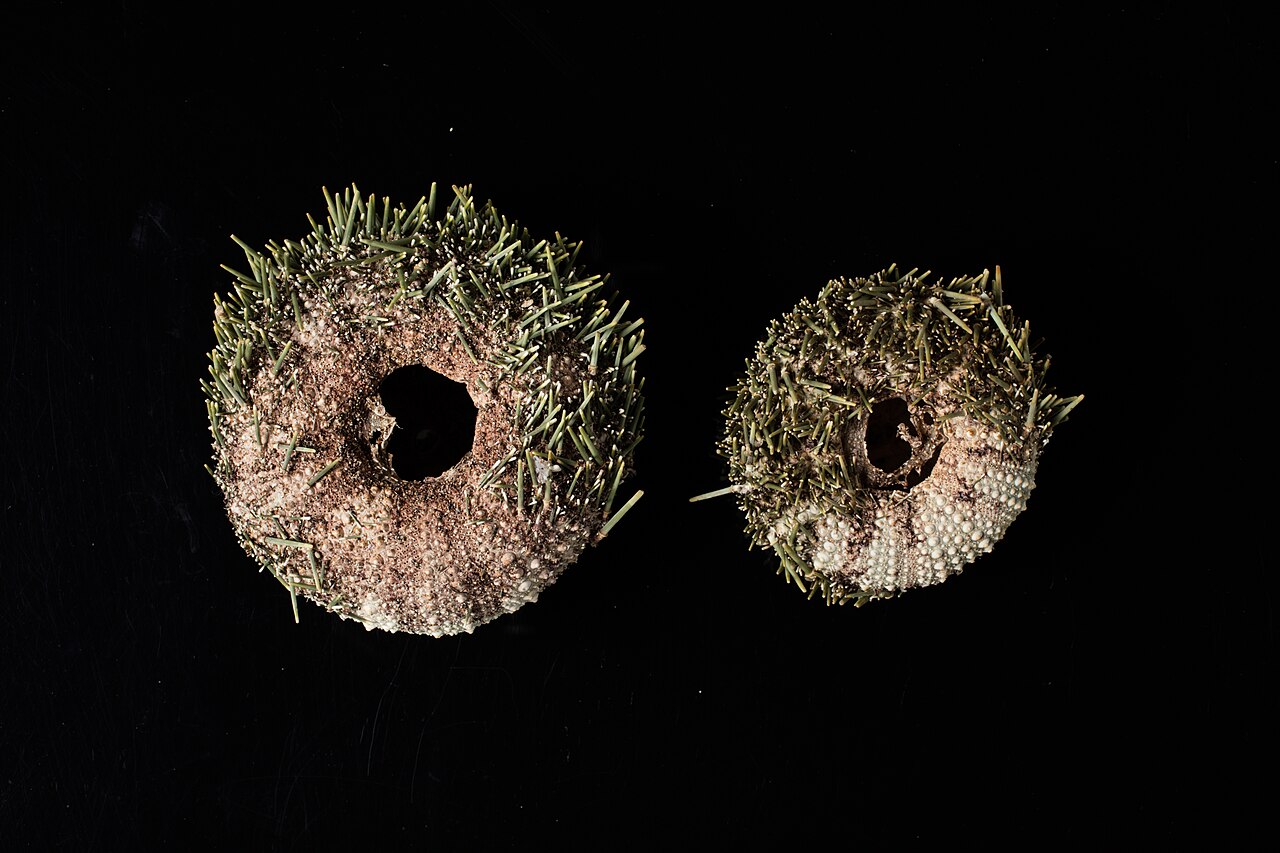
The body is oval and covered with many spines for protection. Between the spines are tube feet that help the kina move along the seafloor.
This sea urchin lives all around New Zealand in shallow waters down to 12–14 metres deep, with intertidal populations also found in the north of both main islands. It prefers areas with moderate wave action. In the north, it is mostly on rocky seafloor but also on sandy areas. In the South Island, it is abundant in the fiords. Individuals under 1 cm across hide under intertidal and subtidal rocks; those between 1–4 cm stay under rocks or in small rock depressions. Once they reach 4 cm, they move into open areas.
Kina are mainly herbivorous, eating large brown algae, red algae, and encrusting substrate. Their larvae feed on various unicellular algae between 5 and 50 μm.
Predators include molluscs like the cymatiid gastropods *Charonia capax* and *Charonia rubicunda*, starfish, and bottom-feeding fish. The most important predators are the eleven-armed sea star (*Coscinasterias calamaria*), the seven-armed prickly starfish (*Astrostole scabra*), the spiny lobster (*Jasus edwardsii*), and snapper.
Kina have an annual breeding cycle. They become sexually mature between 3.5 and 7.5 cm in diameter, depending on the population. Gonads are ripe from October, and spawning occurs from November to February. Swimming larvae develop in the water column over 4 to 6 weeks; in the lab, development takes 22 to 30 days. Larvae settle on substrates covered with coralline algae like *Corallina officinalis* or on artificial surfaces. High sedimentation from activities like residential construction harms settling urchins. In their first year, kina grow 0.8 to 1 cm in diameter, and wild populations grow 1–2 cm per year.
Quick Facts
- Genus
- Evechinus
- Species
- chloroticus
Facts from the source article.
Lore & Background
Kina have been a traditional component of Māori diet since pre-European times, often eaten raw from the sea. The blooming of kōwhai in spring or pōhutukawa in summer indicated times when the roe was particularly palatable. Kina shells, also known as tests, have become a symbol of coastal New Zealand and have been used in crafts such as ornaments and jewellery boxes.
Evechinus chloroticus is oval in shape, covered by spines for protection, and uses tube feet to propel itself along the seafloor. It is found all around New Zealand in shallow waters, preferring areas with moderate wave action. Individuals smaller than 1 cm are found under rocks, those between 1–4 cm under rocks or in depressions, and after reaching 4 cm they migrate to open areas.
The species has an annual breeding cycle, with gonads ripe from October and spawning from November to February. Larvae settle on substrates covered with coralline algal species such as Corallina officinalis, and high sedimentation loads negatively affect settling sea urchins.
Reader's Guide
Evechinus chloroticus holds significant ecological and cultural importance in New Zealand. Its populations have dramatically grown due to overfishing of natural predators such as crayfish and snapper, combined with climate change effects, leading to the formation of kina barrens where kelp forests are entirely eaten away. A notable example is the Hauraki Gulf Marine Park, which has been almost entirely stripped of other marine life. Kina are now being actively removed from many ecosystems for marine conservation efforts.
Culturally, kina have been a traditional Māori food since pre-European times and have been fished commercially since 1986 under the quota management system in restricted areas. Attempts to export E. chloroticus to Asian markets have been unsuccessful due to its reputation for bitter taste and lack of recognition in Japan, making it not economically attractive for aquaculture development. However, there is strong interest in roe enhancement from fished sea urchins, with nine weeks of enhancement giving the greatest return for lowest costs. Roe enhancement is more profitable for sea urchins with low gonad index found in the North Island rather than the South Island.
Did You Know?
- Kina can reach a maximum diameter of 16–17 cm.
- Copper has a detrimental effect on all stages of E. chloroticus, with a LOEC of >15 μg/L over one hour for gametes.
Gallery
Frequently Asked Questions
What is Evechinus chloroticus?
Evechinus chloroticus is a sea urchin species found exclusively in New Zealand waters, belonging to the family Echinometridae. It goes by several common names, including "common sea urchin," "sea egg," and "kina," and is the most widely distributed urchin species in the country.
How big does Evechinus chloroticus get?
Adults can reach a maximum diameter of roughly 16 to 17 centimetres, though they must be between 3.5 and 7.5 cm across before they are capable of reproducing. In their first year of life, a kina typically adds only about 0.8 to 1 cm to its diameter.
Why has Evechinus chloroticus become so overabundant?
Populations have surged dramatically because heavy overfishing removed their natural predators while climate change altered ocean conditions in ways that favour urchin survival. This unchecked growth has turned what was once a balanced part of the reef into a dominant grazer.
What damage does Evechinus chloroticus do to kelp forests?
When their numbers explode, kina graze kelp and other algae down to bare rock, effectively stripping the habitat that countless other marine species depend on for shelter and food. This overgrazing can collapse entire kelp forest ecosystems, leaving behind what divers call "urchin barrens."
When does Evechinus chloroticus spawn, and how long do its larvae develop?
Spawning occurs between November and February, with larvae spending roughly four to six weeks drifting in the water column before settling. In controlled laboratory settings, that larval phase is shorter, taking about 22 to 30 days to complete.
More in Sea Urchins, Part 2 1-24
Spotted an error? Know more?
Reader corrections go straight into our review queue. Suggest an edit · How this site is sourced