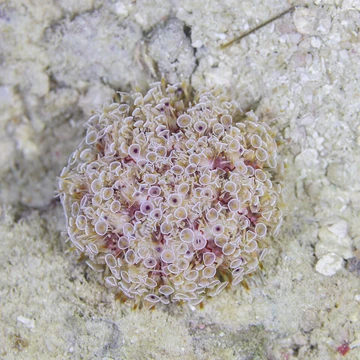
Mellita quinquiesperforata
A tropical sand dollar with nocturnal feeding and righting behavior.

Wilfredor · CC0
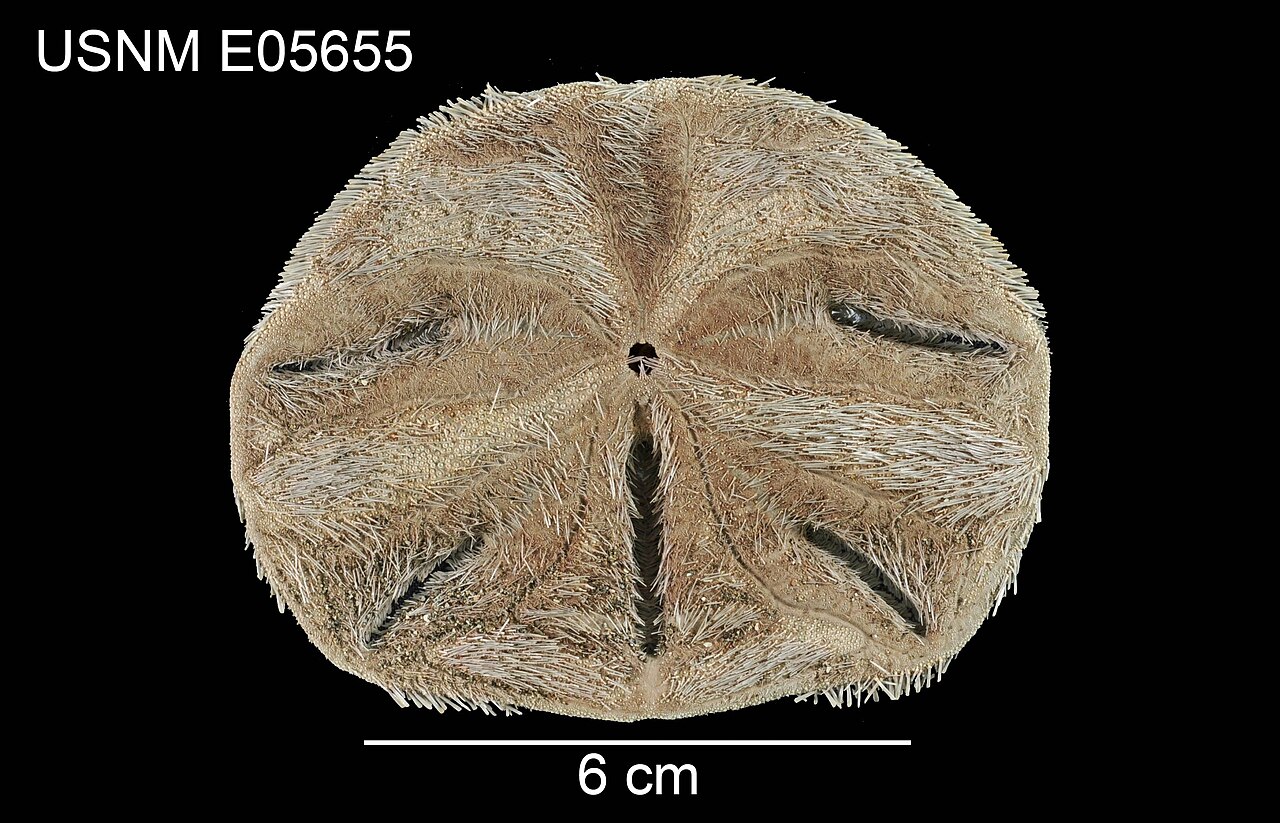
Mellita quinquiesperforata, a tropical sand dollar, is a flat, round echinoderm related to sea urchins and starfish. Its gut holds noticeably more food at night than during the day. When flipped upside down, this animal can detect the direction of water flow and adjust its position to create the right amount of lift and drag to flip itself back over. It lives along the eastern coast of the United States and the coast of Brazil.
Quick Facts
- Taxon
- Mellita quinquiesperforata
Facts from the source article.
Lore & Background
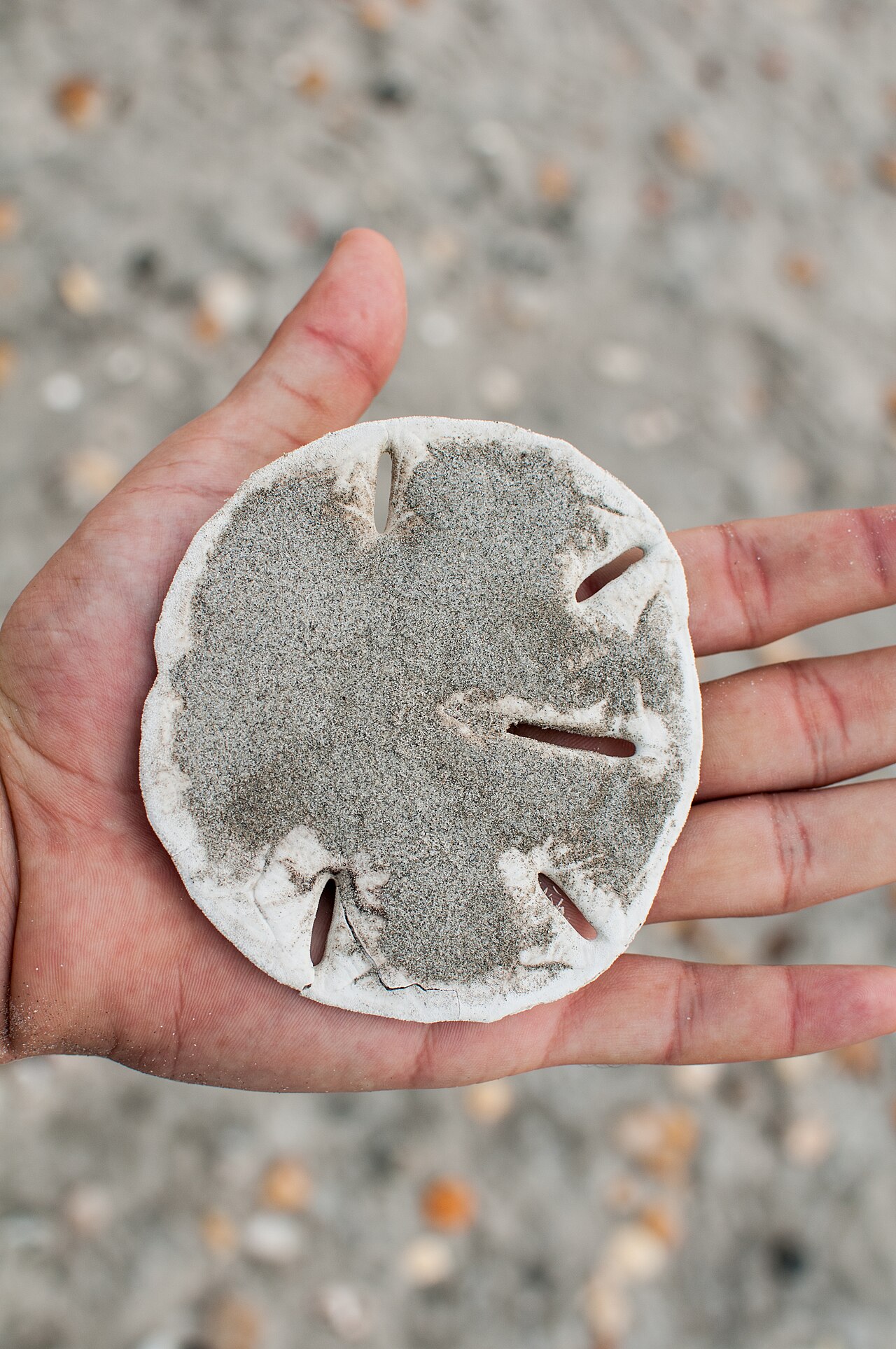
Mellita quinquiesperforata, also known as the five-holed keyhole urchin or sand dollar, resides in the Atlantic Ocean off the eastern coast of North, Central, and South America. They can be found anywhere near the coast of South Carolina, from Hilton Head to Myrtle Beach. Their dried exoskeletons are a common sight on sandy beaches, often in the high tide zone. The species prefers fine-grained sand in the infralittoral zone, which is shallow and dominated by marine algae. To avoid being tossed by currents, they form extensive beds parallel to the shoreline, just beyond the breaker zone. Studies show that bed structure and density are associated with the dynamic nature of tidal zones and can vary from beach to beach; spatial dispersion within a bed and individual growth rate have also been correlated with water depth.
Reader's Guide
Mellita quinquiesperforata is significant as a tropical sand dollar species that exhibits distinct behavioral and ecological traits. The article notes that individuals have been found to possess significantly more food in the gut at night than during the day, suggesting a nocturnal feeding pattern. Additionally, when inverted, these sand dollars can recognize flow direction and respond by modifying their orientation to maximize lift and drag for righting their position, demonstrating an adaptive response to environmental cues. The species forms beds parallel to the shoreline beyond the breaker zone, with bed structure and density varying by beach and linked to tidal dynamics. Its distribution spans the eastern coast of the United States and the coast of Brazil, and its dried tests are commonly found on sandy beaches. The species reproduces sexually through external fertilization, with a breeding season from spring to summer, producing free-swimming offspring. Larvae exhibit bilateral symmetry, while adults are radially symmetrical. These characteristics contribute to the species' role in shallow marine ecosystems and its visibility as a beach-cast organism.
Taxonomic Placement & Deep Roots
Mellita quinquiesperforata is a member of the family Mellitidae, a group popularly known as keyhole sand dollars, nested within the order Clypeasteroida of flat, burrowing sea urchins. Its evolutionary lineage reaches back to the early Jurassic, when the ancestral branch that would eventually give rise to sand dollars separated from the cassiduloids, another clade of irregular echinoids. The first genus to qualify as a true sand dollar, Togocyamus, appeared during the Paleocene, and not long after, in the Eocene, lineages bearing more familiar, modern-looking body plans took shape. The genus Mellita itself encompasses three recognized species, all classified under Mellitidae (Stefanini, 1912). This family is part of the superfamily Scutelloidea, a large and diverse assemblage that also houses the Pacific eccentric sand dollar and the common sea biscuit. The deep temporal roots of this lineage reveal that the flat, disc-shaped architecture we associate with sand dollars is not a recent novelty but the product of well over a hundred million years of gradual refinement.
Architecture of the Test & Living Surface
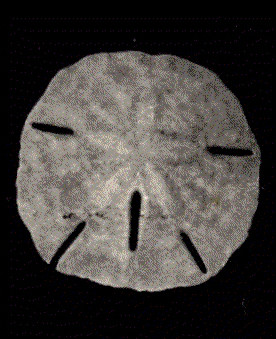
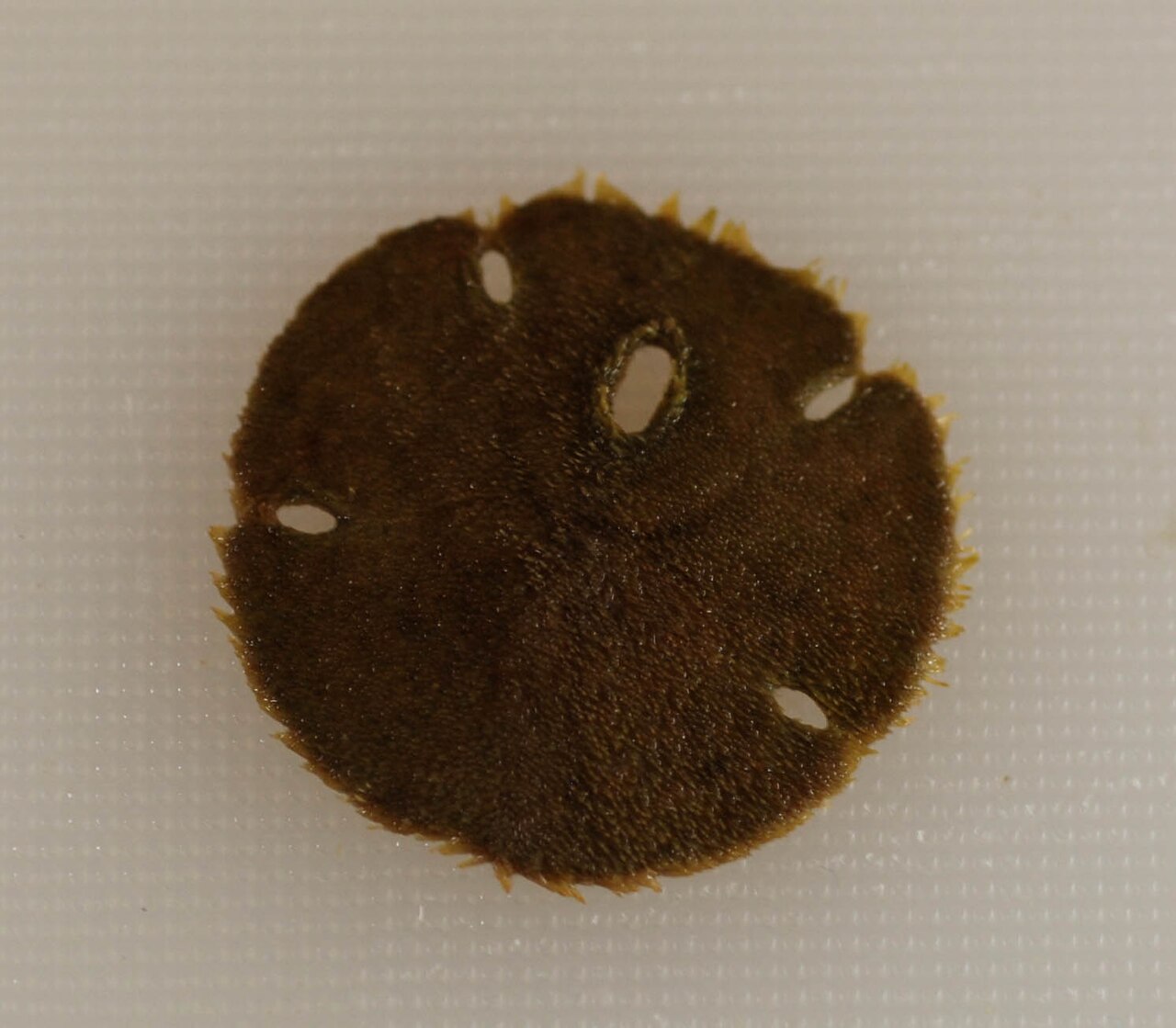
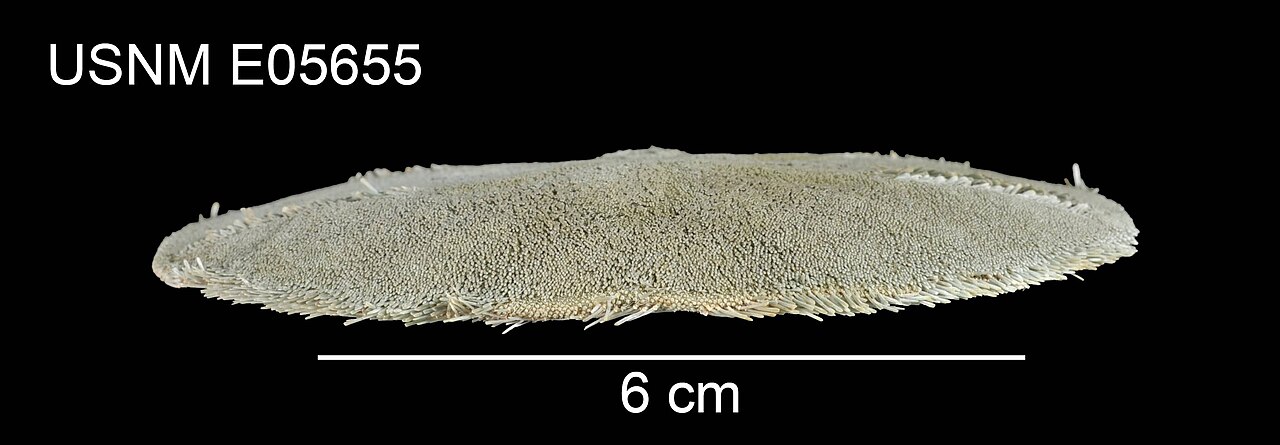
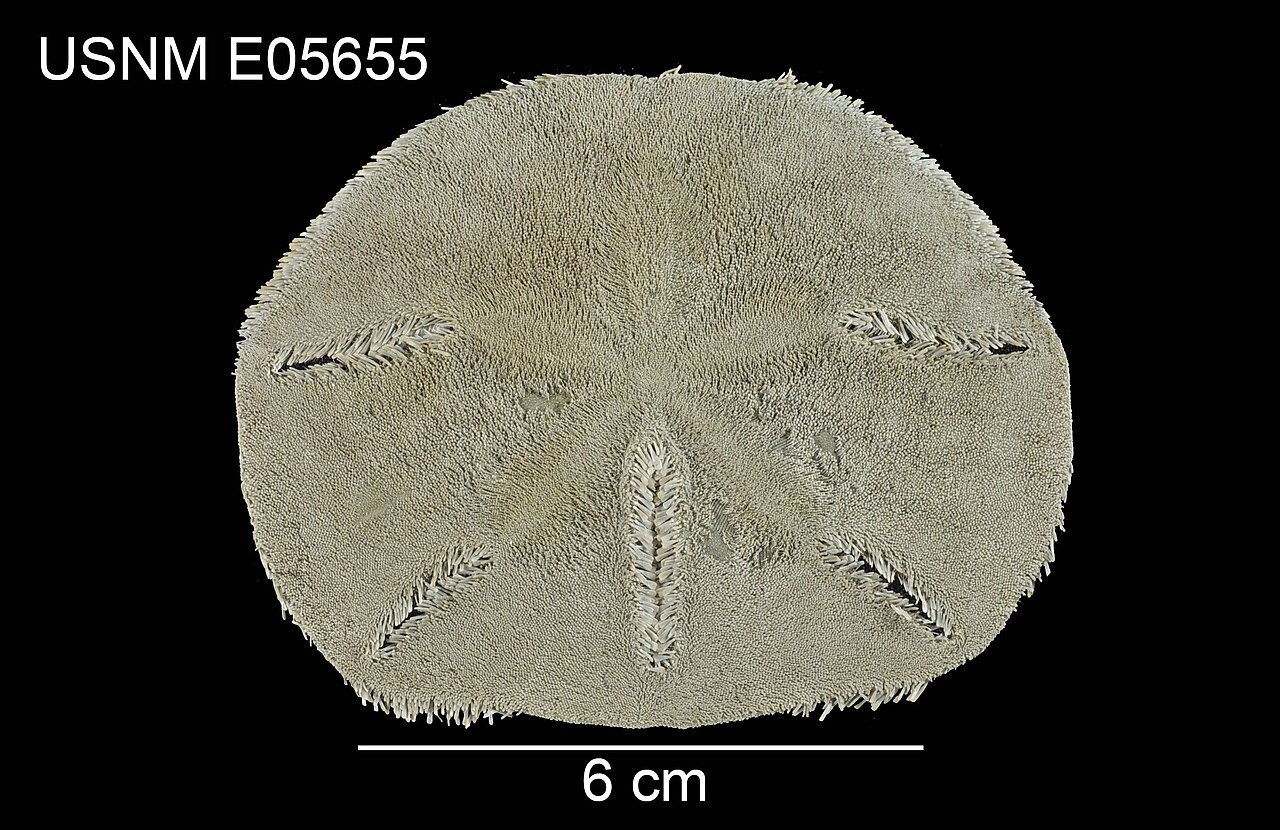
The body of Mellita quinquiesperforata, as with every member of its order, is encased in a rigid endoskeleton called the test, constructed from calcium carbonate plates laid out in a fivefold radial pattern. This petal-like arrangement is defined by five paired rows of pores through which tiny tube feet, known as podia, extend outward for gas exchange. The mouth rests at the very center of this pattern on the underside of the animal, while the anus is positioned toward the rear rather than the top, a notable departure from most other urchins. This front-to-back bilateral symmetry, superimposed on the radial design, mirrors a long evolutionary transition from dwelling atop the seabed to burrowing beneath it. In living specimens the test is draped in a dense coat of velvet-textured spines, each tipped with microscopic cilia whose coordinated motion propels the animal across the sediment. Depending on the species, these spines may appear green, blue, violet, or purple. Certain tests also bear narrow slits called lunules, which anchor the animal in place and prevent it from being swept away by passing waves.
Caribbean Home & Foraging Life
The three species of the genus Mellita, including Mellita quinquiesperforata, are distributed across a broad range of coasts in and around the Caribbean Sea. They occupy waters below the mean low tide line, settling on or just beneath the surface of sandy and muddy substrates where the soft bottom suits their burrowing habits. Their principal diet consists of algae and detrital organic matter scattered across the ocean floor, yet some species adopt a more opportunistic tactic, tipping onto their side to intercept particles drifting in ocean currents. Members of this group tend to congregate on the seafloor, drawn to soft-bottom environments that double as convenient sites for spawning. They average roughly 80 to 100 millimeters in diameter, a modest size that makes them easy to overlook within the sediment. In Spanish-speaking regions of the Americas, beachcombers who encounter the bleached, spine-free tests of deceased individuals often call them galleta de mar, or "sea cookie," a name that has crossed into everyday English usage as well.
Reproduction & a Remarkable Larval Defense
As with most echinoids, Mellita quinquiesperforata has separate sexes, and reproduction proceeds through the release of gametes into the water column for external fertilization. The resulting larvae are planktonic, drifting through the open water and passing through several metamorphic stages before the calcareous test begins to form and the young individual settles to the seafloor as a benthic organism. In 2008, biologists uncovered a striking defensive behavior in sand dollar larvae: upon detecting dissolved mucus shed by a predatory fish, certain species respond by splitting themselves in half, an asexual cloning event that can require up to 24 hours to complete. The offspring that emerge are roughly two-thirds the length of the original larva, a size reduction that helps them slip past the predator's sensory range. This defensive cloning effectively doubles the local larval population while halving individual size, offering a clever trade-off between numerical advantage and physical concealment. The mechanism underscores a level of behavioral plasticity in echinoid larvae that had previously gone unrecognized.
Gallery
Frequently Asked Questions
What is Mellita quinquiesperforata?
It is a flat, round tropical sand dollar — an echinoderm closely related to sea urchins and starfish. Its skeleton is built from calcium carbonate, and adults display radial symmetry. You'll also see it called the five-holed keyhole urchin.
Where does Mellita quinquiesperforata live in the wild?
This species is found along the eastern coast of the United States and the coastline of Brazil. As a tropical sand dollar, it is restricted to warm-water habitats in those two regions.
How does Mellita quinquiesperforata feed?
It is a nocturnal forager: its gut holds noticeably more food at night than it does during the day. This means the animal is most actively gathering and processing its meal after dark.
How does Mellita quinquiesperforata flip itself back over when overturned?
When flipped upside down, it detects the direction of water flow and repositions its body to generate the precise balance of lift and drag needed to right itself. No external help is required — the animal actively uses the current to complete the flip.
How does Mellita quinquiesperforata reproduce?
It is dioecious, so individuals are either male or female, and fertilization takes place externally in the surrounding water. The larval stage is bilaterally symmetrical before the animal matures into its radially symmetrical adult form.
More in Sea Urchins, Part 2 1-24
Spotted an error? Know more?
Reader corrections go straight into our review queue. Suggest an edit · How this site is sourced